• Rreth Nesh
  • Kontakt
  • Albanian
  • English
Monday, April 27, 2026
Memorie.al
No Result
View All Result
  • Home
  • Dossier
  • Interview
  • Personage
  • Documentary
  • Photo Gallery
  • Art & Culture
  • Sport
  • Historical calendar
  • Others
  • Home
  • Dossier
  • Interview
  • Personage
  • Documentary
  • Photo Gallery
  • Art & Culture
  • Sport
  • Historical calendar
  • Others
No Result
View All Result
Memorie.al
No Result
View All Result
Home Personage

“He was in Vienna when he was told that the two ends of the Semmering tunnel had failed to meet, perhaps due to a blunder or a deliberate error by the technicians…” / The sad story of the famous designer of Albanian origin.

“Ndodhej në Vjenë kur i thanë se dy anët e tunelit të Semmeringut nuk ishin takuar, ndoshta nga një lajthitje apo me qëllim e teknikëve…”/ Historia e trishtë e projektuesit të famshëm me origjinë shqiptare

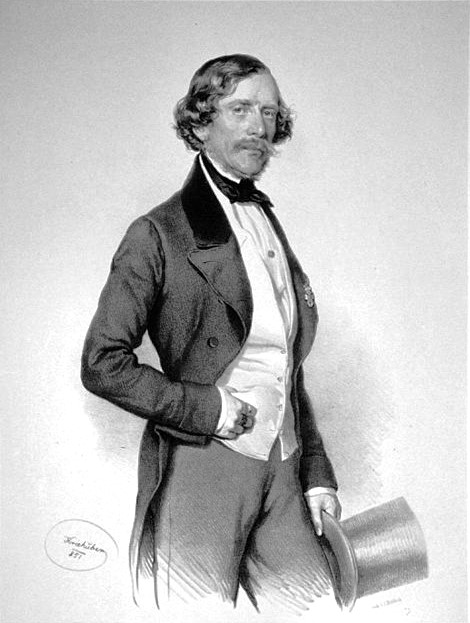
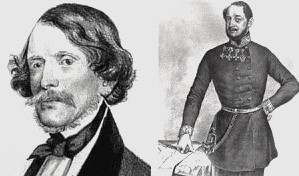
Memorie.al / Karl Gega was born in Venice on January 10, 1802 (some sources cite 1800) and died in Vienna on March 14, 1860, taking his own life out of despair. Karl’s ancestors had migrated to Venice alongside many compatriots fleeing Northern Albania following the Ottoman occupation. Karl Gega was a child prodigy; after graduating from a college of philosophy and mathematics with honors, he enrolled at the University of Padua at age 15. Only a year later, he graduated in Engineering. In 1819, at the age of 17, he earned the title of “Doctor of Mathematics.”

Gega dedicated himself to practical engineering within the railway service of the Lombardo-Venetian Kingdom (a province of the Austrian Empire), handling road tracing, canalization, and the construction of large edifices. Between 1824 and 1830, he directed hydraulic and road works in the provinces of Belluno and Treviso. By 1840, he was promoted to Deputy Director of Construction for the entire Tyrol region, where he designed the mountain road through Val Sugana and the suspension bridge over the Adige (Etsh) near Mores.

The Semmering Challenge

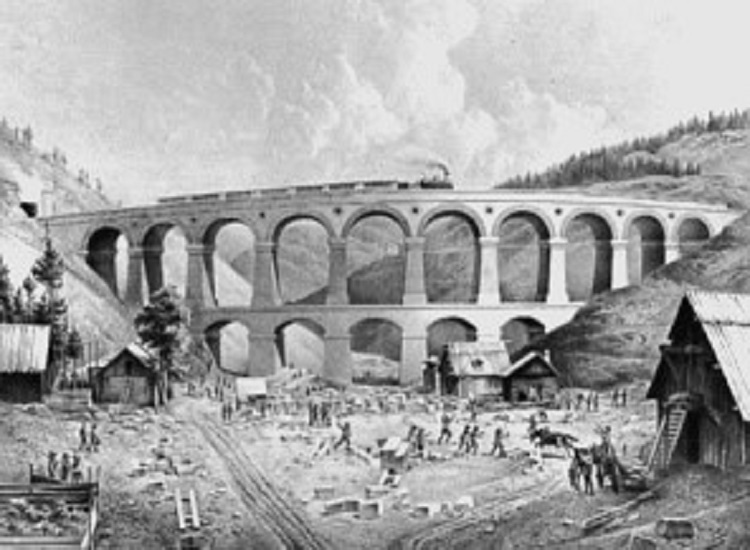
In 1848, as an inspector of the General Directorate of Construction, he led the southern railway expansion toward Ljubljana (Laihah). After extensive study tours in Germany, Belgium, France, and England, he returned to the state railways to trace the Semmering railway line, featuring a 1,430-meter-long tunnel.

At the time, the feasibility of a “standard friction” (simple adherence) railway in high mountains was heavily debated. Many specialists opposed Gega’s solution, doubting that a locomotive could climb such altitudes without cogs or cables. However, Gega’s experience and calculations proved it possible; he predicted that a locomotive could navigate a gradient of 25‰ and a curve radius of 180 meters.

Gjithashtu mund të lexoni

“One day in the prison at Bishqemi’s house in Elbasan, they threw a bloody man to the ground, who was…”/ How did Dr. Emin Haxhimusai, a graduate of Vienna, die from the torture of the Security?

“In the newspaper ‘The New Turk’, it was said that the director of the Ottoman National Bank, Sir Ernest Cassel, had to offer Ismail Qemali 100,000 pounds as a bribe, so that he would receive…”/ The unknown side of the old man of Vlora

A Monumental Feat of Engineering

To understand the sheer scale of this “giant’s work,” consider the figures:

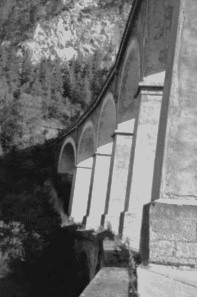
  • Infrastructure: 16 viaducts (totaling 1,502 meters) and 15 tunnels (totaling 4,520 meters).
  • Materials: 1,500,000 $m^3$ of rock blasted; 3,500,000 $m^3$ of earth moved; 65,000,000 bricks stacked; and 80,000 stone blocks rose.
  • Technical Difficulty: At the time, there were no power drills – only hand drills. Massive pillars reaching heights of 45 meters and widths of 20 meters were constructed using swaying scaffolds without the aid of modern cranes.

The pinnacle of this project was the Semmering Tunnel, situated at 818 meters above sea level. Due to its length, it was excavated not only horizontally from both sides but also vertically at six points to create shaft-like galleries for removing debris.

The Tragedy of a Genius

Karl Gega’s final years were filled with sorrow. Shortly before the completion of the Semmering line, the Austrian government reassigned him to Transylvania (Sibenburg) to design a new network – a deliberate maneuver to distance him from his masterpiece just as it was nearing completion.

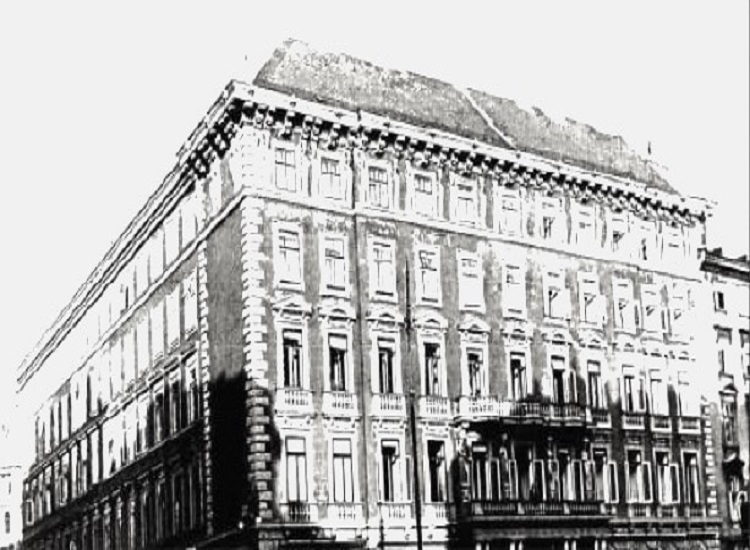
Back in Vienna, he was haunted by the possibility of technical failure. He feared that even a slight blunder by technicians in his absence would cause the two sides of the tunnel to miss each other. When a rumor reached him that the two opposite ends of the Semmering tunnel had indeed deviated and failed to meet, Gega was devastated. To him, the failure of this work meant the collapse of his professional pride and honor. Choosing death over the ridicule of his rivals, he committed suicide at his residence on “Red Tower” Street, No. 6, in Vienna. Tragically, the tunnel had actually been completed successfully with millimetric precision, but Gega did not live to see the inauguration of his greatest achievement.

Legacy and Identity

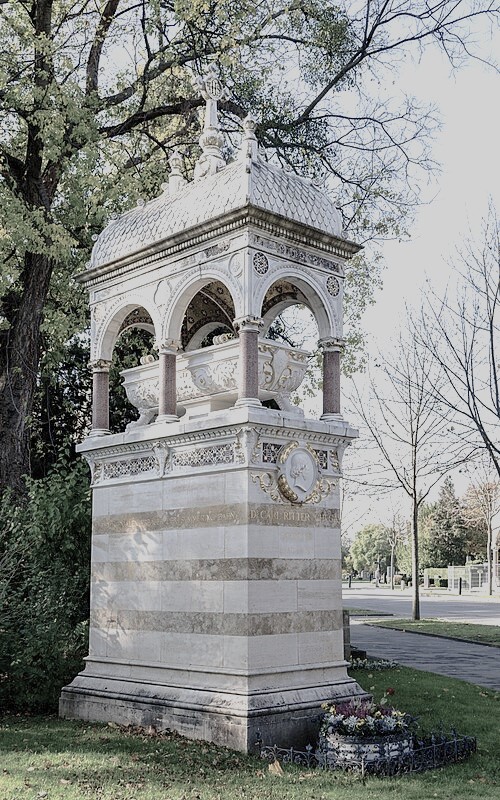
Karl Gega was eventually placed in the pantheon of great men. In 1867, his remains were moved to a monumental grave. A monument stands in his honor at the Semmering station, and his face has graced postage stamps and banknotes.

While some have attempted to claim him as solely Italian or German, objective Austrian scholars have highlighted his Albanian roots. In his 1931 book Neuland Albanien, Friedrich Wallisch writes:

“Karl Gega, the genius builder of the Semmering railway, was of Albanian descent, as evidenced by his surname ‘Gega,’ which means ‘from Northern Albania’.”

Gega left behind seminal works on railway technology and bridge construction in North America. He also invented an improved surveying pole and a sextant with a nonius for tracing curves. He remains the pioneer of the “virtual length” concept in railway engineering. / Memorie.al
ShareTweetPinSendShareSend
Previous Post

"From Churches and Mosques, to Cooperatives; the Transformation of Albanian Society by the 'Atheism Factory'..."! / How Enver Hoxha exploited the press and schools to 'produce' a society without religious beliefs

Next Post

"Whoever, for the purpose of profit in public places, employs 'çëngina' (dancing girls) or other women to attract people and places them at the disposal of clients shall be punished..." / How was prostitution penalized during the Zogist Monarchy?

Artikuj të ngjashëm

“Dom Lekë Sirdani and Dom Pjetër Çunin, after they were cruelly tortured in the section of Koplik, they threw them alive into a well of black water and…”/ Macabre crime on July 31, 1948
Personage

“One day in the prison at Bishqemi’s house in Elbasan, they threw a bloody man to the ground, who was…”/ How did Dr. Emin Haxhimusai, a graduate of Vienna, die from the torture of the Security?

April 26, 2026
“In the newspaper ‘The New Turk’, it was said that the director of the Ottoman National Bank, Sir Ernest Cassel, had to offer Ismail Qemali 100,000 pounds as a bribe, so that he would receive…”/ The unknown side of the old man of Vlora
Personage

“In the newspaper ‘The New Turk’, it was said that the director of the Ottoman National Bank, Sir Ernest Cassel, had to offer Ismail Qemali 100,000 pounds as a bribe, so that he would receive…”/ The unknown side of the old man of Vlora

April 24, 2026
“Emin Biçaku from Qarrishta, in 1944, directed Mehmet Shehu with the First Brigade to follow the route towards the Lespriska Pass, but after the end of the War, they…” / The sad story of the nationalist family
Personage

“Like your lordship – I am of the opinion that Tito’s policy, whatever his hidden intentions, has brought great benefit to the Kosovo issue…”/ Unknown letters of Tahir Zajmi, to Mustafa Merlikë

April 23, 2026
“They approached and the blood froze: on the sheet were lined up 50 human ears, torn personal trophies of a southern formation…”/ Julian Amery’s book, about the massacres of partisans during the war
Personage

“They approached and the blood froze: on the sheet were lined up 50 human ears, torn personal trophies of a southern formation…”/ Julian Amery’s book, about the massacres of partisans during the war

April 22, 2026
“Instead of remaining wise, like thieves who have taken too much, and when they need to fill their pants, lest they eat it, the Greeks and others love…”/ The unknown side of Konica’s creativity
Personage

“Instead of remaining wise, like thieves who have taken too much, and when they need to fill their pants, lest they eat it, the Greeks and others love…”/ The unknown side of Konica’s creativity

April 22, 2026
“The publication of the map in 1902, as well as the major importance of finally discovering it, in order to thus pinpoint the origins and starting point of Albanian cartography…”/ The unknown side of Faik Konica’s creativity
Personage

“The publication of the map in 1902, as well as the major importance of finally discovering it, in order to thus pinpoint the origins and starting point of Albanian cartography…”/ The unknown side of Faik Konica’s creativity

April 22, 2026
Next Post
“Whoever, for the purpose of profit in public places, employs ‘çëngina’ (dancing girls) or other women to attract people and places them at the disposal of clients shall be punished…” / How was prostitution penalized during the Zogist Monarchy?

"Whoever, for the purpose of profit in public places, employs 'çëngina' (dancing girls) or other women to attract people and places them at the disposal of clients shall be punished..." / How was prostitution penalized during the Zogist Monarchy?

“Historia është versioni i ngjarjeve të kaluara për të cilat njerëzit kanë vendosur të bien dakord”
Napoleon Bonaparti

Publikimi ose shpërndarja e përmbajtjes së artikujve nga burime të tjera është e ndaluar reptësisht pa pëlqimin paraprak me shkrim nga Portali MEMORIE. Për të marrë dhe publikuar materialet e Portalit MEMORIE, dërgoni kërkesën tuaj tek [email protected]
NIPT: L92013011M

Na ndiqni

  • Rreth Nesh
  • Privacy

© Memorie.al 2024 • Ndalohet riprodhimi i paautorizuar i përmbajtjes së kësaj faqeje.

No Result
View All Result
  • Albanian
  • English
  • Home
  • Dossier
  • Interview
  • Personage
  • Documentary
  • Photo Gallery
  • Art & Culture
  • Sport
  • Historical calendar
  • Others