Memorie.al / A grandmother, her daughter, and her granddaughter, on a biblical journey to meet their loved one, unjustly imprisoned by the dictatorial regime – this is more or less the essence of Dr. Iris Halili’s newest autobiographical book, titled The Elegance of Tears, Onufri Publishing, 2025. At first glance, it appears as a family chronicle, but it transcends that, because the characters are not only Ganimet Gjilani Fratari, Sabire Halili, and her minor daughter (the author of the book), but also dozens of other families—those excluded from society and considered “enemies of the people and of the Party,” persecuted, interned, imprisoned, or worse, with family members executed or disappeared, whose remains remain unfound even today.
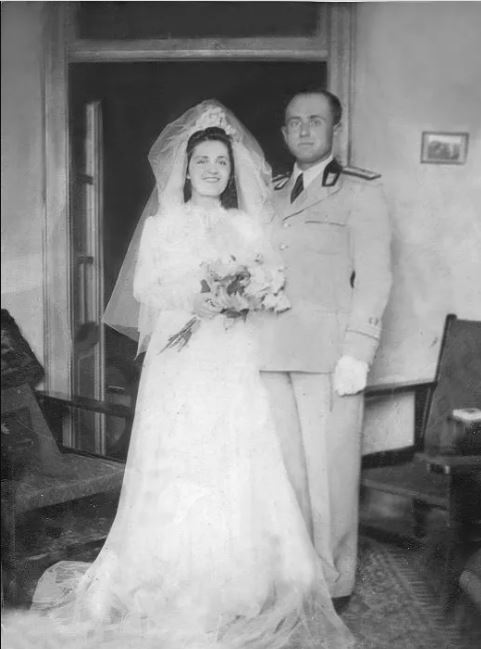
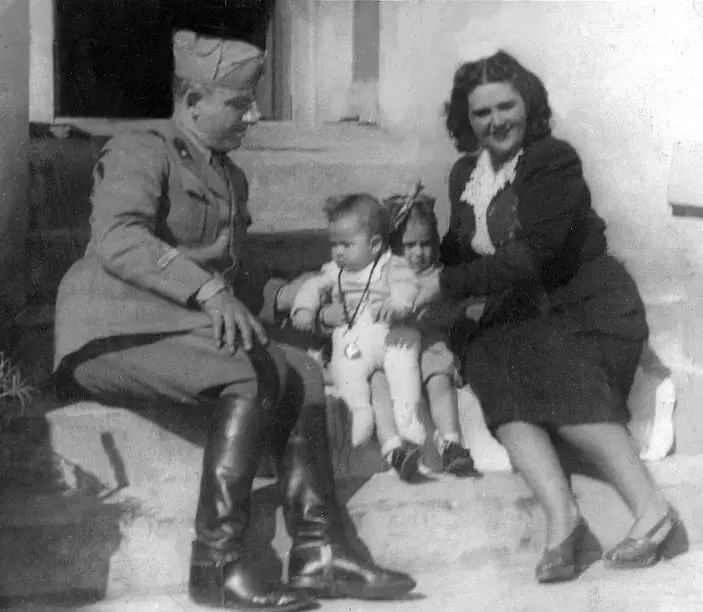
Ganimet, with a natural beauty, as if touched by God, was 20 years old when she graduated from the “Nana Mbretëreshë” (Queen Mother) Women’s Institute in 1937, speaking and writing English, French, and Italian. She was a close friend of the martyred writer Musine Kokalari. She experienced a few years of happiness—including her marriage to Major Rauf Hajredin Fratari, the birth of two children, and other joyful moments with her brother and sister—but her life was then confronted with extraordinary circumstances when her nationalist husband fled to the USA and was eliminated by the State Security of the communist regime in 1973, while her son was sentenced to 25 years in prison, with two counts: 15 years for sabotage and 10 years for agitation and propaganda.
For a regime that held the “class struggle” as its inspiring icon, it mattered nothing that Ganimet herself did not come from a large family from Gjilan in Kosovo, nor that was her father-in-law, Hajredin Fratari, a martyr of the nation, a supporter of Ismail Qemali’s government, treacherously killed by the remnants of the Ottoman Empire.
Equally negligible were the national contributions of Rauf Fratari: educated at the military school in Modena, Italy (1923–1927), with advanced studies at the Royal Academy in Rome (1929–1933), major in the Royal Guard of King Zog (1935–1939), imprisoned twice by the fascist regime in Tirana and Gjirokastra, delegate to the Peza Conference (1943) and the Mukje Conference (1943), and commander of the “Hajredin Fratari” battalion.
The central motif of Iris Halili’s diary‑form book is that one must love one’s homeland, even when life becomes impossible under its merciless rulers, or when they force you to the most unbearable edges of it. Ganimet, with two minor children, aged 4 and 2, held deep within her the belief that by loving your family, you love your homeland even more.
Beautiful, graceful, charming, admired by dozens of her peers – she stirred both the living and the dead (“Gano, don’t go to the graves anymore / you awaken the dead”) – revolutionary fervor no longer mattered to her. Despite them, she lived with her ancestors, with her escaped husband, with her children who had been christened with two distinguished names: Sabire (from the Frashëri lineage, the granddaughter of Naim Frashëri) and the younger Hajredin, the grandson of the original Fratari.
In her early childhood and up to her student years during the Kingdom, she refused to engage in political formations or movements; indeed, she had a thread of mistrust for her brother and sister who became debatikas (communist activists). Yet she was equally distrustful when she was physically parting, once and for all, from her husband, who left Albania in December 1944, hoping to return to his family after the intervention of the Anglo-Americans.
She chose not to leave with her husband; she kept contact with him through the elegant clothes from their brief marriage and through the rare letters that arrived now from Italy, now from the USA after he settled there, having received political asylum. Even less did she wish to reconnect with any of the communist leaders to start another life free of the hardships and sufferings that the new regime was bringing her?
She believed in a power higher than humanity and prayed to it daily, silently, for a better tomorrow, a better year, a better decade, and so on for 46 years – until the democratic processes began, finding her in her old age.
A couple that symbolized the inseparable bond between Kosovo and Albania, both educated, from well‑known families; they foresaw clearly what could happen under a regime that forged unnatural ties with the Serbo‑Slavs rather than with the Western orientation to which they historically belonged.
Her children, her daughter and her son – this was her sole reason for survival, and for them she would do everything possible. Even when she had an infection that threatened amputation of one leg, she prayed secretly at a holy site and succeeded in living that quiet life, bent over her sewing machine, supporting her family. A kind of “sworn virgin” – not one of those who dress and live like men, as happens in some Albanian regions, but with a devotion and self‑denial no different.
On the cover of the book is a painting made by a Jewish refugee who had found shelter in Rauf Fratari’s home during the war against Nazi‑fascism, at a time when Jews were being hunted in every corner of Europe. After painting portraits of Hajredin Fratari and Sabire Frashëri, he asked for a portrait of his own wife, from Gjilan.
The painting shows Ganimet, a short time after her wedding. Although she had posed for him several times, a few teardrops kept reappearing unexpectedly. It was precisely this state that the anonymous Jewish painter captured, as if foreseeing her fate: she would suffer and be worn down for a long time, but she would not be defeated. The painting was kept by her daughter and reproduced after the 1990s, as a memory of the graceful woman with a beautiful soul.
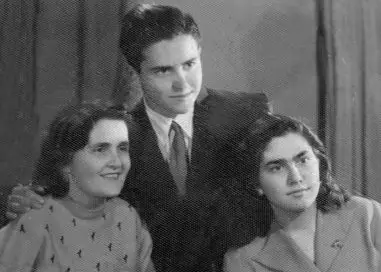
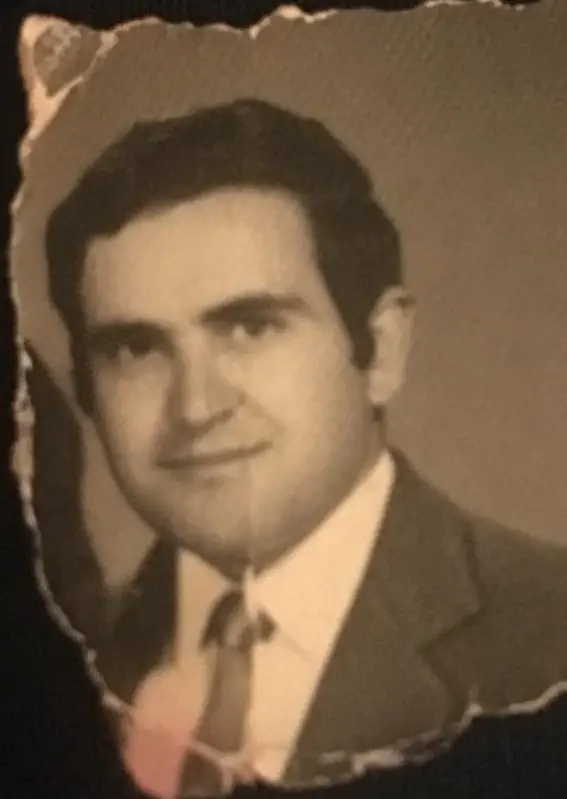
After her husband’s elimination, Ganimet experienced another ordeal: the imprisonment of her son without any fault (the punishment thus continued into the second generation – and there were even three generations involved) – a well‑known engineer. And it is from this moment that the experiences of a minor girl in the southern province of Tepelena begin.
There are always three characters: the grandmother, the mother, and the granddaughter, following the fate of their imprisoned man in Ballsh, Qafë‑Bari, Zejmen, and Burrel. But other protagonists also appear, such as Musine Kokalari, Drita Kosturi, Father Zef Pllumi, Pjetër Arbnori, or figures considered “eternally loyal” who surpassed the regime in their own malice.
The book’s thirty‑one chapters bring back the life of Albanians under dictatorship – those who were supported and others who were denounced; it is hard to find even a single Albanian family untouched by the dictatorship. The blows came in waves: they began with the nationalists, then with the main leaders of partisan formations, then with “hostile groups” every five years – paranoias descending in a chain from the highest dome down to the smallest structures of power. It is precisely this somber picture that reappears on the pages of this book, not only as a message to remember, but also to ensure it is never repeated. / Memorie.al