By Petro Mejdi
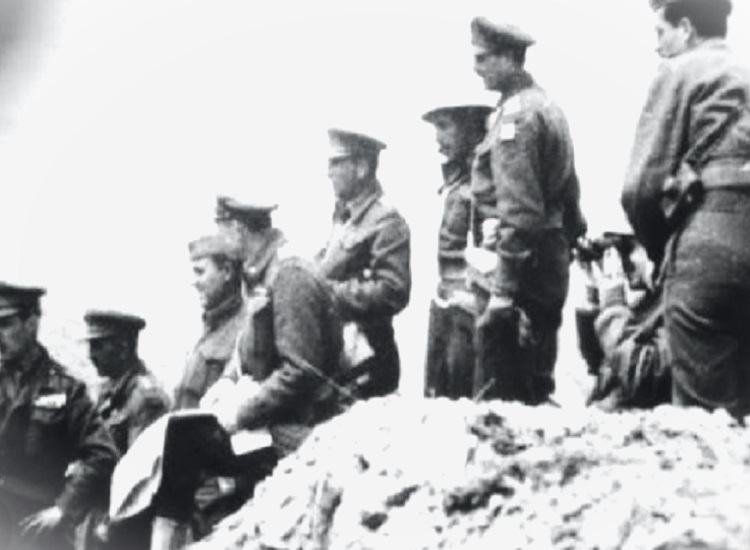
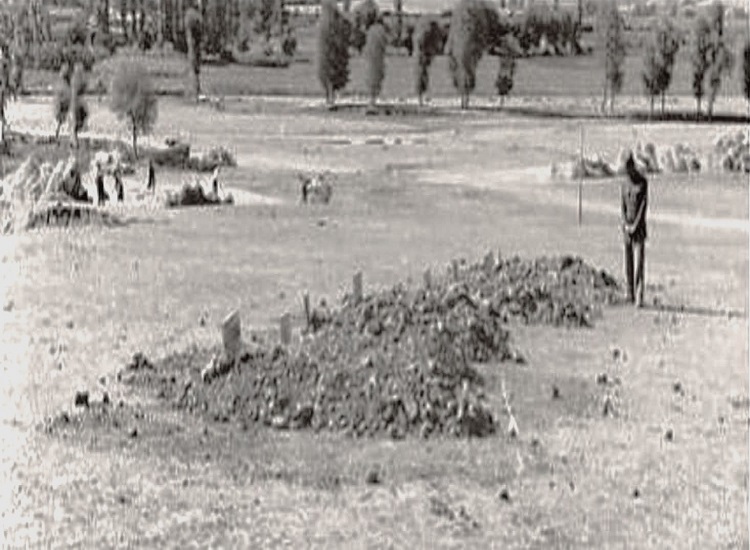
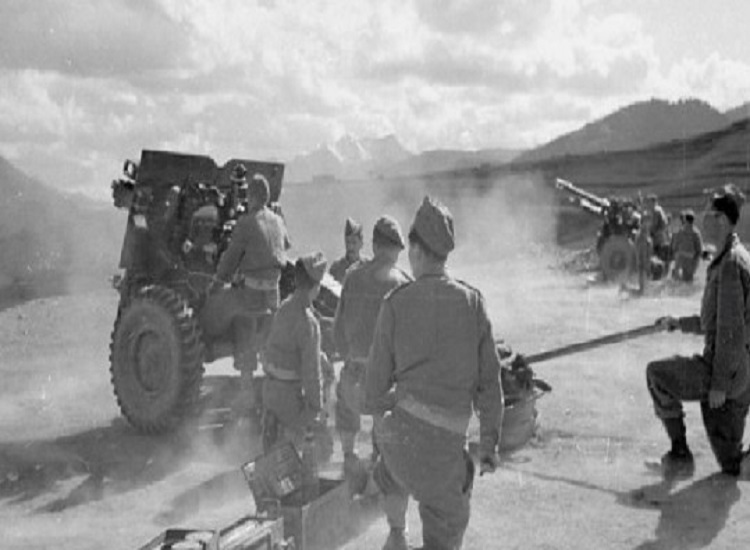
Memorie.al / Ever since I was a student at the Poliçan school, I had heard for the first time about the provocations of August 2, 1949. The subject of provocations came up because the Poliçan House of Culture took the name “Nikolla Naçi,” who, as our teachers told us, had fallen a martyr in these provocations. Later, I came across a book titled “Vidohova, quota ….”! I can’t even recall the full title now! It seems to me it was written by Xhafer Matuka and was well written! Ours, the Albanian soldiers, fighting bravely against the Greek monarcho-fascist soldiers, who want to enter Albanian territory to carve off Albanian lands and annex them to Greece! So, a battle to take Northern Epirus!
Naturally, the Greek side has never hidden that “there is a Greek population on Albanian territory, which has lived on its own lands for centuries!” And the great powers of the time of border demarcation achieved their goal, that with the abusive division of borders they would put these peoples and these states in perpetual conflict! This conflict fell hardest on the minorities, who were isolated and cut off even spiritually from their motherland!
About the August provocations, Kadare also wrote a long story titled “Provokacioni” (The Provocation), a story that, in its first version, was never published, nor after 1990, as it was lost! But even the published version is very beautiful! And its subject, as usual in Kadare’s war prose, does not deal with heroics, but the author recounts more human and simpler things about a battle!
But were these battles of August 2, 1949, an attempt by the Greek army to carve off Albanian lands!? To understand this, one must analyse the political situation of the time, the broken relations between Albania and Greece, not for the well-known problem of Northern Epirus – that problem for the Greeks in those circumstances of the civil war had taken a back seat!
The primary objective for Greece, for the non-communist part of Greek politics, was the speedy end of the civil war! The victor was already known: it was the government forces, now aided not only by the British but also by the Americans, when the “democratic forces” were left in the mud, first in 1948 by Tito and later by the very inspirer and instigator of this war for the Greek communists, Stalin.
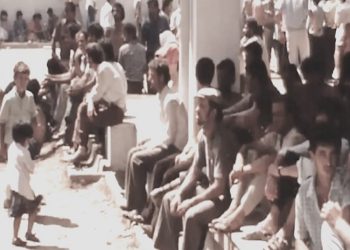
The end of the war, the last trench for the “democrats,” was Gramos and Vitsi! All the remnants of the “Democratic Army” (“Dhimokratikos Stratos”) were lined up for the final battle, a very desperate battle for the communists, on the border with Albania! In the last months, thousands of Greeks – children, unarmed civilians, sick and wounded fighters – had entered Albania.
The Greek government army headquarters, seeing that these last two positions of the “democrats” gave them tactical and strategic superiority, decided to send their units into Albanian territory and outflank them! Naturally, the Albanian army reacted and thus these battles began, which the Albanian side labelled as provocations! The further fate of these communist fighters is well known! Those who escaped the bullets, bombs, and especially the napalm dropped on the slopes of Gramos by American planes, entered Albania!
The sequences of the film “Psihi vathia” (Deep Soul) by the well-known Greek director Pantelis Voulgaris are shocking! American planes fly so low that they chase even the last crowd of people trying to escape the fire they are dropping from the sky! Does this not resemble the wrath of Zeus against Prometheus! A revival of ancient tragedy! These fighters who survived, and others who had entered Albania earlier, ended up in concentration camps set up especially far from the southern border!
In the interesting book of a communist fighter who lived in these camps, titled “From Rubik to Bulkes,” Bulkes is a town in Vojvodina where Tito had set up a camp for Greek leftist fighters. In this book, the countless sufferings of the Greek refugees during their days in these camps are recounted.
According to the bibliography, Enver Hoxha did not want to have these communist refugees on Albanian territory, not only because many of them were very problematic, but also because he did not want to further worsen relations with Greece, already broken, since he would have had to fight and defend himself on two fronts: in the North against Tito and in the South against the Greeks! But Stalin was still alive and he was obliged to follow the line coming from Moscow!
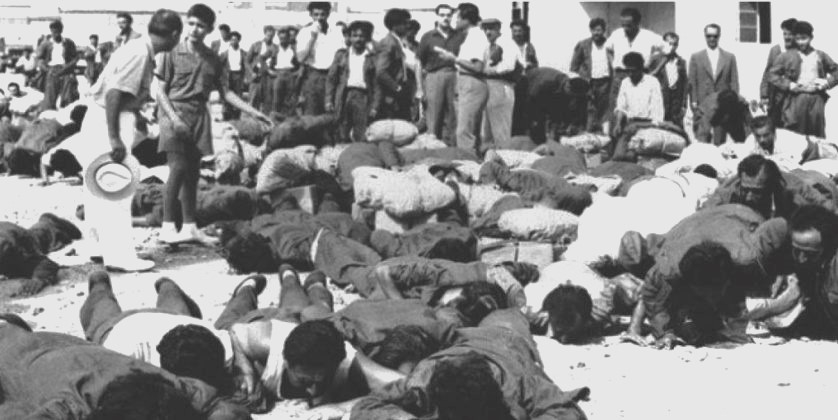
Little by little, these desperate people left for the countries of the “People’s Democracies.” Some of them were later repatriated, and the documentaries of the time and people’s memories have captured painful scenes! The Greek civil war and the stance of the Albanian government, with the help given to the communists, was a reason why interstate relations remained broken for many years!
These relations are shown clearly, deeply, and argued with objectivity in the best study on this topic: “50 Years of Mistrust” (“50 hronia dhispistias”) by the well-known historian Stavri Dajo. In detail about the civil war and Albania’s role in this war, Dajo has dealt with it in the book “The Tito-Hoxha Divergences and the Greek Civil War.”
But did Enver Hoxha help the Greek democrats without anything in exchange?! In the Balkan-French 12-part production: “O telefteos arhondas ton Valkania” (“The Last Archon of the Balkans”), among other things, it also talks about this period of Enver Hoxha’s foreign policy. This film shows how Albania gave weapons to the Greek communists—not directly, but through arms smuggling traders, paid for in gold!
Another service that the Greek communists rendered to Enver Hoxha, in exchange for the help that would come from Albania, was the fact that they found and handed over to the Albanians Koço Kota, who had been prime minister of Zog several times and had chosen Greece to hide, because he knew the Greek language, having finished his medical studies in Athens as a native of Kolonjë – a fact mentioned by Noli in his poem “Sulltani dhe kabineti” (The Sultan and the Cabinet).
About Koço Kota, Noli says: “Koço Kota, doctor-hanxhar, starts a palikari dance! / For with a tyrant’s decree, he became a grand vizier of ill fame!” But the pro-Greek sentiment, for which Noli mocks Kota, did not save his head!
The August provocations of the distant year 1949, as far as I know the history of Albanian-Greek relations, were the last frontal confrontation between Albania and Greece. Naturally, there were later border incidents, especially until 1967. I happened to meet a former Greek communist who remained in Albania, and as irony would have it, he had been imprisoned in Albania – the country that, while he was in his homeland, they had propagandized to him as the model of People’s Democracy and freedom of speech!
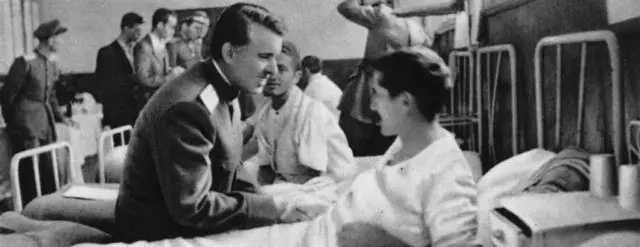
Also interesting is a French documentary about the life and diplomatic struggle that developed between the two countries under the guardianship of the French side for the repatriation of a large group of Greek officers of the government army, who crossed into Albania on the last day of the battles on Gramos and, apparently, were placed in front of the remnants of the “Democratic Army,” perhaps for purposes of pressure on the Greek government to behave better toward the losing side that remained in Greece.
It is a highly propagandistic documentary! Through it, the Albanian side wanted to dispel the fog that had been left on the prestige of communist Albania by the efforts of Greece against this country, brought up to the highest political-diplomatic instances of the time. / Memorie.al