By Prof. Dr. Aleksandër Meksi
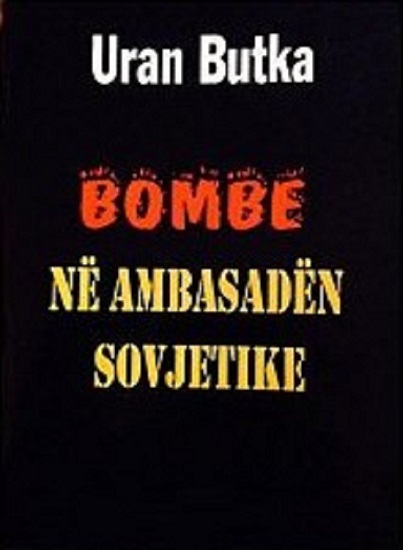
Memorie.al / The so-called “Incident” of the bomb that was thrown at the Soviet Embassy in Tirana on 19 February 1951 constitutes a quite meaningful example of the policy of terror that the Party of Albanian Communists installed since during the War to come to power, and after taking power, to keep it at any cost. This extremely tragic and painful event is presented to us fully and in detail, thus in all its historical and legal aspects, in a book published by the well-known researcher and historian Uran Butka: “Bomb in the Soviet Embassy.” The book, which revisits this occurrence for the second time, after its inclusion in the volume “Ringjallje” (Revival) published in 1995, is the fruit of genuine research work in the Archives of the time. The study relies on indisputable facts and documents as well as testimonies of the protagonists, which shed light on this crime and its authors, the people of the dome of the Party of Albanian Communists.
The memories of that time and my impressions of that occurrence have always convinced me that it was a criminal folly that should never be repeated. With that action, the communist regime clearly showed that for its power it was ready to walk over human bodies, it was ready for anything. For them, just as power emerges and is won from the mouth of the rifle (or “Kalashnikov” in our times), so it is also preserved, with red terror, as the Bolsheviks called it in the 1920s, with the dictatorship of the proletariat, a sword that, according to them, had to be kept always sharp, the tip of which was constituted by structures with the sole task; the defense of the regime from “enemies” internal and external, which were called the organs of the dictatorship of the proletariat. The behavior and mentality of most people, which has not yet changed to this day.
The throwing of the bomb at the Soviet Embassy (to be precise, we should say it was called Legation), in that building where today the Ministry of Education is located, was accompanied by great propagandistic noise and rattling of weapons against “enemies.” This act, worthy of Nero, was clearly directed against intellectuals and those who, in the political vocabulary of the time, were called “reactionaries,” “declassed,” or “overthrown classes.” It was directed, then, against those who had luck, and who were accidentally saved from the purges, which later the communists called “Koçi’s Time” (Xoxe), but which was repeated and other times with another name. This was felt not only by those who were members of these families, but also by many others. Fear was real; the years that followed proved this.
The bomb, as the propaganda of the time called it, was thrown at 17:47 on 19 February 1951. From its explosion, dynamite assembled with paper, only some windowpanes on the back side of the building were broken. We were dealing with what is commonly called a squib, i.e., it was an explosion designed for noise and smoke, but not to damage the embassy building or its personnel, thus not by people who fought communism. This action was a pretext, which coincides with the saying of the distinguished thinker Schopenhauer, that “the wicked seeks a pretext.”
Immediately, thus the next day, the power that had pre-prepared this farce, threw itself into action for a whole week in a row, making numerous arrests, from the ranks and families of intellectuals and of those who were known to be anti-communists. All the arrests were made for this “bomb” but everyone thought that the bomb was thrown by the State Security to have a pretext, and on this point we are not of one mind with Uran Butka who in his book, as previously in “Ringjallje” thinks differently.
Let us briefly present the events in the course of time. That day was the meeting of the Central Committee of the PPSh where on the agenda there was an analysis of the party’s work and some points that related to the role of the Soviet Union and of Stalin as a guiding beacon on the path of the PPSh. In it, Tuk Jakova, Teodor Heba, Manol Konomi were criticized for opportunism and failure to carry out the class struggle, as well as Kahreman Ylli for opportunism and lack of vigilance toward anti-Sovietism in education. It is understood that we are dealing with the preparation of the ground for what had been designed.
The Plenum did not continue its proceedings the next day on 20 February, but early in the morning the Political Bureau, which was the only decision-making structure, gathered behind closed doors. The minutes that are preserved of this meeting, which is elaborated in detail in Butka’s book, show quite shocking facts about the criminal activity of this unscrupulous communist band. The report on the occurrence was presented by the Minister of Internal Affairs Mehmet Shehu who requested “extraordinary repressive measures without regard to the laws in force.”
He also added that the arrests should be made that very night: “about 100-150 people of whom some 10 or 15 of them let us execute by firing squad,” and that we have prepared the lists. Meanwhile within a short time, “to cleanse” Tirana as well as other cities of reactionary families. As Mehmet Shehu said; “We must respond to terror with terror and this we can do with full conscience and composure.” In his speech Shehu also mentioned the expression: “…reactionary elements of the Kasaruho type…”, a name from the lists, which speaks clearly that the lists had been prepared beforehand. The Political Bureau approved all these proposals with one voice.
In the relevant file in the Court, three pre-prepared lists have been found with a series of names with the activity of each that justified the measures being proposed, from which 22 unfortunates were selected by clear political criteria, whose names have beside them a blue cross, which means “to be executed by firing squad,” while the others will be arrested. Later, according to the order given in the Bureau meeting, other lists for arrests were drafted that include the entire country. I judge that all the lists should have been a special annex of the book.
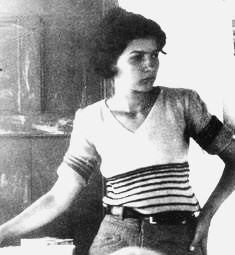
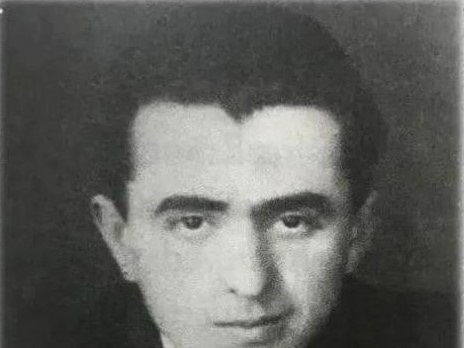
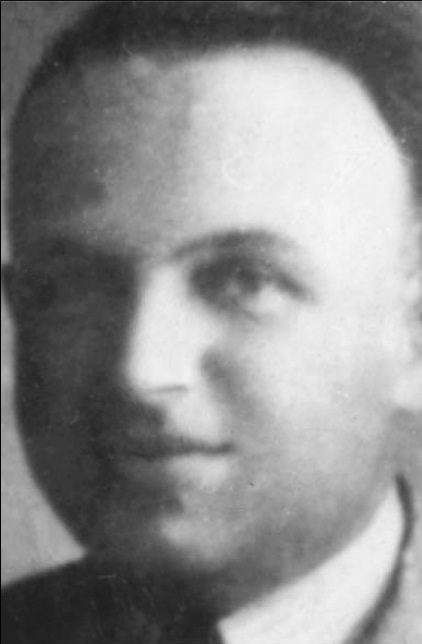
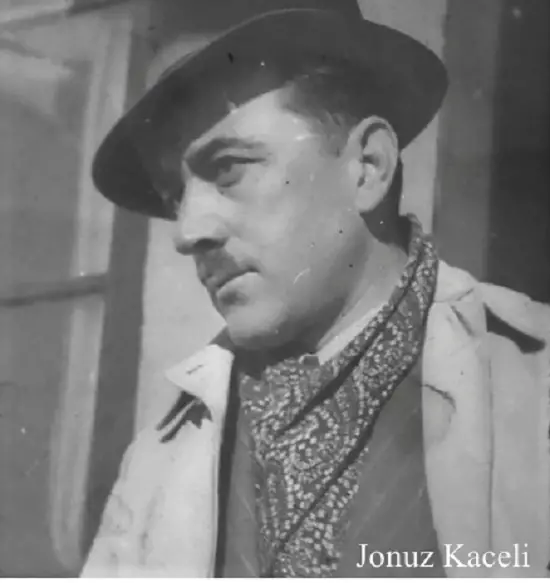
Those who were designated to be executed by firing squad were: Sabiha Kasimati (39 years old), Pjerin Guraziu (46 years old), Anton Delhysa (48 years old), Zyhdi Herri (30 years old), Gafur Jegeni (43 years old), Jonuz Kaceli (43 years old), Manush Peshkëpia (40 years old), Mehmet Ali Shkupi (58 years old), Niko Lezo (50 years old), Lluka Rashkoviç (51 years old), Haki Kodra (30 years old), Reiz Selfo, Myftar Jegeni (36 years old), Thoma Katundi (64 years old), Hekuran Troka (32 years old), Qemal Kasaruho (49 years old), Tefik Shehu (39 years old), Gjon Temali (47 years old), Fadil Dizdari, Petro Konomi (30 years old), Pandeli Nova (59 years old) and Ali Qoralliu.
The careful study of the trial acts, which the historian Butka presents to us in detail and quite convincingly, clearly shows that the process was fictitious, without investigations, without a real trial and falsified in documents. It is crystal clear that the death sentence was given beforehand (in the Political Bureau with lists pre-prepared for this purpose) and then “the papers were arranged.”
They were sentenced with collective accusations: as put in the service of foreign agencies, as their regular agents and as members of terrorist organizations. Their arrests were carried out from 20 to 23 February, without arrest warrants and the prosecutor’s signature (he signs these orders on the 25th, when they are already in prison). Likewise the indictment was drafted on the 25th and in it are also the arrest dates for each defendant. They were not even regularly investigated by the State Security investigators (they were questioned during one night and without minutes), nor were they questioned by the prosecutor charged with this matter, no evidence was presented to them and no witness was called.
During the questioning in the building of the Ministry of Internal Affairs, one of the victims, Jonuz Kaceli, died under torture on the 25th (they say he was thrown from the window) and this is not written in any document, moreover he results as being tried, sentenced and executed by firing squad with the others one day later. On 25 February, the General Military Prosecutor, Siri Çarçani, signs the collective accusation with only 9 lines and requests their trial in a first and single session. In this farce trial, it is said that the defendants generally admitted that they are against the people’s power and that they have spoken with others about this, but they did not accept any other accusation, precisely those for which they would be sentenced.
The study of the documentation for the arrests, the investigation and the sentencing of the victims, as well as the testimonies of some of the officials involved, clearly shows that the investigation was done just for form, without evidence and confrontations, that there was no judicial process and that the relevant documents: the minutes and the decision were drafted later and for this reason, two members of the judging body refused to sign for a trial that did not take place. They were Nonda Papuli (member) and Hydai Bejo (secretary).
Their criminal execution by firing squad was carried out at midnight on 26 February in a place between Ura e Beshirit and the village of Mënik. They were buried tied all together with ropes in a common pit that had been waiting for them for several days. It took years for the grave or more precisely the pit to be found and for them to be reburied as martyrs, in a common grave. I do not know if there is any “sign” there that it is a special occurrence that should not be forgotten. Later, arrests continued according to the lists and with the deportation of the family members of the victims, where in the districts to which they are sent, they are told that; “to settle in some building and to find some work, just to secure the bread of the mouth.” A phrase that speaks for itself.
Since the heads of the communist regime decided to take upon themselves the right of arrests and killings, the natural right of life and death of individuals who thought differently from them, they thought to give these actions also “legal clothing,” according to the principle “I am the law.” They prepared a decree, against which, from the middle of February, Manol Konomi, then Minister of Justice, spoke out. For this manly stance before the self-appointed masters of the lives of Albanians, he was expelled from the Central Committee of the PPSh and removed from minister. To the misfortune of the victims, this decree with No. 1223 bearing the date 26 February was signed by Omer Nishani, Chairman of the Presidium of the People’s Assembly.
The infamous decree, which was drafted and approved in those very days, was made to say that we relied on the law, bears the title; “On the prosecution and review of the activity of terrorist organizations and terrorist acts against the employees of the People’s Power and of the political and social organizations of the People’s Republic of Albania.” The decree itself has six articles, of which only the first, repeats the name of the decree, is with a long phrase where it is determined that the investigations must be carried out within 10 days.
The second determines that the accusation is made known to the defendant one day before the trial. The third, with 6 words, says that the trial is held without the participation of the parties. The fourth, prohibits recourse and the plea for pardon, while the fifth, determines that the extreme sentence is executed immediately after its giving. The decree bears the date 26 February, on the night of which the barbaric act of killing the 22 innocents is carried out, only because they thought differently from the criminal band-the Party of Communists.
The content of the Decree speaks, without the slightest doubt, that it was drafted to have, “according to them,” a legal weapon to kill those they wanted from the ranks of political opponents, even personal, but also for pressure or threat against opponents of the regime. But there is quite a possibility that the Decree was drafted and approved around 8 March, because this date is borne by the minutes of the Government meeting that approves the Decree. In any case, further research is needed for this problem.
So, the people were killed without any legal support and only after two weeks did they remember to justify it and drafted the Decree with a falsified date, as well as the Decision of the Criminal Court, which had not been held, because they considered it unnecessary. The bomb provocation has clearly been carried out to justify the reprisal. The lists were pre-prepared, and after designating the victims they executed them by firing squad, without trial. They thought that with a Decree they had the right to take the lives of innocent people.
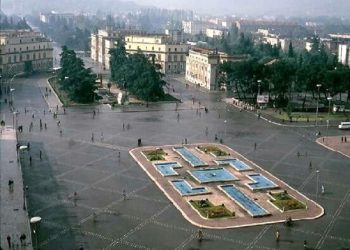
58 years ago, I was 12 years old and was attending the last year of the 7-year school. I remember quite a few things from that time. A week before, walking together with my father (Gabriel Meksi) in “Avni Rustemi” square, we met a friend of his, the pharmacist Gjon Temali. The conversation with him was ordinary. I at that time was occupied, like all my peers, with philately. Gjoni, who according to my father was a known philatelist, took an interest and told me that he would give me some series of stamps and would teach me how to keep them.
I remember him from this thing, but also because in my class and in the school, I had a year earlier two girls, Ida and Greta (I do not believe I am confusing their names). Besides him, my father had friends Niko Lezo, Manush Peshkëpia and quite a few others from those who were arrested. After he came out of prison, Ibrahim Babamusta was my mathematics teacher at the “7 Nëntori” Polytechnic. This monstrous crime has always been a topic of conversation for Albanian intellectuals.
Quite interesting data, which for me beyond any doubt are entirely true, have been told to me more than once, since the ’70s, by my colleague at that time, Apollon Baçe. Since during these years he has not managed to tell what he knew about this occurrence, I am taking the courage to publish it here. I do not think he will reproach me that I did not take permission for this, I hope if it will be necessary I will complete or correct. He had learned this data through Roza (Trandafile), the wife of Omer Nishani, a very close friend of his mother, as well as from the servant of the Nishani family.
According to Baçe, at the beginning of February 1951, Enver Hoxha and Mehmet Shehu met with the Soviet Ambassador in Tirana, Chuvakhin, and told him that the opponents are not staying quiet. Chuvakhin told them to take coercive measures, arrest a large number of people, and execute by firing squad those who seem most dangerous to you and “calm” is ensured. It was said, it was done. The State Security drafted from three of its sectors and branches, three lists of enemies and “someone,” very high certainly, determined who of them should no longer live.
According to Prof. Baçe, very soon after the killing of the 22 innocent martyrs, Omer Nishani felt his responsibility, closed himself in, and in moments of despair would strike his head with his fists, saying; “what did I do that I killed my friends”?! This thing was certainly known also by “them” and for this they no longer chose him in any political post. He killed himself in a crisis of deep despair, in 1954. Dr. Nishani committed suicide with a revolver and for this his servant told. The regime left his name to oblivion.
The above data clearly show how this cruel killing was designed and realized.
I have another memory. Our director at the Institute of Cultural Monuments, arch. Gani Strazimiri, has told us that in a meeting of his with Mehmet Shehu, the latter told him that; “you comrade Gani, you almost got it then. I saw your name in the lists and ordered that; see if it is not the Ganiu we know and no one will touch you.” In reality this was also the fate of the man with the same name, who as soon as the verification was made, escaped the blue cross in the list, escaped death.
In ’91, in my office of the Deputy Chairman of the Assembly of Albania, I received representatives of the families, who asked me to help them for the retrial of the case, to receive innocence. I directed them to Kleanthi Koçi, at that time Chairman of the Supreme Court, with whom we talked about this just request. Kleanthi in a conversation later, told me that we will declare them innocent, that there was no real process against them; and so it happened.
Today after 58 years, one cannot but feel uncomfortable that people of our race stooped so low, showed them so barbaric. The illumination of the truth with these facts serves also to condemn this horrible act, its ideators, the structures that realized it and those who defend it today with insistence. The decommunization of Albanian society is an imperative request, not because Europe is asking it of us, as we often hear, but because they are precisely the remnants of the dictatorship in the manner of acting and the mentality of particular individuals, alongside the presence in politics and not only there of nostalgic people of that period, who try to convince us that we have a continuity of that time in new conditions.
This is also the reason for the presence of these individuals of that regime in today’s Albanian politics and the avoidance of public condemnation of the crimes of communism. The condemnation of the crimes of the communist era and the removal from politics and power of the incriminated, but also the non-permission of etatist and intolerant practices toward those who think differently, the silencing of the voices of political opponents, freedoms and rights that are in the foundations of a legal and democratic state, constitute today a necessity.
At the foundation of this process must be the identification with scientific criteria of the system of violence practiced by that regime, the political and professional platforms, the methods and the main people drafting those policies, the structures from the center to the base (Party and Security) and the executors of criminal violence. Only then will we have full knowledge and the real dimensions of the communist crime in Albania.
For this it is necessary that as soon as possible the Archives where this bitter and shameful history is preserved in documents be opened to anyone, certainly according to the rules of preservation of state secrecy and privacy, studies be encouraged and financed, and necessarily their publication and especially of the documentation of the time. This colossal work cannot be carried out only by officials appointed by the state, but by anyone who is interested (non-public research institutions, foundations and individuals).
The bitter past of the period of the communist regime in Albania must be known through the publication of facts and testimonies of the time, so that ideology, mentalities and wrong and shameful practices be known so as not to be repeated. Unfortunately, studies on communist violence and terror, on the doctrine, anti-democratic laws, structures and acting individuals are few, while the press is bombarded with the braveries of the Security and staged processes.
The hiding of the violent activity of the communists and of the employees of the former State Security, behind state secrecy, is intentional and should not continue anymore. Albanians have the legitimate right to know that time of their history, so that it is not repeated. The presence in leadership of many of those who are implicated with the regime certainly hinders this. But I am convinced that this cannot continue for long. No one should think that he makes history with his own praises, all the more so when the witnesses of that period are still alive, when there is a free press, when the facts are beginning to see the light of publication even though with delay.
Finally we wanted to express two opinions, which are related in terms of actuality, with this last issue. First, it is right that a day of commemoration of the victims of communist violence should be designated, but this date cannot be 20 February, which is also related to the name of the dictator. A suitable day could also be the day of the execution by firing squad of the convicted of the First Special Court, or the day of the execution by firing squad of the deputies. Second, the monument that should be erected in their memory should be with expressive means and artistic forms of the time, not at the pyramid erected to immortalize the dictator, thus also his regime. I am convinced that the day of its disappearance will come soon./ Memorie.al