• Rreth Nesh
  • Kontakt
  • Albanian
  • English
Wednesday, February 18, 2026
Memorie.al
No Result
View All Result
  • Home
  • Dossier
  • Interview
  • Personage
  • Documentary
  • Photo Gallery
  • Art & Culture
  • Sport
  • Historical calendar
  • Others
  • Home
  • Dossier
  • Interview
  • Personage
  • Documentary
  • Photo Gallery
  • Art & Culture
  • Sport
  • Historical calendar
  • Others
No Result
View All Result
Memorie.al
No Result
View All Result
Home Dossier

“During the public exposure meeting, a peasant addressed him: ‘Fran, you named your son “Brezhnev” because you expect the Soviet Union to…’ / A document surfaces, uncovering an incident that caused alarm within the Central Committee in ’69.”

“Në mbledhjen demaskuese para popullit, një fshatar i tha; ti Fran, ja ke vënë emrin ‘Brezhnjev’ djalit, pasi pret që Bashkimi Sovjetik…”/ Zbulohet dokumenti me ngjarjen që alarmoi Komitetin Qendror në ’69-ën
“Nuk mund të krahasohen Enveri e Mehmeti me Stalinin, ata janë më kasapë, ata ja presin kokën atij që flet, siç bënë me…”/ Biseda gjatë një darke në Yevksinograd të Bullgarisë, në ’62-in
“Në ’46-ën kur isha në kampin e Santa-Farës, me sugjerimin e Toliatit, i bëra letër Stalinit, ku për Enverin i shkruaja…”/ Dëshmia e rrallë e ballistit të arratisur
“Kur kryetari i gjykatës e akuzoi Kadri Hazbiun se kishte pasur plane të vriste Enver Hoxhën, ai i’u përgjigj…”/ Kujtimet e panjohura të ish-gazetarit të Radio-Tiranës dhe ‘RD’-së

By Dashnor Kaloçi

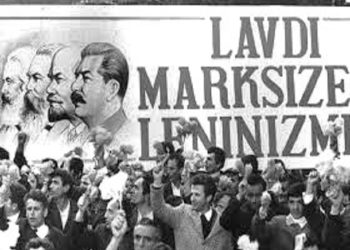
Memorie.al / After 1949, when communist Albania broke ties with Tito’s Yugoslavia to align closely with “Father Stalin,” the era of Russian names began. During the “honeymoon years” with Moscow (1949–1961), many Albanian families – especially those with “high party spirit” or children studying in the Soviet Union – began naming their children Molotov, Vishinski, Zhukov, or Tamara. Adoration for the Kremlin reached such a point that when Stalin died on March 5, 1953, a family in a village in Vlora (then known as “Little Moscow”) opened their doors for a funeral wake. The son of the house, an aviator educated in the Soviet Union, was married to a Russian woman. The village women, covered in black, wailed for the Soviet leader in traditional verse: “Woe to us, O Stalin / you was a comrade to my son!”

However, love turned into a nightmare in 1961. When Enver Hoxha declared Nikita Khrushchev a “revisionist” and “sold out for five silver coins to imperialism,” families with children bearing Russian names felt endangered. Many rushed to the Civil Registry to change or shorten the names: Molotov became “Malo,” Vishinski became “Visho,” and Tamara simply “Mara.”

Yet, ironically, an unbelievable event occurred in 1969 – a time when official Tirana had denounced the “Warsaw Pact” following the Russian tank invasion of Prague. In Iballë of Puka, a 39-year-old man dared to name his newborn son: Brezhnev. This action caused immediate alarm. The case crossed the borders of Puka and ended up on the desk of Hysni Kapo at the Central Committee of the APL. It was inexplicable: how could a man with a “good biography,” a trusted individual armed as a stable guard, christen his son after the number one enemy of Socialist Albania?

Gjithashtu mund të lexoni

“His Wife Suspects Poisoning, Thus She Asked Our Chef That the Organs…” / Documents Uncovered Regarding the Deaths of the French and Turkish Ambassadors in Tirana, in 1968 and 1977!

“In Pogradec and Fier, the Closing of Churches Before Mosques, or Their Preservation as Monuments, Was Interpreted As…” / Enver Hoxha’s 1967 Letter on the Banning of Religious Beliefs

How did the Civil Registry clerk “lower his vigilance” and sign that birth certificate? What pushed the villager from Iballë toward this “provocation”? These archival documents from the Ministry of Internal Affairs, published for the first time with their respective facsimiles, shed light on this rare event from 57 years ago.

“TOP SECRET” OPERATIVE COMMUNIQUÉ FROM THE MINISTRY OF INTERNAL AFFAIRS, DATED APRIL 30, 1969

PEOPLE’S REPUBLIC OF ALBANIA                                    “Top Secret”

MINISTRY OF INTERNAL AFFAIRS                                     Copy No. 1

GENERAL BRANCH                                             Tirana, April 30, 1969

                                              OPERATIVE COMMUNIQUÉ No. 101

POLICE DIRECTORATE

It has recently been reported that the Civil Registry clerk of the Iballë locality accepted a birth certificate with the name Brezhnev. Measures were taken against the clerk by dismissing him from his job. The Internal Affairs Branch of Puka failed to notify the Police Directorate regarding this matter.

HEAD OF THE GENERAL BRANCH

PETRIT HAKANI

NOTE BY HYSNI KAPO, SECRETARY OF THE CENTRAL COMMITTEE, ON THE COMMUNIQUÉ:

“This is all well and good, but what was done about the one who gave the name Brezhnev?! Where does he find such courage?!”

Hysni Kapo

SECRET ARCHIVAL DOCUMENT: OPERATIVE COMMUNIQUÉ DATED MAY 15, 1969, EXPLAINING MEASURES TAKEN AGAINST THE VILLAGER FRAN UKA

PEOPLE’S REPUBLIC OF ALBANIA                                                “Top Secret”

MINISTRY OF INTERNAL AFFAIRS                                                  Copy No. 1

GENERAL BRANCH                                                                      Tirana, 15.5.1969

                             OPERATIVE COMMUNIQUÉ No. 113

NOTE regarding the notice in Communiqué No. 101 concerning the dismissal of the Civil Registry clerk who accepted the name “Brezhnev,” where you noted: “What about the one who gave the name? Where did he find such courage?”

The Internal Affairs Branch of Puka, in letter No. 83 dated April 10, 1969, reports that the parent is Fran Has Uka, aged 39, resident of Iballë, Puka, a member of the Volunteer Workers’ Groups (G.B.V.), a reservist, and employed as a guard at the Seed Enterprise.

Previously, nothing negative was known about this person. He was summoned by the Branch and claims he did not know it was forbidden to give his child this name. The Party Committee was informed, and during his public denunciation before the villagers, it emerged that Fran Uka is an intriguer who pretends to have connections with high-ranking people.

During the public meeting, a fellow villager told him: “You named your son Brezhnev because you hope that Brezhnev will come to power in Albania, and then you will be in his good graces and receive a post from him.”

Following the denunciation, Fran has been alarmed [put under surveillance], and measures were taken for any eventuality. His weapon was confiscated, and the case is being followed to determine if there was a specific [political] intent behind the naming.

HEAD OF THE GENERAL BRANCH

PETRIT HAKANI

FINAL NOTE BY HYSNI KAPO AFTER THE PUBLIC DENUNCIATION:

“That is enough. What ‘intent’ are you looking for? If he were such an enemy, he would not have given the name and registered it officially!”/Memorie.al

Hysni Kapo
ShareTweetPinSendShareSend
Previous Post

"When some friends told him that people were being arrested, he got scared and destroyed all his nudes. However, it must be said that he was eliminated by his own students, because..." / The sad story of the master of sculpture, Janaq Paço.

Next Post

"Whoever, by using violence or intimidation, causes severe damage to a person or property, compels someone to sign a legal act shall be punished..." / What did the Monarchy’s Penal Code prescribe?

Artikuj të ngjashëm

“His Wife Suspects Poisoning, Thus She Asked Our Chef That the Organs…” / Documents Uncovered Regarding the Deaths of the French and Turkish Ambassadors in Tirana, in 1968 and 1977!
Dossier

“His Wife Suspects Poisoning, Thus She Asked Our Chef That the Organs…” / Documents Uncovered Regarding the Deaths of the French and Turkish Ambassadors in Tirana, in 1968 and 1977!

February 17, 2026
“In Pogradec and Fier, the Closing of Churches Before Mosques, or Their Preservation as Monuments, Was Interpreted As…” / Enver Hoxha’s 1967 Letter on the Banning of Religious Beliefs
Dossier

“In Pogradec and Fier, the Closing of Churches Before Mosques, or Their Preservation as Monuments, Was Interpreted As…” / Enver Hoxha’s 1967 Letter on the Banning of Religious Beliefs

February 17, 2026
“The Battle for the Liberation of Tirana Was Unnecessary: It Cost the Partisan Army 127 Dead, 290 Wounded, Caused Immense Material Damage, and Delayed the Capital by 10 Days…” / Reflections from the Well-Known Publicist
Dossier

“The Battle for the Liberation of Tirana Was Unnecessary: It Cost the Partisan Army 127 Dead, 290 Wounded, Caused Immense Material Damage, and Delayed the Capital by 10 Days…” / Reflections from the Well-Known Publicist

February 17, 2026
“He was criticized for reserving books for ‘friends’ and was dismissed from his job just before retirement…” / The unknown side of the bookseller who knew Tefta Tashko and laid flowers at Migjeni’s grave in Italy.
Dossier

“He was criticized for reserving books for ‘friends’ and was dismissed from his job just before retirement…” / The unknown side of the bookseller who knew Tefta Tashko and laid flowers at Migjeni’s grave in Italy.

February 16, 2026
Dossier

“Many churches and mosques are being abandoned and falling into ruin; let no construction be done on them. Some may be converted into museum works, if the people so desire; others shall become warehouses…” — Enver Hoxha’s Order, 1967.

February 18, 2026
Dossier

“It would be better for these sick people to stay in prisons than to be transported up and down, to provide them with wood, food, and the strength to maintain them…”/ Minister Josif Pashko’s letter, December 1955, is revealed

February 16, 2026
Next Post
“The State official who, despite having gained knowledge of an unlawful imprisonment, fails to act, or delays and refuses to take the actions for the release of the prisoner…” / What did the Penal Code of 1928 provide for?

"Whoever, by using violence or intimidation, causes severe damage to a person or property, compels someone to sign a legal act shall be punished..." / What did the Monarchy’s Penal Code prescribe?

“Historia është versioni i ngjarjeve të kaluara për të cilat njerëzit kanë vendosur të bien dakord”
Napoleon Bonaparti

Publikimi ose shpërndarja e përmbajtjes së artikujve nga burime të tjera është e ndaluar reptësisht pa pëlqimin paraprak me shkrim nga Portali MEMORIE. Për të marrë dhe publikuar materialet e Portalit MEMORIE, dërgoni kërkesën tuaj tek [email protected]
NIPT: L92013011M

Na ndiqni

  • Rreth Nesh
  • Privacy

© Memorie.al 2024 • Ndalohet riprodhimi i paautorizuar i përmbajtjes së kësaj faqeje.

No Result
View All Result
  • Albanian
  • English
  • Home
  • Dossier
  • Interview
  • Personage
  • Documentary
  • Photo Gallery
  • Art & Culture
  • Sport
  • Historical calendar
  • Others