• Rreth Nesh
  • Kontakt
  • Albanian
  • English
Tuesday, February 10, 2026
Memorie.al
No Result
View All Result
  • Home
  • Dossier
  • Interview
  • Personage
  • Documentary
  • Photo Gallery
  • Art & Culture
  • Sport
  • Historical calendar
  • Others
  • Home
  • Dossier
  • Interview
  • Personage
  • Documentary
  • Photo Gallery
  • Art & Culture
  • Sport
  • Historical calendar
  • Others
No Result
View All Result
Memorie.al
No Result
View All Result
Home Dossier

“At the Congress of the Communist Party of the Soviet Union on October 27, 1961, Khrushchev exacerbated the conflict with Albania by demanding…” / The unknown history of Moscow’s clash with Enver Hoxha.

“Në kongresin e Partisë Komuniste të Bashkimit Sovjetik, më 27 tetor 1961, Hrushovi e acaroi konfliktin me Shqipërinë në duke kërkuar…”/ Historia e panjohur e përplasjes së Moskës me Enver Hoxhën
Fotot e pabotuara / “Kur Enver Hoxha, Mehmet Shehu dhe Hysni Kapo, pozonin me ushtarakët madhorë, gjeneralë e kolonelë, të cilët…”
“Të pyesim një çikë Kadrinë, si është ajo puna e listës që gjeti Mihal Bisha, me oficerët tanë në shërbim të KGB-së sovjetike…”?!/ Mbledhja e Byrosë, shtator ‘82
“Në kongresin e Partisë Komuniste të Bashkimit Sovjetik, më 27 tetor 1961, Hrushovi e acaroi konfliktin me Shqipërinë në duke kërkuar…”/ Historia e panjohur e përplasjes së Moskës me Enver Hoxhën

                              The Unknown Story of Moscow’s Clash with Enver Hoxha

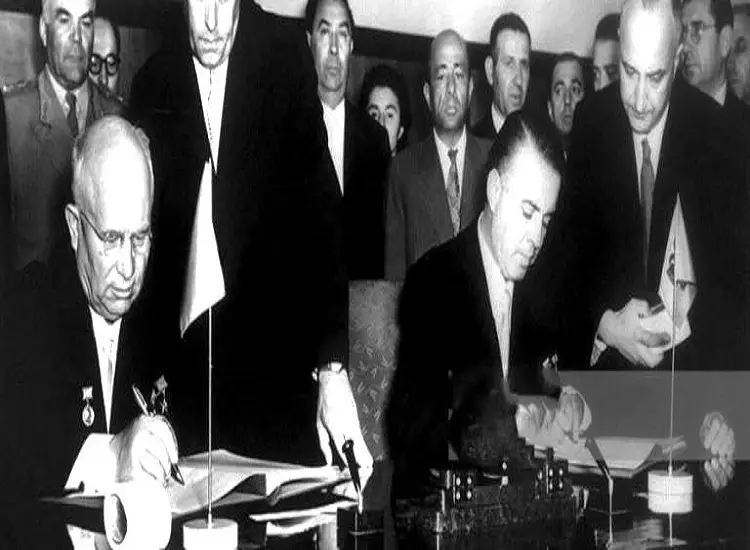
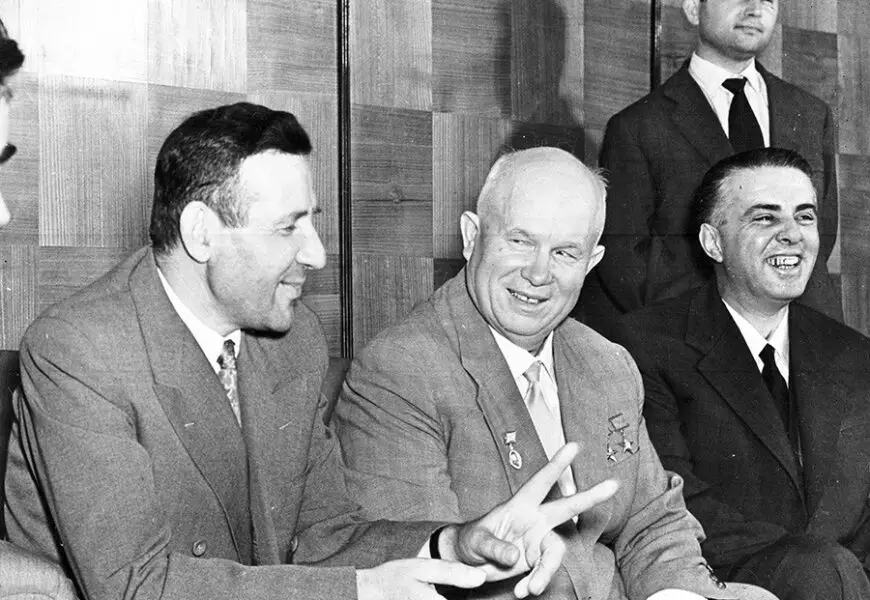
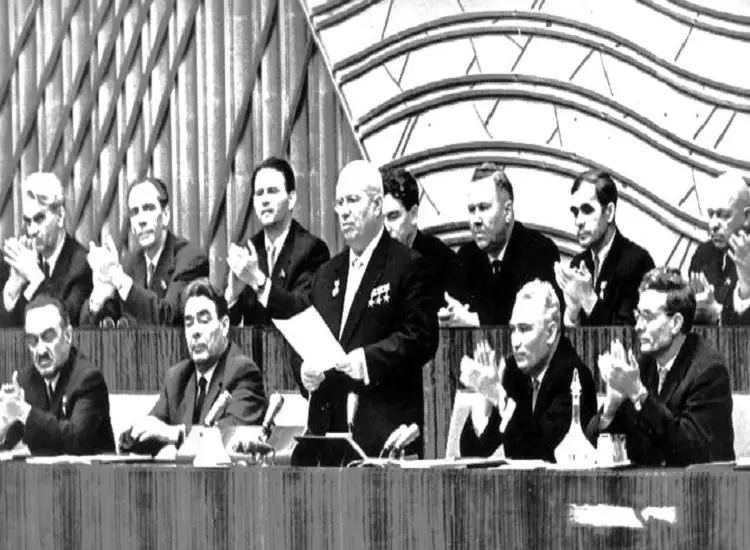
Memorie.al/ During his report at the Congress of the Communist Party of the Soviet Union on October 17, 1961, Khrushchev denounced the pro-Stalinist tendencies of the Albanian government and demanded the removal of its current leaders, Enver Hoxha and Mehmet Shehu. Khrushchev even accused them of having misunderstood the term of de-Stalinization. The clash of statements between Moscow and Tirana led to the great and final rupture with the Soviet Union.

Since mid-1960, Soviet-Albanian relations had significantly worsened, especially after October 1961. The Bucharest Conference in June 1960 was expected to be dominated by the conflict between the Soviet and Chinese communist parties, but the Albanian party played an important role as Beijing’s sole supporter. Immediately after this, Albanian leaders thwarted a coup d’état, which, according to them, was backed by Moscow. As a result, Moscow and its followers began to reduce trade relations and aid to Albania.

According to Khrushchev, the Albanian Communist Party had twice refused Soviet offers for talks in August 1960. Meanwhile, according to the Albanians, Khrushchev had said in October 1960 that he would treat Albania like Yugoslavia. During the Moscow conference of communist parties in November 1960, the Albanian delegation again fully supported Beijing. Thus, Hoxha denounced Khrushchev in spectacular terms. According to Khrushchev, Hoxha and Shehu had refused talks for the third time at this conference.

Gjithashtu mund të lexoni

“When Haki Toska asked Alizot: ‘Do you have Maupassant’s “Bel-Ami”?—he replied: ‘I have it, but did you bring your wife with you? Because that is a dangerous book, since…'” / The unknown history of the famous Gjirokastra bookseller.

“Gjyla Leci from Buçaj, Tropojë, has an escaped husband, Isuf Leci, and brother-in-law, Shaban; subsequently, her sister-in-law also escaped to Yugoslavia with her 4 sons…” / Decision of the Commission for Internment and Deportation, year 1967.

At the end of 1960, all Soviet credits, and probably those from other Eastern countries to Albania, were canceled. Moscow began demanding that Albania pay its previous debts in 1961, debts that were scheduled to be paid in 1970. In late 1960, the Chinese bought more than 100,000 tons of grain for Albania. Throughout 1961, Albania began efforts to be considered part of the Chinese camp. Meanwhile, in January of the same year, the Soviet Union (according to Tirana) had withdrawn a group of technicians, implying that it would later withdraw all of them.

At the party congress in February ’61, Hoxha firmly reconfirmed his pro-Chinese position and publicly announced that he had uncovered an attempted coup (without directly accusing Moscow of supporting it). According to the Albanians, Khrushchev had declared that the Soviet Union would stop all aid to Albania. In April 1961, the Chinese had agreed to give Albania economic aid in the amount of $125 million. This is the same amount that had been promised earlier but was canceled by the Soviet Union and other Eastern countries.

In May of that year, a show trial against “spies and traitors” was held in Albania, which was in fact an anti-Soviet demonstration of force. This was accompanied by the evacuation of the important submarine base in Vlora, the expulsion of Soviet and Albanian military attachés, the expulsion and withdrawal of several Soviet military advisers, the sending home of almost all Albanian students (civilian and military) from the Soviet Union and other Eastern countries, and a drastic decline in trade between the two countries.

In the following months, there is evidence of a large influx of Chinese military and economic advisers to Albania, as well as the continued import of a large quantity of Chinese grain by Albania, despite the difficult food situation in China. Above all, this showed that China was emerging as the only source of foreign aid for Albania.

The Cult of Personality

During his report at the Congress of the Communist Party of the Soviet Union on October 17, 1961, Khrushchev answered the rhetorical question of whether it was necessary to attack Stalin and Stalinism “so openly.” “It was absolutely necessary. In the interest of good relations between the party and the people, of economic development, and of the Soviet position in the world,” he said. In this context, he emphasized that the political course of de-Stalinization “had not been fully understood” by the Albanian leadership.

According to Khrushchev, the Albanian leadership’s opposition to de-Stalinization could be explained by the fact that they themselves used methods of the cult of the individual. He dwelt heavily on the mistakes of the Albanian leaders and, furthermore, declared that “all the bad things that existed in our country during the time of the cult of the individual were being manifested in the worst form in the Albanian communist party.” Later in the congress, on October 27, 1961, Khrushchev took the conflict with Albania to a new phase by openly demanding the overthrow of the Albanian leadership.

He considered them incorrigible Stalinists and accused them of purging party leaders who had supported Khrushchev’s ideas. He said: “To put an end to the cult of personality of Shehu, Hoxha, and others would essentially mean for them to give up their commanding posts in the party and the state, but they have no intention of doing this. But we are confident that a time will come when the Albanian communists and people will have their say, and then these people will answer for what they have done.”

During the five weeks between the Soviet party congress and the final breakdown of Soviet-Albanian relations (on December 3, 1961), events unfolded very quickly, as predicted by the course of the congress. On November 1, the Albanian party published an editorial describing Khrushchev as a liar, fraudster, intriguer, and anti-Marxist.

In this context, in a speech delivered on November 7, Hoxha, continuing his accusations against Khrushchev for blackmail and blockade, contrasted the figure of the current Soviet leader with the role of Stalin as a friend and protector of Albania.

Hoxha insisted that Stalin’s merits were far greater than his weaknesses. He accused Khrushchev of using the issue of Stalinism to eliminate people he didn’t like and said that Khrushchev was blatantly creating a cult of his own personality./Memorie.al
ShareTweetPinSendShareSend
Previous Post

"Laze Thanasi agreed to cooperate with the Sigurimi (Albanian State Security) and signed the statement, but when he returned to Dukat, he..." / The unknown story of the anti-communist group that escaped by submarine from Karaburun.

Next Post

“I consider it utterly undignified that your commission for reparations at the Peace Conference has refused my proposals and presence, as…!” / The letter from Esat Pashë Toptani to Pašić, dated January 20, 1920, is revealed.

Artikuj të ngjashëm

Memorie.al
Dossier

“When Haki Toska asked Alizot: ‘Do you have Maupassant’s “Bel-Ami”?—he replied: ‘I have it, but did you bring your wife with you? Because that is a dangerous book, since…'” / The unknown history of the famous Gjirokastra bookseller.

February 9, 2026
“Gjyla Leci from Buçaj, Tropojë, has an escaped husband, Isuf Leci, and brother-in-law, Shaban; subsequently, her sister-in-law also escaped to Yugoslavia with her 4 sons…” / Decision of the Commission for Internment and Deportation, year 1967.
Dossier

“Gjyla Leci from Buçaj, Tropojë, has an escaped husband, Isuf Leci, and brother-in-law, Shaban; subsequently, her sister-in-law also escaped to Yugoslavia with her 4 sons…” / Decision of the Commission for Internment and Deportation, year 1967.

February 9, 2026
“From the prisoners of Bulqiza, the poisoning at the Elbasan Metallurgical Plant, and the explosive in Lezha, to the accident in Zall-Bastar, where people died…”! / The unknown events of 1979–’80, where 55 people died! (Facsimiles with names)
Dossier

“From the prisoners of Bulqiza, the poisoning at the Elbasan Metallurgical Plant, and the explosive in Lezha, to the accident in Zall-Bastar, where people died…”! / The unknown events of 1979–’80, where 55 people died! (Facsimiles with names)

February 7, 2026
“When I saw the Marxist-Leninist books and the series of Enver’s works and said to Alizoti; you have quite a lot of these, he…”?! / The rare testimony of Dritëro Agolli about the famous bookseller of Gjirokastra.
Dossier

“Alizot Emiri was a respected man throughout all of Gjirokastra, and everyone – young and old alike -knew him and his family, because…” / The testimony of Prof. Muzafer Xhaxhiu about the famous bookseller of the stone city.

February 9, 2026
“Refije Hana Malaj (Koculi), 90 years old, born in Shkozë, Vlorë district, residing in Tirana, is the wife of Qazim Koculi, a former exponent of Balli Kombëtar (The National Front)…” / Decision of the Internment-Deportation Commission, the year 1967.
Dossier

From the Macaj families of Mirdita, Runa of Tepelena and Xhindole of Lushnja, to Beçi of Përmet, Papa of Saranda, and Alliu of Kruja… / Who were the well-known “reactionary” families that were interned in 1967?

February 10, 2026
“When I saw the Marxist-Leninist books and the series of Enver’s works and said to Alizoti; you have quite a lot of these, he…”?! / The rare testimony of Dritëro Agolli about the famous bookseller of Gjirokastra.
Dossier

“When I saw the Marxist-Leninist books and the series of Enver’s works and said to Alizoti; you have quite a lot of these, he…”?! / The rare testimony of Dritëro Agolli about the famous bookseller of Gjirokastra.

February 9, 2026
Next Post
“I consider it utterly undignified that your commission for reparations at the Peace Conference has refused my proposals and presence, as…!” / The letter from Esat Pashë Toptani to Pašić, dated January 20, 1920, is revealed.

“I consider it utterly undignified that your commission for reparations at the Peace Conference has refused my proposals and presence, as…!” / The letter from Esat Pashë Toptani to Pašić, dated January 20, 1920, is revealed.

“Historia është versioni i ngjarjeve të kaluara për të cilat njerëzit kanë vendosur të bien dakord”
Napoleon Bonaparti

Publikimi ose shpërndarja e përmbajtjes së artikujve nga burime të tjera është e ndaluar reptësisht pa pëlqimin paraprak me shkrim nga Portali MEMORIE. Për të marrë dhe publikuar materialet e Portalit MEMORIE, dërgoni kërkesën tuaj tek [email protected]
NIPT: L92013011M

Na ndiqni

  • Rreth Nesh
  • Privacy

© Memorie.al 2024 • Ndalohet riprodhimi i paautorizuar i përmbajtjes së kësaj faqeje.

No Result
View All Result
  • Albanian
  • English
  • Home
  • Dossier
  • Interview
  • Personage
  • Documentary
  • Photo Gallery
  • Art & Culture
  • Sport
  • Historical calendar
  • Others