

By Zhani Ciko
Memorie.al – I first met or, more precisely, saw Dhimitër Shuteriqi up close around 1958, when I was a student at the “Jordan Misja” Artistic High School in Tirana and the school sent us to give a concert at the Writers’ and Artists’ Union, whose building at that time was where the “Kujtim Spahivogli” Experimental Theater stood a few years ago, next to the National Theater. At that time, I was in the high school orchestra as a violinist, and I have the impression – or so it seemed to me – that after the concert ended, Professor Dhimitri made the connection by asking: “Is this the son of the Cikos?” A few years later, around 1962–1963, I was again with the school orchestra to give another concert at the Writers’ Union – to be honest; I don’t remember on what occasion it was organized.
I played the violin, while Bebi Kristidhi accompanied me on piano, and the pieces we performed were foreign. At the end, as far as I could tell from the teachers’ attitudes toward me, I received some positive assessment regarding my interpretation of the scores we played there, and naturally I was pleased and happy about that. But I was even happier when, after the concert, Professor Dhimitër Shuteriqi came over and complimented me at length. Among other things, I remember as if it were today that he said: “I am very pleased that Albanian violin has progressed so much, and even more so with foreign pieces. I will tell your father, Mihal, about this.”
A few days later, we were notified that I, along with my parents, should report to the apparatus building of the Central Committee of the PPSH – I think Doctor Kristidhi called us, telling my father that we had to go there urgently. To be honest, that put all of us in a state of anxiety and a kind of fear, because no one was called to that building for anything good, and until we learned the real reason we had been summoned, we were frightened as a family.
It was Tefik Çaushi who received us – he covered art and culture in the Central Committee apparatus – and he told us briefly that it had been decided that I would go to Austria for studies, to further perfect myself on the violin. This was happening because the Austrian Minister of Culture himself had come to Tirana those days; he had been present at the concert I gave at the Writers’ Union and after hearing me, he told those accompanying him that he was immediately ready to grant me a scholarship to continue my studies in the relevant schools of Austria.
Apparently this had gone all the way up to Enver Hoxha, who had approved it, and so the alarm was raised and we were urgently requested to prepare the necessary documents. But even though we managed to prepare the documents as required by the order from “above,” my going to Austria was not meant to happen, because in those days a student or doctor who was specializing in Austria – I think his surname was Gjini – requested political asylum and never returned to Albania. This put the high leadership on alert, and Mehmet Shehu ordered that no Albanian pupil or student should go abroad for studies or specialization anymore.
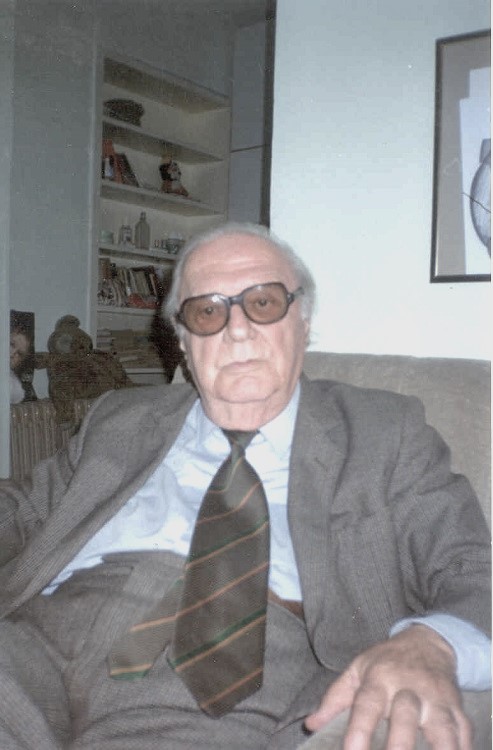
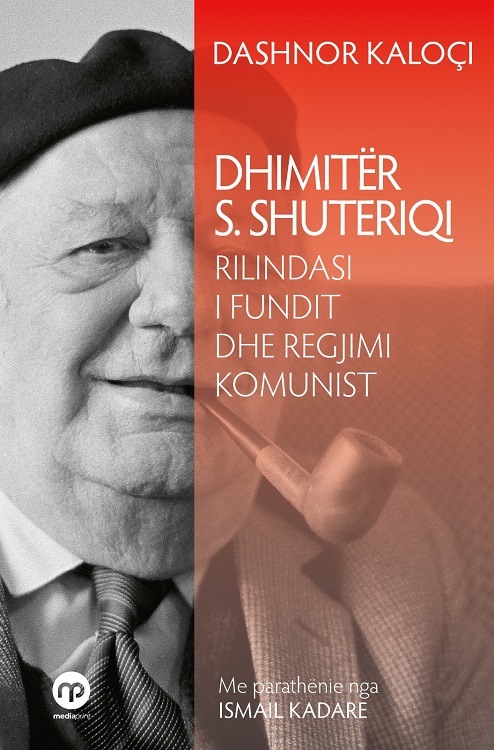
Not to dwell too long on this episode, let me return to the figure of Dhimitër Shuteriqi, whom at that time we – my fellow artists and intellectuals from various fields, in our social circle – discussed and rated with superlatives. Thus, for us, Dhimitër Shuteriqi was the one and only intellectual in the sphere of art who was fully equipped with all the proper and, of course, contemporary knowledge. This opinion was unanimous among all of us, because Shuteriqi belonged to the French Left, and he seemed to me, or I imagined him, as Louis Aragon. For us, Shuteriqi was a reference point of a European intellectual, and among other things, this was also conveyed by his external appearance – his chic attire and, of course, his gentlemanly demeanor in every setting where he appeared.
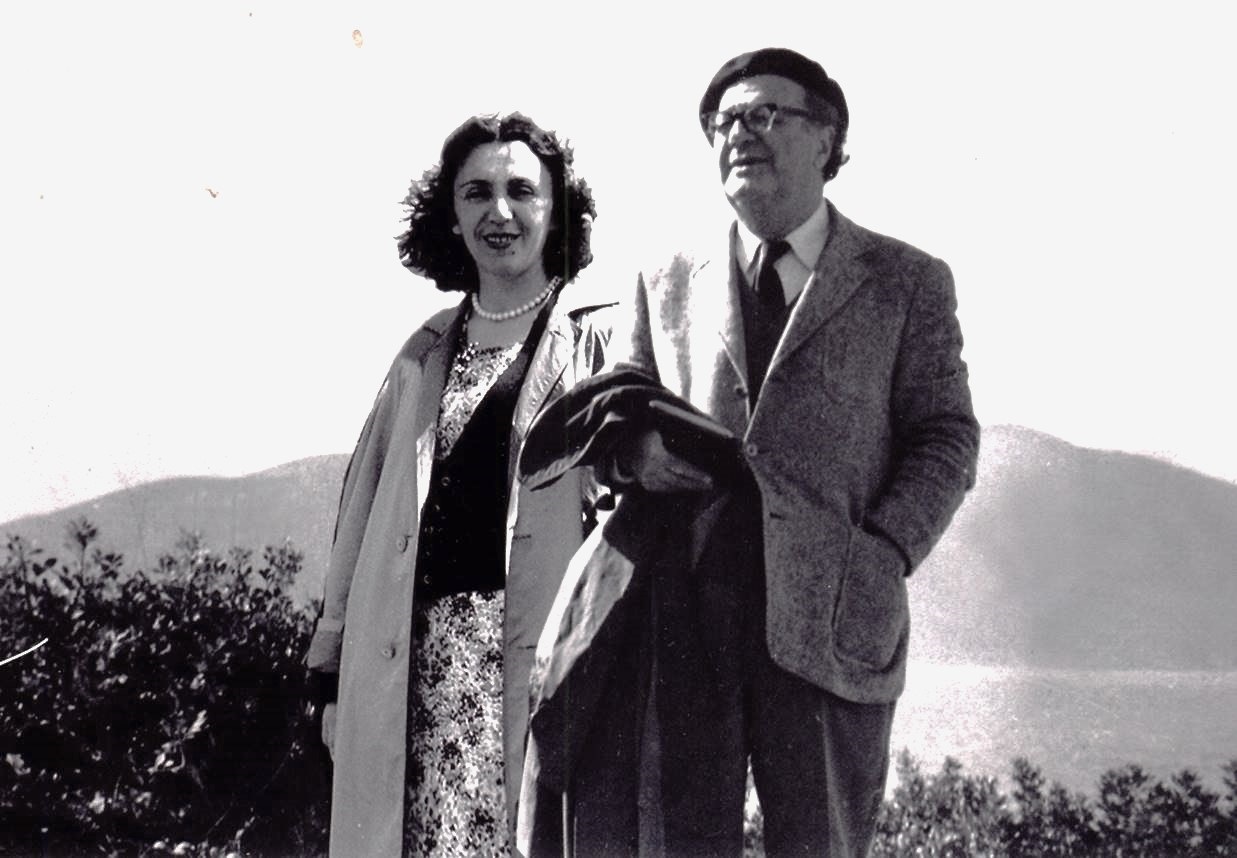
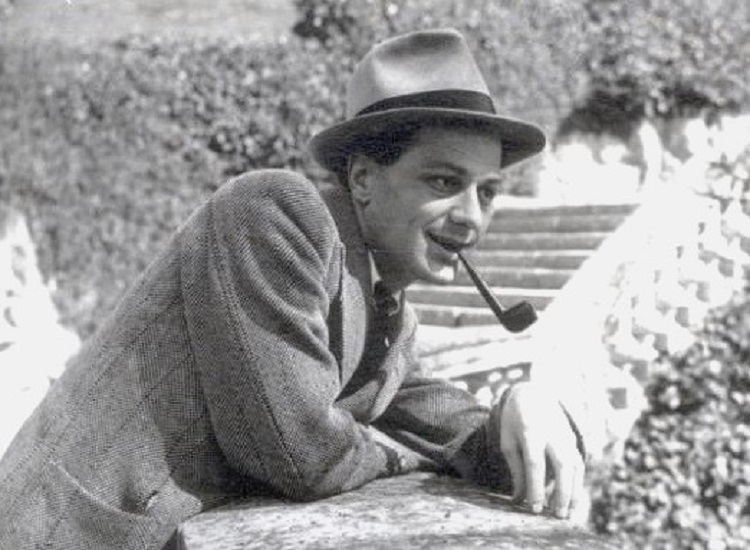
At that time, the professor would sometimes wear a homburg hat and at other times a beret, which made a great impression on us. Later we learned that when he wore the homburg, his affairs were somewhat in order, while the opposite – when he wore the beret – meant he had quite a few problems. I don’t know how true this is, but this was our opinion and observation about Professor Shuteriqi at the time. In this context – that is, the admiration we had for Professor Shuteriqi – I began to read him, because I really liked him as a creator, mainly those stories with themes from antiquity. One of these stories, for example, was “The Last Days of Gjorg Golemi,” which I discussed with my uncle, composer Nikolla Zoraqi, and librettist Zef Zorba, with the idea of turning it into an opera, but this was not achieved for various reasons. Only an overture was written, and that was it.
Later, the opera “The End of the Golems” was realized and staged, with a libretto based on Shuteriqi’s story. But this opera, too, was immediately banned, because it had “problems” in its libretto: the final act ended with an Orthodox priest somewhere in a village near Berat, who tied himself to the bell rope and swung from it to give the alarm signal for the villagers to flee, because the Turks were coming. This – the finale of the opera’s libretto – was deemed very wrong because: first, the positive hero was a priest (which was considered heresy and had never happened in socialist realist literature), and second, the figure of Skanderbeg did not appear at all.
So, the opera did not end with Skanderbeg’s glory, since the events took place after his death. In reality, the finale of that opera – with the priest swinging from the bell rope (his lifeless body struck by Turkish arrows), giving his life to save the villagers – was something extraordinary, an artistic discovery that we valued highly, but those who held the fate of that opera in their hands did not think so, and as I said, it was immediately banned. So, if we analyze the finale of that libretto, it shows that Shuteriqi was not a denier of the past, and certainly he was very upset by the opera’s banning, but he did not open up or discuss it with anyone, as he was very cautious in that regard.
Around 1967, I was appointed to the Opera as a violinist in its orchestra, and later I was made artistic director of the Opera and Ballet, even though I was no more than 24 years old. At that time, just after I had been appointed to that position – which was considered and was quite important – Dhimitër Shuteriqi invited me, along with Ksenofon Dilo, on a tour he was planning to make in southern Albania, to Gjirokastër, Sarandë, etc. We went with pleasure, and his aim was to hear our opinions, specifically on the musical and figurative sides – Professor Dilo was among the most renowned, as he had also studied in Prague and was dean of that department at the Higher Institute of Arts in Tirana.
During that trip, which lasted several days, when we stopped in Gjirokastër, Shuteriqi went to the Party Committee and inquired about two writers, Koço Kosta and Pano Çuka, who had come under attack from the party organs there in their district, and Dhimitri wanted to help them. As far as I understood, this had been one of the main purposes of that trip to the cities and districts of southern Albania. This began with the stop in Fier, where Shuteriqi went to the Party Committee to inquire about composer Simon Gjoni, who had been exiled to that small oil town of Ballsh for “re-education within the bosom of the working class”! As far as I recall from that time, it was said that only Shuteriqi’s intervention and interest saved him from prison bars.
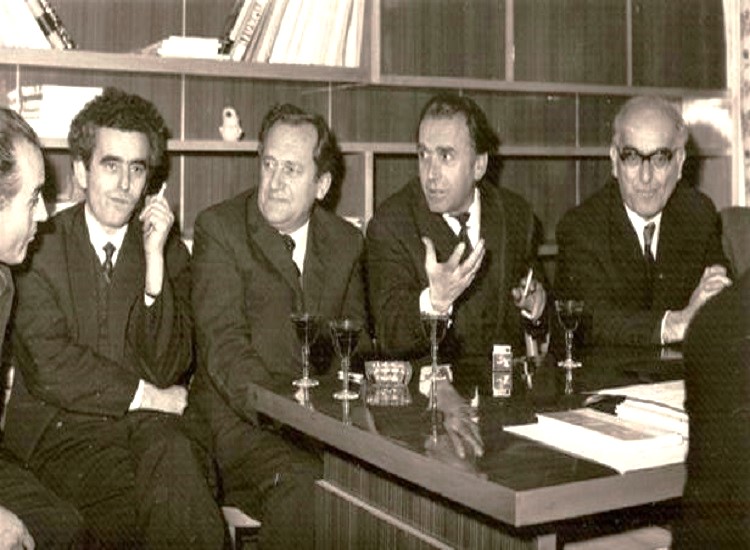
Professor Shuteriqi, using his stature and, of course, his position as Chairman of the Writers’ and Artists’ Union of Albania, was doing his utmost to save those writers and artists from the punishments or sanctions that had been given to them or were expected to be given, since, among other things, at that time Tirana was almost emptied of writers and artists, who, according to orders and instructions from “above,” had all been sent to the provinces – some for “re-education” and others “to get to know life within the bosom of the working class or cooperative peasantry.”
From all the conversations we had with Shuteriqi during that trip, I saw that he was open-minded and listened to us attentively, approving and supporting us in some opinions that, it must be said, were somewhat advanced for the time. After this, Dhimitër Shuteriqi, from his position as head of the Union, co-opted me into the Writers’ and Artists’ Union, even though I was very young and lacked the proper experience. At this time, around 1971, the plenum of the Writers’ Union on Instrumental Music was held, where I came to the conclusion that: “Folk tradition in our music could not be considered realized, because that would only mean adding a musical instrument as a folk instrument, or texts like ‘Qaj Minushi’ [Cry, Minush], etc., but what mattered was the spirit of the people that it should carry…”!
So, this was more or less my conclusion at that Plenum, where two currents clashed: conservatives and liberals, let’s say. Dhimitër Shuteriqi appreciated and supported my discussion, and specifically, in his speech, he cited and used for the first time the word “Pluritradicional” (Pluritraditës) – a term that had never been heard from anyone before. So, in short, he strongly supported me, and this was no small thing for me, at that young age and in that leadership position at the Opera Theater. At the beginning of January 1973, shortly after the 11th National Song Festival had ended on Radio-Television, a team from the apparatus of the Central Committee of the PPSH came to the Writers’ and Artists’ Union, and we were called to a meeting held in the office of Hamide Stringa, who covered the Music section in the Union.
And there, among other things, I was also accused of “deviation from folk tradition.” This, in a way, was not only a blow against me but also indirectly against Shuteriqi, who had supported me shortly before at the Union Plenum on Orchestral Music. In parentheses, I want to say that Shuteriqi had the habit, at every meeting or work session he attended, of keeping his own minutes, writing very quickly in small script, noting the key things that were said or raised there. And as soon as that accusation against me was articulated, Shuteriqi immediately proposed and requested a five-minute break and stepped out of the meeting, returning a few minutes later with ten thick notebooks (16-lek each, 64 pages) that he had fetched from his office.
He opened them and read several passages from the minutes he had kept at meetings where I had spoken – passages that did not at all correspond to the accusations being made against me about “deviation from tradition”! What Shuteriqi did was lifesaving for me. The same happened at another meeting held at the Opera, where they wanted to “sink” me, but only Shuteriqi’s word saved me from the accusations of “liberal spirit” or “deviation from tradition,” etc.
A short time later, on January 9, 1973, Enver Hoxha gave a speech at the Presidium of the People’s Assembly, where he launched the first accusations against the 11th Song Festival on Radio-Television. After that, we were called to an urgent meeting at the Writers’ Union, headed by Shuteriqi, where they communicated what “Comrade Enver” had said, which, understandably, hit us like a bomb.
After this, from his position as head of the Union, Dhimitër Shuteriqi said: “Comrade Zhani Ciko is tasked with preparing a report on the 11th Festival, and he will also have the assistance of Dritëro Agolli.” I remember that one of the reasons Shuteriqi used as an argument to the natural question of “why is this task assigned to Comrade Zhani Ciko” was, according to him: “Zhani is more impartial.” So, since I was not part of the festival, as such I would judge more fairly what had happened there. That task Shuteriqi assigned me was certainly something that carried a great deal of responsibility and was extremely delicate, because I was caught between two fires: on one side was Enver Hoxha’s speech, which had anathematized the 11th Festival, and on the other side were the creators – writers, artists, poets, composers, musicians, scriptwriters, etc. – about whom opinions and judgments had to be given in that material I was tasked with.
Nevertheless, I wrote the report, and after finishing it, I gave it to Dritëro Agolli to review; he made a few adjustments on the political side, about which I knew nothing and had written nothing. After that, a creative discussion was organized at the Writers’ and Artists’ Union, but the main leaders of the Union, like Shuteriqi, were absent, and I don’t even remember if Dritëro Agolli was present at that meeting. At first, we didn’t notice the absence of the main Union leaders at that creative discussion, but as the meeting progressed, we clearly understood why it was being done. A large number of non-professional creators – indeed, mediocre and incompetent ones – had been invited; they had complained all the way “up” to the Central Committee of the PPSH, through anonymous or signed letters, accusing their colleagues who had participated in the Festival, as well as the organizers directly involved – from Radio-Television, the Union leadership, the Ministry of Education and Culture, etc., etc.
These people gave a greater impetus – if not the main one – to what happened afterward with the writers, artists, poets, composers, and all those involved in organizing that festival, where, as is now known, some ended up in prisons and internments, while others were dismissed or removed from their professions, ending up in “re-education within the bosom of the working class or cooperative peasantry.” And one of them was me: I was removed from the Opera and the capital and sent to Patos, where I worked for years at the Culture House of that small town. I don’t know – and I never asked Shuteriqi, even after the 1990s when things changed – why he assigned me that task, namely preparing that report on the 11th Song Festival on Radio-Television.
But I have never doubted from that moment, nor in the years after, nor do I doubt now, that he – Shuteriqi – tried for the best, regardless of the fact that things did not go as he might have imagined, because they went from bad to worse. But when I analyze that event, I say and believe this: apart from what Shuteriqi said publicly at that meeting when he assigned me that task – that is, “as an impartial person” – he chose me primarily as a professional, that is, a connoisseur of music, and thinking that I was not indoctrinated or perhaps somewhat liberal by nature. And thus I would write a report with mild criticism, unlike what someone else, who was the opposite of my nature, might do. So, Shuteriqi’s aim was that by assigning me this task, he might save whatever could be saved from that storm that was being prepared to strike the 11th Song Festival – but unfortunately, neither Shuteriqi nor anyone else had the strength to stop what, as we know, happened afterward.
Despite all that happened with that festival – including my own departure from Tirana and Shuteriqi’s subsequent dismissal – we maintained our friendship with each other, and when I returned to Tirana, we visited each other as families. Even when my father, Mihal, had a birthday anniversary organized, around 1982, we invited Dhimitër Shuteriqi as well, even though he was seen as “part” of the so-called “liberal group in art and culture,” led by Todi Lubonja and Fadil Paçrami. With Shuteriqi and his wife, Mynever, we kept our friendship and happened to meet from time to time until the professor passed away. / Memorie.al