

By ELSA DODA
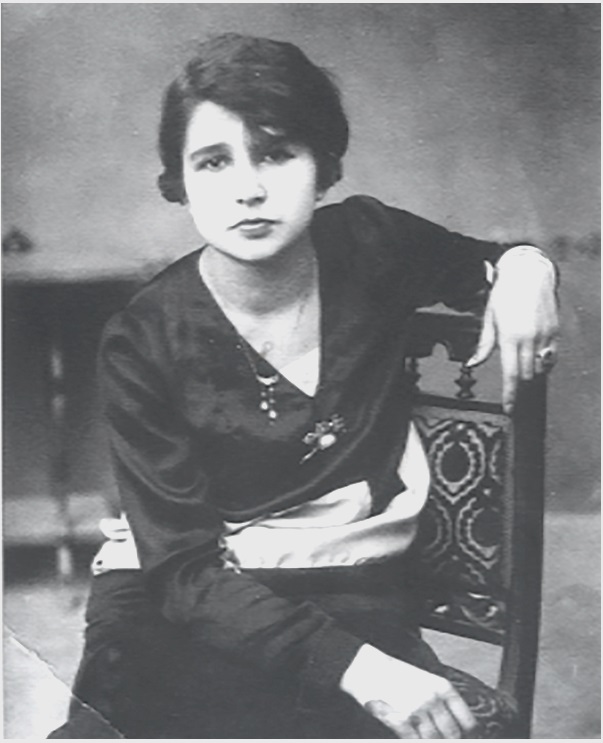
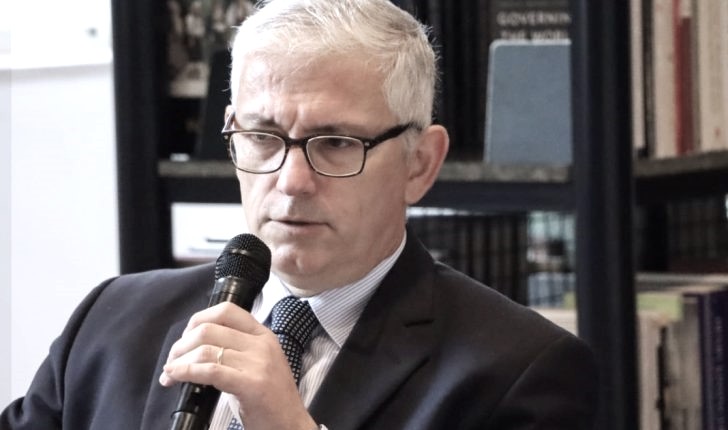
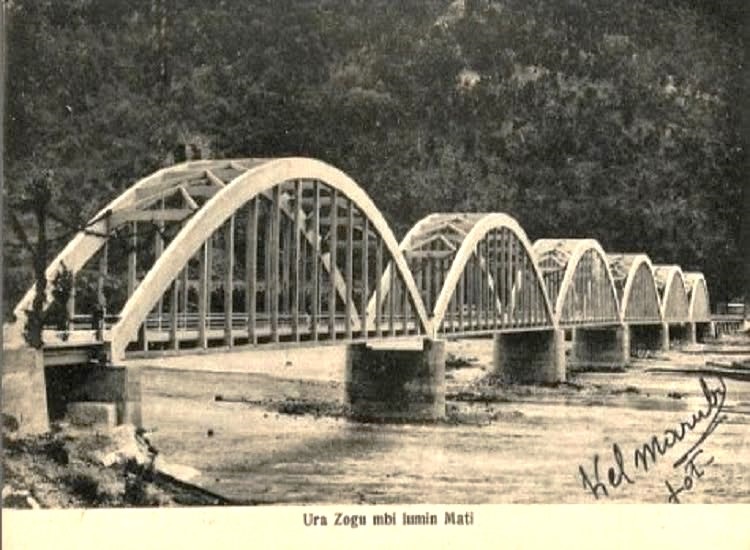
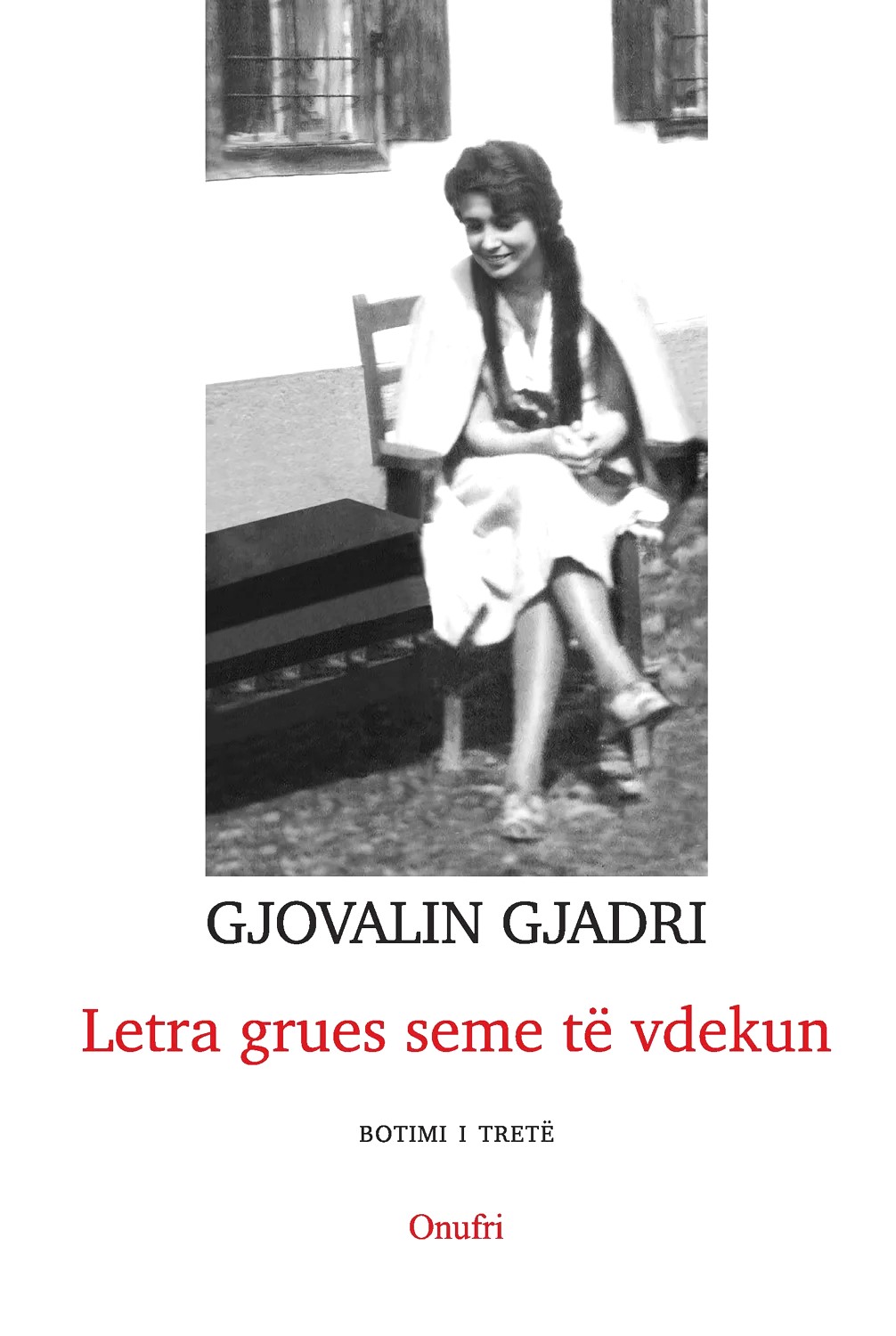
Memorie.al / “Letters to My Dead Wife” is one of the most interesting publications of recent times. The book is authored by Gjovalin Gjadri, the prominent engineer, especially known for the construction of the Mati Bridge, who wrote it in German, and it came translated into Albanian by Ardian Ndreca. The presentation of this book took place in the premises of the National Library in Tirana, where relatives and friends became part of that rare amorous swirl. Engineer Gjadri lost his wife, Zejnep, at a very young age from the disease of the last century, tuberculosis, and began to write letters to his dead wife, in German, with a unique and artistic style. In an exclusive interview, the translator of the work, Ardian Ndreca, tells us more about the story and the characters, while also giving a message: “The only eternal bridge for all those who believe not only in the afterlife but in love is the true love between two people.”
Why did the author decide to write in German?
The author, deeply shocked by the death, the premature loss after only a few years of marriage – 7 years – thinks that the depth of his suffering and the intimacy of the moments they lived, happy and bitter, cannot be accessible to just anyone; therefore, he writes this book in the German language and publishes it in few copies, which he distributes to a few friends, his former students, and former colleagues and friends of his life companion in Austria, Vienna.
So, there is a selection that has to do with the indirect communication the author prefers; secondly, it has to do with the very nature of the text. It is a text that has an autobiographical element, going beyond the biography or the simple chronology of a person who suffers and loses his beloved. Many people in everyday life face tragic events, but these tragic events do not produce literary works. This event is such that it leads the author to write a literary work.
The author is an engineer – not that there are no engineers who have never written literature before – but for the first time in his life, Gjadri has the courage to entrust to writing the dearest thing to him: the experiences, the painful achievements of his life. With this impetus, dictated by pain, he sits down and writes a book that he completes in a short time.
What accompanies him throughout the writing of the work until its delivery to the reader?
He is accompanied by the memory of love for his wife, and on the other hand, the feeling that a great injustice has been done to him, the author of which is difficult to find. Being a person rose with faith in God, he makes God guilty for what has happened to him, and a part of the book is a dialogue, a request for justification that he asks of God: why have You done this? It is an ancient theme that we encounter in Seneca, Cicero in philosophy, Kant, and contemporary literature and essay writing.
He seeks reunion with his beloved, in another dimension beyond the physical one, asking God at least now that this injustice has happened to me, I want from You to be united with the woman I love, to be reunited with her as soon as this segment of the taxis of life is over. He accepts his suffering, since the good thing about suffering is that it ends, along with life, in order to meet his wife again.
On the cover of the book, an original painting is also visible, which a female colleague of Zejnep had made for her in Vienna in 1927. All this discourse is articulated in a literary-philosophical manner and through rare formulations. He says: “I am unable to raise my son, as I have lost all habitus, the abilities to give something good, since I no longer have something good to give.”
Fortunately, something very good had remained within him – the very fact that he feels the presence of such a deep love for his wife. He is not a man finished by suffering, but a man who is purified, where through suffering he continues to remember his wife, but not in memory, the figure, the memory, but within himself. The most real thing of ours is our ego – says Descartes – then comes the body. This is more or less the philosophical and literary journey of the letter.
What is Gjadri’s only enduring bridge?
Unfortunately, one of his most famous bridges was blown up by the Germans during the Second World War – the Gomsiqe Bridge, built with a technology ahead of its time for the era. Material bridges that connect two shores unfortunately reach a moment and break, but the only eternal bridge for all those who believe not only in the afterlife but in love is the true love between two people, and further, respect and friendship.
What message does this book convey?
Today there is talk of domestic violence, which is usually male against female, where society reacts very slowly. Reading this book makes you understand that violence is something very primitive and that love goes beyond conflicts. Those conflicts that are thought to be resolved through violence come only from a barbaric mind.
Toward the woman, the wife, being also a mother, there should be a double respect for the creative role she has; on the other hand, it is the issue of love. I think every woman would have dreamed, if she had the misfortune to die before her husband, of having such a book written for her, or even two such lines, a single love letter, not a whole work, which shows that she was loved by a person with his whole being.
Why does the author decide to publish it under a pseudonym?
This reason is always linked to indirect communication, which is linked to the pseudonym. The writer communicates with the reader not directly; this is realized through the pseudonym, so it is not me, but “G. Maranaj,” and it is not the Albanian language, but a foreign language, in order to preserve and transfer the authority of my word through a filter.
Many times we use this method in everyday life; for example, parliament uses a spokesperson, the minister uses a press office, etc. Here we are dealing with literature, and this communication does not remove the values of literature, but at that moment it is a journey that tries to preserve intact the spiritual side and the intimacy of feeling.
Why did you decide to translate it into Gheg?
I translated it because the first translation is incomplete, and into Gheg because, if the author himself were to be resurrected and had written it in the Albanian language, he would undoubtedly have written it in Gheg. Gheg has stylistic ability, depth in vocabulary, and depth of thought. It has all these instruments. It tired me, but I did it with passion.
Gjadri’s “Letters” brought to our cultural world the phenomenon of intimate writing
Persida Asllani: – “Letters to My Dead Wife” is a specific phenomenon in the Albanian culture of the book. It was written and published in German by an Albanian masculine heart that breathed culturally in the mental and literary world of the former Austro-Hungarian Empire, a space as state-related as it was worldview-related, which survived its own geopolitical dissolution as a memory and a strong cultural and spiritual entity.
That is why we preferred to hold the presentation of its new and complete translation into Albanian precisely in the environment of the German-speaking reading hall at the National Library, as if to mark with a spatial metaphor the dual nature of this emblematic text, as emblematic as its author, the engineer was for entire generations.
While publishing this intimate epistolary under the anxiety of the pseudonym “G. Maranaj” during 1943, he was constructing the theater of life and death under the dark light of lost love and closing his letters with the humility and grandeur of deep pain, affirming to the memory of his dead wife that “I owe it to you to honor you by keeping mourning.”
Written in the German language and connected by hundreds of threads to the vibrations of the literature of the depths of the soul – a defining feature of Austrian literature – as well as to philosophical meditation on life and death, and especially on inalienable love, Gjadri’s “Letters” brought to our cultural world the phenomenon of intimate writing and of the reflective search for oneself and for the beloved (and lovable) being.
Could he have brought them in Albanian? Difficult, but not impossible! Difficult insofar as the cultural and discursive environment of the 1940s had not yet gained the flexibility of affirming personal intimacy. Difficult insofar as the “husband’s wailing” was “grief” and silence. Difficult insofar as the need of their author was the affirmation of the deepest feelings of despair in a language where this type of writing and expression was not being founded but continued as a tradition.
But not impossible! The Gheg translation by the philosopher Ardian Ndreca constitutes for me the best proof: elegance, depth of thought and expression, impressive rhythm and musicality. This translation returns Gjadri to the Albanian reader and to Albanian culture. It returns the charm of the language and the strong tones of thought, albeit through despair and mourning, in order to lead them, as its author also hoped, to the Albanian masculine affirmation of an “eternal love and in mourning.” / Memorie.al