
Part One
Memorie.al / “The War for Shkodra” according to the memories of Edith Durham, a century and some years ago, translated into Albanian by Xhevat Lloshi, is undoubtedly one of the most valuable books at the Book Fair in Tirana. These memories of the famous English lady come for the first time complete in Albanian from the Publishing House “Argeta LMG”/
The Memories of Edith Durham
The fall of Shkodra made a different impression on the foreign legations in Cetinje. France and Russia openly expressed their joy. King Nikola’s action undoubtedly came as a result of the deliberate delay caused by these two countries.
– “You cannot overcome the fait accompli!” [fr. accomplished fact] – someone said to me.
– “Except by committing another one,” – I cut in.
Some among the diplomatic envoys were furious, and everyone knew that this would require laborious and responsible work, while they were preoccupied according to the role they played. The Great Powers had achieved only one thing. Through their very powerful representatives, they had given Montenegro to understand that no acts of violence should be committed in Shkodra.
Any such step would bring about the immediate occupation of Cetinje by Austrian armies and a landing of joint forces. As a result, the authorities allowed only their most civilized battalions to take possession of the city and maintained order for the most part with Slavic volunteers who had come from abroad.
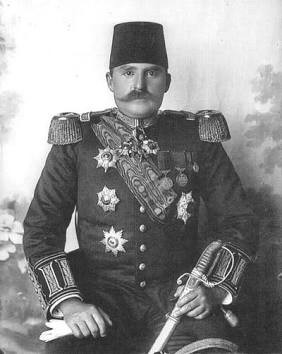
Prince Danilo entered the Castle of Shkodra on April 24, raised the Montenegrin flag there and received the keys from Esadi, who immediately set off for Tirana with the Turkish armies. But no ceremonial entry into the city took place. The King was to do this later. On April 25, together with Mr. Lok of “The Times” newspaper, I set off for Shkodra, with great concern for the condition of my friends. We took two large sacks of bread and several crates of other food.
Shkodra, deserted, from which I had departed nine months earlier, had a pitiful appearance. The inhabitants were half bewildered by terror and the misery of hunger; they were terrified of remaining in the hands of Montenegro. “If only we had known that help was near,” many people said, “we could have stayed one or two days longer.
We had heard that ships had arrived, but after days passed one after another and no help was coming, we thought they would be Greek or Bulgarian ships with more other troops.” In truth, the population knew nothing of what was happening. Montenegrin soldiers had already begun telling Catholics that they would soon learn how to make the sign of the cross.
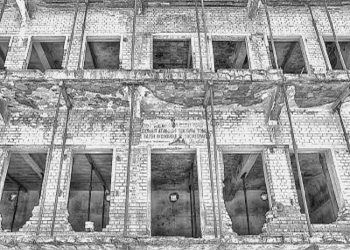
The destroyed houses and the wounded people confirmed the indignant declarations of the consuls and the archbishop that the civilian population had been specifically chosen as the object of bombardment. The schools, the churches, the hospitals and the consulates, all had been targeted more than the castle or the barracks. They had all been hit and some had been destroyed.
There was no possibility that all of them had been hit by chance. Heavy fire had been concentrated against the British consulate. Not only had it been hit and Mr. Suma wounded, but both the house opposite and the one beside it had been completely destroyed. Nothing remained of the Cathedral’s former splendor. The roof had been riddled, the saint’s statue and the tower had been burned, and large holes had been opened in the floor by the shells.
Forty shells had hit it, fifteen of which were of very large caliber. Almost two thousand people had taken shelter there with all their belongings, believing they would be safe, but they had fled in panic. Some had been wounded and many people had lost all their belongings in the flames. The monastery, too, had been destroyed, two monks had been killed and one had been wounded.
Poor old Marko and his family had remained alive with the help of the Archbishop’s brother, who had kept them supplied with food. But they were sick and could barely hold themselves up, just like many others. In the poorest houses people lay on the ground, in the last stage of misery. As food they had used everything: turtles, frogs, hedgehogs and radishes. During the last twenty-eight days very few rations had been distributed.
Many people had eaten more or less poisonous plants (especially very bitter roots of a type of lily), or had tried to make bread with flax seed. These had caused acute diarrhea. I saw a man fall and die in the street, while I myself fed a child reduced to a skeleton.
The Montenegrins had given flour to the heads of the Catholic and Muslim communities; in the first days they distributed it for free. The people waited in long lines in front of the depots. By now all food reserves were in the hands of the Montenegrins and nothing could be imported. I gave all my friends and neighbors from my own fund. Poor old Marko was desperate.
His garden had been taken over by Turkish soldiers as a place for barracks huts; four such wooden barracks had been erected. Bimbashi, when he fled, had given Marko a signed letter stating that, for the damage caused, all the things left in his garden remained his property.
But Montenegrin troops poured in and when I arrived they were looting with haste, tearing down the barracks, breaking the windows and tiles, shouting like wild beasts. I ordered them to leave, and since they refused to obey, I went straight to the camp and complained to the officer that his men were behaving worse than the Turks and were making a very bad impression on the population.
A guard was posted, but it was soon removed. The soldiers came again and began again. Poor Marko did not speak from fear, he was almost crying when he saw his belongings disappearing. I drove them out a second time and threatened that I would go to the general about this matter.
Petar Plamenac arrived, appointed governor of Shkodra. It was April 28. The Montenegrin cage met me on the street and told me that Petar wanted to meet me as soon as possible. I went straight to the Montenegrin consulate, where he had been installed. “I congratulate you,” – I said to him. “During the war you had told me that you had your eye on this post. You achieved your goal.” Petar seemed worried.
– What! – he cried. – You, you who know the difficulties of the situation, congratulate me?
– If you succeed, the greater the difficulties, the greater the honor, – I said.
– Mon Dieu! Mon Dieu! – cried Petar. – What can I do? I drafted the entire agreement with Esadi, I determined all the conditions of surrender. I believed that this would be the crowning of my life and that I would be able to withdraw from state life, closing my career with honor!
His idea of closing his career seemed laughable to me, when it was known that Petar had not even turned forty. I did not utter a word.
– I called you, – he continued, – to ask for your help. (“What the devil do you want,” I said to myself). I beg you, since you understand this people, to take a house somewhere and stay to help me.
I told him that I hoped to stay a little, but I still had no definite plan. — The situation, – said Petar, – is very complicated.
– Very, – I cut in.
– What would you advise me to do with the highlanders?
– Nothing, – I answered. – Do not get involved with them in any way, if you do not wish to have troubles. They all hate you.
– I am of the same opinion. We agree. – Then quite suddenly, and unable to contain himself, he began:
– You – you – you, just one little word from you, just one word and these highlanders will follow you. Speak a word for us, one little word, – I beg you, I implore you!
Many things were running through my mind. For the third time Montenegro was begging me to get it out of the difficult situation it was in. No more than two years earlier, I had been asked to help get the betrayed highlanders back across the border.
Now Petar was humbly begging me to help him put them back under the Montenegrin heel. I do not know if I have ever felt such contempt for a living being as I felt at that moment for Petar.
– Everything is in the hands of the Great Powers, – I said (hoping they would act quickly). – And who am I? I can do nothing.
– You, of course, understand, – said Petar, trembling when the Great Powers were mentioned, – that we have taken Shkodra and will remain here?
– Completely, – I answered. – I have heard this already many times.
– And that we would sooner leave the last drop of our blood here than withdraw.
– Completely so. I have heard this already for several months. – Petar trembled again.
– Can I count on your help? – he asked.
– Without assuring me that the same justice will be applied to Muslims, Catholics and Orthodox, expect nothing from me. It is a matter on which I do not yield. Until now during the war I have seen only follies, corruption and barbarity. You may not be aware of the behavior of Stanko Markovic in Podgorica. He wanted people to die of hunger…!
– Ah, mon Dieu! mon Dieu! – cried Petar. – You do not know how sorry I am about this thing. You do not wish to have trust in me because of the behavior of a beast, of an animal like Stanko?
– I, too, have heard what has happened in other regions. And you must admit that Stanko is the governor of the largest city in Montenegro. If such is the justice of a large city, what kind of justice can be expected in distant provinces? I have heard enough about these things. – Petar seemed desperate. He opened a box and took out some papers.
– Look, – he told me, – you yourself will appoint the officials here./ Memorie.al
Continues in the next issue