By Fatmira NIKOLLI
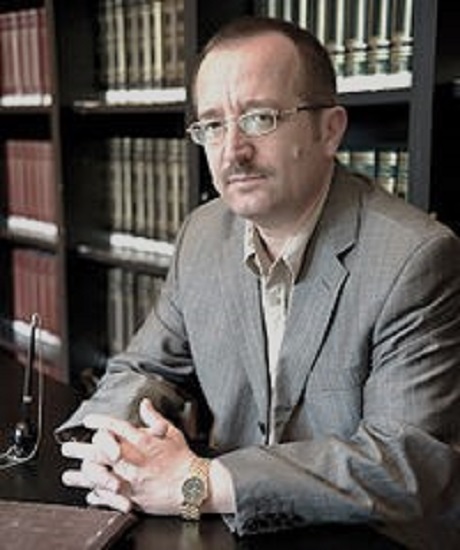
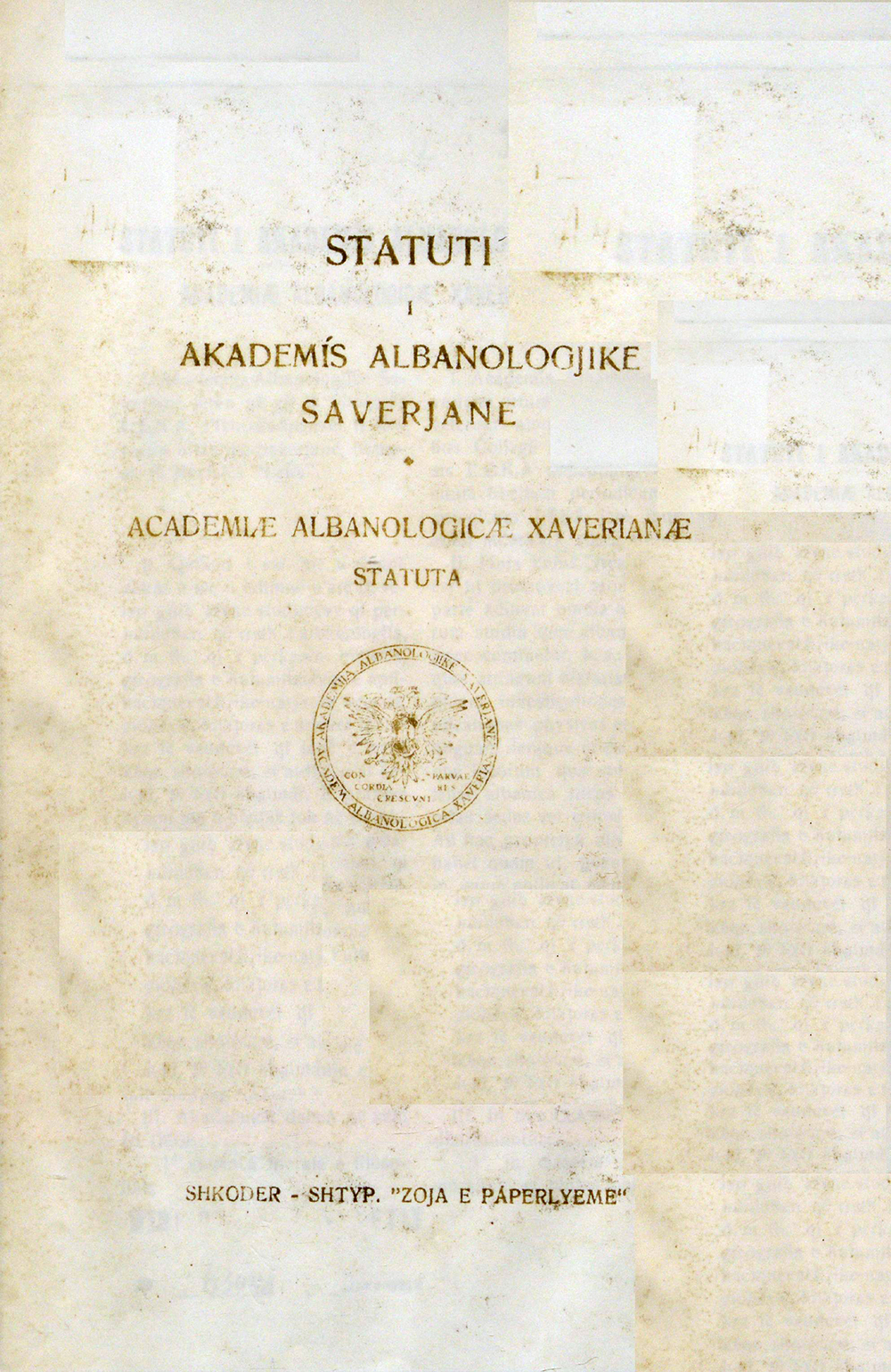
Memorie.al / About 90 years ago, an Academy of Sciences had been founded in Shkodra. The turmoil of war, and especially those of the post-war period, had knowingly erased much of what it had achieved, starting it over from scratch with its re-establishment in order to arrive at the Academy we know today. Through a lecture held at the Academy of Sciences of Albania, Prof. Aurel Plasari has shed light on the founding of the Saverian Albanological Academy in Shkodra in 1937. In nearly two hours, he brought to attention a historical event that, for the variety of Albanological studies and for the time when it was raised and functioned, was very significant.
THE SAVERIAN ALBANOLOGICAL ACADEMY OF L.E.K.A AS A BEGINNING
Professor Plasari took care to point out that the year 2017 marks the 80th anniversary of a historical event left almost in the dark. “The founding of a first academic institution of Albanology under the name ‘Saverian Albanological Academy’ in Shkodra in 1937 has been left in the dark not in terms of the results achieved, or not achieved, of the Academy in question.”
Almost like humanity being born carrying “original sin,” this Academy was left in shadow by the burden of prejudices, since it came as an initiative of an environment centered around the institution that in the first decades of the 20th century was known by the name “Saverian College,” while after World War II, the name was turned into a “stain.” Plasari began his lecture with the unfolding of the history that led to the Academy. “In the middle of the 19th century, at a time when Albanians were part of ‘Turkish Albania,’ the Jesuit Fathers opened in Shkodra their first seminary.”
He recalled that the Jesuit Fathers founded in 1871 in Shkodra a printing press with Latin letters. They called it Typographia Immaculatae Conceptionis B.M.V., while the name in Albanian was adapted time and again until it ended up from “Shtyp. e Xoies zanun pa mkat t’ rriedhshem” to Shtyp. “Zoja e Paperlyeme.” According to Plasari, it was the only printing press in “Turkish Albania” after the destruction of that of Voskopoja in 1769.
“From the jubilee publication Kolegja saverjane nder 50 vjetët e para [The Saverian College over its first 50 years] it results that, from its founding until 1928, 411 works were published in Albanian, Latin, and Italian. For those years this figure has rightly been assessed as ‘a record.’ In 1891 the Jesuit Fathers set about publishing a periodical, known as ‘Elçija’ and later ‘Lajmtári i Zêmërs s’Jezu Krishtit’; this too was the only periodical in the Albanian language in ‘Turkish Albania,'” said Professor Plasari.
He stressed in this connection that from that “palestra of young Shkodran writers,” as it has been considered, there also emerged some of their greatest names, while in 1908 the same Fathers founded the so-called “Vepra Piore,” a kind of publishing entity for books not only religious but also literary; the first publishing house in “Turkish Albania” as well.
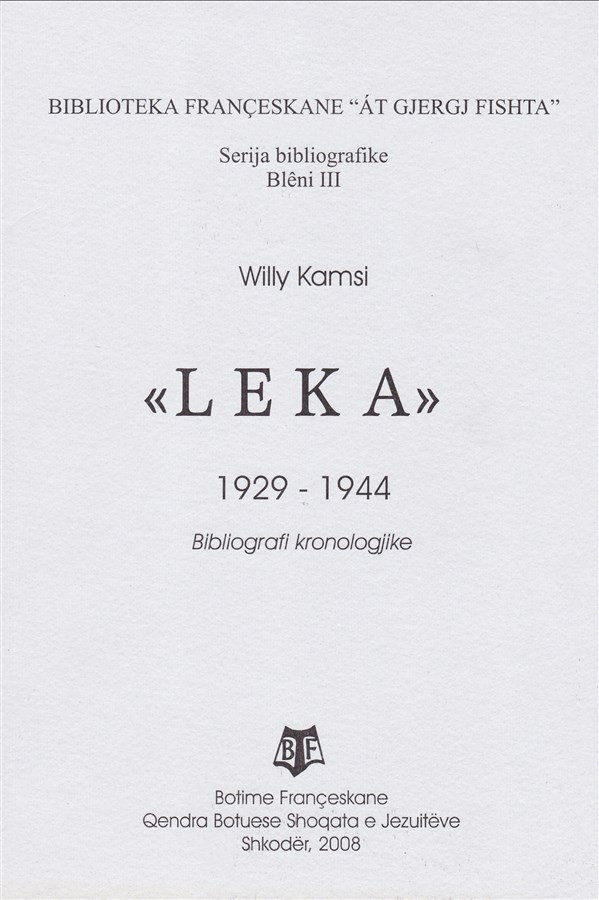
Plasari points out that the year of the 50th anniversary of the Saverians in Albania (1928) was also the year of the founding in Shkodra of an association with a known name, though still little researched to this day. The association, which was named with the initials L.E.K.A. (Lidhje-Edukim-Kulturë-Argtim — Union-Education-Culture-Entertainment), was founded by 38 graduates (former pupils), the overwhelming majority Albanians, of both the Saverian College and of other colleges and schools of the country.
Among the 38 there are only three clerics (one bishop and two Jesuit fathers), while the others are laymen: among these also those of Muslim affiliation. “Teofik Bekteshi, for example, results also as an adviser to the presidency of the Association. The presidency consisted only of laymen. In the list of its founders or leaders, neither Valentini nor other clerics by name appear, while names known for their contributions to the national and cultural movement stand out,” stressed Plasari.
He further clarified that “LEKA” in April 1929 carried out the trial publication, in a “special number.” It is worth noting what draws attention in its Statute — Article 5 of “Chapter I”: “Political action within the Association is categorically excluded.” The monthly magazine of the Association, also with the name “Leka,” began its regular periodic publication in 1930.
NDRE MJEDA AS INSPIRER
“Mjeda had once left the Jesuit Order,” recalls Plasari. He notes further that it had been a quiet and unostentatious departure, probably by agreement between the two parties, as Injac Zamputi has thought. The causes of such a departure from the Order, scholars have discussed, guessing at length, but without being able to untie the knot of the “secret,” he said, adding that from the end of 1929 Ndre Mjeda had settled in Shkodra, at the Saverian College and the Papal Seminary, as a professor of language and literature for the upper classes, thanks to an agreement with the superiors of the Jesuit Order, though with a special status outside the Order: “më vedi” [on his own].
“In an intellectual environment such as that of the Jesuit Fathers, who constituted the majority in the respective Order, the return of a cultural authority like Mjeda, by then a veteran, would raise its weight. Precisely ‘Don Ndreu,’ as he called him, Zamputi described as the ‘inspirer’ of the Saverian Albanological Academy,” points out Professor Plasari in his lecture. When mentioning “Dom Ndreu” as inspirer of the Saverian Albanological Academy, Plasari says that Zamputi did not undervalue the role of Zef Valentini in its founding, as a scholar and at the same time as a capable organizer.
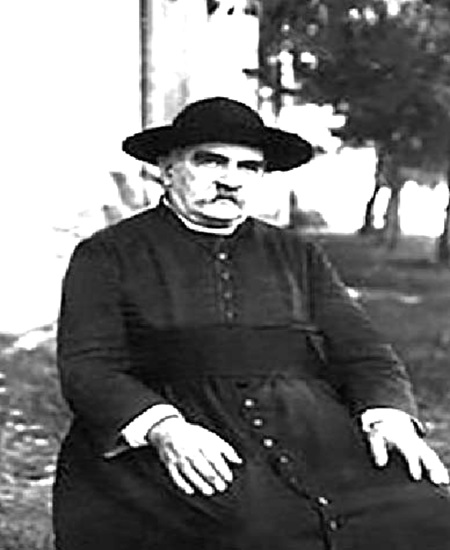
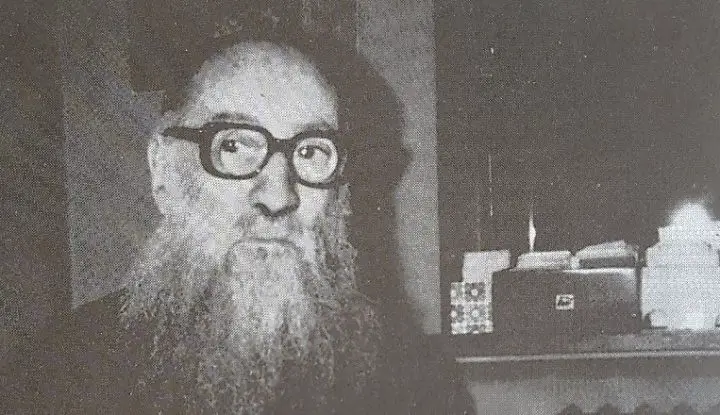
“But in researching the circumstances of 1937 that favored the creation of the Academy by the Saverians, the intellectual relationship between Valentini and Mjeda must be calculated rightly. It was not a question of Valentini as we see him today from widely circulated photographs: with a full beard and no hair left on his head. At that historical moment for Albanian studies, Valentini was only 36 years old, while the 70-year-old Ndre Mjeda was living his last year,” stressed Plasari.
He noted further that this relationship has been testified to by Zamputi when he wrote in his Memoirs: “Dom Ndreu, until his death, was Valentini’s chief consultant…”! That Zamputi testified to the truth is confirmed by Valentini himself, who in 1934 wrote to Mjeda from Italy, for his name day: “I have obtained permission to write to You, as a necessary exception to the strict rules here; but if an exception is not to be made for Shn’a Ndrén and for D. Ndrén, for whom shall I make it? How much love and how much help, and teachings and counsel and expenses and kind words I cannot forget before God, nor can I let people think that I forget them.”
In view of the above, Plasari, who has studied this relationship at greater length through documents, manuscripts, and letters still unpublished, makes known that; “for this position of Ndre Mjeda as ‘inspirer’ of the Saverian Albanological Academy, a pause is needed on his profile, which is of interest here.
In Albanian culture, Mjeda’s profile as an Albanologist – a specialist in several linguistic disciplines ranging from paleography to comparative linguistics, of ancient and medieval history, of archaeology, of folklore studies, etc. – has remained edged into the shadow of his poetic work, that one being far more popular.
MJEDA’S LETTERS AND LETTERS TO MJEDA
Plasari from the rostrum of the Academy of Sciences, full of listeners, academicians, and scholars, points out that Mjeda’s dedication as a researcher can be recorded from the end of the 19th century, since in 1893 he wrote to Nikolla Naço, chairman of the “Drita” society in Bucharest, that he had a plan to write a “History of Albania.”
In view of the above, his correspondence with Gustav Meyer (1892–1893, 1895–1896) testifies to his research of his youth, even if only indirectly. “… il mio desiderio sarebbe di fondare colà [a Scutari], col consenso dei Superiori, una scuola di perfezionamento nella lingua albanese,” Mjeda, only 25 years old, had written to the great German Albanologist, at a time when Albania was still “Turkish,” said Plasari.
The professor recalls other valuable works of Mjeda as well, when he mentions him as one of the six founding members of the “Komisia Letrare Shqype” [Albanian Literary Commission] (1916–1917), convened for the selection and establishment of a standard of the Albanian language. Further, in a lecture that takes the form of a genuine study deserving publication in a book, Plasari says: “His aforementioned return as a teacher at the Saverian College and the Papal Seminary from 1930 made possible an even broader involvement of Ndre Mjeda in Albanological studies.
He also recalls the “surprise” of Mjeda’s emergence as an authority in paleography, perhaps the first Albanian scholar to introduce into this field the advanced methods of the time for the reproduction and commentary of old documents of the Albanian language, and not only. He pointed out that until two weeks before he died, Mjeda had his mind on his own works: on 15 July 1937 he wrote to Zef Valentini in Italy, instructing him that the photographing of Budi’s work Rituale romanum should be done in “grandezza naturale” [natural size].
Injac Zamputi had the opportunity, from 1931 until Mjeda’s death, to have daily relations with him. According to Plasari, one of the “privileges” that the young Zamputi enjoyed was to knock almost every morning at the door of “Dom Ndreu’s” room and accompany him along the many lanes that led to the teaching hall in the building of the Seminary, where the xhakonë [young Jesuits] and seculars joined during Mjeda’s lessons.
Plasari quotes Zamputi in his Memoirs about those years: “The six years I spent in his shadow and company have been worth more to me than two universities, because he, besides in the linguistic and literary field, had a very broad horizon, which included all the humanistic fields, so much so that, for this, one could call him encyclopedic.” This was, then, the personality who in 1937 would become the “inspirer” of the founding of the Saverian Albanological Academy, said Plasari./ Memorie.al