By Dashnor Dervishi
Part One
Memorie.al / We arrived in Rome on September 14, 1988. The four-year period of my stay in Italy would turn into the most difficult and most important test of my activity in foreign relations. Rome, in the years that would follow, would become the main reference center of the entire social, economic, and political spectrum of Albanians in foreign relations. Italy turned into the “Far West” of Albanians. More than any other time, in that period the saying became real that “all roads lead to Rome.”
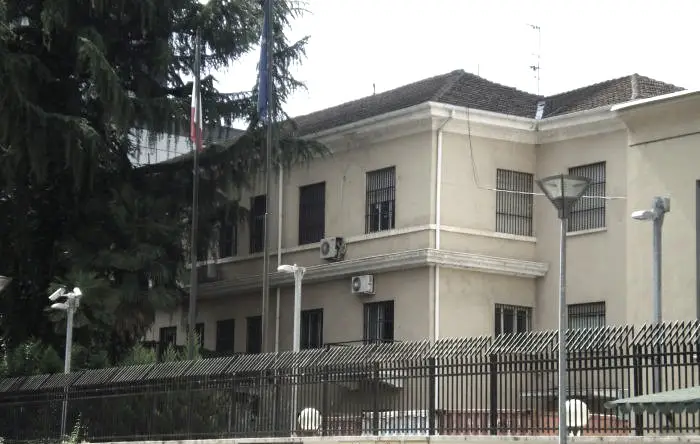
The events that were changing Europe had knocked on Albania’s door much earlier than in other Eastern countries. In the Italian Embassy in Tirana, the 6 members of the Popaj family had remained besieged since December 12, 1985, and there was no sign of unblocking the situation.
Important historical events had also occurred in Italy. The crises under the influence of the Cold War, which had shaken public opinion with the discovery of right-wing paramilitary structures known as “Gladio,” with the kidnapping and murder of Aldo Moro, and the stories with the “Red Brigades,” had given way to great historical compromises, creating for the first time in Italy’s history a governing coalition between the Christian Democrats of Arnaldo Forlani and Giulio Andreotti and the Socialists of Bettino Craxi.
In democratic Italy, the winds of even deeper reforms were blowing, which would bring the storm of prosecutor Di Pietro. Despite the crises and frequent changes of governments, which had become a normal phenomenon, several qualitative changes had occurred in Italy.
In diplomatic circles at that time, the story circulated about American President George Bush, who experienced a change of government during the days of his visit to Italy. To his surprise at how such things could happen so often in Italy, Craxi replied that if we had known, they would not happen to us.
Italy was considered Albania’s main partner, but the event at the Embassy with the Popaj family had almost frozen relations, although artificial efforts were being made to ignore it, pushing the solution through “fatigue” with the passage of time. And in fact, fatigue had produced its effects.
Before departing for Rome, I held several meetings with the Italian ambassador in Tirana, De Andreis, within the framework of acquaintances and reciprocal exchange of information. He had replaced the Italian ambassador, Francesco Carlo Gentile, who had experienced the beginning of the event and felt a victim of this situation.
At Ambassador De Andreis I saw fatigue and nervousness. He expressed not only his own nervousness but also that of the members of the Popaj family, with whom lately he could hardly communicate. From all sides there was a great lack of trust. On the other hand, trust had also been lost in finding a way out, which at first glance seemed to be desired by everyone.
I say at first glance, because subsequent developments showed that the event with the Popaj family was only the prelude to the events that would occur later. Apparently, what began in Albania gave way to painful changes in Romania, while Albania would be limited to soft transitions, only with embassy stories.
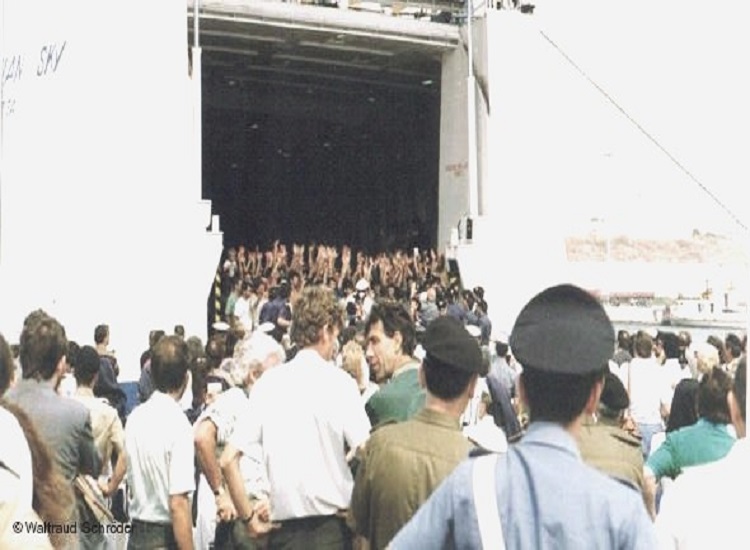
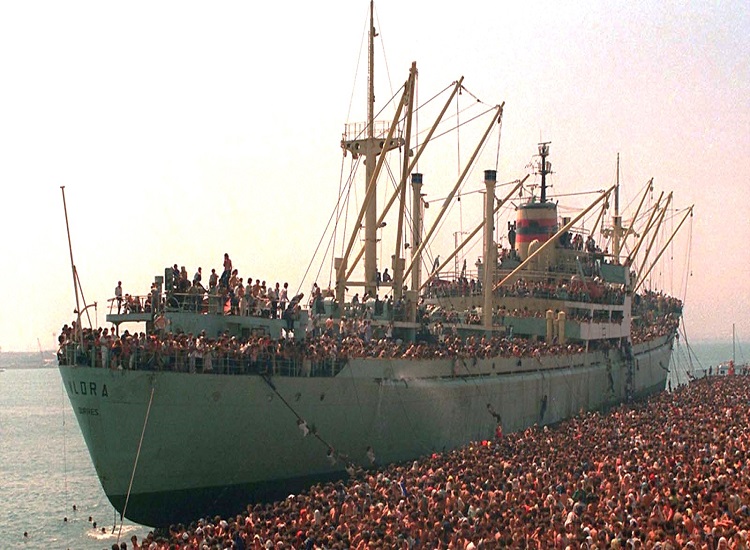
The departure of the Popaj family in May 1990 would be followed by the massive influx into embassies on July 13 of the same year and would end with the spectacular departures of more than 5,500 citizens on 6 ships toward the shores of Italy.
The Popa Sisters, Maria and Zhaneta
It is interesting to note the fact that, in parallel with the event at the Italian Embassy in Tirana, despite the massive influx not only of the first six ships but also of several ferries and other vessels toward Italy, relations between the governments that succeeded one another in Tirana and the Italian one not only did not experience any crisis, but on the contrary, they were characterized by a spirit of understanding and cooperation that came increasingly growing, until March 1992. It seemed as if we were experiencing the great developments and changes in Albania together, both countries.
A few days before I was to present my credentials to the President of the Republic, on September 16, I arranged a meeting with the Director of State Protocol at the Ministry of Foreign Affairs, Franco Ferreti, to familiarize myself with the ceremony procedures. With Ambassador Ferreti we were old friends, as we had been together in Mexico. He had been transferred to that post a few days before I too received my appointment to Italy.
At the Italian Embassy in Mexico, when we were at a joint activity, the same event occurred as in Tirana. A group of Mexicans forcefully entered the Italian Embassy to put pressure on the Mexican government to fulfill their demands. Ambassador Ferreti returned urgently to the embassy and without any hesitation requested the intervention of law enforcement forces to remove them. The event was closed without fanfare.
The ceremony of presenting the letters of credence to President Francesco Cossiga took place on September 27, 1988. The meeting and conversation with Cossiga was quite warm and friendly. At that meeting he would express a certain affinity with our country, “which is located beyond the Adriatic, whose shores are sometimes visible from those of Brindisi; the proximity and shared history we have make us feel like cousins, regardless of temporary coolings,” said Cossiga.
Later, throughout my entire stay in Italy, the President never addressed me with the title of ambassador, but always with “cugino” [cousin]. Meetings and conversations with President Cossiga became frequent. He did not hesitate to receive every delegation that came from Albania, even when protocol did not include the level. Likewise, he made two consecutive visits to Tirana.
In the early beginnings, the Minister of Foreign Affairs was Giulio Andreotti. While my most frequent interlocutor was Bruno Bottai, Secretary General of the MFA, an official with authority in the MFA, not only as an old representative of the Christian Democrats but also for the well-known name he had inherited from his family, Bottai, and with a long and important diplomatic career.
Bottai followed the Albanian issue more closely, and we met with him whenever we had important communications. Over time, with the changes of governments, these officials were replaced by others. While as a permanent point of contact remained Pietro Ago, a specialist in the MFA who also covered Albania in the Directorate of the Balkans. He too came from a family known in Christian Democratic circles.
An interesting figure who came from left-wing circles was Senator Serri, a member of the Foreign Commission in the Senate, who had participated in the first delegations that had been to Albania immediately after the incident at the Embassy and followed with a certain concern and preoccupation the situation for its unblocking, contributing ideas and proposals, sometimes as his own and sometimes as suggested, but which over time would increasingly fall out of play.
In my meetings of the first 6–7 months, it is understandable that alongside the exchange of views and efforts for the development of friendly relations and cooperation between our two countries, the blocked situation at the Italian Embassy in Tirana stood like a shadow at every step, and the aim of finding ways of solution was a primary objective.
The solution could not be achieved only with schemes or with the exchange of proposals and counter-proposals, which had reached almost complete exhaustion and from time to time returned to where they had started, going around within a vicious circle.
The initiative for taking the first step toward reciprocal concessions and decision-making also required a more cooperative and trusting environment and atmosphere, required more tolerance, but also guarantees for more perspective for the liberalizations that would come later, without “wounding” the sensitivity of interference in internal affairs.
In October 1988, the situation had reached this formulation:
The Albanian side: was ready to equip all six members of the Popaj family with Albanian passports and escort them to the airport, to leave by plane toward Italy.
The Italian side: from fear and suspicion that the Albanian authorities might arrest the family members as soon as they left the territory of the Italian Embassy, and also under pressure from the Popaj family, did not accept this variant, but demanded that they be escorted under the cover of diplomatic immunity, accompanied by embassy diplomats, from the exit from the embassy to boarding the plane.
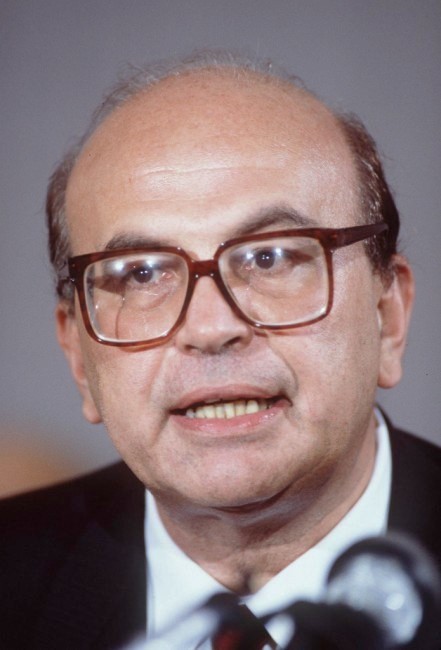
On November 16, 1988, I managed to secure a meeting with Bettino Craxi, who was the General Secretary of the Italian Socialist Party. In coalition with the Christian Democratic Party, it had several ministers in the government, including the Ministry of Foreign Affairs.
During the conversation, in addition to expressing good will for cooperation as two neighboring countries, the issue of the embassy and the Popaj family was also touched upon.
I proposed that he make a visit to Albania, and on this occasion he could become the protagonist of unblocking the situation and the initiator of the beginning of a new phase in relations between our two countries. He liked the idea and in principle approved the proposal.
In my presence he telephoned Giulio Andreotti and asked for his opinion. He, apparently, did not give a definitive answer and left a meeting with him to discuss it better. He told me he would notify me later about the decision he would make. / Memorie.al
Continues in the next issue