






By DASHNOR KALOÇI
Part Five
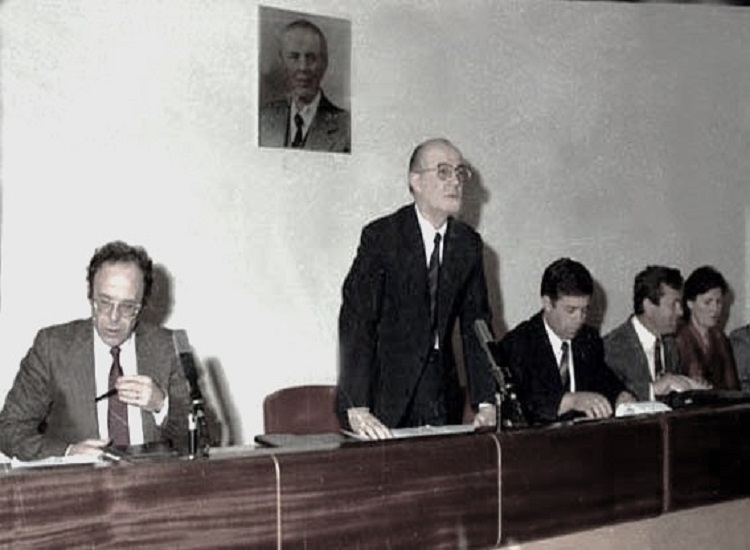
Memorie.al / When not even a week had passed since July 2, 1990, when thousands of Albanian citizens climbed over the railings and walls of foreign embassies in Tirana and entered their premises with the aim of leaving Albania, the high leadership of the Party of Labor of Albania (PPSH), headed by General Secretary Ramiz Alia, held the 11th Plenum of the Central Committee, which held its proceedings on July 6 and 7. Although the agenda was set in three main points, where the one on the development of education in Albania predominated, almost throughout the proceedings of that plenum (especially in point 4, “Miscellaneous”), the event of those days, otherwise known as “July 2 of the embassies,” was discussed and debated. In that plenum, in which all members and candidates of the Central Committee of the PPSH participated, the first secretaries of the party committees of the districts, ministers, main cadres of the sector of education, culture, science, economy, leaders of the organization of the Union of Working Youth of Albania, from the apparatus of the Central Committee of the PPSH, Radio-Television, ATSH, etc., there were absent Nimet Cani, Ali Vukatana, Reiz Malile, Shpëtim Çaushi, Zylyftar Ramizi, Qemal Lame, Zef Loka, Pirro Kondi, and Hekuran Isai, who for several days had been “in the field,” “managing” the embassy event.
After the opening of the meeting by Ramiz Alia, the floor was given to the Minister of Education, Skënder Gjinushi, who also held the relevant report, (“On the perfection of the educational system and the further qualitative strengthening of the school”), the main topic of that plenum was the “embassy event,” discussing and analyzing in detail how and why it happened, (“the role of foreign agencies”), up to the tasks that emerged for managing that situation in those hot July days, when over five thousand Albanian citizens from all the districts of the country were located in the internal premises of some of the main embassies in Tirana, waiting to leave Albania.
Besides this, throughout that meeting, but mainly in point no. 4 of the agenda, (which was discussed in the last session), several of the main events that had occurred in various districts of the country during that year were also taken into analysis, such as; the protests in Shkodra in January for the removal of Stalin’s bust; the events in the city of Kavaja where the people of that city clashed with police forces; the massive escapes from the state borders with Yugoslavia and Greece; the massive gatherings in holy religious sites, such as the Church of Shën-Ndout in Laç of Kurbin; the legal permission of religious beliefs and the opening of places of worship; or other problems that were raised for solution, such as; the talks of the international factor for the restoration of diplomatic relations with the USA, the Soviet Union, (the talks held with the Soviet Deputy Foreign Minister in Sofia by Sofokli Lazri); the Kosovo problem; the international pressure for the opening of Albania to the world and its adherence to several international conventions; the privileges of the high leadership of the PPSH and their families who lived mainly in the “Block”; the words that circulated among the people about Enver Hoxha’s family and Ramiz’s relations with Nexhmija; the change of legislation and the penal code; the release of political prisoners; the stamping with passports of citizens who sought to leave as visitors to their relatives abroad; the new economic mechanism; the housing and employment of many additions in all the districts of the country; the giving of land and livestock to the cooperative peasantry; up to the supply of the urban population with basic food products and various industrial goods.
As we will see also from archival documents belonging to the 11th Plenum of the Central Committee of the PPSH, which we emphasize are published for the first time, besides the leadership and some of the high functionaries of that time, several other high figures who continued their political careers even after the 1990s also discussed or were mentioned in that meeting, such as; Skënder Gjinushi, Fatos Nano, Sali Berisha, Rexhep Mejdani, Gramoz Pashko, Spiro Dede, Dritëro Agolli, Ismail Kadare, Moikom Zeqo, Mehmet Elezi, Lisen Bashkurti, Koço Kokëdhima, Ylli Popa, Aleks Luarasi, etc.
Likewise, in the voluminous file of this plenum, of great interest are also those documents that belong to the secretaries of the Party Committees of the districts or the “Information Group” who went to all the districts of the country and documented all the main problems that emerged in the meetings of the basic organizations of the party, where “On the letter of the Central Committee” was discussed, documents that constitute the largest and also the most important part of the file in question. It can even be said to be among the most important of the entire period of the communist regime of Enver Hoxha and his successor Ramiz Alia, since that period of time with the events that unfolded marked the prologue of the fall of that regime.
Likewise, of great interest are also the documents that belong to the last session of that meeting with point no. 4 of the agenda “Miscellaneous,” which constitutes the hottest point of the entire plenum, where the release from duties and retirement of three members of the Political Bureau (Rita Marko, Manush Myftiu, and Prokop Murra) was discussed, even with harsh debates, as well as the release from ministerial duties or other high functions that several other “leaders” had held for years, such as Simon Stefani, Pali Miska, Muho Asllani, Lenka Çuko, Vito Kapo, Pirro Kondi, Jovan Bardhi, etc., and the appointment of “new comrades” in the leadership of the high forums of the Party and State, such as; Xhelil Gjoni, Abdyl Backa, Niko Gjyzari, Kiço Mustaqi, etc. Regarding these etc., we are made known by the documents in question extracted from the Central State Archive (Fund of the former Central Committee of the PPSH), which are published for the first time and with the relevant facsimiles by Memorie.al
REPORT-INFORMATION OF THE FIRST SECRETARY OF THE PARTY COMMITTEE OF THE VLORA DISTRICT, HALIL HASKO, SENT TO THE SECRETARY OF THE CENTRAL COMMITTEE OF THE PPSH RAMIZ ALIA
CONCLUSIONS AND TASKS EMERGING FROM THE DISCUSSION OF THE LETTER OF THE CC OF THE PARTY.
In all the basic organizations of the Party and among the people, the great problems raised by the letter of the Central Committee of the Party were discussed. Each has drawn its own lessons. Today, in the Plenum of the Party Committee of the district, we will discuss together the conclusions we have reached and the tasks that emerge for the future. The process of democratization of the political, economic, and social life of the country expressed in the decisions of the recent Plenums of the Central Committee of the Party is irreversible.
The new complex internal and external situation has placed the entire Party before new tasks and choices. How to understand and how to place ourselves at the head of these situations so that we communists always have the initiative in hand, this is one of the most difficult questions and tasks, this is the key to the success of the Party’s work. This is the object of today’s Plenum.
The broad problematic of the plenums of the CC of the Party, the novelties and developments they bring, were not and are not easy to understand. Their understanding was also made difficult by the continuation with old methods in the Party’s work. To the mobility of situations we did not oppose that dynamism and that agility that was required. New situations are not faced with phraseology and slogans, but with convincing arguments, explanations of the time. The lack of understanding, hesitations and even oscillations that these changes might have to do with changes in the line brought a withdrawal and defensiveness in the Party’s work.
Hostile elements came to life, which initially brought to the fore contingents of deceived people and of low level, especially from the ranks of young workers. At the appropriate moment they came out themselves with openly hostile slogans, denigrating our reality and progress, inciting and arousing hatred for the Party, the people’s power, for the communists, the Party leadership and socialist ideals, and there were those among them who said: “Our time has come.”
During the discussion of the Letter of the Central Committee of the Party, the communists accepted that we were not prepared to face such situations. To the tolerance that democratic changes brought, and even more to the pushing and indiscipline that the enemies intended to cause with the aim of taking power, we did not respond with an attacking and organized Party work. Instead of these, confusion, bewilderment, and even distrust in the future arose.
The criticism of what we have not done well is at the same time the main lesson we draw for the Party’s work. To constantly master situations and place we at their head, however “softened” or harsh or sharp the class struggle may be. Not to surrender positions. Surrender, withdrawal, indifferentism are advantages and positions gained by the enemy.
To the political and ideological preparation of the communists and cadres in these moments served the Party activs that were held throughout the district. In them, many questions and problems that had emerged among the people received answers, which comrade Ramiz Alia treated in the meeting with the first secretaries of the Party committees of the districts in July. The Letter of the Central Committee of the Party was a new generalization of the problems and concerns before which the Party and the people found them in today’s moments.
While all kinds of slanders, slogans, denigrating and hostile rumors were circulating, the Letter confirmed once again the official position of the Party on the consistency in the line and path we have chosen ourselves for the construction of socialism. Alongside the clarification of many ideological, political, economic, and foreign policy issues, it was also a call for readiness and vigilance for the defense of the people’s power, the Party, socialism, and the Homeland.
The Letter further strengthened political convictions and trust among the communists and the masses for the Party’s line and the justice of the decisions of the Plenums of the Central Committee of the Party. The Party organizations criticized naivety, sluggishness, lack of orientation and ideological sharpness, being caught up in the whirlpool of slanders and rumors. During the discussion of the Letter, it emerged that the questions and ambiguities are different and varied but also have common sides, the doubts that we might have changes in the line. One wing is the conservative one, which attacks the Party from the left.
These are people who care about the cause, who care about the Party, but who are not clear and need clarification about the content and aims of the changes we are making. The other wing is the liberal wing that attacks the Party from the right. It tries to break our necks. In the name of welfare and rapid development, it throws out the theses of privatization of the economy, of unconditional enslaving credit, of Party pluralism, etc.
Or if not openly, through the pressure it exerts for the immediate change of living conditions, outside our monetary and material possibilities, it wants the Party to be broken and to deviate from the path of sovereignty, freedom, and independence. Knowledge of such tendencies and trends helps in determining the directions of the work of the basic organizations of the Party in the future. Some things were clarified by the Letter of the Central Committee of the Party, others we will clarify as we work.
The Letter of the Central Committee of the Party serves the further strengthening of the moral-political unity of the people around the Party. The enthusiasm and level with which the 70th anniversary of the War of Vlora, the 47th anniversary of the War of Drashovica and that of the Çeta of Myzeqeja were celebrated were manifestations and a living expression of the unity of the people with the Party and of the steadfastness and brotherly support that the people gave to the Party to lead them on the chosen path for the construction of socialism.
The revolutionary atmosphere created by the Letter of the Central Committee of the Party further raised the patriotic feelings that the people of our district expressed in hundreds of letters and telegrams addressed to the CC of the Party and comrade Ramiz Alia, regarding the Greek territorial claims against our country, where they expressed their anger and deep indignation at these provocative and chauvinist positions.
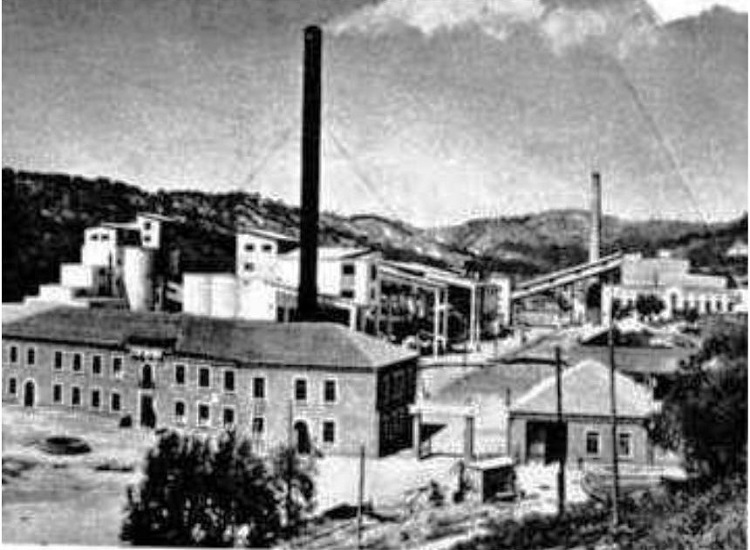
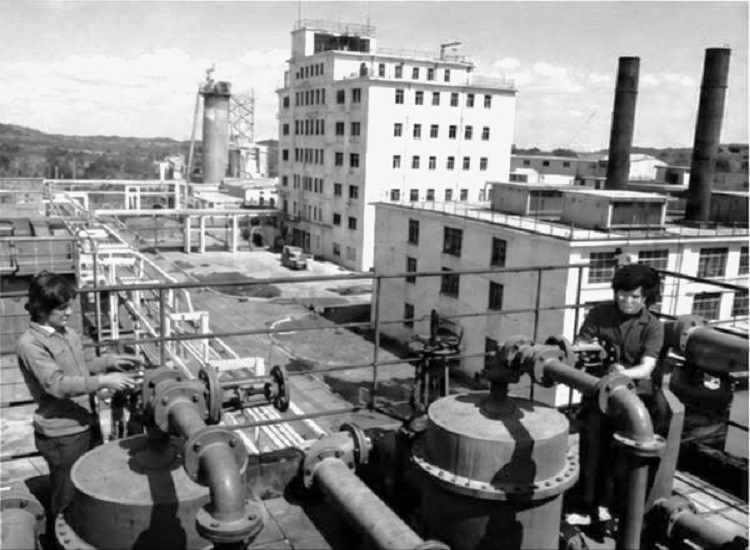
The Letter of the Central Committee of the Party gave new tones to the attitude toward work and social property. Everywhere, unjustified shortages have been reduced. In the Soda-PVC plant there is an increase in daily production, from 80 to 90 tons per day. In many tractor brigades, the annual plan has been met since November 29. In the cement factory, preparations are being made to carry out the overhaul of the furnace twice as fast as the planned time, equal to 4,000-5,000 tons of cement.
In the brick factory, it was decided to put into life a study made earlier for the doubling of output. Within this month, 50 artisan service units and 28 trade units with separate accounts will begin work, and 10 new artisan service units will be opened.
In all agricultural cooperatives, deadlines have been set and the implementation of supplementary measures is being followed for the compensation of deficits created by drought, for the achievement of the value of the work day, etc. The raising of the political consciousness of the communists and the masses constitutes a new basis for carrying things further forward. We are before other greater tasks in the future.
Let us strengthen the fighting attitude of the basic organizations of the Party, of the communists and cadres and employees, let us put political work with people in the first plan.
We are all of one mind that we were not prepared to face such situations, as those we have passed and are passing through. The question arose why we were not prepared? The process of democratization of the Party’s life and of the masses, such as the open Party meetings or the pluralism of opinions, some communists interpreted as liquidation or dissolution of the leading role of the Party, as erasing boundaries between the organization and the communists and the rest without the Party.
As a consequence, there were oscillations and surrender of the Party’s positions. While the Party’s work increased, communists and cadres unclear and foggy in their thoughts withdrew. Instead of adding forces and going on the attack, they did not work even as we had worked before. While more than ever vigilance, militancy, clever and full-of-argument explanations was required, communists and Party organizations were bewildered, thus creating a great void in the Party’s work.
The pluralism of opinions creates terrain for confrontation and greater difficulties. The clash of opposites and the victory of that which is partisan and in the interest of the people today breaks through, with the logic and force of argument. Our communists and cadres were not even prepared for this as they should be. The communist is a leader of the masses. But to preserve the leading position in society, one must convince by example, but also capture people’s hearts, with the convincing force of revolutionary theory and practice.
The “monopoly” of ideas has realized many things as if by command and without much effort. As a consequence, some communists have remained sluggish and incapable; there are those whom time has left behind or others who could not orient themselves in the rapid internal and external changes. The events of the East frightened some and they lost faith in the future.
So what is the conclusion? For the external political circumstances more favorable to it, the enemy took courage and has become more aggressive, but the degree of demonstration of its aggressiveness depends on us. If we are on the attack and in uninterrupted vigilance, the enemy will save its skin, will cower and be bewildered, because we hold power in our hands, we the people, the communists. How and in what way can we place ourselves in active and attacking positions, what should we do?
First: we communists and cadres, where we work and where we live, let us make the life of a militant. For the militant there is no tranquility, for him indifferentism is foreign, his pulse always beats for the cause of the Party and the people. He can never be far from the people and cannot play the role of the “ignorant” as happens in some cases where even though things are discussed, even tyrannized and organized, taking proportions, and communists and cadres including secretaries, directors, and chairmen are surprised how such a thing was organized, they stand aside as powerless for the regulation of the situation.
The militant hears and learns what the people think and what concerns and preoccupations they have, how the political situation is, always he is informed and updated. In Himara, communists and cadres say: “We are surprised how this situation was created for us”? Why be surprised? If Greek television is watched and certain people, intentionally or without evil intent, comment on what they hear, what are the cadres and other Party comrades doing, why do they not explain the meaning or their opposites, why do they not argue?
If the minds of the young have been spoiled by the tourists and visitors who come to us, why are they not interested, what people do these represent? Are they well-wishing and realistic people or are they new crows and the envoys of Greek asphalt. And if need be, to advise that either they stay well or leave peacefully from where they came. Religious rites are performed in Dhërmi and in Himara crosses are placed, all those people are organized. Some say why not distribute the accumulation fund, which they want.
A part of the young have abandoned work and are doing propaganda to others as well. There is also the head of the cooperative’s plan, and he gives no explanation. Why? Whom do such indifferent attitudes serve, except the scaling down of the cooperative and our political order! What does this “hermeticism” of the communists and cadres say, even mixed with fear? Power is held with war and militant attitudes, fear and withdrawal lead us to its loss!
The militant or the fighting man is such that he has unshakable convictions in his ideal, in the path we have chosen for the construction of socialism. He has as his source of inspiration the communist ideals and his Party. In this aspect, it is unforgivable that many communists, instead of using the decisions of the Plenums of the Central Committee as attacking arguments, fell into the bosom of hostile propaganda.
To rumors that; “there is no unity in the leadership,” the militant stands up to them, asks who said it and how the one who said it argues it. All kinds of slogans: “You communists know nothing, the time will come when we will take the lands as we had them before the formation of the cooperative,” “Why should we work in the cooperative,” “there will be party pluralism,” “now you communists are finished, your days are past, enough you oppressed us, our time has come,” “Medicine will be with money,” etc. etc.
If you look at them carefully, they have a tendency, an emphasis, a desire, the undermining of socialism, of the Party, and of the people’s power. For the events of Himara, comrade Dhimitër Çali, as a member of the District Bureau and head of the cooperative, has a special responsibility.
It is not enough only to winterize some situation. The main thing is the militant attitude, the fight for the healing of the sick situation. The problems of Himara are as a result of a weak Party work that made responsible the basic organizations of the Party, the communists, and the leaders of the social organizations. For the internal and external enemy, for the “Voice of America,” the BBC, and other reactionary circles, this is the great desire, for this their heart cries, and they would try with all their forces to make the undone done. This is their dream.
But the communist, the cadre, and our man, how do they not revolt, how do they not rise up against these people, denounce them in plain language, unmask them, show them their place. To those who are unclear, to clarify them, while to others who say “our time has come,” to tell them: “Give us explanations for which time you dream of and which time has come!?” and thus “peasant-like” as the article emphasizes in “Zëri i Popullit,” dated 14.9.1990, to hold the trial in the collective, for they touch us in the dearest, most beloved thing, in the people’s power that we won with the blood of 28 thousand out of 70 thousand who lined up in the partisan ranks. / Memorie.al
FOR THE BUREAU OF THE PARTY COMMITTEE OF THE DISTRICT
THE FIRST SECRETARY OF THE PARTY COMMITTEE OF THE DISTRICT
Halil Hasko
Vlora, 20.9.1990
Continues in the next issue