
By Eugen Shehu*
Memorie.al – It was the autumn of 1879, when the Albanian fighters of Plavë, Gucia, and Rugova sensed the winds of war. While for the Montenegrins these wars beckoned for new southern territories, for the Albanians they were the touchstone of a great trial: would they let their old and cunning neighbors trample their hearths, or would they keep intact their dreams and ancestral lands? If the Albanians of these highlands chose the latter, in the end they proved the dimension of freedom won at any cost, in the face of national shame. The first shots between the two neighbors rang out in the second autumn, while the last gunshots were heard, weary, in April 1880. The battles had been fierce, even reaching the unreal limits of two adversaries striking each other.
The rains and snows of the cold weather could not hide the blood shed by Montenegrins and Albanians. To call it doom is an understatement. Indeed, the peoples of those lands christened this winter with a most chilling symbol: “The Winter of Blood”! The ancient Balkan stubbornness would not spare thousands of human lives, who with their blood made the mountain streams run red with blood instead of snowmelt waters.
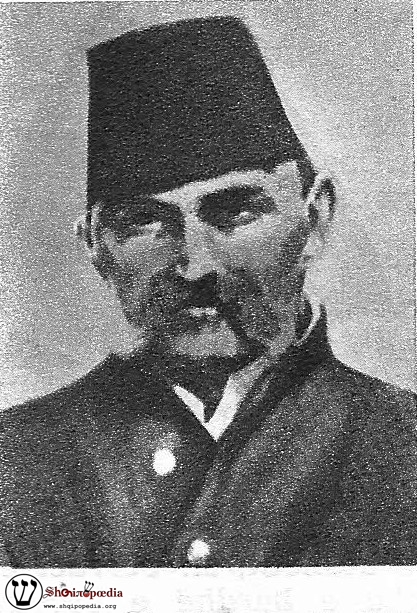
In this tragic winter, for thousands of Albanian fighters there was a man who shone like lightning, a fire that dispelled confused souls, and ultimately a hope that never died out amid the wars. This was the brave man Ali Pasha Gucia. But who was this giant of the northernmost regions of Albania?
He was born in Gucia, on the eve of 1820, in the often-mentioned house of the Shabanagaj family. Ali’s father, Hasan, had been captain of Gucia for ten consecutive years and was renowned for his bravery. With a sense of love for his homeland, he would raise his only son, Ali, aiming also for his military education. Generally speaking, Ali Pasha Gucia’s character was formed in the harsh environments of his birthplace, where the word of men in the towers carried several times more weight than the lead itself.
Meanwhile, he completed his military studies, where his inclinations toward the principles of popular wars stood out, far from the pedantic academicism of Ottoman theories. Deeply aware of the wars waged by our ancestors, their victories and losses, his theoretical thinking was placed on the concrete Albanian ground, on the armament and psychology of the people of Plavë, Gucia, and Rugova.
In the early 1850s (18th century), he was kaymakam of Gucia. Authoritative and attentive to the course of events, he managed to gather around himself a handful of wealthy and honest men, for whom the preservation of territorial integrity was everything. Even though under Ottoman rule, the small peoples of the Balkans were awakening. In this awakening, while Albanians kept their eyes on their borders, others were rubbing their eyes in amazement at chauvinist dreams.
Kujaz Darulloja, noticing that the eyes and activities of the Albanians of the North were increasingly turning toward autonomy, sent strong Montenegrin forces to Gucia under the command of Serdar Piletić. The latter, supported also by the large tribe of Vasojevići, immediately began repression against the Albanian tribes, trying to put a brake on the revolts. It was precisely this moment that Ali Pasha Gucia exploited. He organized work with his friends and, together with Plavë, Gucia, and Rugova, also called upon Krasniqi and Gashi, who responded immediately.
Thanks to his military abilities, Ali Pasha Gucia drew the troops of Serdar Piletić into several almost terrifying gorges and there struck them like lightning, inflicting heavy losses. The Montenegrin forces withdrew, only to return again to Albanian lands in 1856–1858. But by now the self-defense units of Plavë and Gucia, under the command of Ali Pasha Gucia, knew how to receive their covetous neighbor. Fighting bravely for their hearths and lands, the brave men of these regions were at the same time inspirers of all Albanians – not only for preserving ethnic territories, but also for keeping alive the hope for autonomy and independence for Albania.
Faced with this stance of an honest Albanian, the Sublime Porte in Istanbul naturally could not remain silent. Numerous messages came from there, instructing Ali Pasha Gucia that he must change his attitude toward the Empire and not disregard its trust. Endowed with excellent virtues of character, the brave man from Gucia found the opportunity and, at a gathering of men, declared: “I have received news that the Sultan calls me a traitor. I do not recognize myself as such. But if until today I have served the Sultan with my soul, from now on I will serve only Albania.”
The movements of Albanian patriots in the agony of the “sick man of the Bosphorus” were by now complete: political, diplomatic, military. The peak was and remains the Albanian League of Prizren, which, for the tasks it set and the problems it solved, became a point of reference for other landmark events in Albania.
While the Congress of Berlin in July 1878 initiated the great massacre for the occupation of Plavë, Gucia, and Rugova by Montenegro, it was precisely the grand headquarters of the League of Prizren that, on August 22 of that same year, declared: “No change of the border with Montenegro will be recognized without the participation… of the leaders of the League of Albanians and without its decisions being approved by all of Albania.” (History of Albania, Volume II, page 234).
The first days of December 1873 would mark the first major confrontation between Montenegrin and Albanian forces. Over 10,000 Montenegrin troops commanded by Mark Milan entered toward Plavë, controlling several highly strategic heights. Nevertheless, Ali Pasha Gucia, knowing the enemy’s aims, organized several ambushes on the slopes of the Stereq and Vixiter mountains, almost invisible, enticing the opponent to seek and penetrate ever deeper into Albanian lands.
At the climax of the battle, when the Montenegrins were calling for reinforcements, Ali Pasha Gucia, with a few fighters, also destroyed the Rozhanica Bridge, definitively cutting off the enemy’s communication among themselves. Thus, victory spoke only for the Albanians. But naturally, these men had been led by the military strategist Ali Pasha Gucia.
Understandably, neither Edirne nor Knjaz Nikolla could be reconciled with the course of these events. By now the Albanian League had won its popularity. With the appointment of Ali Pasha Gucia as commander of the military headquarters of Prizren (at that time Plavë and Gucia were regions of the Vilayet of Kosovo), the brave men of these regions gained confidence in their combat actions.
And this was especially evident in the fierce battles of the “Winter of Blood,” as the period December 1879 – April 1880 was called. The intuition and military knowledge of the Albanian commander-in-chief Ali Pasha Gucia intertwined with the oath and bravery of the Albanian highlanders, astonishing not only the wretched Montenegrin soldiers but all of Europe with their victories. The battles were numerous (especially that on the Andrejević–Plavë front), where the rifles did not stop working.
The fronts were so close that the opponents came out of their positions and fought each other with yataghans. It is important to say that in all these battles, Ali Pasha Gucia never remained as a commander-in-chief who only gave orders. He skillfully directed many complex operations; indeed, the crack of his rifle was felt in almost every battle.
Regarding these battles, the Austro-Hungarian consul in Shkodër, Schumacher, sent the following information to his government: “The Montenegrins themselves affirm that the Albanians fought manfully and won over them…! The power of the League of Prizren broke that Montenegrin army which had always been capable of resisting the Turkish forces. The myth of Montenegrin invincibility, of their bravery, had almost fled before the united chests of the Albanians of Plavë, Gucia, Rugova, and Gashi, led by their leader, Ali Pasha Gucia.” (From the letters of Austro-Hungarian diplomacy in Albania).
Seeing that after the “bloody winter” many Albanian families were in misery, this son of Gucia sold numerous properties inherited from his grandfather and father (he was the sole heir) and gave the money to the families of those who had fallen in these battles to defend the Albanian land. Naturally, following his example, many other patriots acted, who could forgive everything for the Homeland.
As stern as he was with the age-old enemies of the Homeland, yet a disciple of human compassion, Ali Pasha Gucia also showed himself toward the other peoples and tribes entangled in wars. He avoided several confrontations between the Bosniaks and Montenegrins, thus proving freedom and peace. Thus, he was not infrequently respected even by his opponents. For instance, Vuković, once Minister of Foreign Affairs of Montenegro, knowing the Albanian man closely, wrote: “Ali Bey was a great military leader and a rare brave man, who had shared the battlefield manfully with his father, when in peace they had respected each other as men.”
Meanwhile, for many reasons (which I do not find reasonable to analyze in this writing), the Albanian League of Prizren fell; nevertheless, it serves as a meteor that shines until it is extinguished in the sky of the long Albanian night. Many wise and brave Albanian men were imprisoned, condemned, or interned on the farthest shores of Anatolia. The Sultan of that time, knowing the great reputation and personality of Ali Pasha Gucia, sought to tempt him by offering high duties and ranks in the military hierarchy of the time. The brave man from Gucia refused.
After several months, heeding also the advice of his patriotic friends, Ali Pasha Gucia accepted the post of Mutesarif of Peja. Peja at that time was an important commercial center and a hearth of national awakening. The placement of Ali Pasha Gucia in the post of Mutesarif of the city and its surroundings meant a repulsion of Serbian aims for territorial annexation…! But the Serbs tried in every way to minimize the role of this great Albanian, who spared nothing for his homeland.
Nevertheless, the four years that Ali Pasha served as Mutesarif proved his pure Albanianism. He fought to the end for the organization of rebellious spirits, as well as for the institutionalization of the Albanian *besa* (oath of honor) toward autonomy. The wealth he had in Gucia he indeed sold, pouring capital for the poor, but he never severed his ties with his birthplace. Several military organizations that he undertook in Plavë and Gucia while carrying out his duties in Peja are well known. The Montenegrins would always sense from afar the rustle of wars following the voice of the giant from Gucia.
It was the year 1885 when a murderous hand was raised against the Albanian brave man. Shot from behind, treacherously, in his final moment he said that if he survived, he would find out who had shot him. But the wounds were great, and Ali Pasha Gucia closed his eyes under the eternal enigma of his killing. It is entirely understandable that behind the assassination on the streets of Peja is not hidden one person or one such group.
The two great empires of the time, Turkey and Austro-Hungary, could not forget the great harm that Ali Pasha Gucia had caused them with his bravery and wisdom. By choosing the path of murder from behind (regardless of which of them), they proved their fear before the logic of this brave man.
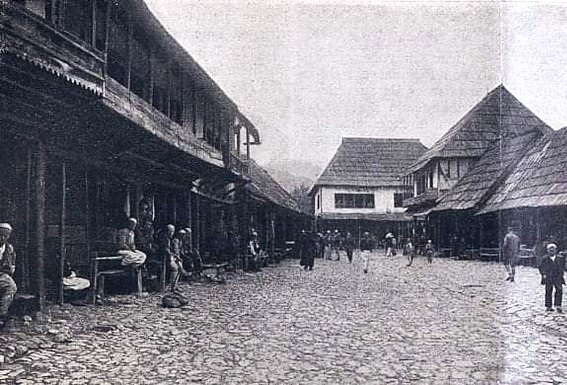
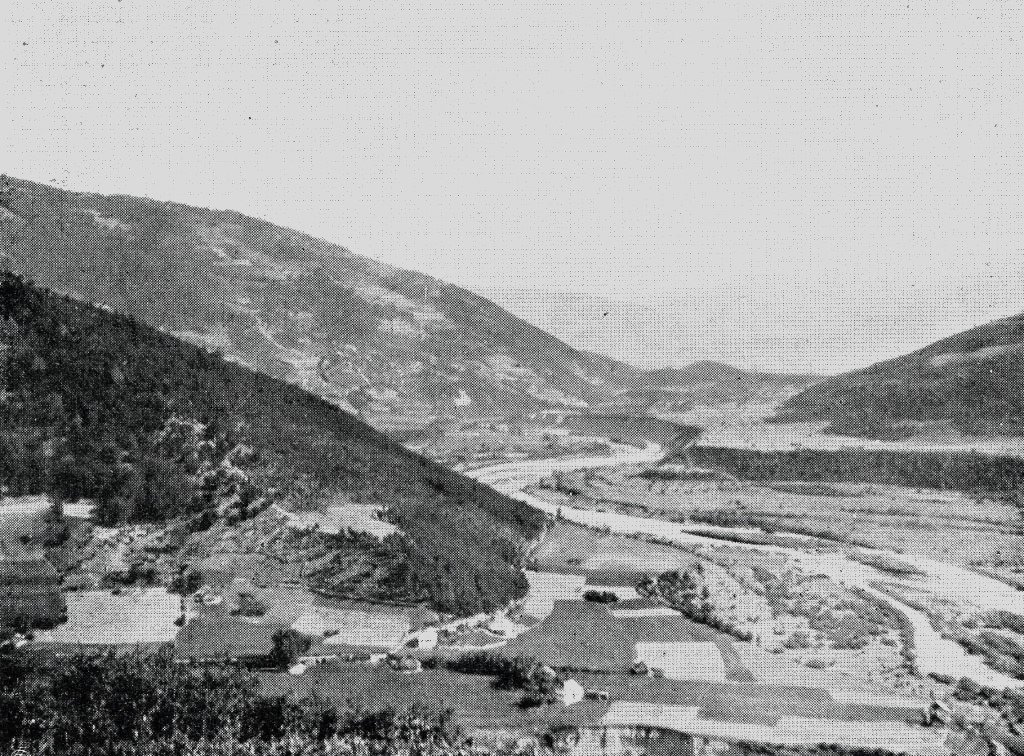
Upon leaving Gucia, one immediately encounters the Vruja River. Once you cross it, under the magic of its blue waters, you find yourself before the ruins of Ali Pasha Gucia’s palace. With the murder of the brave man, the great house of Shabanagaj closes completely. He was the last scion of the family; he was the last memory and pride of the tribe. But in the surroundings of Brada e Vezirit, there are some inexhaustible springs that even today are called the springs of Ali Pasha Gucia. They flow and will flow forever with Ali’s name in their roaring bosom. / Memorie.al
*Switzerland – Bern