From HALIL RAMA
Part One
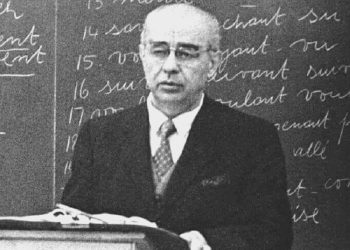
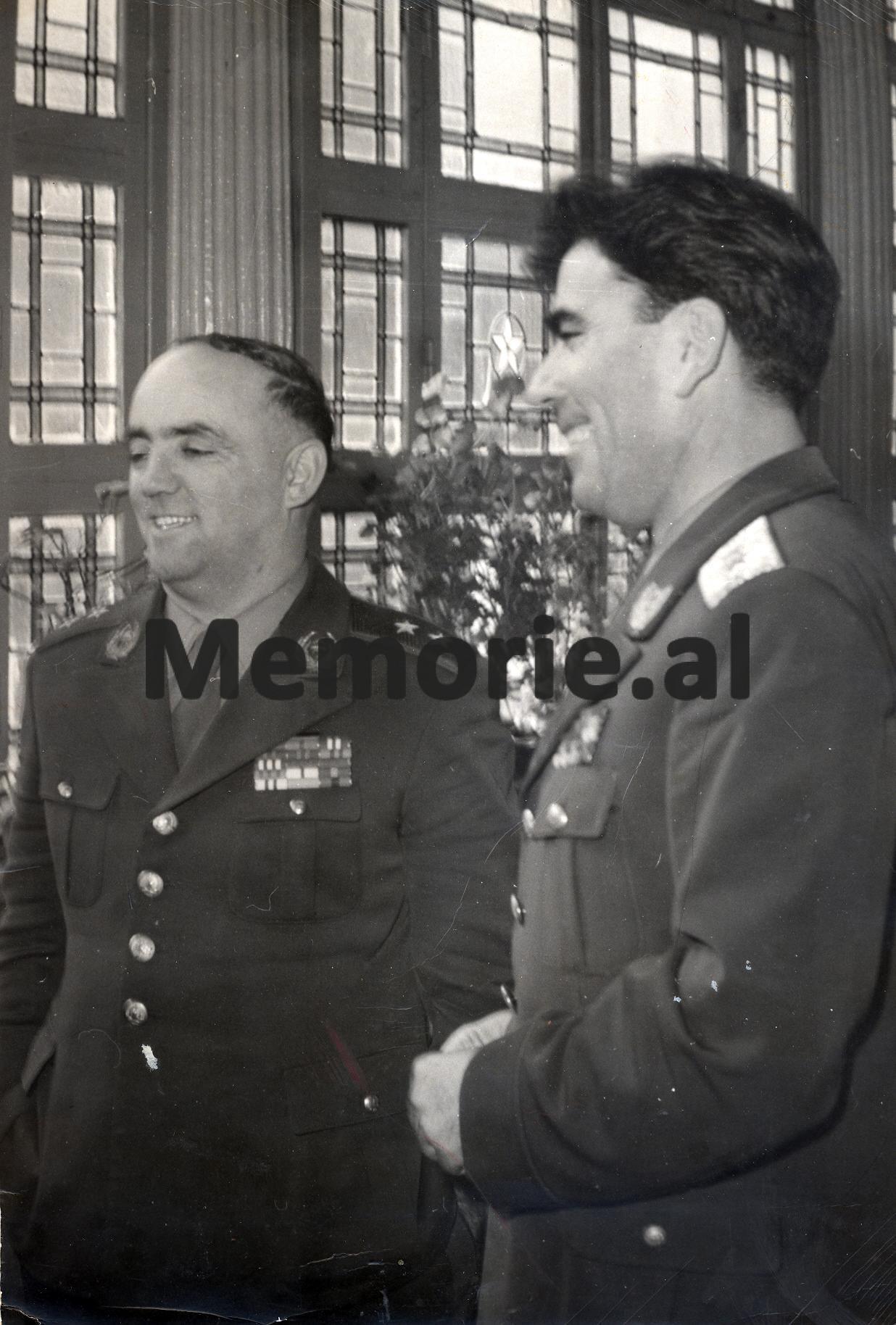
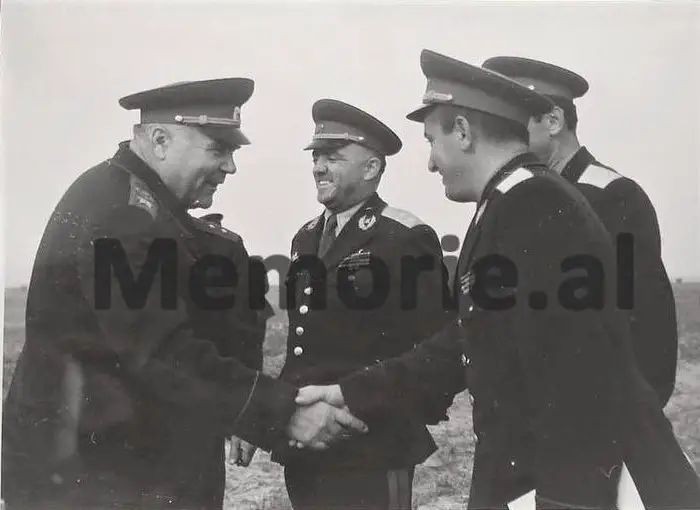
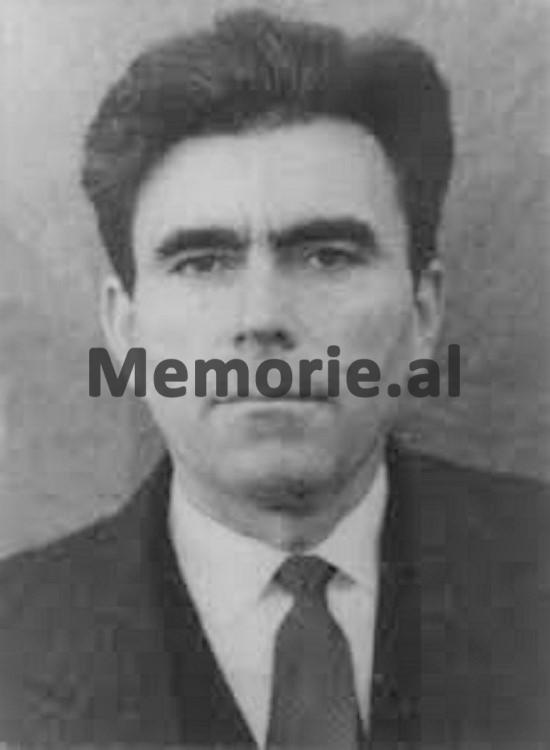
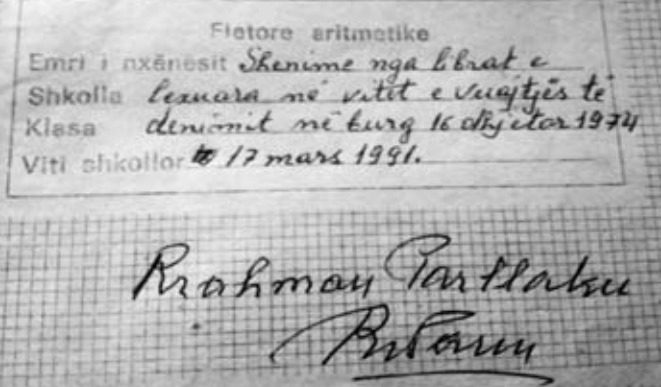
Memorie.al / During the 17 years of suffering his sentence in the prisons of the dictatorship, the man-legend on the boundary of two eras read and summarized 96 works by the most renowned authors of world literature and Albanian literature. Within the Calvary of sufferings over 16 years, 3 months and 1 day spent in the prisons of the dictatorship, there is also included a notebook of notes, as a “rare treasure” belonging to the Hero of the People and Honor of the Nation, Lieutenant General Rrahman Parllaku. An arithmetic notebook from a distant time, yellowed by the weight of years, codified as “Notes from books read during the years of suffering of the prison sentence, December 16, 1974 – March 17, 1991,” across 32 pages utilized to the maximum, line by line, carries special values, inseparably linked to the formation of the Hero-legend, on the boundary of two eras.
This notebook is testimony to his ability not to break his friendship with books even under the conditions of the most brutal inquisition. At the same time, it is testament to a man who, even in those conditions, knew how to distinguish and choose for reading those books that could influence the formation and strengthening of his character and identity.
This is clearly evident in the “diary kept” for every book read, where in a few lines he noted: the author, the theme, the idea, and the actions of the characters. In these notes, we find not just a simple reader, but the erudite intellectual who manages to draw conclusions about the values and shortcomings of each work.
He does this not only for Albanian authors but also for giants of world literature. Let us begin with “Ne Zhelianët” (The Zhelian People) by author Saverino Strati, among the first books Parllaku read in prison, at the end of which he noted that: “The author describes in the novel the dire condition of the people in Southern Italy, the oppression and exploitation inflicted upon the working masses. This condition is greatly aggravated by emigration, which forces people to disperse to various parts of the world, separated from their families, performing the hardest labors, while also suffering the contempt of the landowners and locals.” Thus, in just a few lines, an entire novel by one of the most prominent authors is summarized…!
In this manner, Rrahman Parllaku faithfully adheres to the philosophy of Plato, according to which: “The first and greatest victory is the conquest of oneself. To be defeated by oneself is the most shameful and pitiable thing.” He was not defeated by the most brutal tortures…!
TO READ BOOKS AFTER HAVING ENDURED THE MOST BRUTAL TORTURES OF THE SPECIAL INVESTIGATION…!
Books kept his memory alive and helped him preserve the freshness of thought and action even after having endured the most brutal tortures of the Special Investigation. In the formation of Rr. Parllaku, who had brilliantly completed two elementary grades within a single school year and who, with the same zeal for knowledge and education, had later graduated from the Military Academy in Moscow, the book would have a special influence. For Beqir Balluku, Petrit Dume, Hito Çako, and Rrahman Parllaku, an unprecedented criterion was applied.
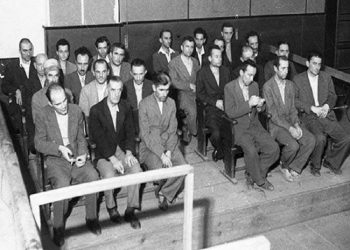
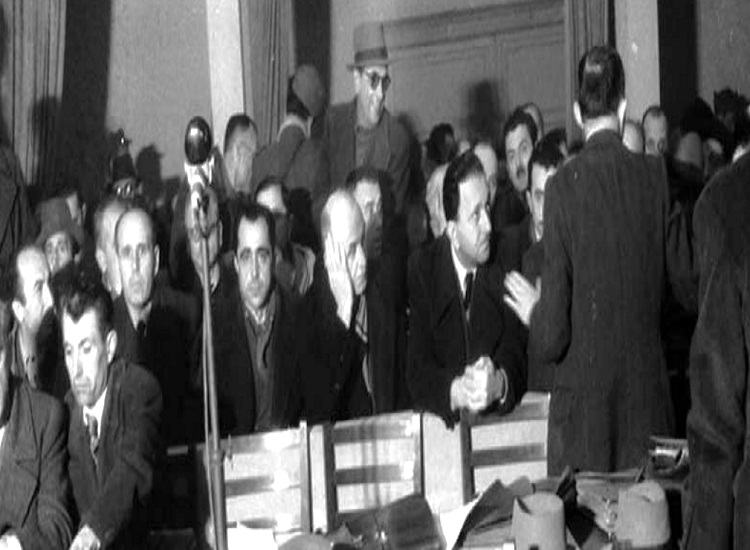
They were arrested in the hall, with handcuffs on their wrists and helmets on their heads, and transported immediately in “BÇ” vehicles to the high-security prison. The investigation lasted 11 months. In addition to being placed in cells, they were put in iron cages inside the cells. In these cages they slept, ate, and were interrogated. For their guard, a special command and a special unit of guards was assigned, commanded by Idriz Seiti (former Chief of Security), who had retired but was called back for this duty. Ironically, even Idriz, after the death of Mehmet Shehu, was sentenced to prison.
There were four security officers around the clock guarding them, monitoring them, and who were forbidden to speak because they too were watched through the peepholes of the cell doors. Even when they were taken out for personal needs, they were not relieved of their handcuffs or helmets. Police officers loomed over them constantly. But this was also difficult for them. After the death sentence, Beqir Balluku, Petrit Dume, and Hito Çako were executed by firing squad in Lanabregas, Tirana, and were buried in Vranisht, Vlorë, at night, without anyone’s knowledge…! No grave, no funeral, no marker…!
Was this investigation necessary, when the sentence had already been predetermined by Chief Prosecutor Hoxha at the Plenum meeting of the Central Committee of the PPSH?! But behold, even the communist state has laws, has formalism, has a state apparatus!!! This is also confirmed by the case prosecutor, Murat Kamani, and the investigator Piro Dautaj.
At one moment during the investigation, Piro Dautaj asked Parllaku: “Do you still believe you will be defended when the accusation and sentence have been determined by the one up there?” “Why should I not believe in justice?!”, Parllaku replied. “Because those who expelled you from the party also gave you the sentence at that very moment,” Piro continued. “Your sentence was decided by those 100 men of the Plenum of the Central Committee of the PPSH. We are just going through a formality here.” Murat Kamani, the prosecutor of the case, declared the same.
HUNGER STRIKE AND MEDICAL VISIT
During the days of suffering, it happened that Rrahmani went on a hunger strike because the prison command would not accept his request to be treated as a diabetic and to allow him to move about or read a book. Dr. Hektor Peçi came to visit him. He had brought with him the medical record confirming that Parllaku indeed suffered from diabetes and had been treated up until the moment of his imprisonment.
After the doctor’s visit, he was treated as a diabetic and was allowed to move for about 15 minutes, of course with two guards at his sides. The diet in prison, especially during the investigation, was barely implemented. After sentencing, with the help of family members, Parllaku respected this diet, which made it possible for him to survive after 16 years and 3 months in prison.
AN ORANGE IN THE CELL ON NEW YEAR’S EVE
It was the night of the turn of the year 1974-75. Rrahmani had been 15 days inside the iron cage within his cell. At midnight, the shift change occurred for the officer guarding his cell. The officer taking over the service, as Parllaku would later learn, was named Dilaver Muhametaj, from the village of Kajcë, Dishnica.
He made sure that the peephole of the cell, which also controlled the guard inside, was closed. He sat down in his fixed chair and began to peel an orange. Parllaku felt offended by that act, and his mind wandered to his loved ones. What was happening with them, he wondered, on this New Year’s Eve?
Parllaku recounts: “Dilaver peeled the orange and extended it towards me. ‘Don’t leave any trace or seed in the blankets that those in the morning might see,’ he instructed me. My heart filled with warmth, and I convinced myself that there were still good people, even in that place of hell.” Memories come flooding back. He also tells of another act of humanity from the guards serving in the prison:
“I had been 10 days in the cage inside the cell. They took me to the bathroom for personal needs. I asked the escorting officer to allow me to wash my feet. It was December. He allowed me. The water was ice cold, but I needed it, because my feet were beginning to rot. I entered the cell with my feet frozen. The officer brought his heater close to dry my feet. At that moment, their commander, Idriz Seiti, entered and shouted at him: ‘what are you doing, are you guarding or warming prisoners who have betrayed the party and Enver Hoxha?!’ The officer replied: ‘I am doing my duty, but I am also a human being.’ I never learned the name of this officer, and I have never met him since to thank him from the bottom of my heart. Surely this act must have cost him dearly, because the next day I did not see him anymore.” Rrahman Parllaku also has gratitude for Officer Hiqmet Meçe. “Hiqmet treated me very well. Whenever he took the midnight shift, he would bring me a small container of coffee with sugar, so I would not forget the taste of coffee.
When he took the day shift, he would clean the cell. Once, when Commander Idriz Seiti found him cleaning and reprimanded him, he replied that he was cleaning it for himself, to maintain cleanliness in his place of duty. Rrahmani has met Hiqmet Meçe and Dilaver Muhamet even after his release from prison, expressing his thanks to them.
HOW DID HE FIND BOOKS IN PRISON?
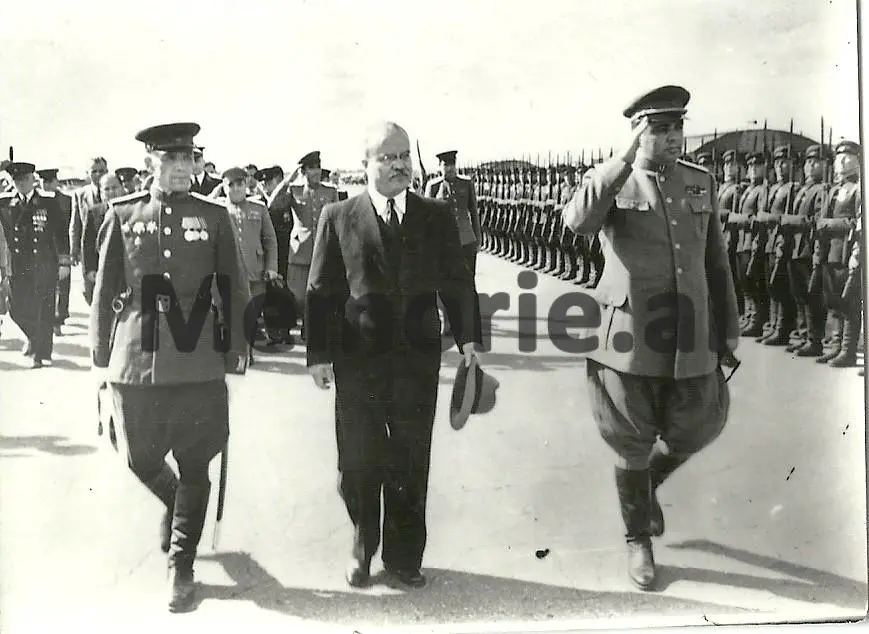
The above facts are part of the Calvary of those terrible years of the special investigation. Rrahman Parllaku, who was not defeated before the special investigators of the dictatorship, after “emerging” from the inquisition, one day said to the prison warden: “Can I find a book to pass the time with?” “There are some books in a warehouse, but they need to be sorted first,” the prison official told him. “If you allow me, I can do that,” continued the general who for nearly 30 years had commanded the Albanian army, as former Deputy Minister of Defense, Deputy Chief of the General Staff, and several times director of important directorates in the Defense Ministry, now sentenced to 25 years imprisonment.
And thanks to the “generosity” of the warden, the general, who since his childhood had learned Fishta’s “Lahuta e Malcisë” (The Highland Lute) (and even today at the age of 98 knows it by heart), set to work selecting the books left to their fate in one of the dark corners of the prison.
From that distant time, in his rare notebook we find notes on the novel “Shembja e idhujve” (The Fall of Idols) by Skënder Drini, “The Jongblands” by John O’Killens, the collected works of Çajupi, “Lidhja Shqiptare e Prizrenit” (The Albanian League of Prizren) by Koli Xoxi, “Tokë e papushtueshme” (Unconquerable Land) by Skënder Jasa, “Kikoja” (an autobiographical story) by Franko Piro, “Prova e zjarrit” (The Test of Fire) by Sabri Godo, and dozens of other novels from that period.
With the vision and foresight of an intellectual forged in the fire of the war for freedom and well-educated up to the military academies in the former Soviet Union, without knowing that one day this notebook would serve as a rare exemplar for literary scholars, he would also record in it even prominent elements of literary criticism.
Thus, if he considers the autobiographical story “Kikoja” as realistic, since “it describes the life of the poor strata, who under conditions of oppression have begun to awaken, seek to organize and fight, [but] they are deceived by the socialists and revisionists who serve the bourgeoisie,” regarding the novel “Prova e zjarrit” (The Test of Fire) by Sabri Godo, the reader Parllaku, in prison conditions, states that: “this novel does not have the level of this writer’s other works!”
Furthermore, in this notebook of notes kept by General Parllaku during his prison years on masterpieces (notes that constitute a rare treasure), we find objective evaluations of masterpieces of world literature, such as the novel “Te shpella prapa palmave” (In the Cave Behind the Palms) by Anh Duc; “Beteja vazhdon” (The Battle Continues) by Stiv Nelson; “Shoqja Anjezë” (Comrade Anjezë) by Renato Vigano; “E kuqja dhe e zeza” (The Red and the Black) by Stendhal; “Dita, bijë njeriu” (The Day, Son of Man) by Martin Andersen Nexø; “Shigjetat e zeza” (The Black Arrows) by Robert Louis Stevenson; “Eugénie Grandet” and “The Peasants” by Honoré de Balzac, as well as dozens of other world masterpieces…!
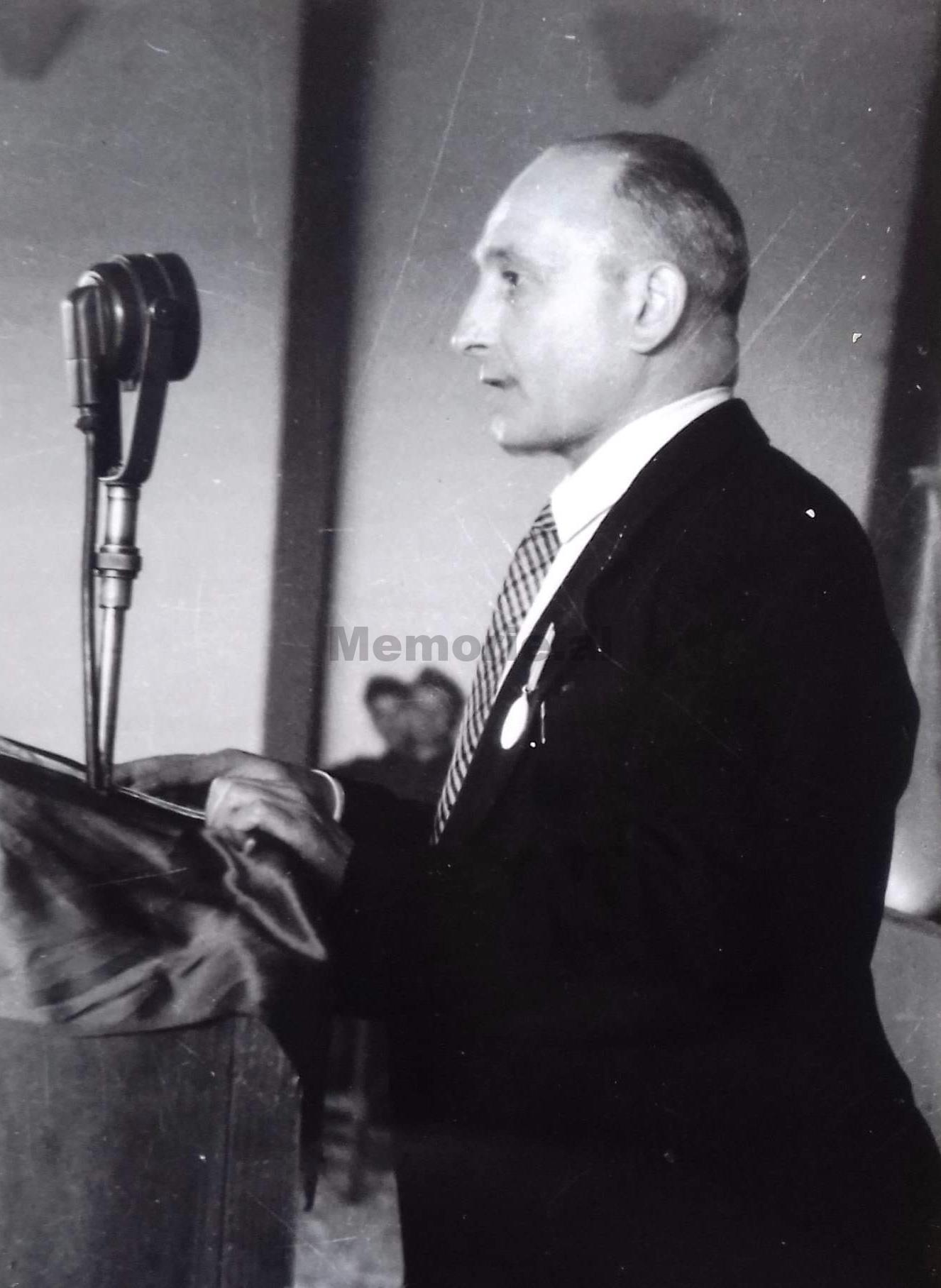
But the general, former deputy for eight legislatures of the People’s Assembly of the Republic of Albania, where in the very first one he had the fortune to sit at a table with Sejfulla Malëshova and Aleksandër Xhuvani and had benefited from their experience even in working with books, could not possibly overlook Albanian authors.
Thus, during the hellish years in the infamous Burrel prison, he read with extraordinary interest and summarized the novels: “Belzhiku që këndonte vençe” (The Belgian Who Sang Venetian) by Shevqet Musaraj; “Njeriu me top” (The Man with the Cannon) by Dritëro Agolli; “Lulja e kripës” (The Salt Flower) by Jakov Xoxa; “Zëri i largët i kasolles” (The Distant Voice of the Hut) by Frederik Reshpe; “Do të jetojmë ndryshe” (We Will Live Differently) by Dhimitër Xhuvani; “Përballimi” (The Confrontation) by Teodor Laço; “Ditë me furtunë” (Stormy Days) by Resul Bedo; “Dueli i madh” (The Great Duel) by Ali Abdihoxha, and several other novels.
Rrahman Parllaku is today 98 years old, but his memory is enviable. Reading has been the “mathematics” of his mind even in the most difficult times, when he was serving his prison sentence. A full 16 years and three months, which he filled with reading those books allowed inside the cell, mostly Albanian, but also foreign. Everything he read he noted down in a notebook, which today comes to light. An interesting document that could be a subject of study in its own right.
The distinguished general, a former participant in the National Antifascist Liberation War, shares with the reader his thoughts on the role of the National Antifascist Liberation War. His account of the first pluralist parliament, of his colleagues Riza Dani and Sejfulla Malëshova, their views on pluralism and economic reforms, is also interesting.
He recounts one of the most difficult moments for him, experienced in this legislature, related to the sentencing of Riza Dani, the accusations made against him in the courtroom, and Dani’s response, which he still remembers today. Furthermore, he is preparing a voluminous book, in which he testifies to the crimes of the dictatorship as well./ Memorie.al