By VASIL S. TOLE
Memorie.al / Much has been said and little has been written about the Sazet (as one of the most prominent folk musical formations of the late 19th and 20th centuries), about the sazexhinjtë (saz players), the bards, the ensembles – which, although seemingly strange, is more than true. Regarding the Sazet, one might easily think that the artistic dimension they project could be similar to a space that can be quickly surveyed and, moreover, fully unveiled. I think it is not that easy. The Sazet were born to uphold and further inherit a centuries-old unique formula of our musical ethnogenesis: folk polyphony “a capella” with iso, centered on the choir. Polyphony with iso, or Iso-polyphony, appears as a well-structured relationship between the individual polyphonic voices and the collective-choral voice of the ISO.
The distinct voices of iso-polyphony: the taker – first voice, the returner – second voice, and the iso as a synonym for the whole, the general, exist only as a unity of opposites, which are superimposed upon a bed of acceptance by the majority, which is the anonymous iso. Regarding this nature of relationships, Ismail Kadare writes that: …in folk polyphonic song, the melting, the communication, the pouring of the individual into the collective and vice versa, the surge of the collective into the individual, reach their highest point.
Iso-polyphonic singing is a reflection of the social organization of human life and certainly of the pluralism of thought within it. In this democratic model of behavior, no one should claim hierarchy of one function over another, or claim that there can be another reality without the unity of all factors. The Sazet, as an urban phenomenon linked to the musical language of cities, naturally came into the developments of iso-polyphonic musical folklore to play one of the most important roles in preserving, disseminating, and developing the folk musical tradition from the late 19th century to the present day.
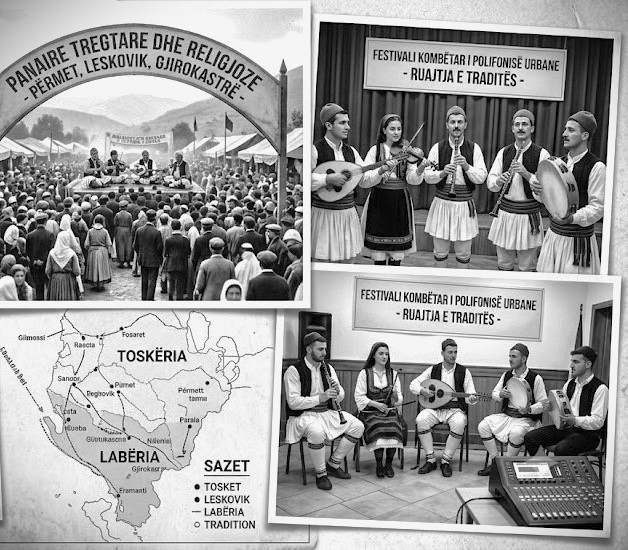
Folk music with saze from Southern Albania is observed across a geographical plane that includes almost the entire southern part of the country. From an ethnocultural perspective, within this geographical plane, two large ethnographic areas stand out: Toskëria and Labëria. The southern half of this country was called Epirus in antiquity, while the northern half was called Illyria, and the border of Toskëria with Gegëria passes through the Shkumbin River. In today’s view of the proper administrative division, they include the districts of Sarandë, Delvinë, Gjirokastër, Përmet, Tepelenë, Mallakastër, Fier, Skrapar, Berat, Kuçovë, Lushnjë, Vlorë, Kolonjë, Korçë, Devoll, Pogradec, Gramsh, and Librazhd.
The formation of the Sazet in the southern geo-ethnomusicological entirety took place at different times and in different places; however, the public life of the saze and their spread began around the late 19th and early 20th centuries. What is evident from the core of the Sazet (in the vast majority of them) is that they were born and formed within the same unit: the family. As faithful daughters of a single organism, they repeated the past tradition of traditional formations, which were organized together on the basis of kinship and beyond. Within a relatively short time, the method was found that would determine the structure of the Sazet in the future.
Perceived not only as a technical solution, it consisted of replacing traditional instruments with tempered ones and implementing the structure of vocal iso-polyphonic singing “a capella”, but now through tempered instruments – a process that culminated in the creation of the Saze formation, the basic formation of folk music in our southern cities. Before the instruments “changed places” (the kavall-flute with the clarinet, the lodër (drum) with the frame drum, and especially the concept of how they were played), during the period of coexistence, as the first phase of this role exchange, borrowing from the traditional repertoire took place, where the tendency to borrow the authentic musical repertoire with village instruments came to the fore.
It goes without saying that this also came as a normal need of the Albanian city dweller of the National Renaissance period and beyond, who was mainly inextricably linked to the village of his origin and the traditions of the surrounding area. In conditions where the “new” Albanian city was walking alongside modern life, another, so to speak, contemporary culture had not yet been formed that would satisfy its tastes, while also withstanding the centuries-old tradition of the village’s musical-folkloric culture. Thus, this chain reaction, from village tradition to the Sazet, proved, in one aspect, the unity of the tradition of southern folk musical culture.
The music of the cities that lie within the ethnomusicological areas of Toskëria and Labëria maintains sensitive ties with village music. This includes almost all the main cities of Saze music, such as Korça, Përmeti, Leskoviku, Fieri in Toskëria, as well as Vlora, Saranda, Tepelena, Gjirokastra, and Delvina in Labëria. The rural areas, for example, those of Albania stretching between Përmet and Leskovik, or the villages surrounding Vlorë and Delvinë, etc., have served as a basic source not only for the direct musical repertoire of the saze melody, but also as the sole unitary musical bed for their musical repertoire.
There are several reasons for the selection of specific areas as the primary source for the Sazet’s repertoire. The first relates to a collective approval that, over the years, that part of the musical folklore originating from these areas had acquired; the second relates to the fact that, from a technical standpoint, their musical material concentrated both the universal mass of expression of the folk musical language and its tendency towards evolution. From this point on, every effort of the saze and every result of their work would ultimately be linked to the formation of an urban folk music culture.
The classification of the commercial relations of Southern Albania (from the ports of Lower Albania such as Preveza, Vlorë, Sarandë, Butrint, etc.), only for the year 1877, demonstrates this. Even the city of Korça, for many years under the Ottoman Empire, was a commercial center for a large part of Southern Albania, because it had connections with the port of Thessaloniki, where industrial goods from Western Europe were taken. Also, Korça was seen as the point from which European industrial products subsequently spread throughout the periphery of Southeastern Albania, etc.
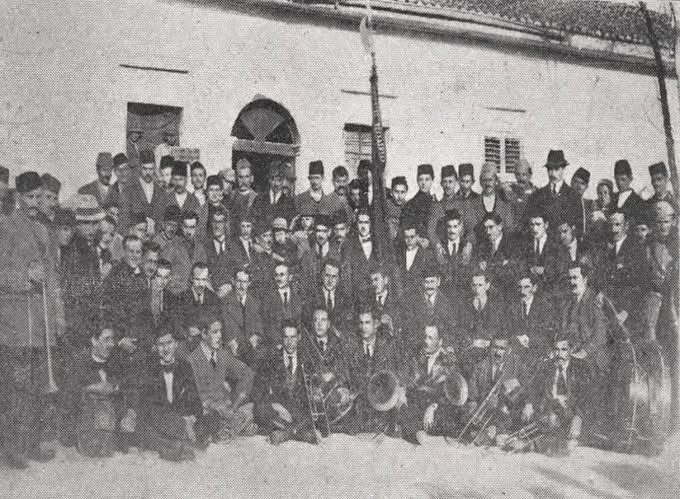
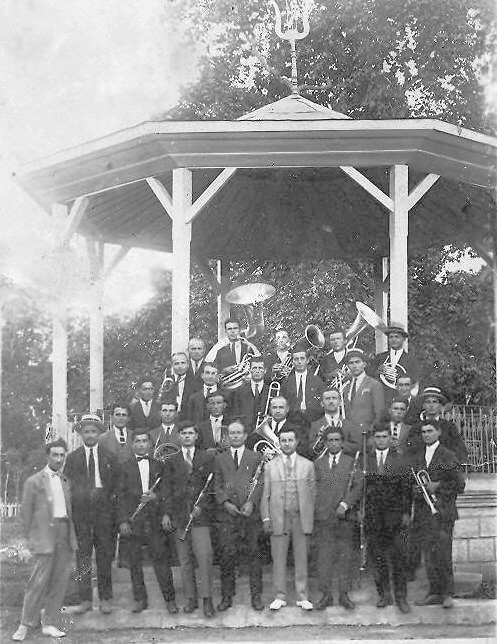
Tempered instruments very quickly became part of the musical life of the then Albanian cities. We know that in the cultivated formations of urban music in the 19th century, such as the first Albanian band formed in Shkodër in 1878, and that of Frano Ndoja, founded in 1898 (nicknamed “Daulla”), in their instrumental formations, along with other instruments, clarinets were also included. The Cathedral Church Commission, through the mediation of Tom Markoci, had brought the instruments from Italy, along with the conductor Giovanni Canale.
Also in Shkodër, in 1835, we have documents proving the purchase of 28 pianos, just as we have information that in the village of Bërdicë-Shkodër, in 1842, there were about 30 violins used in folk music. The Regulation of the Music Society “Band e Lirisë” – Korçë, Article 30, stipulated that: “Every member who wishes to join the society’s music must have his own instrument, as per his desire and according to the need that the teacher will determine”; while in the “Canon…” of the music society “ROZAFAT”: “…Music members, who are those to whom musical instruments are given and who constitute the Orchestra.”
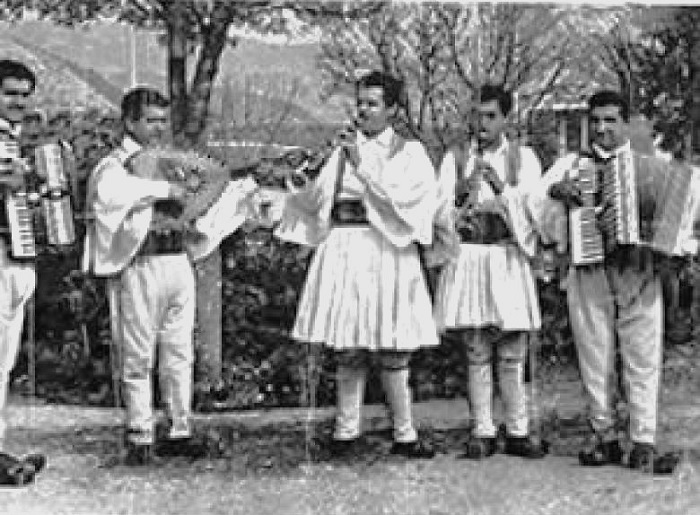
The introduction of tempered instruments – clarinet, accordion, violin (the main constituent instruments of the Sazet and of any other folk formation in southern Albanian music) – occurred precisely at the moment when this music demanded the creation of a new dimension for its expression. Since the first saze were few in number, at this time (late 19th century – around 1910), they were forced to function as itinerant saze, and thus they would inevitably have to walk and touch almost the entire territory around their fixed place of residence.
The saze of Leskovik would go to make music as far as Konitsa, Kastoria, Ioannina, Mallakastër and Tepelenë, Korçë and Përmet, in Vlorë and Sarandë, while the saze of Berat could exceed the ethno-cultural unit, going as far as the cities of Elbasan, Fier, Tirana, and Durrës. There are known cases where sazexhinj from Përmet, Leskovik, or Berat moved and formed saze in other southern cities that until then had not been able to form them.
A part of the Sazet were also installed near aristocratic families in various areas, which was a repetition of the tradition of the Pashaliks, where we mention their heads, such as the beys of Këlcyrë or Ibrahim Pashë Vlora, the Sanjak-bey of Berat, who kept by his side folk formations with traditional instruments composed of virtuoso musicians.
By the end of the 1920s, the Sazet had not only managed to complete the process of “establishment” and consolidation, but they had also achieved a kind of classification. This classification is related to the fact that from the conventional totality of the concept of “Saze” among the people, due to the characteristics of their playing style and respective repertoire, their clearer formations were also defined – an indicator that the music of the saze had become more widely known in broad popular circles and beyond.
Thus, in the first decades of the 1900s, the most general characteristics of the playing style of the Sazet of Toskëria were formed, with names such as: the Sazet of Selim and Hafize Leskoviku, the Sazet of Demkë Hajro in Korçë, Medi Përmetit in Përmet, Cilo Qorri in Korçë, Riza Nebati and Shyqyri Fuga in Berat; those of Labëria with names like Bilbil Vlora in Vlorë, and those of Myzeqe, although the “boundaries” between them gradually dissolved into one another. Among them, for example, the clarinet of Përmet was considered “sweet”, the frame drum of the Sazet of Myzeqe “strong”, and the Sazet of Labëria “play with a mournful tone”, etc.
According to the data we have from the old sazexhinj of the southern regions, where tempered instruments were first used in the earliest saze, there was immediately massive approval of them by the masses of the people, which can also be linked to the close nature of these instruments to the human voice. The Sazet were invited to participate in weddings, religious and trade fairs where hundreds of people gathered, as well as in inns.
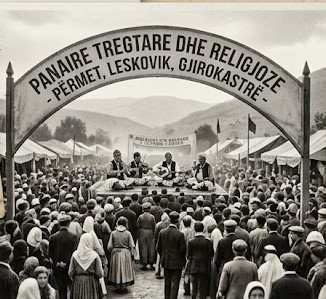
Here we mention the religious fairs of Saint Naum in Pogradec, which opened on December 23rd on the occasion of the Orthodox Christmas feast; that of Voskopoja, which opened on June 24th near the Monastery of Saint Prodromos; that of Ioannina, which opened on October 8th; that of Pogon on August 15th; that of Kosina in Përmet on August 14-15; that of Zerec in Përmet, also in August, etc. Among the trade fairs, those of Boboshtica, Frashër and Këlcyrë, Voskopoja, etc., are mentioned. We emphasize that Orthodox Easter was also celebrated with saze in cities such as Përmet and Leskovik. This collective approval showed that the saze had passed their initial test.
The special ways of organizing, as well as the direction of their musical life, meant that besides the extensive instrumental repertoire, the Sazet also possessed a considerable amount of the vocal and choreographic musical repertoire of each ethnomusicological area, gathered mainly from weddings and other celebrations held in the guest rooms (odas) of friends. This was extremely necessary, both for the popularity they would gain and for the material profit they would derive. The emergence from enclosed environments brought about the premise that folk music itself was considered a kind of valuable “commodity”, with which one could not only make a living but also earn money.
The replacement of folk instruments with tempered ones – the moment that gave the Saze formation its physiognomy – happened gradually and comfortably. Here again, the Albanian peculiarity of this “changing of places” must be taken into account, as it was only a formal change of instruments, while the “change” did not happen with the musician, who in most cases was the same person who played the flute, the kavall, the bilbil (wooden flute), as well as the clarinet. This peculiarity also resulted in the reshaping of the concept of their identity, making the saze the main generative mechanism of traditional folklore, but now with new means. This change did not happen with the folk attire of the musicians either, thus preserving the same old clothing.
The place where the Sazet thrived and gave functionality to their formation was weddings, and this has its explanation. In the South, it is said that “a wedding opens songs,” while “death opens wounds.” As the sazexhinjt themselves put it, “at weddings, conversation was held and money was spent,” because from year to year, “…expenses made on these occasions were not only not limited but increased even more, especially among the wealthy strata of the city.” Although the wedding has been and is a product of many centuries and generations, at this time, the people themselves in oral folklore have defined the saze-wedding symbiosis in a single equation, as if to say that without one side, the other is not worth it: “I knew I was coming to the wedding / to bring you a pair of Saze”, because after the formation of the Sazet, “weddings were no longer done with just one flute.”
Furthermore, it was the Sazet that, from the most well-known Lab polyphonic songs, realized the homologous types of saze music, now titled “labiko” or “labikoçe”, which implies a “softened” Lab song, while the folk songs of the Tosk cities had been created earlier as a result of their accelerated urban developments. When the Sazet generally borrowed the traditional instrumental musical repertoire, it in itself represented a much broader collection of folk musical material.
From this mass, they had their preferences, as in the case of genuine instrumental types of the past (such as “avaz”, “e qarë” (the mournful), “melodi” (melody), “valle” (dance), “vajtim” (lament), “logatje”, “borohite”, “ligjërim” (speech/recitative)), a preference for the vocal folk repertoire and its main typologies, as well as for specific pieces of musical-choreographic folklore. From these traditional genres, their general structural features were borrowed, aiming for a new dynamism of all parameters. With the new technical possibilities offered by tempered instruments, the Sazet truly gave a different look and breathe to the traditional repertoire, scaling it up.
It is an indisputable fact that the Sazet have also interpreted a part of the instrumental folk heritage of the Greek and Aromanian (Vlach) peoples, and this is more than understandable. Historically forced neighborhood has meant that certain parts of the folk musical repertoire of both our countries circulated and were also preferentially known, especially in the intermediate areas, and not just music. Thus, our saze have recorded on discs some of the most well-known Greek folk dances, which in the general recorded repertoire occupy a specific place.
Folk instrumental music and the Sazet as part of it are today symbols of unity and identity. Currently, this music presents itself as an essential element of creativity, a route of artistic communication among Albanians, and the carrier factor of tradition, as a condition for preserving national character. In this sense, folk instrumental music is a specific direction of development, a form of existence and continuity of Albanian musical folklore. The Sazet are today the musical language of the cities, the place where the West embraces the East, European musical instruments with the magic of iso-polyphony, where life and death coexist in unrepeatable sounds and in unique architectural forms. / Memorie.al