


From Franko Tagliarini
– A mountaineering guide from early‑1940s Albania, published by ‘Distaptur’ in Tirana in 1941. With a study on “The Rhapsodes of the Albanian Mountain” by Nicola Lo Russo Attoma. –
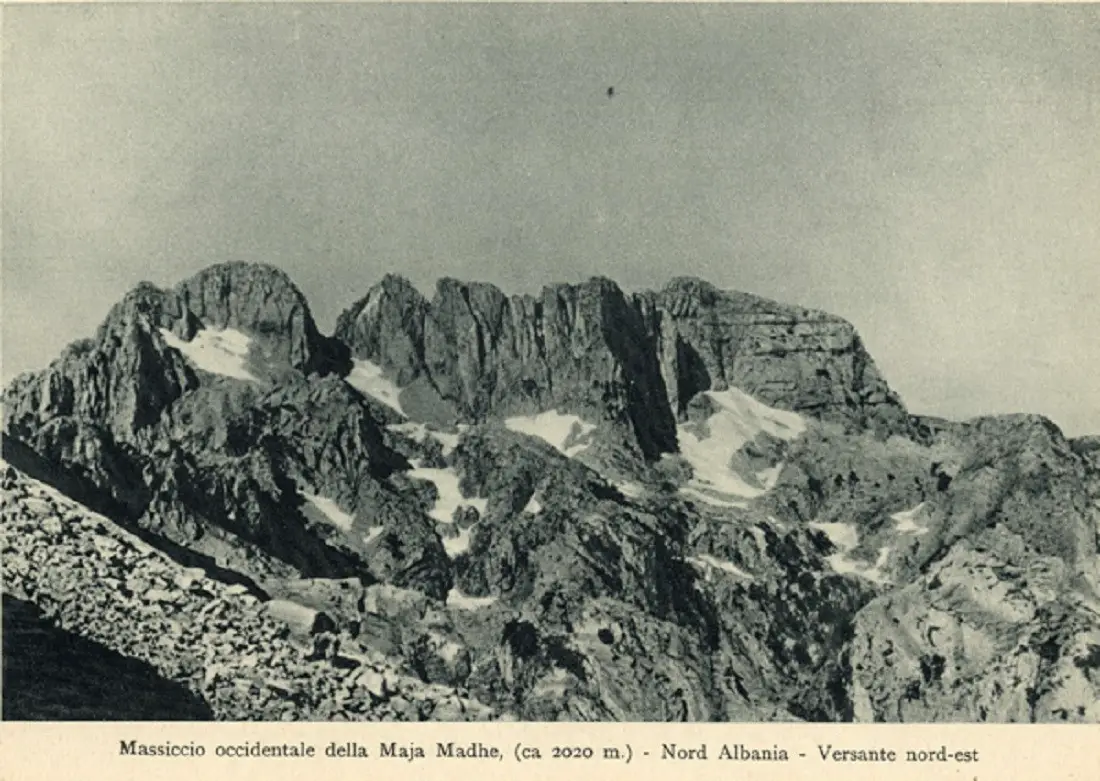
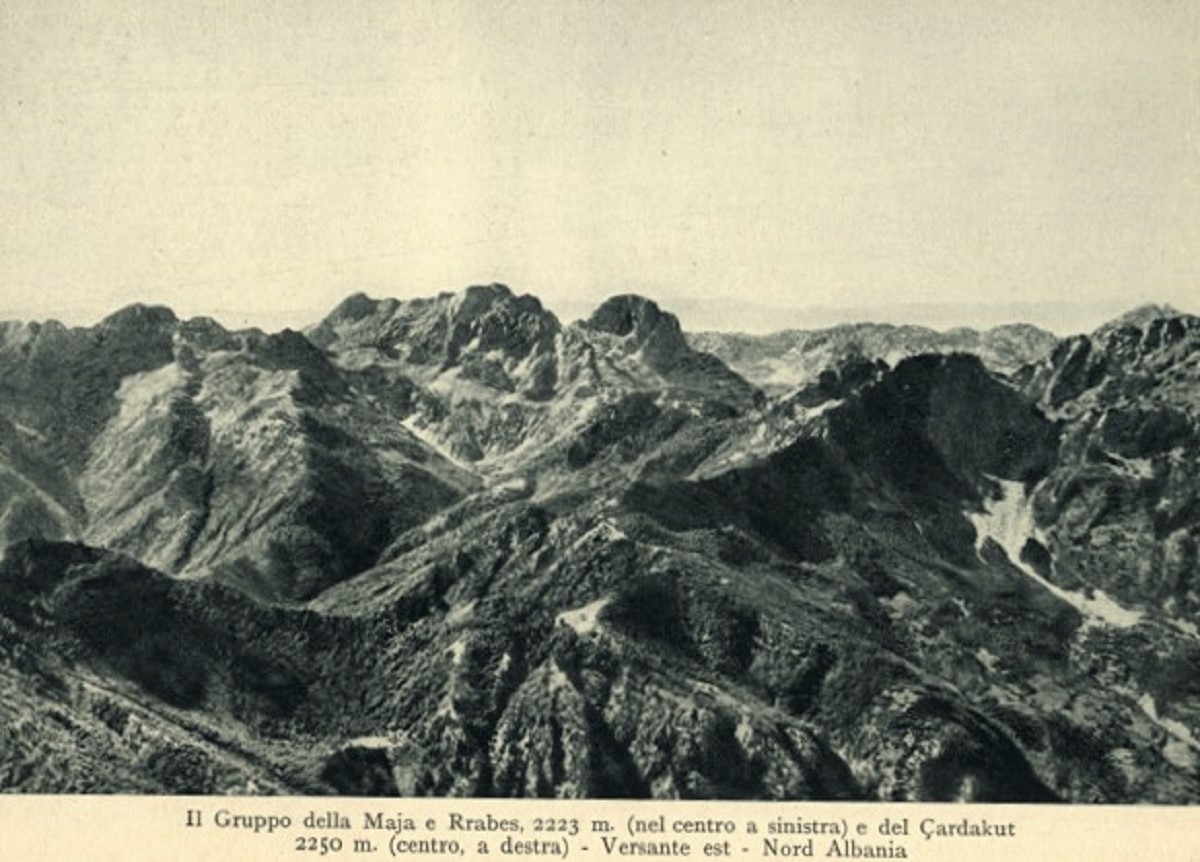
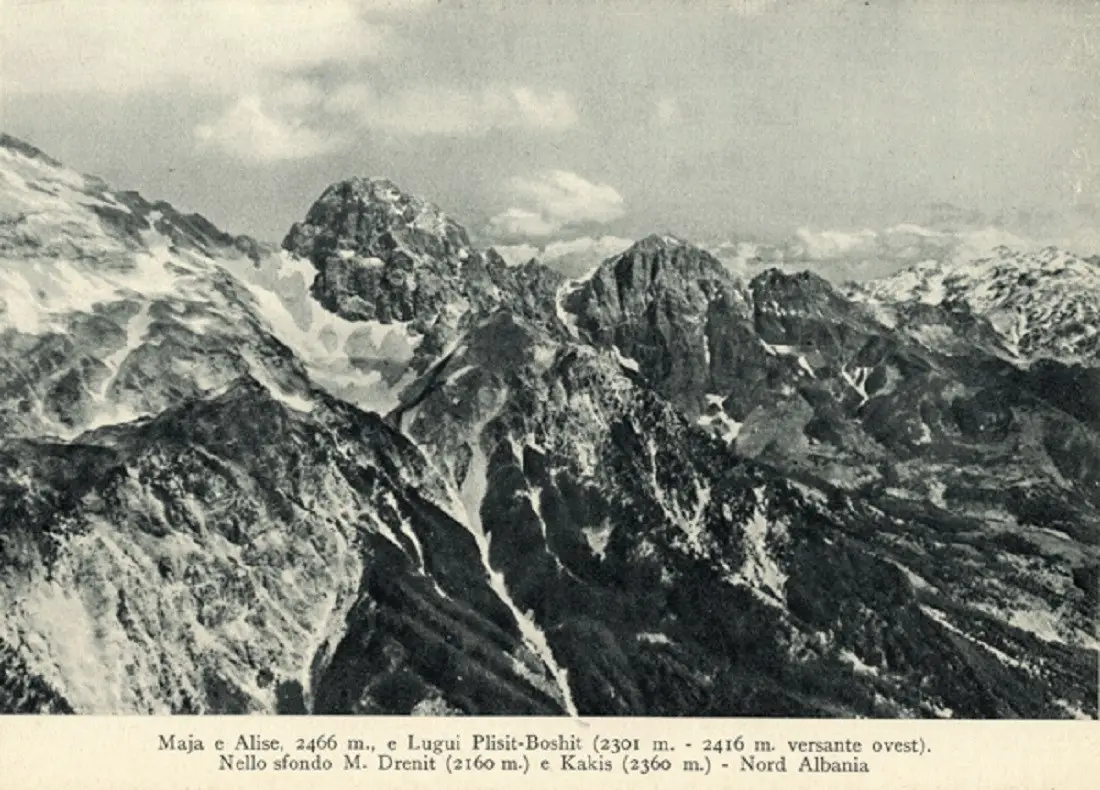
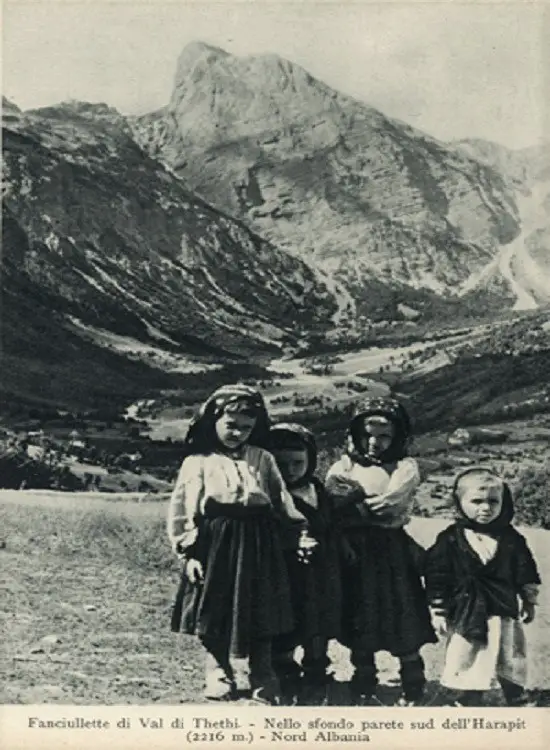
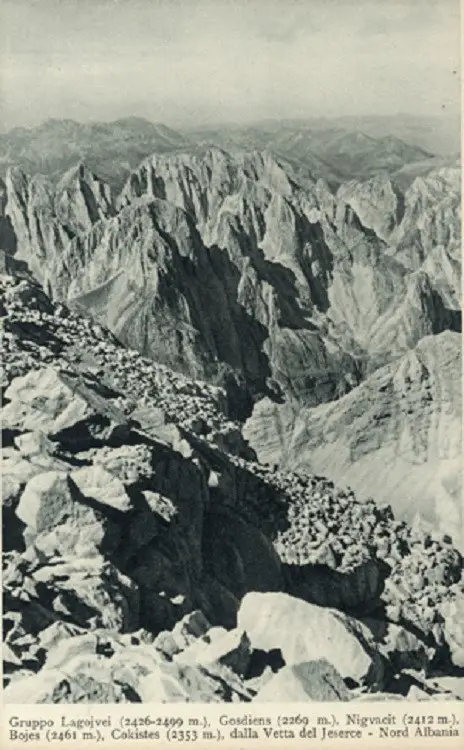
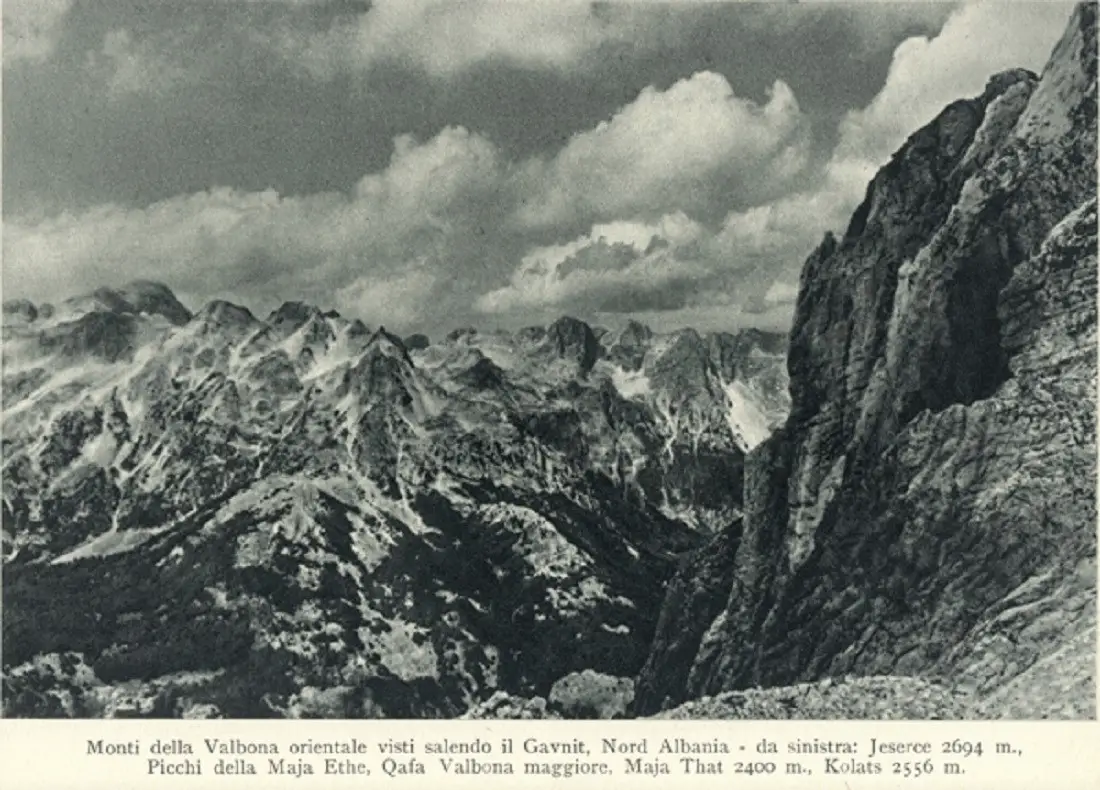
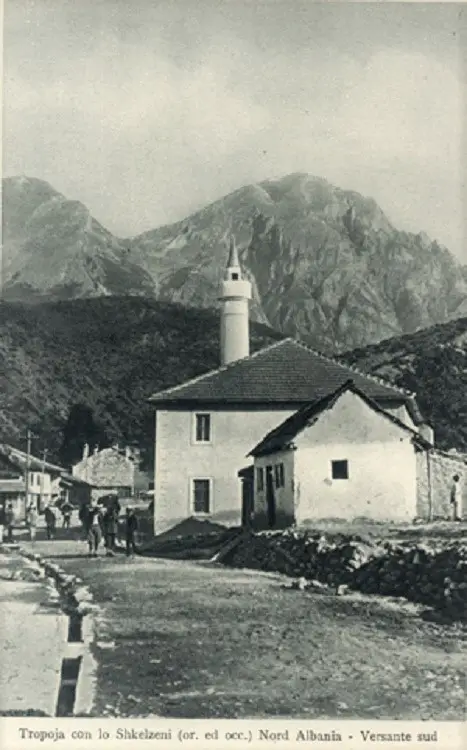
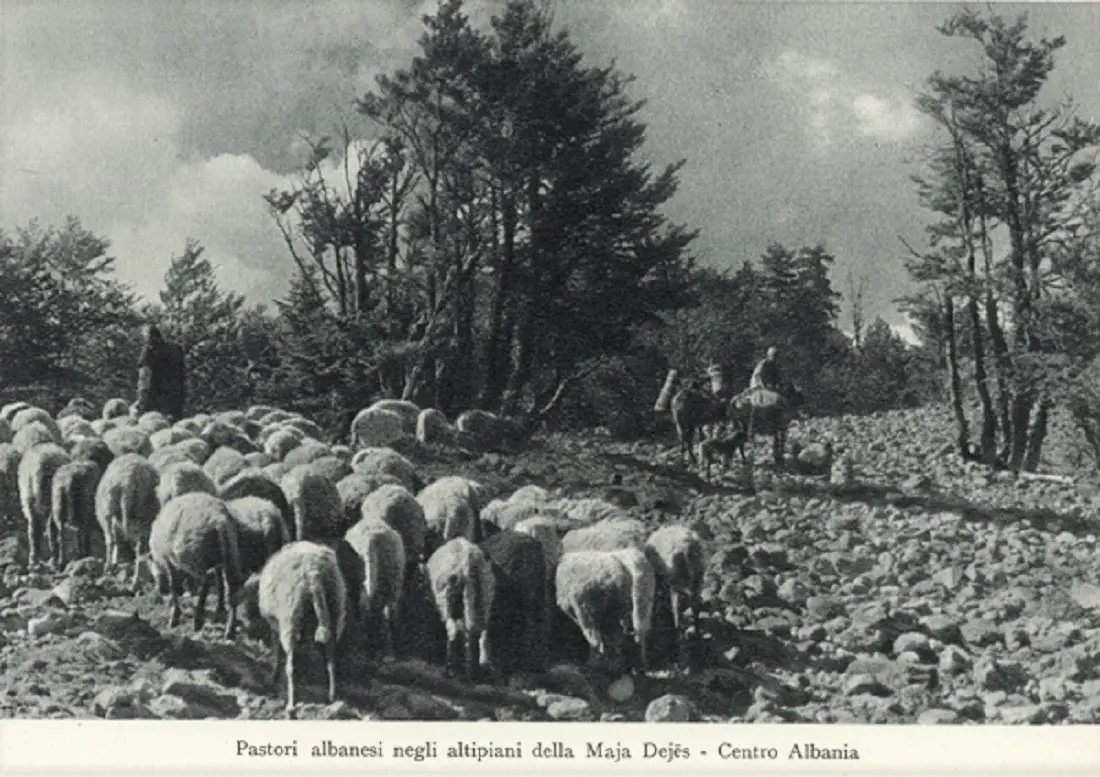
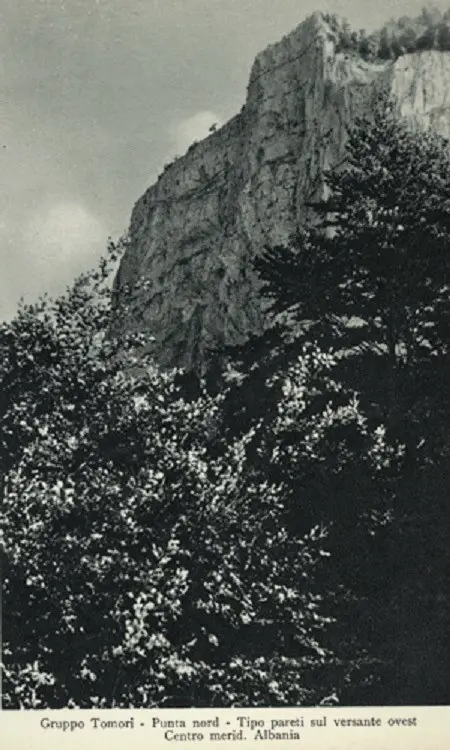
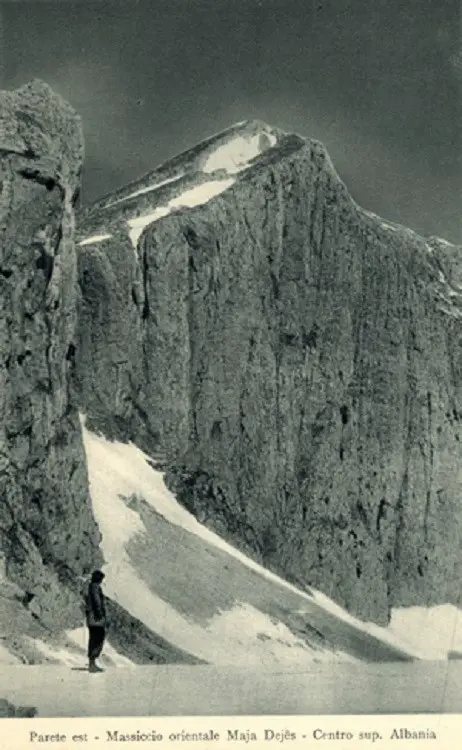
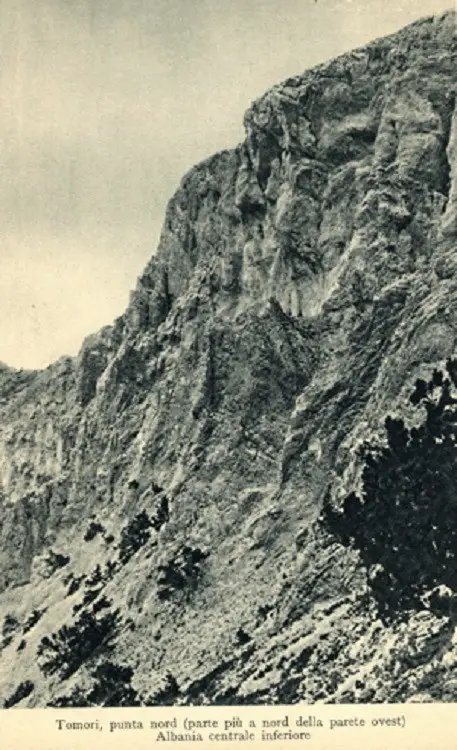
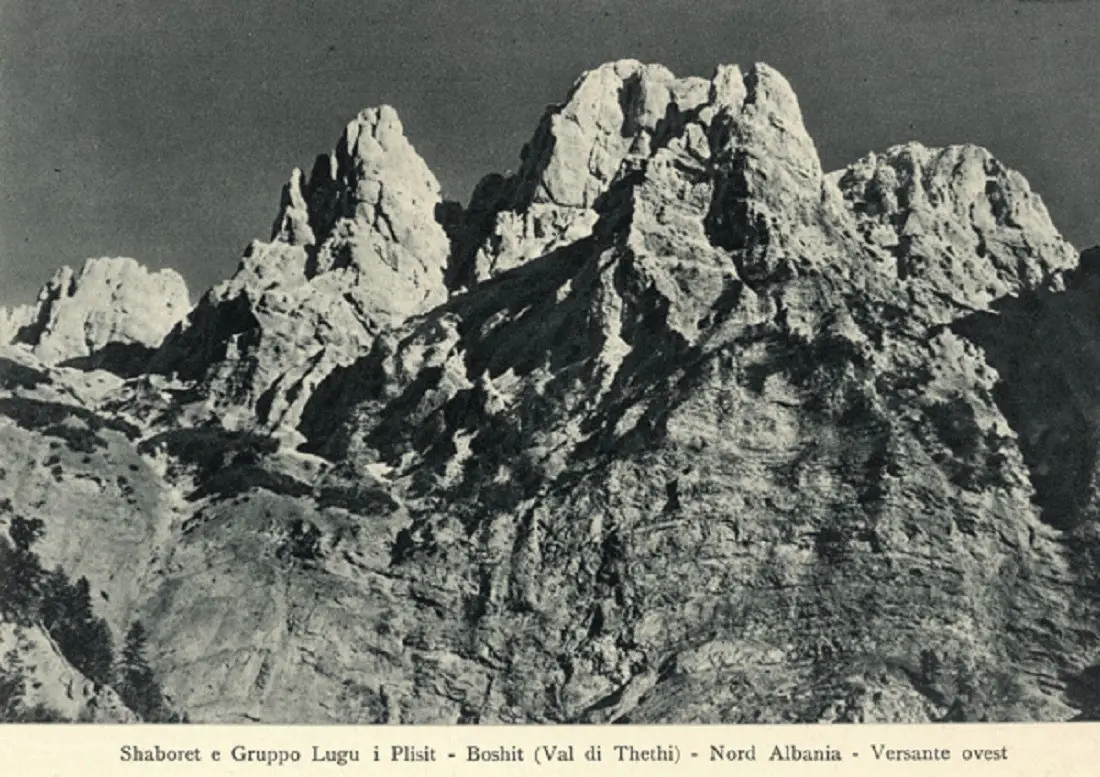
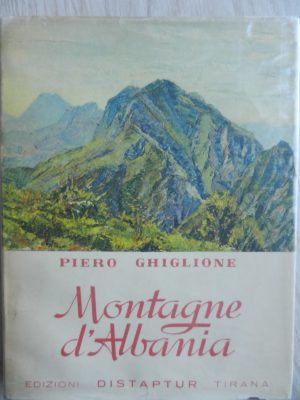
Memorie.al / In 1941, ‘Distaptur’ Publications of Tirana published Piero Ghiglione’s volume “Montagne d’Albania”, which was printed by the De Agostini Geographical Institute in Novara. The book, which includes a study on “The Rhapsodes of the Albanian Mountain” by Nicola Lo Russo Attoma, has 118 pages and is accompanied by 60 black‑and‑white illustrations taken from photographs made by the author. So that the book would have a wide circulation in Albania, it was published at the same time in the Albanian language – in “PUBLICATIONS of DISTAPTUR in TIRANA” under the title “Malet e Shqipnisë” and with the subtitle “With a study dealing with the Rhapsodes and the Albanian mountains”, by Nicola Lo Russo Attoma.
The magazine “DRINI” – (Monthly Bulletin of Albanian Tourism) – published in Tirana by the Directorate of Tourism, Press and Propaganda of the Presidency of the Council of Albania – published a review of the book in issue No. 8, dated 1 October 1941.
“Montagne d’Albania” can be considered the first scientific essay on the Albanian mountain system and is no longer found on the antiquarian book market. Our research shows that copies exist in specialised Italian libraries and also in the NATIONAL LIBRARY OF ALBANIA in Tirana.
The essay by Ing. Piero Ghiglione presents itself as a guide for mountaineers who might wish to venture into the Little‑known Mountains of Albania, with the certainty of finding there those pictorial beauties and those mountaineering emotions which, until now, could only be found in other regions of Europe.
The cover of the book is taken from a painting by the painter Sante Bullo, which portrays the mountains of Kruja, and the illustrations are taken from photographs by Ing. Ghiglione.
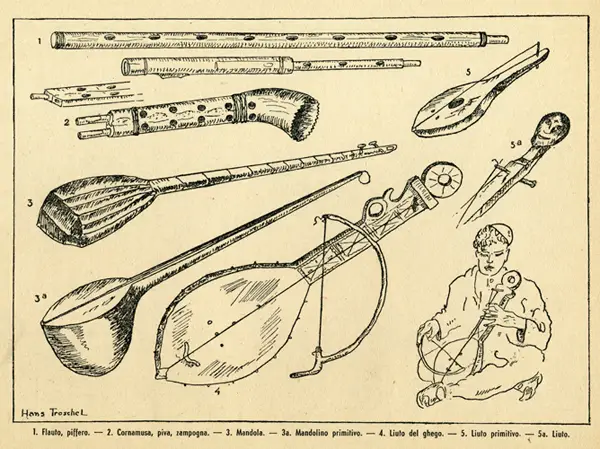
In the chapter “The Rhapsodes of the Albanian Mountain”, an illustration is given of the main musical instruments used in Albania at that time.
This is the text of the review published in the magazine “DRINI”: The initiatives carried out in the field of Albanian publishing – it is enough to recall the wonderful collection of artistically illustrated postcards which could not have better popularised the folklore and scenic beauties of Albania – has gained a new merit by presenting to the public a volume, soon to be released from the presses of the ‘De Agostini’ Geographical Institute, which brings to the world the tangible illustration of a largely ignored sector of Albanian territory: the mountain.
Three‑quarters of Albania are mountainous: inaccessible peaks, majestic ranges, broken rocky ridges, forests, valleys, snow and glaciers, alpine houses clinging to the rock, dolomite ridges carved into the opal purity of the sky.
Here is an Albania unknown to many people, an Albania viewed from afar, often without interest or curiosity, which today, through this new activity of Distaptur, draws the public’s attention to itself.
Nor should we believe that these “Mountains of Albania” come to meet us through the pages of a volume written in the dry prose of a tourist guide, however elegant and illustrated with all the rules of modern art.
No, on each of these pages there trembles a heartbeat of deep humanity, a shepherd’s song rises from every described valley, every peak relives its legend of flesh and blood, so that when you close the work, around you there is the glory of space and silence, but there is also the human spirit refined and purified by the wind of millennia, by the eternal whiteness of the snow.
It opens a spiritual panorama that will accompany the reader on every excursion and that will give every ridge and every valley its own special soul. Here, as in everything, it is the human element that dominates over matter. It is man, with his passions, with his history, with his traditions, with his defects and with his virtues, who rules and regulates the mysterious laws of nature, who gives, often unconsciously, a special physiognomy made of colours and sounds to the environment in which he lives.
The tourist part of the volume – that is, the description of the Albanian mountain, the illustration that we might call technical of that imposing mountaineering complex which forms the backbone of the whole country – has been entrusted to Piero Ghiglione, that is, to one of the most famous mountaineers in the entire world.
And it is enough to recall in this regard that Ghiglione carried out his mountaineering explorations in the Himalayas, in the Andes, in the African massifs and naturally in all the European chains, to understand the seriousness and competence that enliven the pages of this volume.
Ghiglione needed several months to carry out his precise and painstaking Albanian campaign. He carried it out with the understandable love of a man who made the mountain the main element of his life. Some peaks were known to him, others were overcome by him for the first time – because some of his ascents constituted the coveted conquest of a first ascent.
He describes them in every rock fold, in every jagged stone, leading us along inaccessible paths and dizzying climbs, up to the most difficult and broken peaks.
Divided into six chapters covering the six mountain groups of the Albanian mountaineering system, this part of the volume analyses the mountains with the precision of a scientific treatise: precision perhaps abstruse for people sitting at home, just as the formula of a chemist or the signs of mysterious traces from a radiologist on an analytical spectrum plate might be abstruse for a layman.
But despite this, one feels on every page the powerful spirit of nature, the infinity of the horizons, the grandeur of the struggle that the small, stubborn man fights and wins against the stone colossus. And one becomes acquainted with the strange and well‑known weapons of the mountaineer: crampons, felt pads, ropes, ice axes, blankets, pitons.
One becomes acquainted with the sixth or seventh class of a clean face, with countless other mysterious terms, and with the dangers, pains and joys that constitute the material and spiritual burden of those who climb.
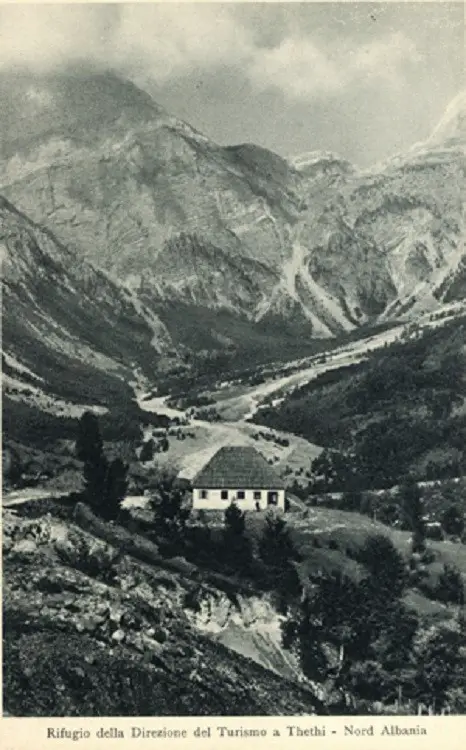
Piero Ghiglione is enthusiastic about the mountains of Albania. He appreciates the work of Albanian Tourism, which has already built a comfortable shelter in the Theth region, in the northern mountains, and foresees a flourishing future for mountaineering in Albania, especially in the areas that host large and comfortable skiing fields.
Indeed, on this subject he concludes his work by dedicating an entire chapter to it, where he examines all the areas that could become frequented centres of this important and special sector of mountaineering.
An interesting book, then, is this “Montagne d’Albania” with which Distaptur adds an aspect both beautiful and unknown of the Albanian land – an interesting and noble book, for which, in addition to the Italian and Albanian editions, other editions in the major European languages are planned.
Ing. Ghiglione, as a skilled mountaineer, wanted to accompany the guidebook with “Warnings” for mountaineers. “Bear in mind,” he writes, “that the best season for summer excursions is June – September.
Until mid‑June the weather is generally uncertain and a great deal of snow may be found on the approaches below the rocks; in September, after the middle of the month, the evenings and nights are very cold, especially for camps above 1500 metres. In the Albanian mountains you can do a great deal of skiing, so in the winter and spring months.
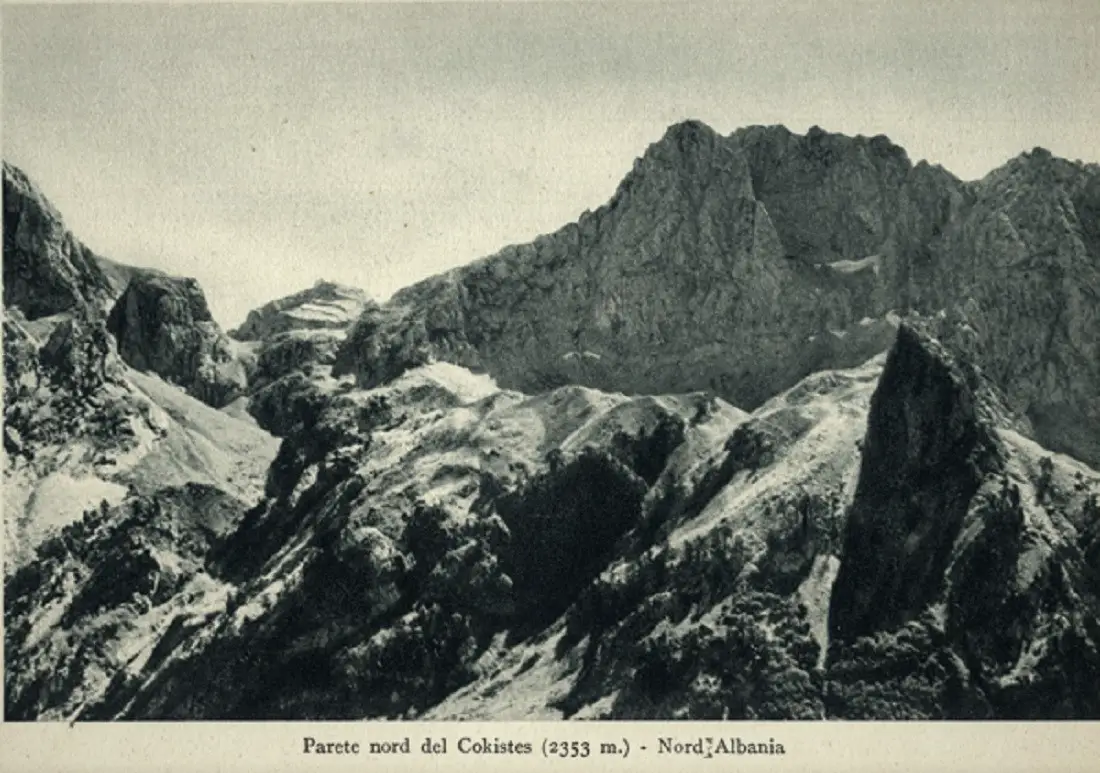
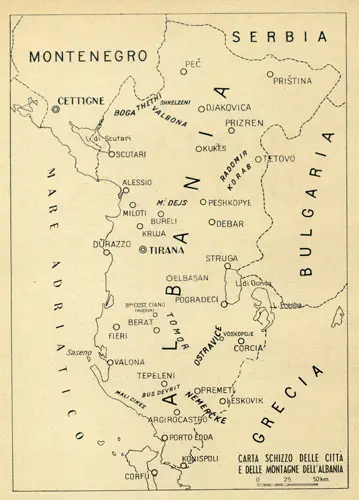
It should be noted – the author continues – that for genuine rock climbing, the best area is without doubt that of northern Albania between Boga, Theth and Valbona. Then come, in geographical order, the region of Maja e Madhe and its neighbour Parnas. This is a long series of slopes over 2000 metres. Worth mentioning is the area of Maja e Dejës, in the upper central part of Albania, and that of Korab and Radomira.
The area of Tomorri (lower central) is also highly recommendable – both for tourist‑mountaineers in the southern part and for mountaineers in the northern part. Also to be mentioned as important are the Ostrovica chain in the lower eastern region, near Korça, and the Nemerçka area in the south.”
The author ends the book with his advice on the necessary and useful equipment and supplies for mountaineers. Undoubtedly this part refers to those heroic years of mountaineering and today is surpassed by continuous technical innovations. Nevertheless, it gives an idea of the difficulties the first explorer‑mountaineers had to overcome (it should not be forgotten that many Albanian peaks were still untouched at that time) and that they could easily encounter wolves and wild boars, if not a few bears.
“Malet e Shqipërisë” is an interesting and well‑documented book, which still today has its scientific and cultural validity. Below we are publishing some of the book’s illustrations, which make the volume particularly valuable. Memorie.al