From Elsa Demo
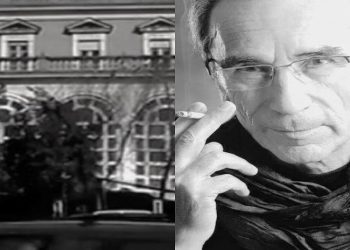
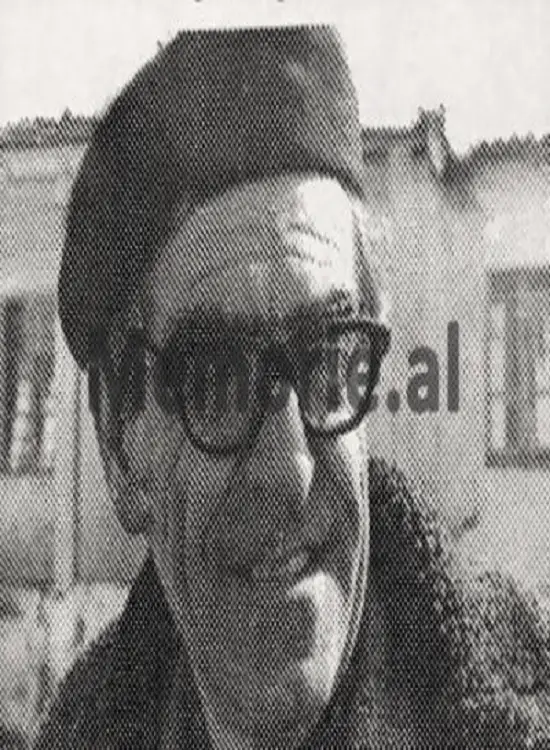
Memorie.al / Everything that is preserved in the form of memories from Xhemal Broja is located in a small old house on “Rruga e Dibrës” in Tirana. It is not far from that building which is often hypocritically called a “temple” by people who shrug their shoulders if you ask them who Xhemal Broja was for the Theatre. In one month, it will be exactly 20 years since the death of one of the creators of the People’s Theatre who, together with the actor’s shelter, also raised a edifice of knowledge about theatre and the history of this art, at a time when ¾ of the population was illiterate. It is certain that no one has thought to remember Broja along with a series of his contemporaries, also for a simple reason.
While our National Theatre insists on a repertoire of Albanian drama and a predominantly Albanian identity of the theatre, for years hymns have been sung to actors, shifting attention away from the true dramatists and dramaturgy or from those personalities who helped to have, practically and theoretically, a national theatre.
September 17th could have had a few hours in memoriam for Xhemal Broja in a corner of the Theatre. To remember on this occasion also the life of the intellectual which resembled a tragically perfect drama? It could have been an opportunity to remember that some of the persecutors of the Broja couple and of those who shared their fate under the dictatorship are alive and have a great public reputation.
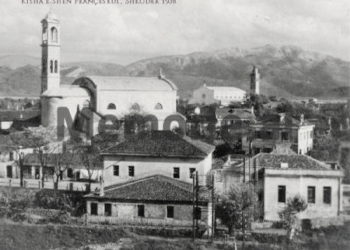
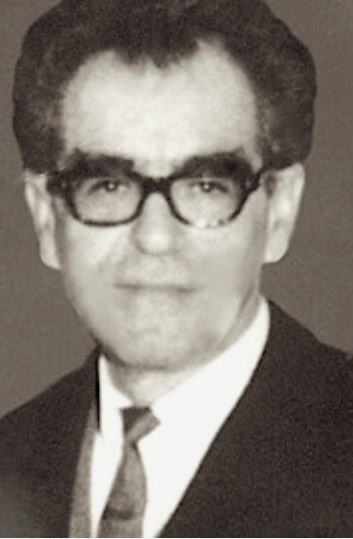
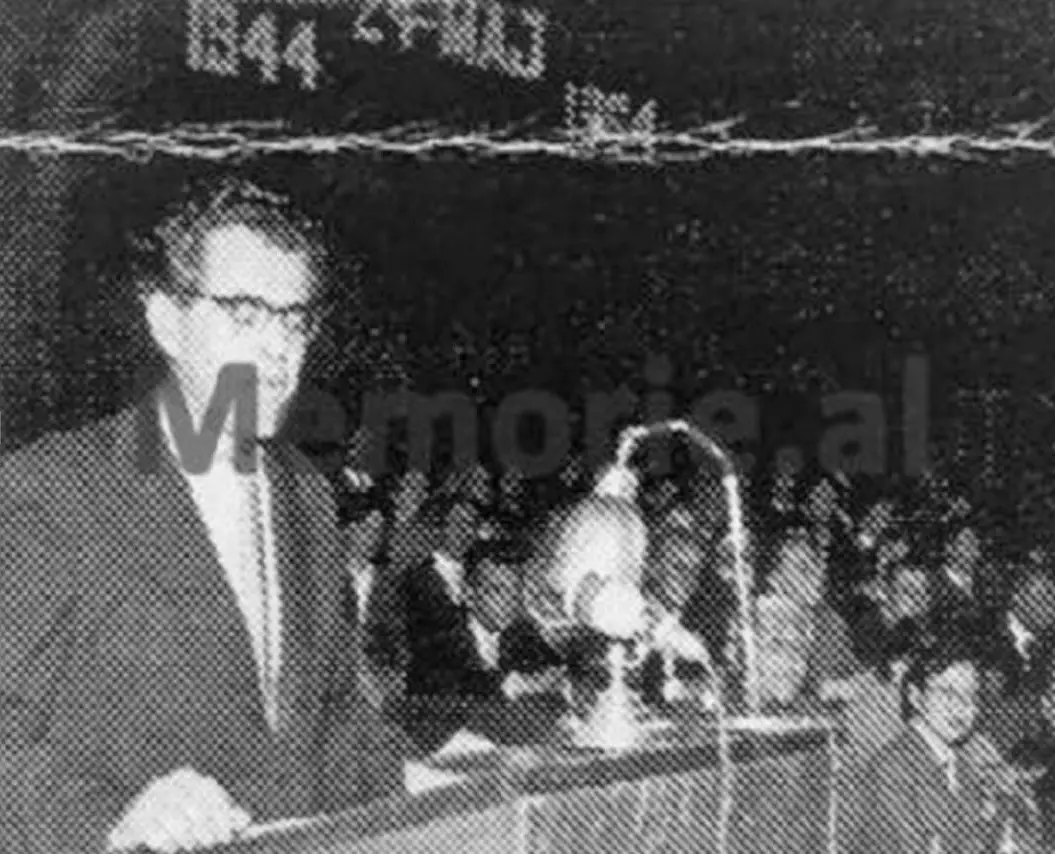
Xhemal Broja was born on March 24, 1918 in Shkodër, where he attended the Franciscan high school in his hometown and then studied law in Grenoble, France. There he simultaneously attended courses in literature and dramaturgy. During this period, he became active in the movement of the French Communist Party. When Albania was invaded in 1939, young Albanian anti-fascists studying in France protested together with the French in front of the Italian consulate.
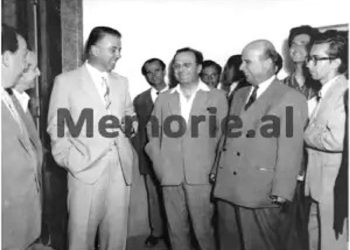
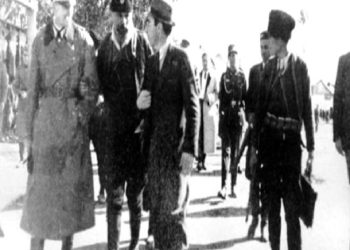
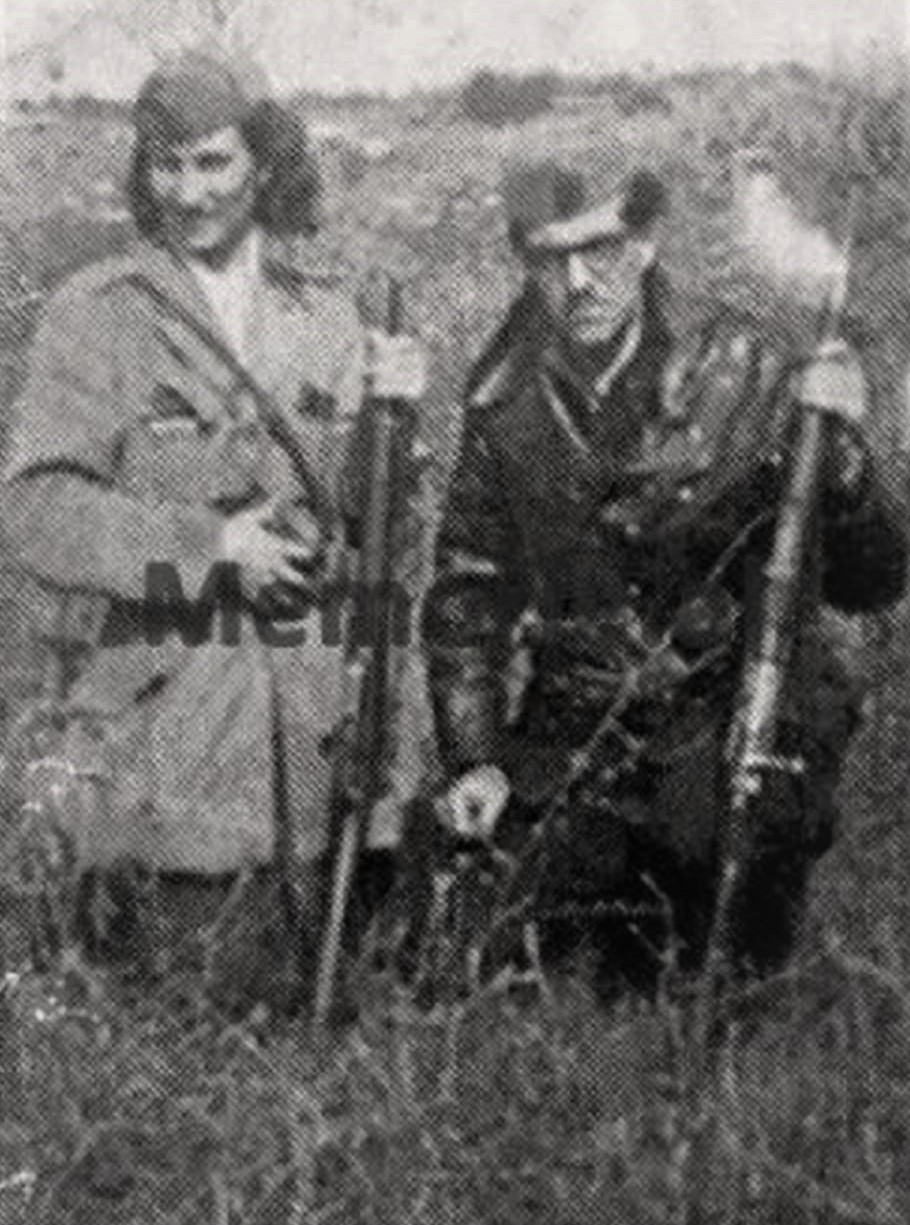
There, Xhemal Broja drafted and delivered the speech for the occasion. For financial reasons, he interrupted his studies in Grenoble to continue them in Italy alongside his wife Selfixhe Broja (Ciu) and Qemal Stafa, as we see the three together in this photo from the time. Here too, he continues his anti-fascist engagement until he decides to interrupt his studies and return to Shkodër, where the couple opens a bookshop that radiates culture and patriotism among the youth.
After the demonstration of February 22, 1942, accused of being the main organizers, his wife was arrested, while the husband went into hiding and was thrown into the Postriba area where a partisan nucleus was created, which later became the “Perlat Rexhepi” battalion. From August 1944 until the liberation of the country, he directed the illegal printing press. Meanwhile, he was a member of the Presidency of the National Liberation Council of the district.
His inclination for theatre had emerged in adolescence, especially with the arrival of Professor Skënder Luarasi at the high school. His first drama was titled “The Spy” and was successfully shown in several cities of the country. Another drama, “November 28”, was suspended, but as his wife testifies in her memoirs, Xhemali was an optimistic nature and was not easily discouraged.
After the war, he was called to Tirana to organize the People’s Theatre, where he worked for 20 years as a director and dramaturge, and at the same time contributed to the organization of other theatres, the Opera and Ballet Theatre, the Puppet Theatre, and those in the districts. The great help he gave at the “Aleksandër Moisiu” Higher Institute for preparing students in conditions of a total lack of textbooks cannot be overlooked.
And this is spoken of below by a former student of his, the famous actor Timo Flloko, who remembers him as a lecturer of World Theatre History, a well-known dramaturge at the time, author of “Majlinda” and other works, as a universal erudite.
Broja managed to compile texts such as The Actor’s Mastery, History of Dramatic Art, Methodology of Theatrical Art, Theatrical Dictionary, History of Albanian Theatre, History of World Theatre, etc.
As a dramaturge, he wrote the dramas Under Occupation, The Clash, Bajram Curri, Majlinda, Deep Roots. He translated works such as The School for Wives, The Deputy, The Titanic Waltz, The Gardener’s Dog, a work translated in collaboration with his wife, some of which have remained in the drawers of institutions or in the family archive.
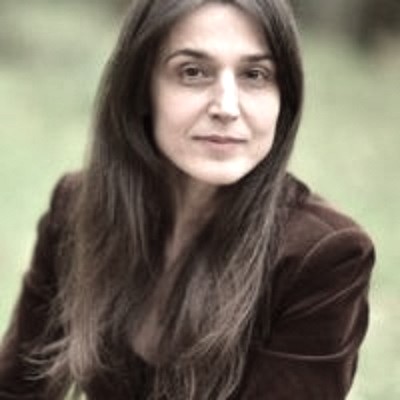
Sashenka Gjergji, the daughter of the Brojas, says that everything remains in her father’s manuscript. She has taken the initiative several times to publish, especially the texts he compiled on theatre history and the actor’s mastery, but publishers ask for money.
In this corner of Broja’s archive are the collected index cards on the history of the People’s Theatre, the “Migjeni” Theatre, the Opera and Ballet Theatre, the Film Studio, as well as a collection of proverbs of famous people, folk anecdotes, individual memories which he did not manage to finish.
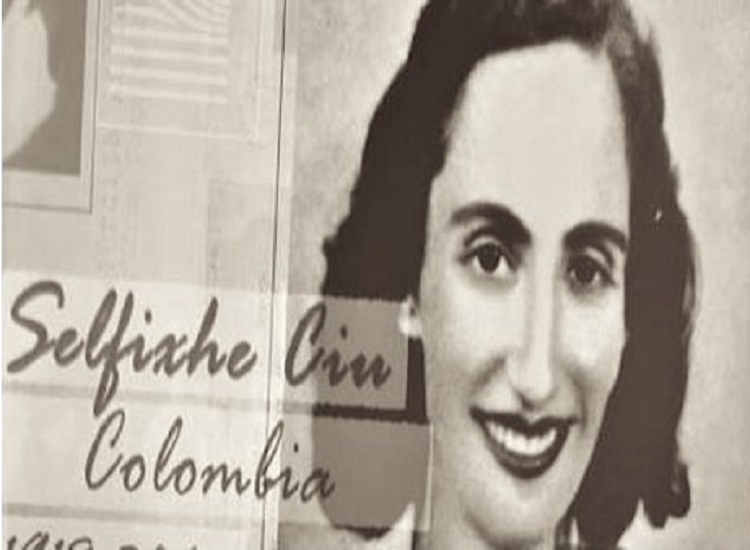
In the memoirs of Selfixhe Broja, one of the first female journalists who wrote under the pseudonym Kolombia, it is clearly told how it happened that they, husband and wife and later with their children, were continuously struck by the regime. On March 23, 1946, both were expelled from the party as its “enemies”, and it was not long before they were declared agents of the American mission. Constantly watched, they decided to isolate themselves to avoid any trap that might otherwise have been inevitable.
In January 1947, they were interned in Kurvelesh. After the break with the Yugoslavs, the internment measure was lifted. They were sent first to Elbasan and then to Tirana, where many others like them, rehabilitated, believed in the “turn”. They are transferred to Kuçovë. Their old enemies had not forgotten them. In 1966, they were interned again, together with their 15-year-old daughter, in the Lushnje sector as agricultural workers, where they wallowed in the muds of Myzeqe.
Selfixhe Broja recalls that one day Xhemali told her, as old age and a tumor were putting an end to him: “I have a callus inside my soul, a sorrow that the grave will not consume. And this not only for my and your disappointment, but for all my comrades and friends, for all those persecuted by the dictatorship, for the country and for the people, before whom we former communists must bow and ask for forgiveness, because we too placed a stone in the foundations of this terrorist system.”
On the other hand, Selfixhe is as much a witness to this forgiveness that the ex-communist asks for, as she also testifies, sometimes by name, sometimes by initials, about the informers and hyenas of persecution. Everything is clear. Those people were and are among us, some of them belonged even to relatives of academic circles. This woman testifies that on the eve of liberation, when Xhemal Broja was asked whether he would follow a military or civilian profile, he replied: “I will remain a simple citizen.”
Timo Flloko: The Living Library of Knowledge
Xhemal Broja was for us an alienated form of each of the tragedies, a qualitative synthesis of them, the living oral library of knowledge, perhaps even a contemporary of Aeschylus, Sophocles, and Euripides. No, certainly, he was not such a realist, but undoubtedly for all generations of studies, he was a translated model of culture, an indisputable personality. I followed all his lectures with particular interest.
The lecture hour was a retrospective excursion into time and the world that he would take you to. His style and knowledge flowed naturally in a wide bed of information, like the bed of a man from the large volume of inflows… I had no knowledge whatsoever of theatre dramaturgy. The world literature subject we had done in high school included very few playwrights.
Around the middle of the year, I approached him and said: “Professor, I finished with ancient Greece. I read all the authors.” – “Good,” he tells me kindly. “Now conquer Rome.” In the June exam, I did well and he was pleased with the answer. “In culture, something always remains… said, that’s why I give you a nine. Are you satisfied?” – he tells me. “Yes, professor, very satisfied,” I tell him. “The ten belongs to life, Timotheo.” / Memorie.al