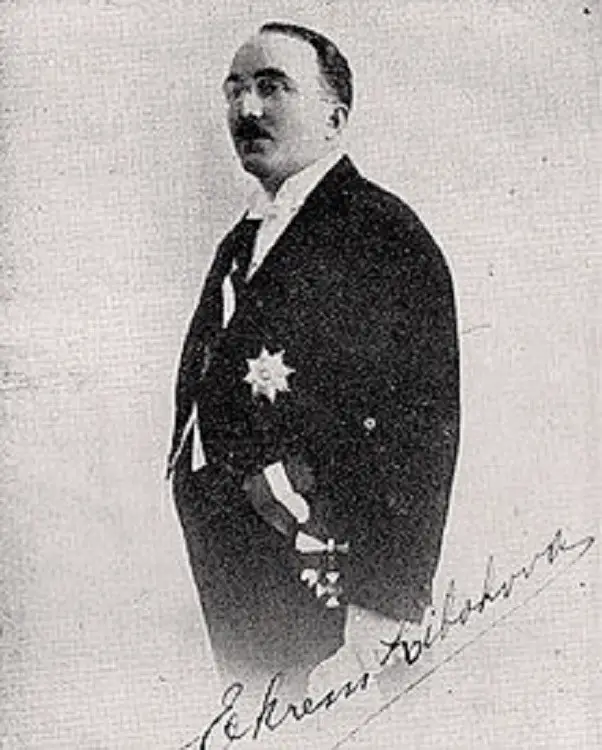
From Çerçiz LOLOÇI
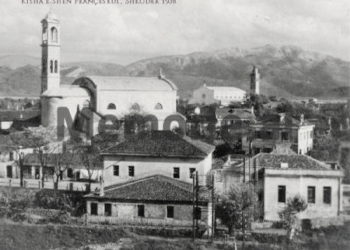
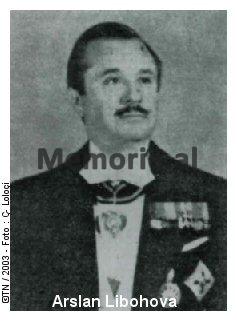
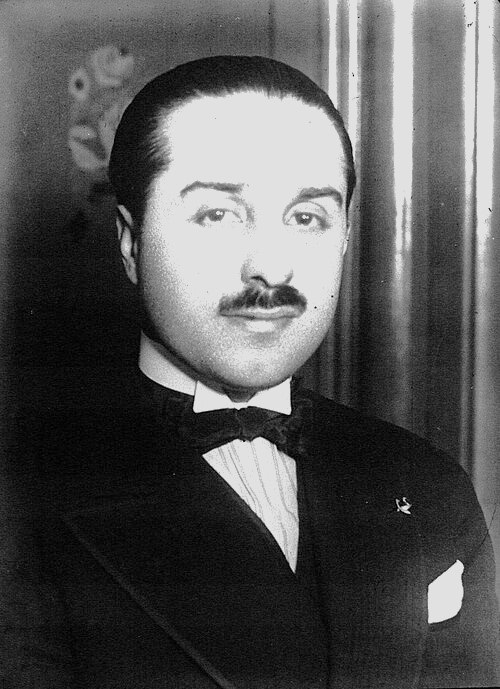
Memorie.al / Arslan Libohova has published many writings in the Albanian language and especially in French. He was endowed with a broad culture and spoke and wrote many foreign languages. He was a member of many cultural and social circles and was known in high European society. He was decorated with many Albanian and foreign orders of merit. Arslan Libohova was born on July 5, 1917, in his family’s homes in Libohovë, after the castle of Libohovë together with the palace, in an old dwelling of the house that existed at that time, was partially ruined by the Balkan War and later by the Greek occupation, by World War II, and finally by the communist regime.
A member of the old Albanian aristocracy, which from the 13th century for three consecutive centuries, generation after generation (from 1536 to 1800), led the Principality of Ioannina and the sanjaks of Gjirokastër and Delvinë, as well as several provinces surrounding them. In the old history of the Ottoman Empire, this family (household) is known as the house of the viziers, the Arslan Pashas of Ioannina – the beys of Libohovë. After this period begins the rule of Ali Pasha Tepelena over these sanjaks, who had formed a marital alliance with the beys of Libohovë, giving and receiving among them.
Malik Bej Libohova, the father of Arslan Libohova, was a high-ranking officer and academic graduate of the first Albanian army from 1915 to 1925, and later as a diplomat represented Albania in Paris, London, Rome, and at the League of Nations in Geneva. He died in 1952 in Rome, in exile, defending with honesty and dignity the interests of his country.
Arslan Libohova, together with his twin brother Kaplan bej Libohova, were raised by their grandfather Mufid bej Libohova, an international statesman and ardent patriot, having been 10 times minister in the portfolios of Finance, Foreign Affairs, Interior, and Justice. He also led an interim government after that of Ismail Kemal bej Vlora. Mufid Libohova signed many international treaties in Albania’s interest; among other things, he was the founder of the National Bank of Albania.
In the Ottoman Empire, he was a plenipotentiary minister and later a deputy of Albania in the Parliament of Istanbul, where he distinguished himself for his nationalist activity as a standard-bearer of the cause of Albania’s independence. Putting his life at risk, after the Young Turks made two assassination attempts on him, he returned to his homeland where he resolutely continued the fight for the independence of the Fatherland.
He is also one of the main leaders of the national movement and the founding of the first Albanian state. In the first government of independent Albania in 1912, headed by his cousin Ismail Kemal bej Vlora, he was Minister of the Interior and later Minister of Foreign Affairs, as well as Albania’s representative on the International Control Commission of the Albanian government.
Arslan Libohova, high-ranking officer, academic, and diplomat, completed his secondary studies in Paris and London. In 1934, he successfully finished the Military High School in Naples, where he had entered in 1931, and in 1936 he completed the Military Academy in Modena. In 1936, he was appointed an officer of the Albanian Army and continued his higher military studies at the advanced school in Parma. He was a professor at the military school in Tirana during the years 1938-1939. Captain in the Balkan War during 1940-1942 at the head of an Albanian volunteer battalion fighting for the liberation of Chameria.
Later he was promoted to Major of the Army and was awarded the “Order of Bravery”. In 1947, he resigned from the army and lived in exile for more than 10 years in Egypt as an advisor to one of the most powerful financial, industrial, and economic groups in the country. He also had close contacts with political, military, and diplomatic personalities to illustrate to them the tragic situation in which Albania found itself at that time, and for this purpose he collaborated with the international press.
Being in this large group gave him the opportunity to travel to many countries of the Mediterranean, Africa, and Asia, thereby gaining valuable experience in various fields of life. In 1959, after the military revolution in Egypt, being also family-related and friendly with the Egyptian royal house, which is of Albanian descent, he was forced to leave that country and settle temporarily in Rome, where the rest of the family lived in exile. Later, in 1960, he left for the USA, where he lived for several years in New York, having the opportunity to visit many other states of America. In New York, he had the chance to frequent several cultural and academic institutes to conduct historical and American cultural studies.
He collaborated with many international and American organizations as an independent leader, refusing to take part in any of the many divided Albanian political parties in exile that were in constant dispute with each other. He made these contacts with the aim of protecting the freedom and interests of the country. He had the opportunity to become closely acquainted with many high-ranking American and international military and civilian personalities, presenting to them the problems and terrible situation of Albania during the Marxist totalitarian regime.
Around 1964, he returned to Rome for personal and family reasons. Even in Rome, he continued to make contacts, as he had done before in Egypt and America, to take an interest in Albanian problems, having contacts with many Italian and international governmental and military authorities, giving opinions on resolving the situation in Albania. Here, too, he collaborated with the Italian and international press to reflect the situation as realistically as possible. Author of many articles in Albanian magazines published in exile, and mainly of the magazine “Koha e jonë” (Our Time) published in Paris.
He also collaborated with foreign magazines and newspapers on Albanian issues. He was not only a good researcher of military science, but also of Albanian history, especially within the framework of the Ottoman Empire. For this purpose, he made several trips to Istanbul to study the origin of the Libohova family as well as that of Albania. Many old documents are located in the libraries of the ministries of religious foundations (vakfs) of Turkey. The great library of Mufid bej in Libohovë, with many valuable books on the history of the family and the country, was burned as a result of the ignorance of the communist leaders, a crime against Albanian history and culture.
Arslan Libohova had published many writings in Albanian and especially in French, in order to make our history better known outside the homeland as well. He was endowed with a broad culture and spoke and wrote many foreign languages. He was a member of many cultural and social circles and was known in high European society. He was decorated with many Albanian and foreign orders of merit, both from his own country and from other states. Everywhere, with his noble behavior, he reflected the ancient traditions of his family and the generosity of his country.
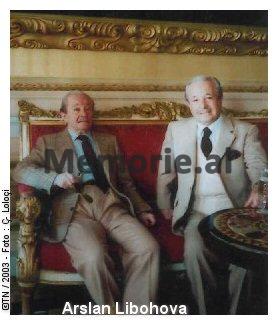
Arslan bej Libohova and his brother Kaplan bej Libohova are the eldest heads of the family. He lived 60 years in exile with great dignity, but unfortunately he did not have the fortune, as he wished, to see his beloved homeland one last time, because on December 15, 2002, with this wish and thought in his heart, he passed away in Sanremo, Italy, at the age of 85. He died with great sorrow for the future of his beloved homeland.
A few words about the journalistic work of Mr. Kaplan Bej Libohova
The publication of a book is currently under study, in which will be collected and published a part of the writings presented during the communist rule in Albania, from the Albanian press in exile and from the international press, reports, memoranda, and papers, which from time to time had been submitted to some foreign American and European diplomatic representations as well as to some headquarters of European capitals, through which Arslan bej Libohova and his twin brother Kaplan bej Libohova (who followed the same career), as independent leaders (without any connection to Albanian or foreign political groups), reflect the tragic situation and terrible sufferings of our people under the brutal communist dictatorship and the high treason of the Albanian Marxist-Stalinist ruling class; also, in these writings and comments, our history is discussed and the undeniable rights of the Albanian nation and people are highlighted. / Memorie.al