Memorie.al / Many families in Elbasan have almost disappeared, leaving no descendants. In most cases, they were persecuted by communism, were killed and imprisoned, making continuity impossible. The Haxhimusai family suffered a similar fate. The granddaughters and the only grandson were born and raised in internal exile and managed to survive and return only because the wife of one of the Haxhimusai sons had a brother who was a martyr of the war. But these children were left in the shadows and persecuted all their lives.
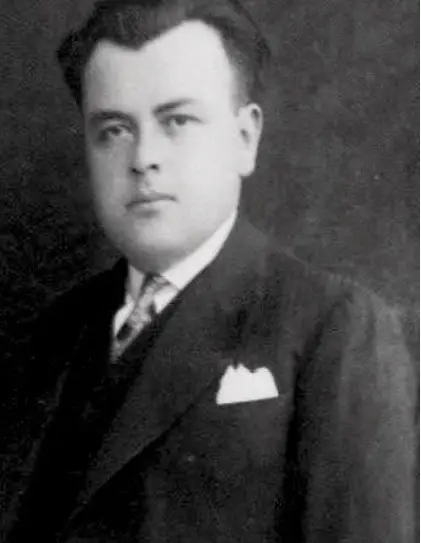
The history and data about the past of this family have been gathered by a researcher of Elbasan tradition, Shpëtim Haxhihyseni. He recounts that the granddaughters of Emin, Doctor of Sciences who opened the first chemistry laboratory in the country, bring back quite sad memories from that time.
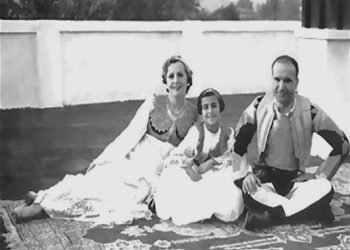
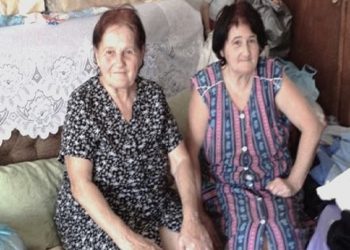
One of them, Afërdita, married into the Hasekiu family, says that as children they were born and raised in internal exile, while their father died young. A daughter of Agim, one of the Haxhimusai brothers, married into the Bakalli family, while Hedija never married. As for the only son, he left as an emigrant and now lives in Greece.
Shpëtimi, gathering data about this family, also brings the complete story of how they were persecuted, killed, and now the Haxhimusai have no trace of continuity; they were known as nationalists, but they met the same end, even though Emini left Vienna to contribute to his country.
The history of the family
“In the dead-end alley opposite the two-story building of the Baholli family (former dispensary) lived a simple, typical Elbasan family, the family of Xhaferr Haxhimusai. Xhaferri had four children: three sons and one daughter.
The sons were: Ymeri, Emini, Qamili. The daughter, Fatimeja, married Hysen Struga. After the father’s death, Ymeri practiced trade, while Emini and Qamili attended school. Emin Haxhimusai was born in 1905. From childhood, his diligence for learning stood out, and he distinguished himself among his peers for his intellect.
With the care of his older brother, Ymeri, he was sent to Austria to continue his secondary and higher studies. After graduating with excellent results in Vienna in chemical engineering, in the following three years, he did his doctorate in Linz, Austria. He earned the title of Doctor in Chemical Sciences and was among the first Albanians with this title.
He did not accept the offer made to him to work as an assistant to his professor in the academy’s laboratory, but decided to return to Albania. And, upon returning to his homeland, he stayed in Tirana, being appointed supervisor and founder of the first national chemical laboratory.
He was valued as a deep expert in many theoretical issues and particularly for his abilities in conducting experimental practices. His comprehensive Western culture quickly caught the eye, and he soon found himself alongside great elite figures such as Doctor Bilal Golemi.
The Fascist occupation
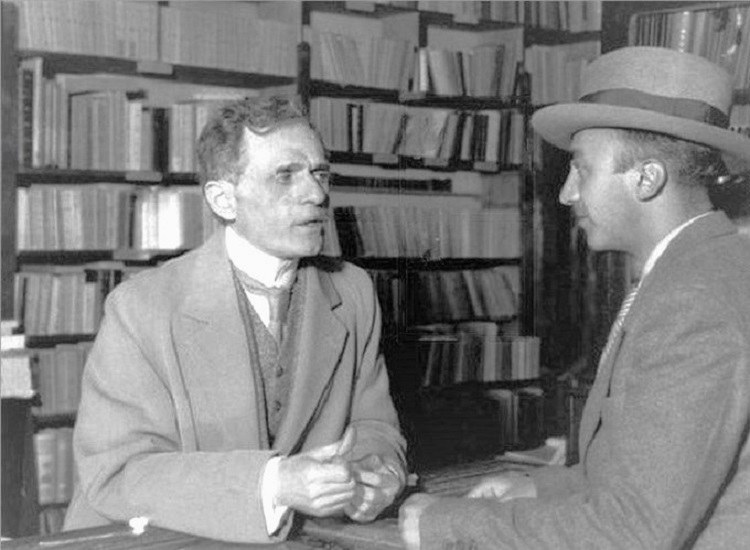
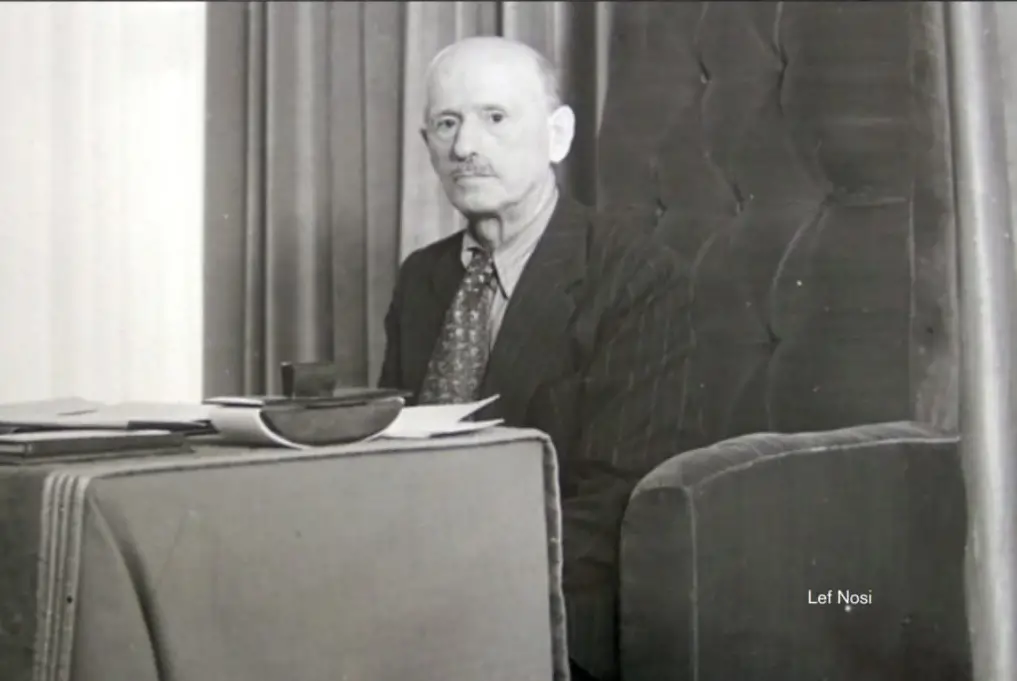
During the days of the Fascist occupation, Emini stood out and became known as a true nationalist, as an anti-fascist and as a staunch anti-communist. He aligned himself with the ranks of the ‘Balli Kombëtar’ (National Front) organization, also holding high leadership functions. He was a friend and colleague, a comrade in ideals with Mit’hat Frashëri, Lef Nosi, and Et’hem Haxhiademi.
During the war, he organized and invigorated ‘Balli Kombëtar’ for the Elbasan district, cooperating with Lef Nosi, Alush Lleshanaku, and Osman Doraci for the ‘Resistance Front’. At the end of the war period, he found himself in Shkodër, to leave Albania with Mit’hat Frashëri and Lef Nosi.
But he returns again to take the notes of a scientific paper of his, with the aim of publishing it abroad in exile. Precisely then, the road is closed, and he remains in Albania.
The first years after the war
During the war years, with his first cousin, Shegush Haxhimusai (the wife of Petrit Hakani, former major-general), the two debate in his house for nearly two hours. She proposes that he join the Movement (Communist), while he opposes, telling her: ‘I know communism better than you.’ After the execution of Lef Nosi, Emini leaves Elbasan and goes into hiding with some friends of his, in the village of Dorëz in Librazhd.
The State Security forces do their utmost to learn Emin’s location. Then the violence against his family increases. His older brother Ymer, together with his family, is internally exiled to Berat, whiles his mother together with the other son Qamil, is interned in the terrible camp of Tepelena, where they were crushed with unprecedented physical and spiritual violence.
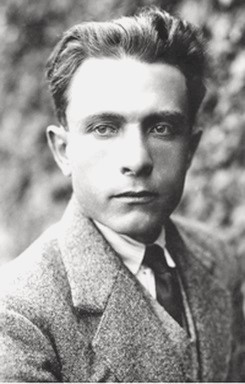
Qamili was a ‘normal school’ teacher who had worked throughout Albania. The days passed, and the tortures increased for mother Hedie and Qamil. One day, the bound Qamil is taken from Tepelena and brought to Elbasan. This game was done so that Qamil would cooperate with the Security service, and through the villagers, connect with Emin, but he was a man with a strong character and loyal to his brother’s ideals.
Seeing this stance, they put Qamil in prison and torture him to death. According to Osman Doraci: ‘One day in the prison near Bishqemi’s house, a bleeding man is thrown to the ground. It was Qamili’… So, he died from torture during interrogation. Consumed by longing for her sons, one day in 1947, Hedia died, closed her eyes, and was buried in those lands of Tepelena.
Emin remained hidden in the highlands of Dorëz, but the State Security acted and finally discovered his hiding place. Many traps were set to capture Emin alive. On one occasion, during the night hours, after the bedding was laid out for Emin and his two companions, the Pursuit Forces swiftly reached them and in the darkness pounced on his bed.
They were informed to capture him alive, but they erred. Emin, with his cleverness, had calmly gotten up and had not lain down in that spot, but was isolated in a small chamber from which he could escape, and thus he survived. In May 1947, he was killed, surrounded by the Security forces. This was the third victim of the Haxhimusai family.
Meanwhile, the older brother Ymer, was forced to report to the Internal Department every day. He stayed in Berat until he died in 1967. His wife, the sister of Ali Myftiu, finally came to Elbasan in 1967, with their 4 orphaned children. Thus the history of this family, condemned to extinction by communism, was closed.” / Memorie.al