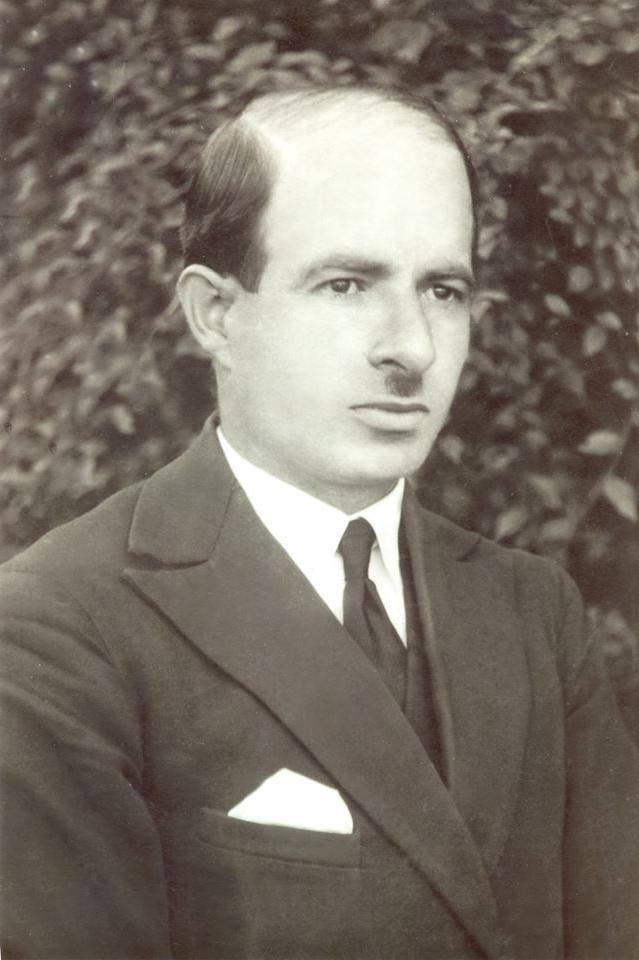
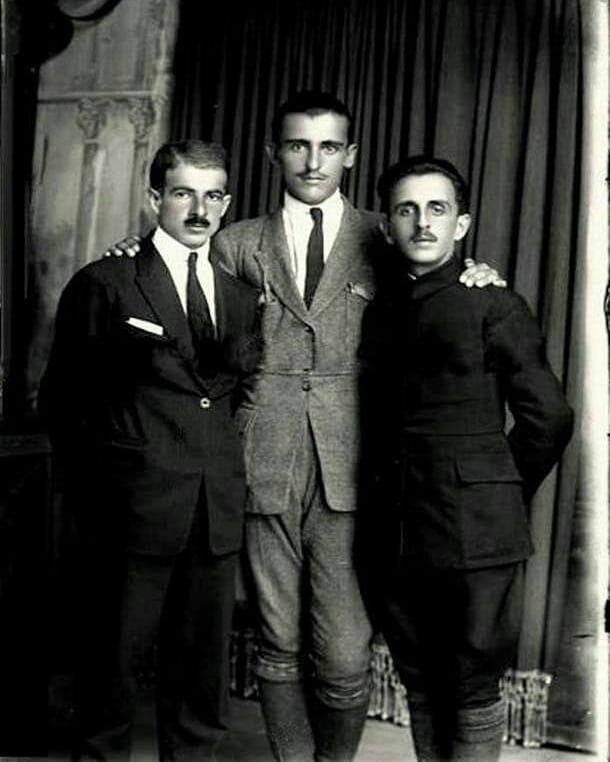

Memorie.al / “A gathering of letters with friends,” the rich correspondence of Mustafa Merlika-Kruja, included in four volumes, gives not only the dimension of this personality but also documents and illuminates many dark aspects of our history in the most delicate period, before and after the Second World War, when the communists took power. It is a long cycle of letters between Mustafa Kruja and Tahir Zajmi, about which the heir of Kruja tells us, providing information on the organization of Albanian politics in emigration. The letters of Kosovars, represented by Tahir Zajmi (1897–1971), former secretary of Bajram Curri, could not be missing from this volume. He was born in Gjakova of Baca and joined his bands at a young age.
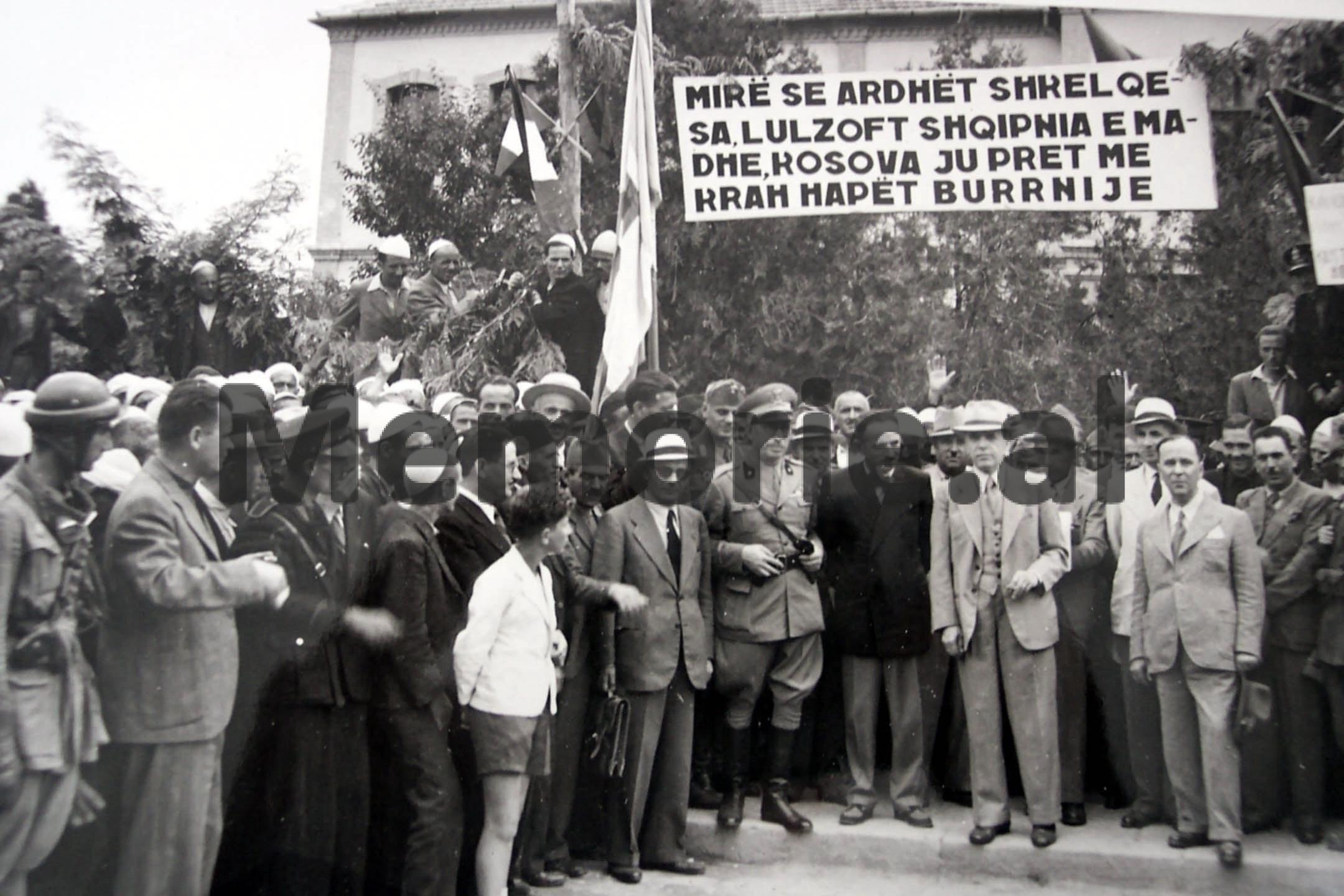
In 1918, he came to Albania, where he lived in Kukës, Krumë, and Shkodër. He joined the “National Defense of Kosovo” Committee, with Hoxhë Kadriu, Salih Gjuka, etc. He served briefly in the Ministry of Finance under Minister Gurakuqi, in Noli’s government. In 1941, he became fully engaged in the project of ethnic Albania and became one of the main leaders of the Second League of Prizren, which aimed to preserve the union with Albania, fighting with arms against Chetniks or Yugoslav partisans. Regarding this period and those events, in 1964 he published in Brussels the work “The Second League of Prizren and the heroic struggle of the people for the defense of Kosovo.”
He spent most of his exile in Turkey, in a painful struggle to make a living. For Mustafa Kruja, he expresses very high consideration, valuing all his activity summarized in the “objective”: “to unite all Albanians in a single homeland…” and that its realization had the fate of those flowers that see only one dawn and then wither. Between the two, they discuss the topics of the diaspora’s activity, with its strengths and weaknesses, with the eternal cleavages that have so conditioned Albania’s path.
There is a moment in this correspondence that I want to highlight, because it is the expression of a refined nobility of the friend from Gjakova, accompanied by an unusual sensitivity and a rare human generosity: “Just to somewhat quench the longing for your unforgettable friend, the late Luigj Gurakuqi, on 26 km [date?] by mail, I have sent you his work: ‘Versification in the Albanian language,’ which I have been carrying in my suitcase for thirty years now, and which, when we see each other someday in the future, I will ask you to return to me.”
That book, with a cherry-colored cover, never returned to its owner; that meeting between friends never took place, and the book remained among the documents and correspondence of Mustafa Kruja, and today it is, as many decades ago, in the library that holds his memories.
These letters are part of the third volume, where the rich correspondence of Mustafa Merlika-Kruja, included in four volumes, gives not only the dimension of this personality but also documents and illuminates many dark aspects of our history in the most delicate period, before and after the Second World War, when the communists took power. Even though it is correspondence, what is valued in them is the pursuit of knowledge, as if these were articles published for readers, not between themselves. Perhaps this was a project-perspective of Mustafa Kruja, which he imposed on every correspondent, as in this case, giving us a school of thought.
LETTERS OF TAHIR ZAJMI, ADDRESSED TO MUSTAFA MERLIKA-KRUJA
Manisa, March 7, 1952
Dear and Honorable Mr. Mustafa,
I received your letter quite late, a full month after it arrived in Manisa, because – having found myself outside the city center and especially due to the disruption of communications caused by the heavy snow blocking the roads – I was unable to go to the city for a long time, which is the reason for my delay in replying to you as well. So please forgive me.
Whenever I receive a letter from you, I feel a completely special joy, and I am very pleased that you call and title me as your “dear friend.” Even though I am now at a considerably advanced age, and knowing also that friendship is not measured in years but in the sincere love of people, I still consider myself far too small (in social standing or distance) to also address you with this beautiful title. So I claim that I have always been as a friend to you, who has loved and admired you with all the sincerity of a friend, appreciating in your person the positive value, the tireless worker, and the unfortunate fighter of our national cause.
Forgive me, dear friend, for daring to call you an unfortunate fighter, because unfortunately, so too were your comrades and fellow fighters who have passed away, such as: Bajram Curri, Luigj Gurakuqi, Hasan Prishtina, Avni Rustemi, Qazim Koculi, Lef Nosi, etc., etc., known and unknown fighters whom now the black earth and the dust of oblivion cover.
It is true that one day their memory will be revived with interest, and it will impose upon the hardened hearts of this bread-burning generation the need to have some respect for these pillars of the homeland. And you, who are alive and, by some miracle of fate, did not suffer their lot, are criticized and are smeared with all sorts of tails and undeserved adjectives by people blinded by political passions, charlatans, and new politicians, because the political direction you followed – with the objective: to unite all Albanians in a single homeland – did not have luck and success.
They criticize you, yes, and they fight you without taking into account your long past full of suffering and hardships, and without judging the circumstances under which certain events unfolded and upon which some people seek to formulate accusations. They do the same to many others, including the wretched Pétain and Laval, of whom, as far as the statesmen and military men of that country during these last thirty years are known, there is not a single one – in caliber – who can come close to them.
And so, these great and undoubtedly patriotic men, who sacrificed their personal prestige and everything else sacred they had, to save their homeland from ruin – tragic irony of the time! – are judged as traitors and collaborators!… Perhaps these criticisms, which are not at all objective, discourage you, and I notice this discouragement from a phrase of yours where you say: “I am trying to get used to dealing with the dead for the benefit of those who have left nothing behind.”
You are right to the heavens, dear friend, because truly it is a bitter thing and a great misfortune for a man not to be able to understand and explain himself to his own people: to see the great patriots of the nation, who gave and sacrificed everything for the country and kept nothing for themselves, condemned, killed, insulted, and despised. Therefore, I, who know quite intimately the people and events of these last thirty years, would be very discouraged to learn who is that Albanian man, among the living, who can match you in suffering, effort, and sacrifice for that wretched piece of land we call homeland.
Exiled [syrgyn] all your life, and exiled – God forbid! – Perhaps even in death. Some time ago, a friend wrote to me: “Oh, why didn’t death separate us so as not to see and hear the miseries of this era!” And I add: “the moral sorrows” that you, Mr., speak of.
Now I will write to you a bit about my own work: I came here to Turkey in May of last year, and after securing a residence permit in these last months, I have started a kind of job – as an administrator on a large estate of a gentleman – so as not to be a burden to friends and well-wishers. I am somewhat isolated, in an environment that leaves much to be desired, but quiet and far from the noise of cities and coffeehouse life. Taking the road to Australia with the other comrades never convinced me, for fear that we would not be able to succeed by adapting to manual labor.
A few words also about Xhelal:
Xhelal, being Xhelal: a young man with education and talent as a writer, especially in the field of journalism, who prefers adventures and dealings – as he himself admits – to positive and constructive work. He is so ambitious and, unfortunately, so weak in character, that one would not believe he is the son of Dervish Mitrovica. He is trying to discredit and bring down Xhafer, because the latter could not satisfy him by giving him his own place (as a social position) and everything else material that he could dispose of. And, by faith, poor Xhafer has done enough for him. A reprimand from the latter made Xhelal so revolted that then, insidiously, through some elements of Legality in Syria, he managed to change Abaz Kupi’s mind against Xhafer, thus causing the failure of the assembly that was intended to be held in Rome in 1948, with the participation of all political groups of the Albanian emigration, according to the Alexandria protocol. There is no doubt that there may have been other factors that hindered the realization of that assembly, but Xhelal’s hidden role also had its part. Past, forgotten! So I have the impression that with his temperament, Xhelal is destined to fail in every undertaking of his.
Quite the opposite can be said for Rexhep Krasniqi: a wise and measured man, as you, Mr., can well know, moderate and a good worker. His weakness for Xhelal pushed him to go to Australia. As for Xhafer, with all his possible flaws, and especially his absolute immaturity in Albanian politics, he is the only positive element left to poor Kosovo, so desperately impoverished of intellectuals and especially of men with weight among the people. Rexhep Mitrovica and Seit Kryeziu, or some new politicians who have emerged in recent years, do not seem to me to be able to represent Kosovo…!
Dear friend, perhaps with these last details I have made it too long, and you, Mr., might eventually say: lucky Tahir for the mind he has, and how he overdoes it!… but as an old and true friend of Kosovo, who is certainly interested in its problems, even though they are lengthy, I don’t think they will bore you – I believe – as they would tire and bore someone else.
Wishing you success and good work in completing the works of literary, scientific, and historical importance that you have prepared, and with which you will enrich our very poor national library, I bid you farewell with much longing and sincere love.
Tahir Zajmi
Manisa, 4 – VI – 1952
Dear Friend,
The delay in your response had led me to doubt that my half-kilometer-long letter had perhaps annoyed you too much and that for this reason you would prefer to pass over it in silence. I had great need to express myself a little, to somehow give vent to this spiritual inflammation that has been burning and tormenting us for so many years now.
But since I – oh what a shame! – Unintentionally, again failed toward you by delaying my reply to your letter, for which I apologize. I would have written to you on time, but the heavy work, without schedule and without order, which I am forced to do – from 5 in the morning until 9 in the evening – has tired and demoralized me so much that I don’t have time to take a breath, as they say. Tired body, tired mind.
I had come with great pleasure to the estate of Fazli Nexhib Bey, a Korçar who came to Turkey about fifty years ago, and who, thanks to a marriage with a rich woman, has become the owner of a colossal fortune: besides the valuable buildings he owns in Muradiye, Izmir, and Istanbul, thousands of olive groves and hundreds of acres of vineyards, etc., etc., the estate I administer alone covers twenty thousand acres, land which nature, generously, has provided with all the goods that human greed seeks: fields, meadows, pastures, and rich forests that can only be traversed by horse or car; inexhaustible water sources that irrigate the planted lands, mostly cotton and melon patches, whenever needed.
Thousands upon thousands of livestock graze on these lands, green in summer and winter, and the owner, an old man of 74 years, childless, governs his wealth without ever stopping, traveling by horse, car, wagon, and often on foot, intervening personally in every task, in the work of the engines, in the plowing and various cultivations of the lands and animals. And despite all this, because he is extremely stingy, he leads a life that not even a factory worker would envy.
On the other hand, he is surrounded by some Albanian swindlers from the “southern brothers,” who also came here long ago; the genius of Molière would have tried in vain to find and create more perfect types for his comedies. And the gentleman – so we are calling him! – as you rightly say, Mr., listens more to these brave men who exploit him without a shred of mercy or shame, than to me and others who defend his interests. How strange the world is!
Forgive me, dear friend, for having strayed so much with the matter of my gentleman, who, above all other merits or faults, has a great desire to speak Albanian, which he speaks very well and freely only when he does not want the locals to understand him. Regarding the refugees in Yugoslavia, about whom you ask me, I have had no correspondence whatsoever. But as far as I understand from the letters that reach me occasionally and from the stories of Kosovars, Turkish subjects, who go there with passports, not only the condition of the refugees but also that of the Albanians of Kosovo is now considerably improved.
Contrary to the opinions of politicians over there and of some of my friends and comrades of various currents, I – like you, Mr. – am of the opinion that Tito’s policy, whatever his hidden goals may be, has brought great benefit to the cause of Kosovo, because by officially acknowledging the fact of the existence of an Albanian population of about 67% in that region of ours where now over 200 Albanian schools function, the League of Prizren, etc., political concessions, we gain a right that was hitherto completely denied to us by the Serbian chauvinists who, if they had come to power by arms, would just as surely repeat the massacres of 1912.
Among the refugees in Izmir are the sons of Xhemal Bey Prishtina, Reshit Mehmeti, Sulejman Kryeziu, Mahmut Sh Pasha, and some young Kosovar men who work in factories. Who might be the one who wrote to you from Izmir, I do not know, but I only remember that on the occasion of the opening of the international fair in that city, I sent you a postcard with a picture of the fair.
A small clarification regarding the words “praise for me”: not at all influenced by the sympathy or friendship that binds us, my opinion in that modest description I made in the first letter is nothing other than the fruit of an objective judgment. If I had expressed myself that way when you were in power, then, yes, you would have had the right to doubt my sincerity. But now? / Memorie.al
With much health and best wishes.
Tahir Zajmi