

By AGRON ALIBALI
Part One
– According to American archival data –
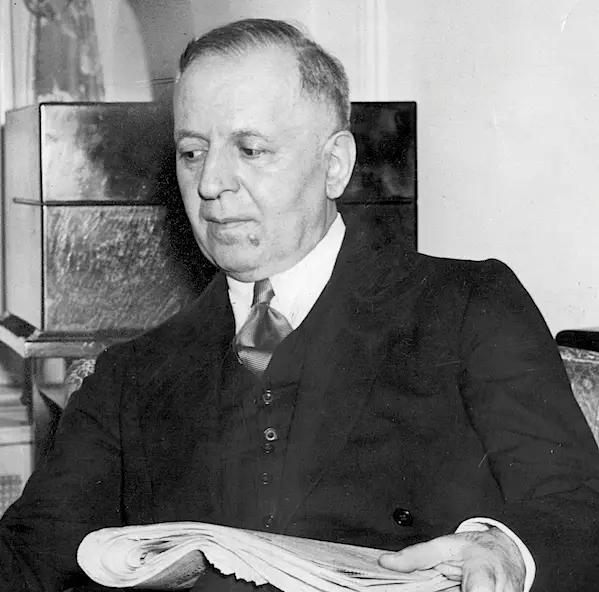
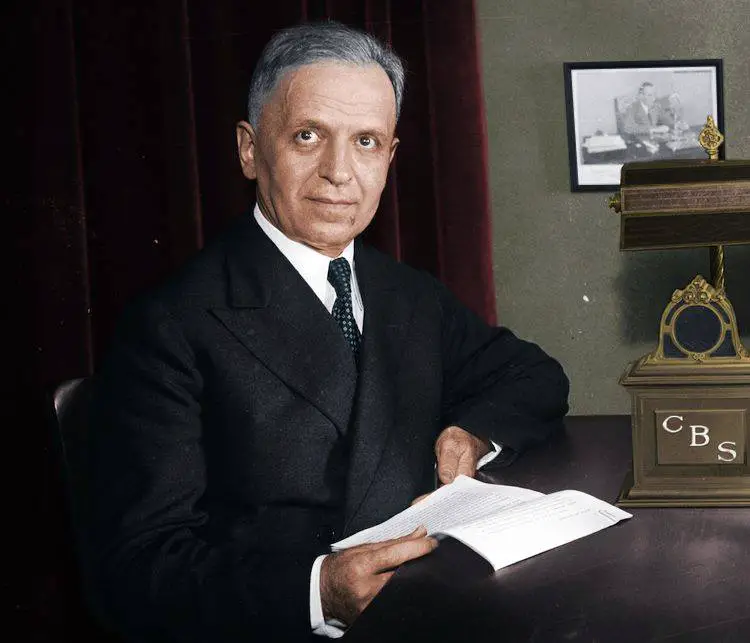
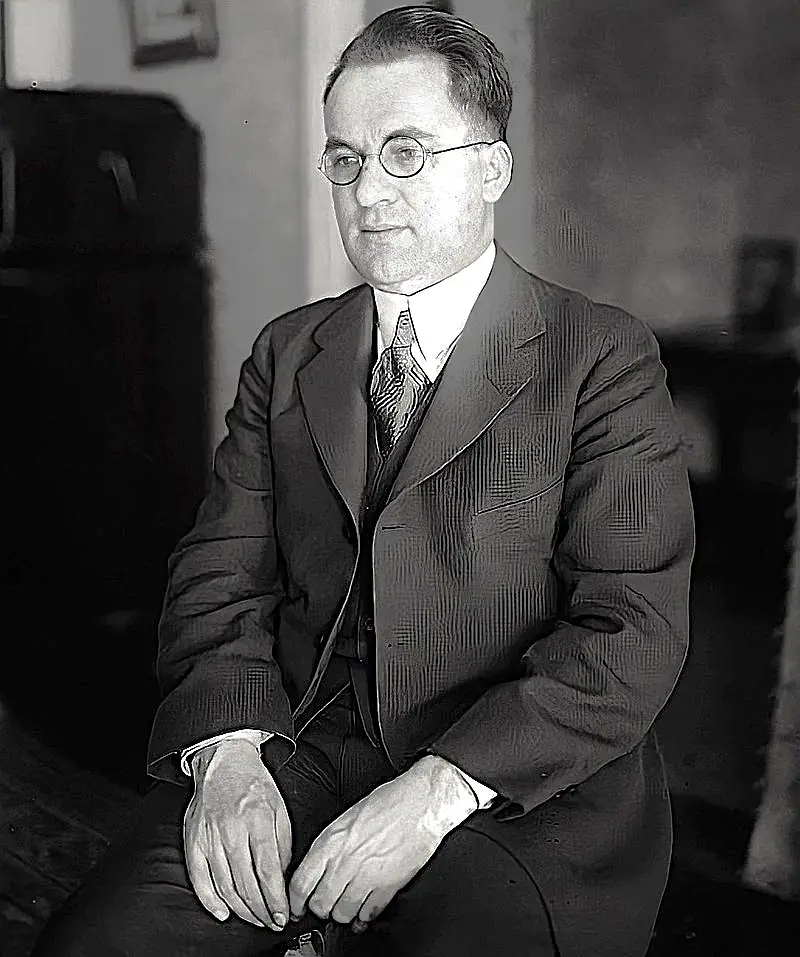
Memorie.al / during the last two years of his life, Faik Konica was placed under surveillance and investigation by the FBI. The relevant archival records shed light on the final moments of the life of the distinguished diplomat who had represented his small country for a long time and with such dignity in the American capital.
A contact at the Italian Consulate?
The reason for initiating the investigation was a notification in January 1941 from a source “highly confidential and known to the FBI” that Faik Konica had met frequently with an unidentified employee of the Italian Consulate in New York during the year‑end holidays of 1940, more specifically during the period December 24, 1940 – January 3, 1941. Konica is reported to have stayed meanwhile at the Pennsylvania Hotel in New York, with address 1530, 16th Street, Washington, D.C. “The nature of the contact,” the report further states, “was not clarified.”
What could have been the reason for Konica’s visit, and who could have been the consular official, Italian or otherwise, that Faik met in New York? And further, why was this stressed as an issue precisely one year later, i.e., in January 1942, when world circumstances had completely changed with the entry of the USA into World War II after the treacherous Japanese attack on Pearl Harbor, and when Italy had declared war on the USA on December 11, 1941?
The matter was reported to headquarters by a Special Agent of the FBI, as shown in the Memorandum of January 28, 1941. On May 12, 1941, the Deputy Inspector of the Police Department of the City of New York requested the opening of an investigation into Faik Konica. The case was categorised as “Internal Security”. A report of the Deputy Inspector dated September 25, 1941, shows that Konica visited New York again on July 13, 1941, staying again at the same hotel.
It is worth noting that Konica’s first mentioned visit to New York coincided with Christmas and New Year’s celebrations, meaning that the Italian Consulate would have been officially closed. On the other hand, if indeed Faik had been involved in any pro‑Italian activity in the USA, he could have done it quite easily in Washington, directly with the Italian Embassy there. However, these circumstances are not highlighted in the surveillance reports.
In any case, if there was any contact between Faik and the Italian Consulate in New York, it appears to have been entirely private in nature. Indeed, it is very likely that Konica met his former assistant, Hito Sadiku, who at that time was drafting an essay on the history and relations of Albania with its neighbours, the content of which Konica must have been made aware of. The essay was published a few weeks later in English under the title “An Albanian Letter”, printed with Italian funds.
Konica’s surveillance for a year seems to have been treated as routine and left at low levels of federal or local police authorities. Meanwhile, as we have mentioned elsewhere, in the framework of his activity as a former representative of Albania and as a leader of the Albanian‑American community, Faik was in constant contact with officials of the State Department and other US administration bodies, to clarify and support the Albanian cause.
The case gains momentum with the USA’s entry into World War II
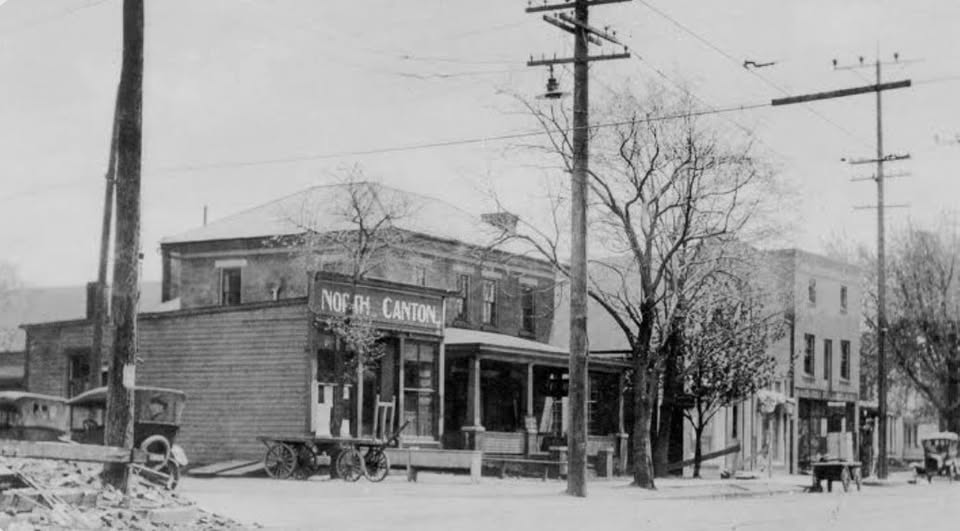
However, on March 5, 1942, an unidentified individual from the city of Avon Lake, Ohio, writes directly to the Director of the FBI, John Edgar Hoover. “I am sure you have been previously informed about Faik Konica, the former Albanian Ambassador in Washington, and his pro‑Italian sentiments,” writes the female denouncer. “As I have learned,” the letter continues, “Konica will speak at a meeting with Muslim Albanians in the Canton‑Louisville‑Massillon region of Ohio… on March 8, 1942.”
“The Albanians of America are loyal citizens of this country” and “the majority of them are members of an organisation that wants the liberation of Albania from the Italian claw,” the letter emphasises, undoubtedly referring to the organisation “Free Albania” of Kostë Çekrezi. The letter further informs that “a number of Muslim Albanians … are supporters of Konica and the latter has great influence over them.” “The above is confidential and I remain hopeful that you will pursue this matter,” the letter concludes.
Hoover replied personally on March 23, 1942, suggesting that the denouncer meet with the Special Agent in Charge of Investigation (SACI) in Cleveland, Ohio. He also wrote personally to the latter, instructing him to give this matter “immediate investigative attention” and to coordinate the work with the New York office, since it “is the office where the investigation began,” and with that of Washington, because Konica resided there.
Police records gathered for the first time on Konica showed that he “had neither criminal record nor traffic violations,” had a “favourable credit rating” of “I‑A”, and that at that time “he had no unpaid accounts.” And it couldn’t be otherwise. Since Konica had made no other visits to New York, the FBI office there requested that Washington “become the office of origin of the case,” a request promptly approved by Hoover.
Information was also collected from State Department sources, which confirmed to the FBI that Konica “had once been Albanian Minister to the United States, but at present had no diplomatic immunity.” Information was also gathered about Faik’s pamphlet entitled “Background of the Italo‑Greek Conflict,” which was held by a State Department employee in Room 304, part of that institution’s library.
Two pamphlets
The FBI Special Agent reports that after skimming the pamphlet, he determined that it was intended for newspaper publication, but “was privately published in Washington, D.C. on August 2, 1940” and, in the cursory opinion of a person without knowledge of the history of Balkan conflicts, the brochure appeared “very pro‑Italian and anti‑Greek.” In fact, the brochure was neither pro‑Italian nor anti‑Greek; it was simply pro‑Albanian.
In the confusing and very fluid circumstances of the beginning of World War II and in the context of the general lack of information about Balkan problems, Faik presented the view that the territories known as Lower Albania or Epirus had historically been populated by Albanians, but had been severed from the native trunk by the Great Powers.
“The question is,” Faik wrote, “whether the former Turkish province of Janina was and always has been an integral part of Albania. If this is true, does it cease to be true merely because it is the Italians who affirm it?”
Hoover paid special attention to the investigation. On June 3, 1942, he even criticised the SACI in Cleveland, Ohio, “that no investigative attention had been given to the case,” demanding “that there be no further delays in its handling.”
Consequently, the first investigative report was prepared within the week. Its summary contained some inaccurate facts, such as the reference that “after Hitler took Albania three years ago…”! From the content of the report we learn that the Cleveland office had finally interviewed the denouncer, who presented herself as “a political opponent of Konica.”
Commenting on Konica, the informant presents him as “quite unstable in his political views,” which is one of the most inaccurate opinions of Faik, expressed also on other occasions. The informant against Konica, according to the report, also mentions Fan Noli, presenting him “as a communist in ideals.”
There we learn that she had filed a report with the FBI against Noli as early as 1940, perhaps at the FBI office in Ohio, but there is no record that this was taken into account at the time by the Bureau. Given the connections and knowledge she displays, the unknown informant was certainly of Albanian descent.
However, it is understood that she was not at all clear about the essence of Noli’s and Konica’s philosophy and activity. They might change alliances, but above all they always put Albania’s independence and territorial integrity, as well as the strengthening of relations with the USA. As a declared political opponent of both, it is particularly regrettable that she set in motion even American state bodies themselves.
The informant also speaks about the activities of another Albanian, whose identity is kept secret. In the information she provides, the informant declares that he came to the USA “after Pearl Harbor,” that he “did not like Zog, because Zog had once imprisoned him in Albania,” that he “wanted to unite all Albanians so that Albania would be liberated, join the League of Nations and take part in the present war.”
The above information matches the views and activity of Kostandin Çekrezi. It is not clear whether the informant aimed at settling personal or political scores with Konica. She herself did not attend Konica’s lecture on March 8, 1942, in Canton, Ohio, but stated that her brother had been there, that the meeting was completely open, and that he had not noticed any indication that Konica was engaged in activities in support of Italy.”
She gave the Special Agent a copy of the brochure “An Albanian Letter” by the author Hito Sadiku, suggesting that in fact Konica should be the real author because “the writing style was quite close (peculiar) to Konica’s style.”
It seems that Hito Sadiku was initially engaged with “Vatra” and “Dielli” and later as an assistant or secretary to Konica at the Albanian Legation in Washington until 1939.
As we mentioned, he later appears as secretary of the Italian Consulate in New York and must have been exactly the person that Faik may have met there. In fact, according to biographical data, after a short time Hito Sadiku left New York and settled in Rome, where he worked as a speaker for Radio Rome.
There he married an Italian woman and returned to his homeland after the end of the war. According to researcher Novruz Xh. Shehu, he first worked at the Albanian Telegraphic Agency and the Red Cross, but then ended up in prison for several years and died later at the age of 53 under unclear circumstances.
His book in English, “An Albanian Letter,” could not have been written by Konica, because Faik had the courage to publicly declare his own thoughts and views. Nevertheless, Konica’s influence, both on the content and on the form of the book, is clear.
Faik’s erudition must have been the source of the quotation of the Latin poem by Gabriell Fairnus from Cremona, translated by Richard Knolles in A Generall Historie of the Turkes, London 1603, or Heraclitus’ saying that “Right without fail will drive out the weavers of lies and the false swearers.”
The book also contains extensive references to events and characters that Faik knew even personally, such as the case of the historical statements of MP Aubrey Herbert in the House of Commons on June 20, 1914, concerning Greek massacres in Toskëria. / Memorie.al