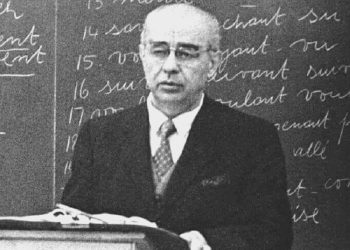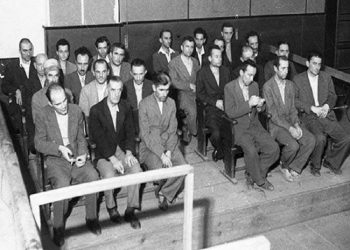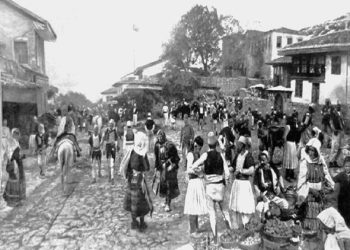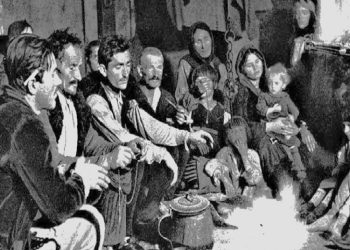
Memorie.al / Kristo Dako, the scholar and patriot from Korça, a contemporary of the events that decided the fate of the Albanian state “baptized” by the Great Powers. The man who traveled inch by inch through the “forgotten land,” the advisor to American President Wilson, Charles Crane, and their role in the Albanian cause. Testimonies of the Greek massacre appearing for the first time in Dako’s work “Albania, the Master Key to the Near East.”
“After seizing the village of Kodër, near Tepelena, the Greeks called upon all the villagers – men, women, and children – to gather at the church. When they had all assembled, 230 in total, the Greek officers ordered the soldiers to open fire on them with machine guns. They were all killed; their heads were cut off and hung on the church walls. General De Weer, of the Dutch mission, went to that village himself and saw this terrible Greek atrocity with his own eyes. At the end of June, the ‘Esadist Movement’ reached the Greeks, and a general assault began, but on July 6, 1914, the Albanians were forced to retreat.”
This is the testimony of Kristo Dako, the researcher and patriot who provides us with this ‘landscape of blood’ in the spring of 1914, directly from the scene. The son-in-law of the Kyrias (Qiriazi) family, the life partner of Sevasti Qiriazi, and the head of the Albanian Nationalist Party, recounts in his work “Albania, the Master Key to the Near East” the fate of Albania after the handover of the government by Ismail Qemal Bey into the hands of a King, Prince William of Wied, appointed by the Great Powers. He describes the situation at the endangered borders on the eve of the Prince’s arrival and the American role in the Albanian cause.
The scene described above by Dako is just one of those events that occurred as a result of greed, intrigues, and attacks coming from Serbia and Greece, which caused the deaths of thousands of innocent people, women, and children – victims of “unscrupulous politicians and warlords,” as Dako notes. This work fills the void of historical books and precedes others that focus on the darkest and most manipulated periods of Albanian history until now, from independence to the departure of King Zog.
After traversing the map of his country, Dako concludes that: “Although Albania possesses the most important geographical position in the Adriatic, although it is the master key to the Near East, although it is located thirty-nine miles from Italy, it is still, perhaps, the least known country in Europe.” In outlining the past, Dako stands where the heart of the Albanian issue beats, and simultaneously, the issue of the Balkan peoples at the turn of the 19th and 20th centuries—the question of nation-building according to President Wilson’s American principle of nationalities.
The author of the work “Albania, the Master Key to the Near East” reaches the conclusion that it is the popular will that constitutes nationality. “But if this principle were to be applied to the Albanians, a difficult debate would ensue, as the popular will would have to be taken into account. However, the further back you follow the history of this brave people, you will find it characterized by two passions: the passion for their language and the passion for ancient customs…! This small people – and they are but a handful – has fought with double determination, even with success, against the countless odds that have always threatened to extinguish them. Pressed against the Adriatic, the mountains remained their only refuge; thus they were invaded by Goths, Huns, Serbs, Bulgarians, and Normans…” writes Richard Gottheil of Columbia University, New York, in the preface of this work in 1919.
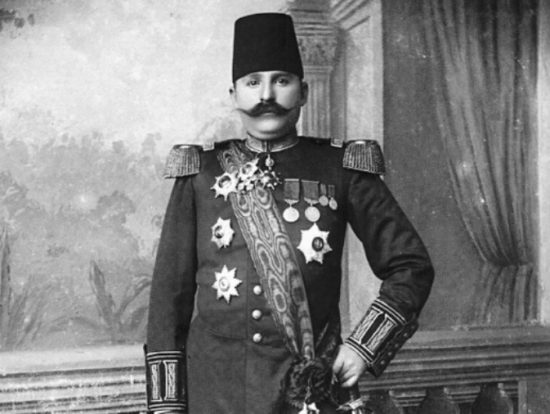
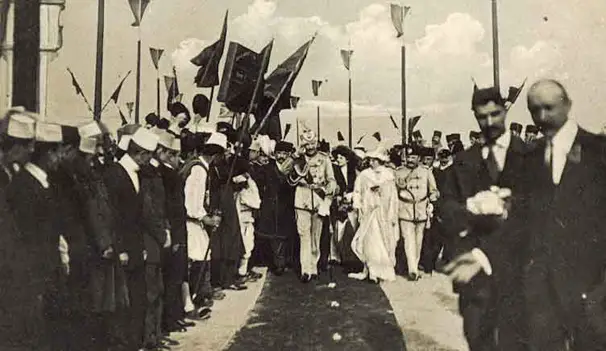
One of the interesting chapters of the work is: “Europe begins to play its tragedy in Albania,” where Dako is an eyewitness to the events. Here is what he writes about the moment of Prince Wied’s arrival in Durrës: “He was received with enthusiastic cheers by the population, while welcome shots were fired from the harbor. His first act was the appointment of Esad Pasha as Minister of War and as Commander-in-Chief of Albania, which was certainly a fatal mistake regarding Esad, who was, at the very least, undesirable to his compatriots, as his name sparked discontent and contempt among the people.
As soon as he secured this important position, under the instruction and help of the country’s greedy neighbors, Esad Pasha began organizing a coup d’état against his own government, with the ambition of becoming the Sovereign of Albania himself. He was caught flagrante delicto, his house was bombarded, and he was forced to flee the country, vowing never to return to Albania again.
But with his departure, the ‘Esadist Movement’ did not cease; on the contrary, it grew, taking on a threatening character, because it was now kept alive by his neighbors and relatives so that it would not fail. While Esad was preparing for the coup d’état in the capital of Albania, the Greeks delivered a coup-de-main from Korça, the cradle of the Albanian national movement and education, on Thursday morning at 2:30 AM, April 2, 1914.” The history of the attack, written on April 25, 1914, by the author who was a living witness alongside his American friends, is a typical illustration of the general policy exercised in a loathsome form by Albania’s neighbors for its dissolution and partition, since they had been forbidden from fulfilling this goal openly.
At the end of June, the “Esadist Movement” joined the Greeks, and a general assault began, but on July 6, 1914, the Albanians were forced to retreat. Together with government officials, 350,000 people fled for their lives. 50,000 gathered in Berat, 100,000 found shelter in Elbasan; others wandered for a while and then went to hide their heads under the olive trees of Vlora.
Speaking about the destruction caused by neighbors in Albania, the Honorable Aubrey Herbert, a member of the British Parliament, said: “I am convinced that this people is being systematically exterminated in various border areas of Albania by those who had sworn themselves as their neighbors. Besides all its misfortunes, Albania suffered this great doom because the whole world does not know what is happening in that corner of the Balkans. The Albanians are perishing in silence, because they are unable to complain or make known the catastrophe of their suffering; they have been left to starve without anyone helping them.”
Albania had been abandoned to its fate!
The five Powers that created it and promised to protect and help it had withdrawn their moral support, and Albania was ruined as a result of attacks organized, supported, and implemented by those who solemnly swore to support it.
Dako Recounts: Memoirs
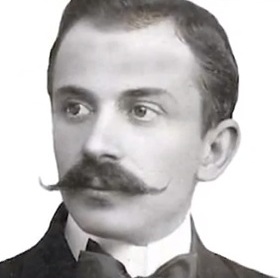
“If personal notes seem too passionate, let the reader remember that the incidents recounted are entirely true and vivid for the writer, and that through this concrete reflection, he attempts to portray the tribulations of his people.” Thus begins the narrative of memoirs by Kristo Dako in the final chapter of his memorialist work, “Albania, the Master Key to the Near East.” For the first time, Dako becomes active in the Albanian National Movement, not in Albania, as it might seem at first glance, but in Bucharest, where he attended school with his brother after leaving his birthplace, Korça, in 1890.
Bucharest had a large Albanian colony with a strong national organization. In Bucharest, the first propaganda literature of the national movement for Albania was published. Kristo Dako was elected honorary secretary of this organization and held this post for several years, reading the history of the “forgotten race,” inspired by the principle of the country’s liberation and national independence.
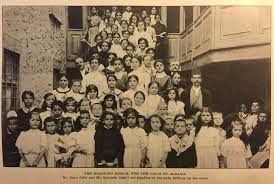
It was quite natural that, holding such a position in an organization that asserted as its goal the liberation of Albania from the Turkish yoke and freedom from the dominance of the Greek clergy, he would connect and collaborate with the pioneers of the Albanian national movement. In these circumstances, he met Miss Sevasti Qiriazi, the young woman who was later identified with the movement aimed at educating Albanian children in writing their mother tongue and the history of their country. Their interests and ambitions were so close that their friendship and dense correspondence soon turned into a romance. A union was inevitable, and from this meeting predestined by the common cause of freedom, Kristo Dako found his bride.
This is how he describes their first meeting: “When I first met Sevasti, now Mrs. Dako, she had taken her brother’s place at the head of the first Albanian school for girls, founded within the territorial borders of Albania. The sprout of our romance invigorated me and set me on the great path of education for the emancipation of Albanians, as I felt an inescapable call to serve in this field with a bright perspective for the country’s future. Indeed, in my youth, I felt that my wife would be sanctified for the liberation of my people from the Turkish yoke.”
Although he continued his studies for a scientific degree at the University of Bucharest, he went to the United States to complete his educational preparation with a single goal: to be capable of returning to Albania and giving everything to the cause of its emancipation. He enrolled at Oberlin College in the spring of 1907. Two years later, he returned to Albania. He was arrested by the Governor-General of the Vilayet of Monastir and imprisoned in Monastir. But this had a negative effect, as it was deemed that Dako would be less dangerous outside than in prison.
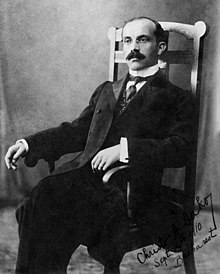
Thus, he was released, and during the period when he was involved in preparing schoolbooks to be circulated in Albanian schools, he met for the first time His Excellency, Charles Crane from Chicago, who would have an extraordinary influence on Albania’s political affairs. Thanks to his efforts, the Province of Korça was included within the land borders of independent Albania by the London Conference of Ambassadors. A scholar and permanent authority on Balkan affairs, a keen observer of the situation in the Near East, and one of the most informed people in the United States on Russian affairs, Mr. Crane had never personally visited Albania.
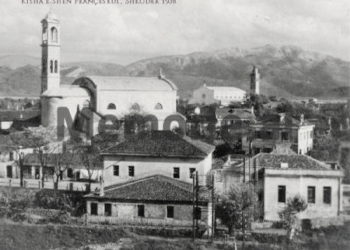
In May 1911, he began his journey. Although uprisings had broken out everywhere, he was determined to continue his trip, and thanks to this determination, through Mr. Crane, we could show the world the conditions in which the country found itself. During the three years following Mr. Crane’s visit until the achievement of independence, many events occurred in Albania. Greek authorities still kept Korça occupied, contrary to the decision of the London Conference of Ambassadors. The “Qiriazi” school was just as threatened as it had been under Turkish occupation. In March 1914, after five centuries of Turkish rule, Korça became part of Independent Albania, but the threat was Greek rule; on that day in 1914, the crowd shouted, “Long live Greece!”
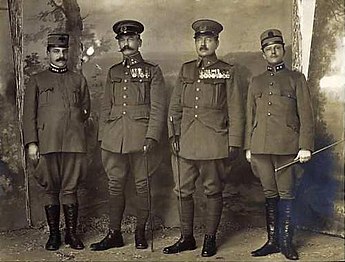
But the sudden Hellenic attack failed, avoiding a repetition of the St. Bartholomew’s Day massacre. It was finally proven that the attack had been prepared by officers of the Greek army acting in coordination with the Greek bishop. By mid-June, the “Epirote Movement” joined Esad’s movement, and after a general assault began along the border, the Dako couple and Miss Qiriazi, along with many citizens, were forced to flee for their lives. They were pursued by Esad Pasha’s troops, and only the escort of the British Consul of Monastir, Mr. Greig, helping them during their escape, saved their lives.
Charles Crane’s Statement after the Trip to Albania
Mr. Crane released a statement whose significance could not be overlooked when it was understood that it was the first report given to the world by a responsible and impartial eyewitness regarding the true situation in Albania and the Albanian uprising against Turkish rule. The essence of this statement was as follows:
“Under the cover of an amnesty and a seeming truce, Turkish troops are systematically destroying every human dwelling, all crops, and all means of survival in the territory of the Albanian highlanders. The devastation continues mercilessly, without sparing lives. Many of the elderly, women, and children who were not fortunate enough to escape to Montenegro were massacred. Women were raped in a ghastly manner. At this moment, several hundred women and children are blocked from Montenegro and surrounded by the Turks. Their rescue seems impossible.”
Mr. Crane’s statement was verified and confirmed by similar declarations from Miss Durham, Baron d’Estournelles de Constant, Yoost de Kruyff (Chairman of the Foreign Press Association in Constantinople), and Signor Zoli, correspondent for the newspaper “Secolo.” As a result of these testimonies and the wide publicity given to the statements, Turgut Shevket Pasha, commander of the Turkish troops in Albania, was withdrawn and his resignation was ordered. Memorie.al