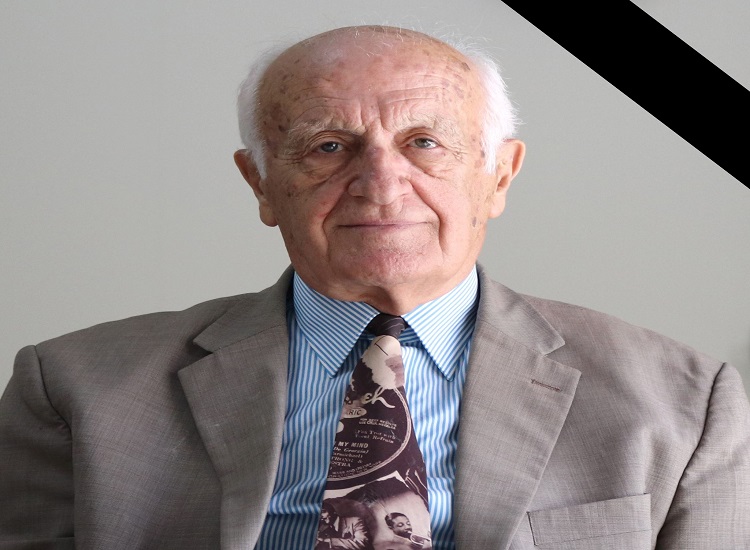
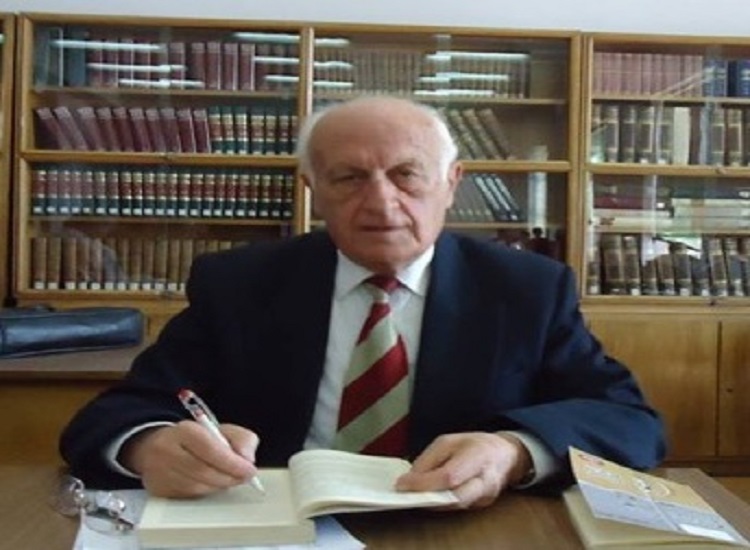
Memorie.al / It is not our title. It is the feeling expressed by patients who have been treated by Doctor Hektor and by medical students who have him as a professor. More than those two enviable numbers – over 40 years each in their positions – it was the virtues of his perfect character that have placed him among the most distinguished names in the history of Albanian medicine. Suffice it to recall that for over 30 years, he was the right‑hand man of the “father of Albanian pulmonology”, the great Prof. Dr. Shefqet Ndroqi. To be near that man, you could feel only kindness and benefit. A doctor, who marked an era in his field, thanks to his dedication and professional abilities. Dr. Ndroqi was equally magnificent as a human being, with a great and sensitive soul. Even on his wedding day, he left for the sanatorium to come to the aid of a patient who had arrived as an emergency.
And if on that memorable day he left his bride, after a few years he would leave two of his fingers, the result of damage from X‑rays, from endless radioscopies in the fight against tuberculosis and typhus. After these losses, he gained the greatness and the name that will not be forgotten, but also a generation of doctors worthy of presenting themselves as employees of the “Shefqet Ndroqi” University Hospital of Pulmonary Diseases. The most prominent among them is Doctor Hektor. And whoever follows in the footsteps of the best, goodness will follow him. He did his utmost to take as much as possible from Dr. Ndroqi, professionally and spiritually. It was not easy to replace that great man and doctor.
This medical institution had become very important and well‑known. The very spread and consequences of lung diseases required discipline and professional skill. And who more than Hektor should feel the weight of this responsibility and trust? Everything in service of the health of people affected by these diseases. A staff prepared and passionate about the prophylaxis, diagnosis and treatment of tuberculosis. Doctor Hektor had to act as a doctor, but also as the leader of this medical staff. All those who have worked with him recall the warm communication and simplicity of their boss. But they also do not forget the severity and his firm stance if he observed weaknesses and mistakes at work.
In one case that he himself recalls, even though years have passed, he still feels no regret for the disciplinary measure he imposed on a nurse. For three‑four days a patient had been in a serious condition with a high fever. Even with the medications given, the situation still could not be brought under control. Sleepless nights for the doctors in those long consultations where they sought the reasons for the deterioration. Exhaustion and great effort when the cause was very simple. The nurse had not given the patient the main antibiotic that the doctors had prescribed! For the reason that that medication was missing those days from the hospital pharmacy. Even though the nurse’s duty was to administer it, not to find it, she kept silent. A silence that put the entire medical staff on edge and, above all, endangered the patient’s life.
The head of the service, Doctor Hektor, did not think twice about proposing the nurse’s dismissal. After this incident, dedication and responsibility increased even more among the service staff. It is not rare that you do not have the possibility to save a human life, but when you do have the possibility, you are not forgiven for becoming an ally of death. But he has not escaped this undesirable emotion either. Every case of loss of life, even if not his fault, is called a failure. But Doctor Hektor has felt them more than necessary. In fact, this is his weakest point. A doctor should not experience, but live with the patient’s diagnosis. But here he goes perhaps even further than others in this sensitivity. More than ten years have passed and he still experiences a tragic case with powerful emotion. He understood the diagnosis of that unfortunate 20‑year‑old boy, but could not find the strength to answer that mother who, in her daily tears, begged him:
– “Please, doctor! Tell me everything; only do not tell me that he has a bad disease, because he is my only son”!
Harder than the battle he was fighting with the disease seemed to him the answer to this mother’s plea.
– “The disease is serious, but we will do the impossible…”, Doctor Hektor barely uttered.
The entire staff dedicated and engaged night and day in that battle they knew was lost. Medical care that did not waver in the soul of that mother, so grievously wounded. Thus, one day as he was returning from work, even though he tried to avoid her, that mother wanted to meet Doctor Hektor. She expressed her gratitude for what they had done for her unfortunate son. As if yearning for a relic of her son, she kissed the doctor’s hands. Deeply moved, the doctor invited her to sit down and have a coffee. More to comfort that mother’s heart. But he rose from that coffee even more despairing, when he learned those two years earlier, she had also lost her husband. Husband and wife had grown up in the child’s home and their greatest joy in life was that son…! Doctor Hektor experienced the anxieties of that misfortune for days on end.
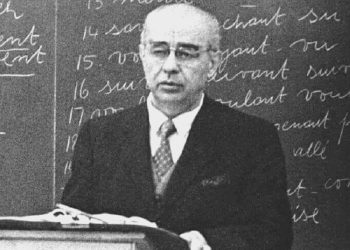
Something not good for a doctor who should live calmer and colder in the face of such emotions. Otherwise, he will be weaker in facing the next battle…! But yet, even this bad thing testifies to the character and high human virtues of Doctor Hektor, not only as a doctor but also as a professor. There are dozens of students who have benefited the maximum from the subject of lung diseases. This distinguished doctor is also special in teaching. Students will not forget the first days of communication with him. Passionate, fluent and clear in his lecture, he begins the lesson with the postulate: “Nothing costs so little and is valued so much as good behaviour”! – Because the doctor does not belong to himself, but to others. Whoever cannot fulfil this condition is in the right time to give life another direction. After he has given them their first spiritual test, he does not delay in quoting the four lines of the people that serve the health of the people:
“O you, a man with mind!
Do not seek it in every place,
Try it on your own body,
As it hurts you, so it hurts me”!
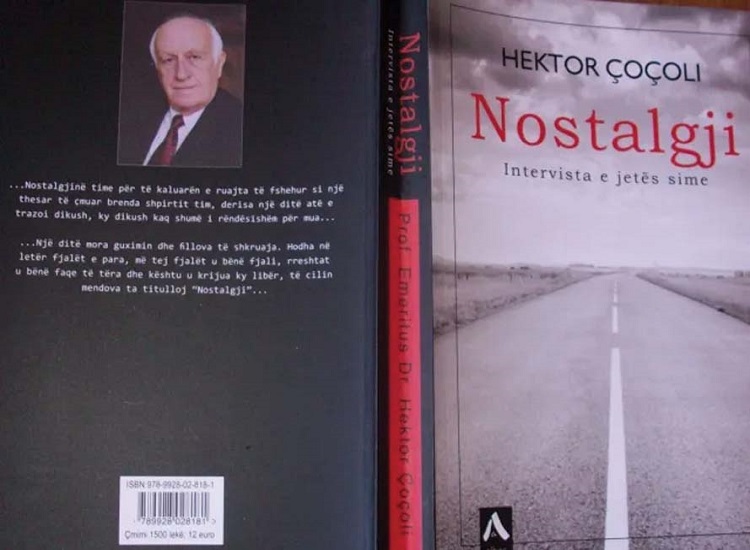
And where better than to use the wisdom of the people to instil and perfect the human and humane virtues so necessary for the medical profession. It is the viewpoint and method followed by such a successful professor as Doctor Hektor. Perhaps it is the moment to testify to another fact as well: that in his library we also touched three voluminous books with achievements and information from world medicine on lung diseases, editions from 2009. Otherwise he would not be so valued and desired by medical students. He does not feel good when he sees that most of them smoke cigarettes, that main enemy that also causes lung diseases. He does not tire or bore them by quoting the lines written in capital letters even on cigarette packets. He “loses” an hour of teaching and walks the students through the patients’ rooms, asking them how many of them smoke. The final tally itself gives them the shocking answer: on average, out of 100 people affected by lung diseases, 97 smoke cigarettes.
A tally that reminds us of a debate held among distinguished doctors in Edinburgh, Scotland. Surely all of Doctor Hektor’s students would feel proud of their professor. This world congress on “Tuberculosis Control in the 21st Century” was chaired by the distinguished doctor John Crofton, the most prominent world figure in the field of tuberculosis. Doctor Hektor had just presented the study entitled: “Current Epidemiological Situation of Tuberculosis in Albania”. To prepare this material, a voluminous preliminary work had been done.
A group of doctors had carried out screening throughout our country. Thousands of people were examined, among whom 700 tuberculosis patients were found. Before Doctor Hektor had even left the podium, a Swiss doctor who had presented a few hours earlier – on mathematical models that could be used to assess the situation with a smaller number of patients, meaning a shorter time without compromising the accuracy of the study – rose from the hall. Apparently, the somewhat unfamiliar name of Albania, the seriousness and personality shown by the Albanian doctor, had irritated the sick ego of the colleague, prompting the question:
– “On what do you base the accuracy of the data you presented?”
Without losing his composure and without hesitation, Doctor Hektor, even though he had felt the malice of the question, answered:
– “Without questioning the accuracy of the use of mathematical models for the study you presented, the accuracy of my study’s data is based on the medical examination of all patients…”!
As if that slap were not enough, the Congress chair, Sir Crofton, intervened, invalidating the Swiss doctor’s question: – “Doctor Hektor from Albania is right”!
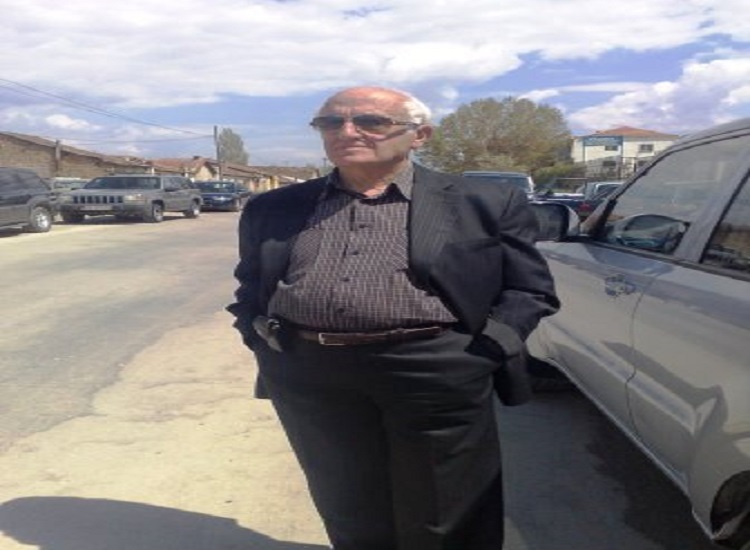
A few years ago, Doctor Hektor was declared an “Honorary Citizen of Tropoja”. The appreciations and titles awarded to him are not few, but this last one aroused a powerful emotion in him. A deserved recognition that reawakened the memories of the years 1960‑1965, when he served as a doctor in Tropoja. After finishing the Faculty of Medicine with excellent results, he hoped to be appointed in the capital. He was not disappointed that he left for the extreme north of Albania, but it was not easy either. Imagine a 21‑year‑old young man leaving Tirana for the first time and ending up in Tropoja. He had just finished his one‑year specialisation with Dr. Ndroqi.
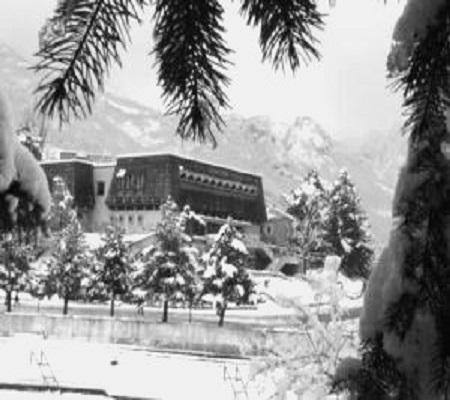
The northern areas were more affected by lung diseases, also due to low temperatures. He found only one doctor in “Bajram Curr”. Necessarily, the need made him also serve as a pathologist, gynaecologist, paediatrician, etc. He appreciates the fact that there he found a trained and dedicated medical staff. He considers himself even luckier that he met a wonderful man, born with humour, such as Master Ali Mula. Knowing him made it even easier to perform his duty as a doctor, but also to adapt to the hospitable and very cultured inhabitants. This special gratitude that goes to his respected friend makes him even forgive that “torturing” presentation as a doctor…!
Positioned in front of an old fluoroscopy machine, he invites the first patient. He sees that his heart was on the right side. He is impressed, but not surprised, since he knew that in every 10,000 inhabitants, such an anomaly occurs. He finishes the work and invites the second citizen in front of the machine. He wipes his eyes, but the same image does not go away. This one also had his heart on the right side. At least for another reason, what was happening to him should not be acceptable. He had been told that the district of Tropoja had about 11,000 inhabitants. This anomaly he was seeing on the fluoroscopy screen would mean that the number of inhabitants should be over 20,000. He does not give in and continues the work. The body of the third patient appears before the machine. And again, heart on the right side. Shaken, he takes his foot off the pedal that kept the light off and immediately stands up. He sees that the citizen had positioned himself with his back, not as he should with his face towards the machine. He cannot contain himself and raises his voice, showing him how to stand. Meanwhile, the other two who were dressing say: “We also entered like that, doctor.”
– “Enter and never come out again!” – he utters a soulless curse, but aloud, and leaves the room.
But the days, months and years that followed made Doctor Hektor the most beloved man of that region. With youthful vigour, passion for the profession and the desire to help these dear people, but immersed in poverty, he left no village or house unvisited. He would walk on foot day or night even for 12 hours without a break. He does not forget the care and love they showed for him, as if he were a saint. Even today he remembers when he travelled on snowy days; two other people would clear the snow in front of him to make his journey easier.
And how could he not serve them and be near these people in emergencies. Even today, old friends from Tropoja knock on Doctor Hektor’s door. Some with a problem, some to greet him for the good deeds done in those years and afterwards, because Doctor Hektor, by discovering and blocking all the foci of infection in Tropoja, opened the doors of his soul for life and became an eternal and welcome guest in every Tropojan hearth…!
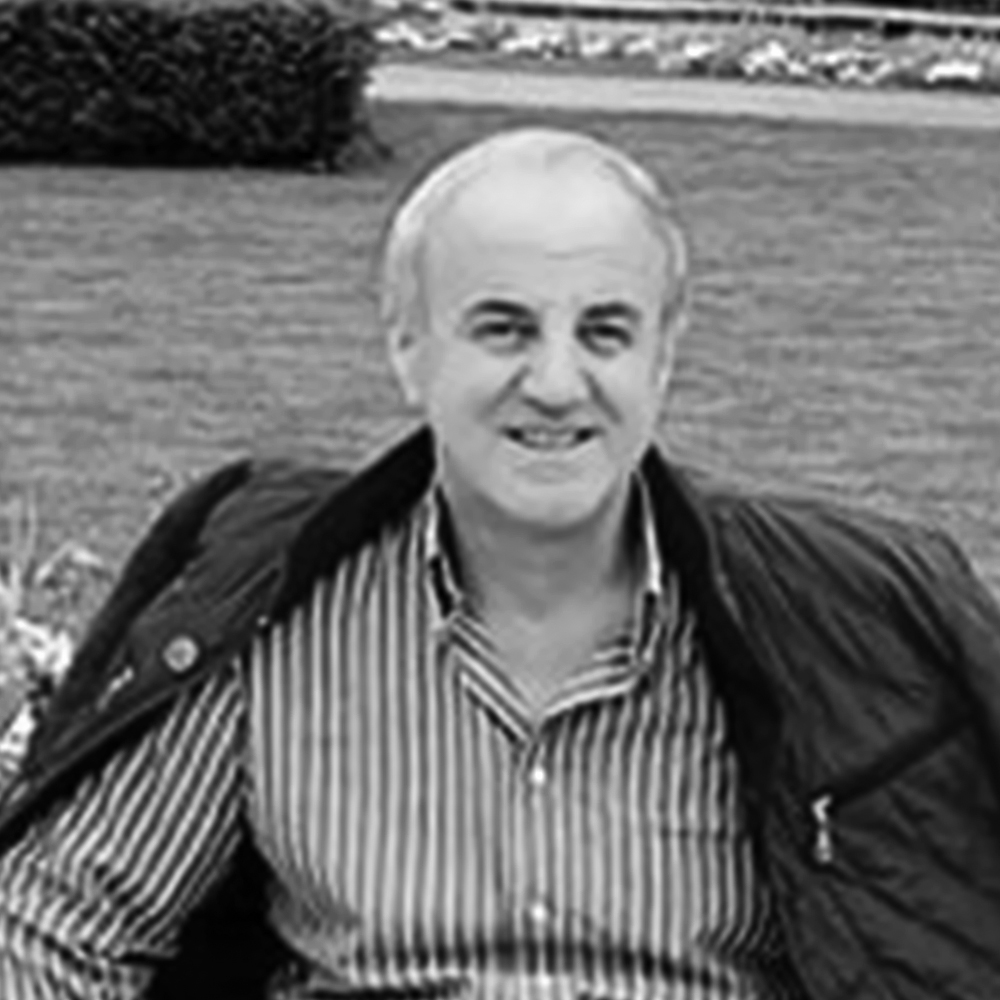
One looks at this photograph of the Çoçoli couple and anyone can see that Lirika looks more youthful. But if you enter Doctor Hektor’s soul, you find that charm and beauty multiplied…! So much so that his soul feels several years younger than his wife. Not for nothing does he consider her one of the supporters and inspirers of his successful career. A joyful life of harmony and understanding, love and cooperation. Even today they are as much in love and devoted to each other as they once were in the hall of the National Library. Hektor was preparing for his doctoral thesis, while Lirika was studying for her seasonal exams. More than on their studies, they had their minds on when the break would come that would bring them together in the corridor.
They truly had an age difference, but Hektor’s humour and cheerful nature immediately won over that beauty. Because even in love, wisdom leads you faster and more surely than anything else. Fluency in speech, sincerity and elegant communication greatly facilitated the battle for that sympathetic young man. He started and finished the proposal with jokes. He was telling her the story of a person who had fallen in love with a female student he had next to him. He told it so beautifully that even she herself did not understand for whom those bells were tolling…! After his silence, waiting for her reaction, he understood that she was the student and he was the person in love. And why should that proposal is made more difficult when the answer of each of them had long been given by their hearts?
– “In Hektor I found not only a man of unique humour, but a man devoted to his family. An ardent admirer of reading, history, geography, architecture, painting, music, travels…! It is easy to live with Hektor as a husband because he makes life beautiful, not only by adapting to my wishes, but enriches it with his intellect and his cheerful nature…”! A woman needs no more than this to feel good and secure in a happy married life.
Their own life testifies to this, and this photograph that elegantly unfolds their joy and daily smile testifies to it as well…!
WORK ACTIVITY:
1960 – Graduates as “Doctor” from the Faculty of Medicine, University of Tirana.
1980 – “Candidate of Medical Sciences”, Faculty of Medicine, Tirana.
1983 – “Docent” (title equivalent to Prof. Assoc.), Faculty of Medicine, Tirana.
1993 – “Doctor of Medical Sciences”.
1994 – “Professor”, University of Tirana.
2007 – Professor, Faculty of Medicine, “KRISTAL” Private University.
2008 – “Professor Emeritus”.
2009 – Short biography described in the Albanian Encyclopedia, published in Tirana, 2009.
SCIENTIFIC ACTIVITY:
He has actively participated in many conferences, symposia, medical congresses both inside the country and abroad.
Outside Albania: Prishtina (Kosovo), Ulcinj (Montenegro), Skopje (North Macedonia), Bucharest (Romania), Constanța (Romania), Varna (Bulgaria), Athens (Greece), Ioannina (Greece), Ljubljana (Slovenia), Ankara (Turkey), Budapest (Hungary), Salzburg (Austria), Rome (Italy), Palermo (Italy), Paris (France), Nice (France), Moscow (Russia), Mainz (Germany), Essen (Germany), Freiburg (Germany), Edinburgh (Scotland), London (England), Wolfheze (Netherlands), Seattle (USA), Tehran (Iran), Tunis (Tunisia), Lomé (Togo).
He has participated in all scientific activities developed in Albania on the problems of lung diseases, especially those of tuberculosis, held in Tirana or other cities of the country; in conferences organised with foreign doctors; in medical conferences organised by other specialties where he has discussed lung disease problems. He has published numerous studies: monographs, textbooks, books on tuberculosis and lung disease problems, scientific articles, etc. The publications have been made in Albania and in several foreign journals./ Memorie.al