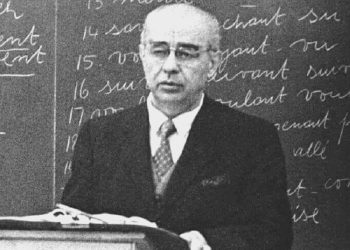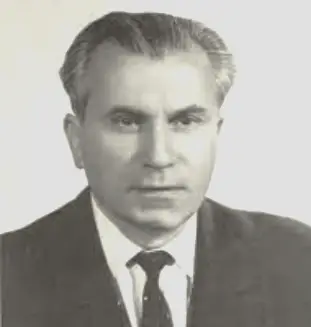
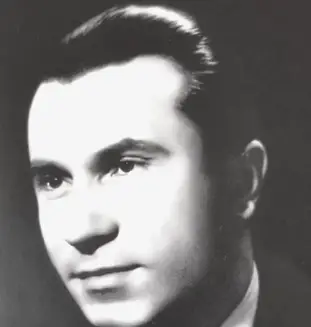
Memorie.al /Even though years have passed, even though systems, ideas, and political, social, and cultural mentalities have changed and been overturned, the figure of Kahreman Ylli, the great fighter and defender of Albanian freedom and culture, has not suffered the slightest damage. On the contrary, on commemorative anniversaries, on the culminating celebrations of high educational institutions, the Academy of Sciences, the State University and other institutes, the Ministry of Foreign Affairs and diplomacy, unlike many of his colleagues of those times, Kahreman’s work is remembered with special honor and respect.
His name “brings everyone to their feet,” left and right, those who boast of him, but also those radicals who do not agree with his ideas, because they bow to his knowledge, his patriotic work, more than to the ideas to which he belonged. This union of feelings, this symbiosis of love and gratitude, rare among Albanians, comes from the man himself, Kahreman Ylli, whose ideal was the enlightening light, the illumination of the Albanian nation, through knowledge and culture.
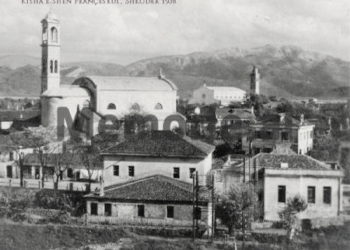
Kahreman Ylli was born on April 22, 1917, in Leshnje, Skrapar, into a family known for its history, like all those great noble houses in Skrapar, who dedicated their whole lives and activity to freedom and independence, thus giving a notable patriotic contribution to the entire region of Skrapar, Korça, Kolonja, Opar, Berat, and all of Albania.
The older generations have it fresher and know very well what patriotic role this family played over the centuries. Even the younger generations have known this role and contribution through history. However, for a re-memory and to somewhat wipe away the dust of time that does its work, we are trying below, in a summarized manner, to shed some light on some of the main figures of this family and especially on one of them, Kahreman Ylli.
Kahreman’s father, Sinani, was a popular figure and personality of weight in Skrapar, standing at the forefront of all historical events from 1900 until his death, facing such well-known figures as: Riza Cerova, Muço Kapinova, Xhelal and Ali Koprëncka, Pasho Hysi, Servet and Mahmut Zaloshnja, Ramiz Spathara, Nuri Vlusha, Myrto Cerova, Sulejman Qafa, etc. His signature was affixed to many documents of the time, in defense of the interests of the long-suffering people of Skrapar.
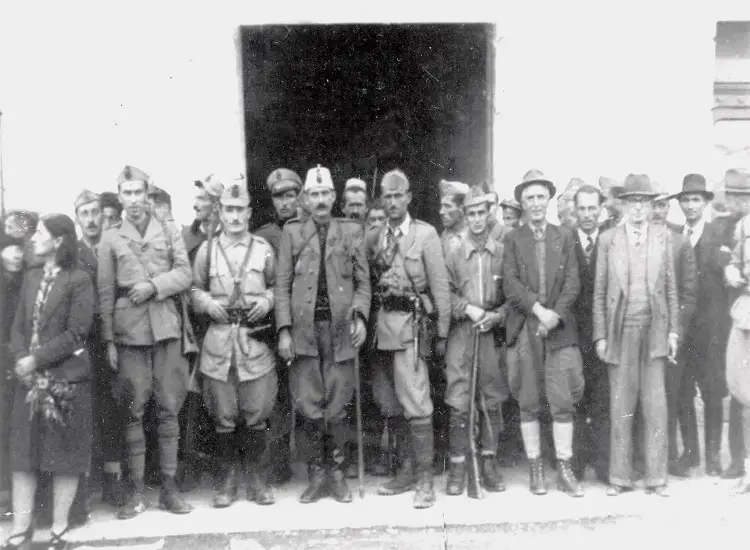
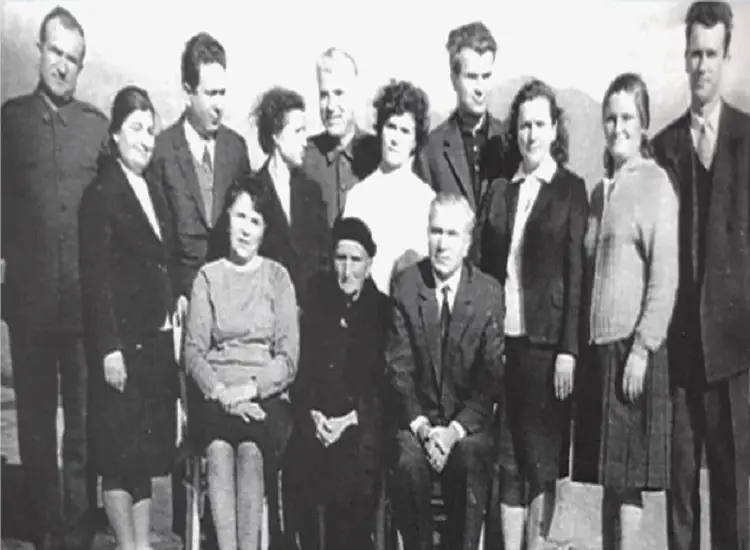
Even during the Anti-Fascist National Liberation War, this house opened its doors floor by floor to the partisans. All the people of the house, from the women to the children, were placed at the disposal of this war. The house of the Yllaj family, with all its annexes, became at that time the central headquarters of the National Liberation Staff of the Berat District. Kahremani, Sinan’s eldest son, was the first to take up the rifle, followed by Aqifi, Kastrioti, Figani, while the daughters, Vera and Fetanja, became active, one with the Youth and the other with the Anti-Fascist Women.
But the other members, Sadushi and Sakua, stood by those who came and went and, when needed, took part in local actions of the partisan units. But let us return to where we left off, to Kahremani. After primary school in his birthplace, with the support and help of his father’s friend, the patriotic teacher Ali Myftiu, he completed the “Normal” School of Elbasan. After that, he was appointed a teacher in Zaloshnje, Skrapar.
In the years 1936–1938, he completed higher studies at the Pedagogical Academy of Lyon in France. There he connected with anti-fascist groups and joined the French Communist Party. In illegality, under the pseudonym Burlati, he was one of the first initiators for the publication of the newspaper “Populli”. During his stay in France, he met Gogo Nushi, Dhimitër Shuteriqi, Ymer Dishnica, and Ali Kelmendi, etc.
He was part of a communist cell with French workers. In the years 1938–1939, he was appointed school director in Peshkopi. After the 1940s, he worked as an education inspector in Berat. In the years 1940–1942, he became the inspiration and organizer of the formation of partisan bands in Skrapar and Berat. In the years 1942–1944, he was appointed commissar of the National Liberation Staff of the Berat District.
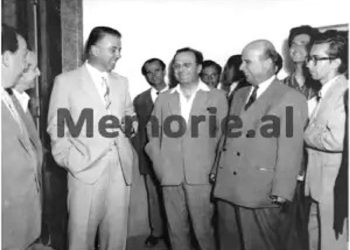
Immediately after liberation, he was entrusted with important diplomatic duties, becoming Albania’s minister plenipotentiary in Paris, and later representative of our country to the UN. He was one of the most distinguished diplomats who represented post-liberation Albania in many international organizations and forums. Kahremani never tired of instilling in the heads of the then state leaders and ordinary people that Albania’s European future was the mind, was knowledge.
He had as much success in diplomacy as he later had in reforming Albanian education, science, and culture, not only because he was Minister of Education and Rector of the University of Tirana, but because behind every major development in education and science, his hand and mind were involved in the founding of the State University of Tirana, the Scientific Research Institutes, the Academy of Sciences, the Educational Reform of the 1970s, etc.
What he did at that time not only has value today but will also have value for future generations. It must be admitted that during the dark period of Albanian communism, there were few people who deserve full respect for their work and contribution. And Kahremani was the most prominent among them. Kahreman Ylli passed away very early, on September 3, 1975, when he was only 58 years old, leaving undone, as he would have known how to do, many other good things, but also leaving behind a name that will never be forgotten. Memorie.al