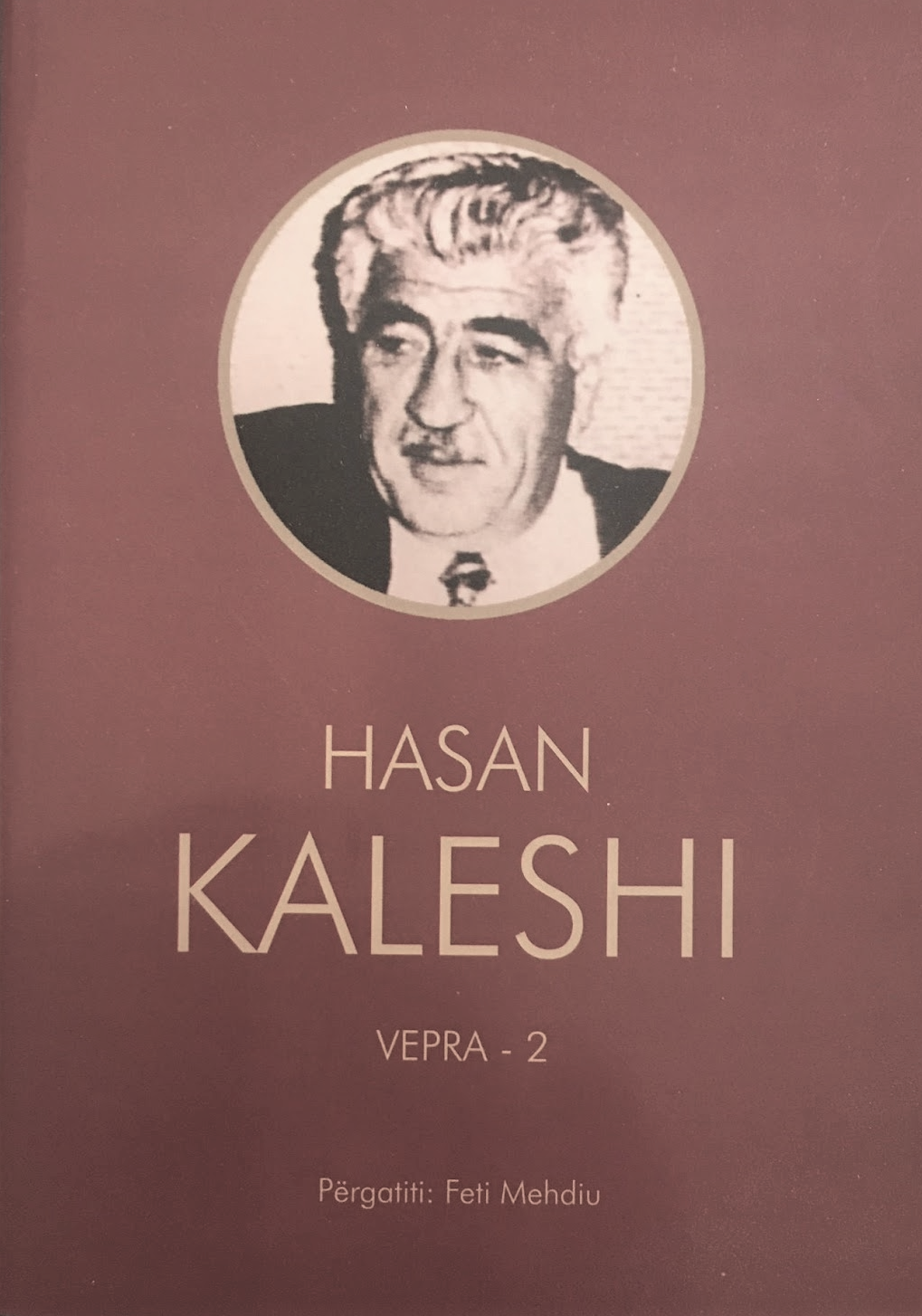
– Recension on the works of Prof. Dr. Hasan Kaleshi –
(Published by “Dija” Publishing House, Prishtina 2022)
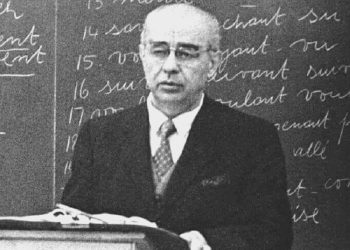
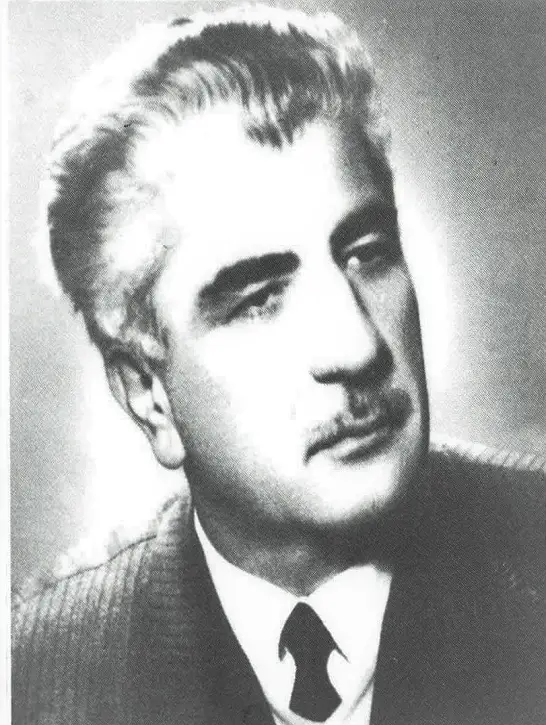
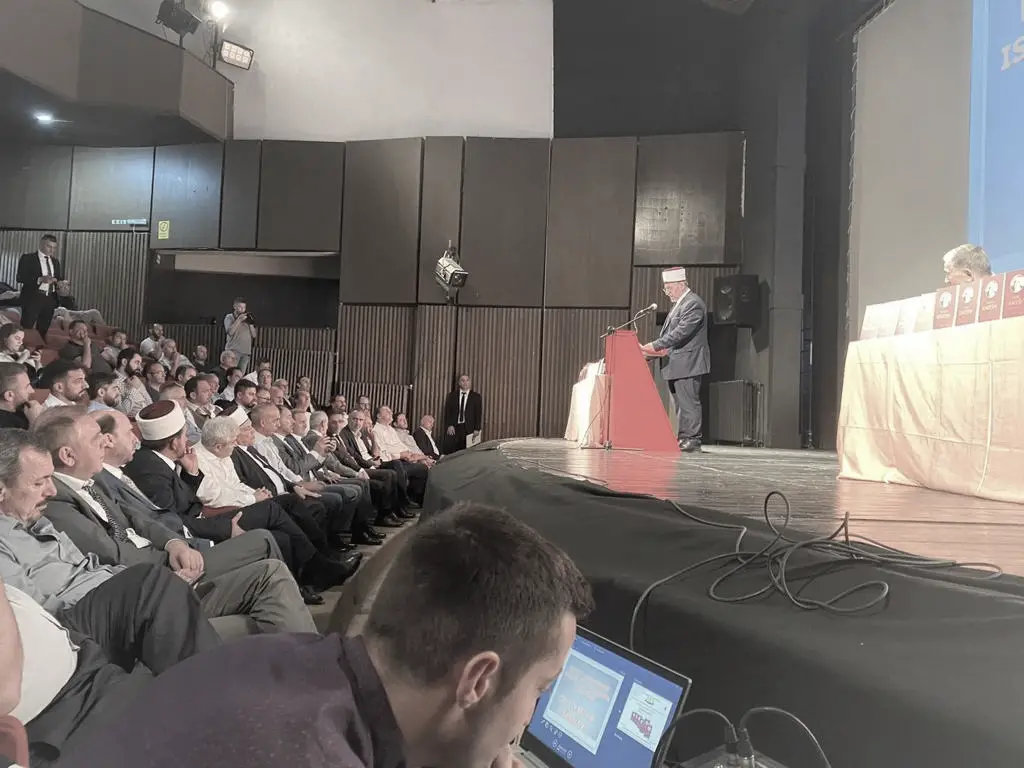
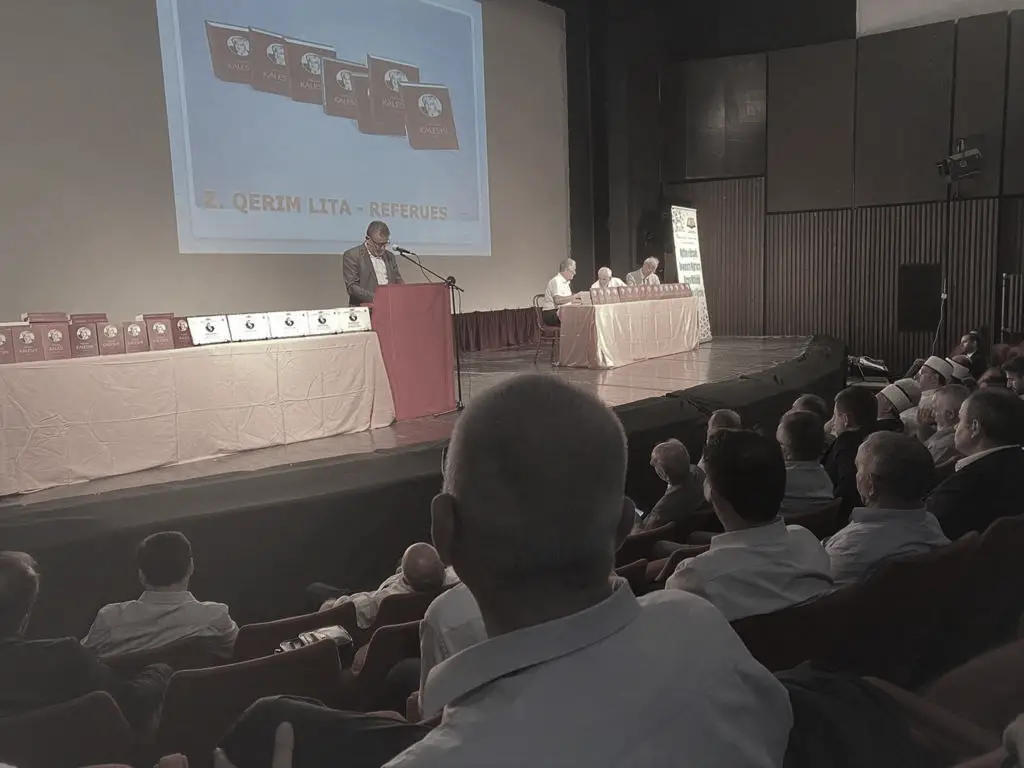
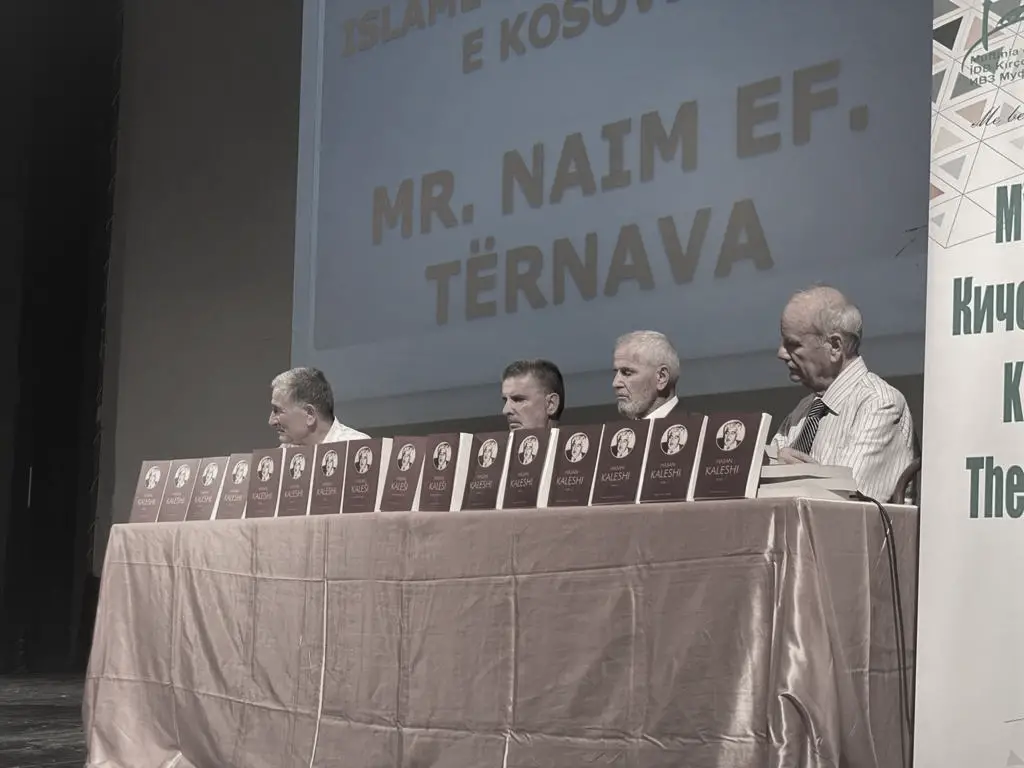
Memorie.al / These days, the collection of 8 volumes (works) of Prof. Dr. Hasan Kaleshi, the distinguished Albanian publicist, linguist, historian, and orientalist, has been released from print. Through his research and scholarly work, he left an indelible mark on our national historiography in the years 1950–1970 of the last century. The collection was prepared for publication by Prof. Dr. Feti Mehdiu, Prof. Dr. Esad Durakoviq, Prof. Dr. Muhamet Mufaku, Dr. Nuridin Ahmeti, and Dr. Sadik Mehmeti.
Professor Kaleshi, – as Academician Feti Mehdiu puts it, – belongs to the generation “of scientific and cultural personalities who laid the foundations of Albanian scientific and cultural institutions outside political Albania.” He was a co-founder of the Albanological Institute, the Academy of Sciences and Arts of Kosovo, and the founder of the Department of Oriental Studies at the University of Prishtina. Besides Albanian, he also wrote in several other world languages such as Serbo-Croatian (Bosnian), Turkish, German, English, Arabic, and French.
The work in question was published by the “Dija” Publishing House in Prishtina, while all financial expenses for the publication were covered by the Muftiate of Kërçova. Although this collection consists of a total of 8 volumes, I will focus only on three volumes, namely the first works. The first volume contains a selection of Hasan Kaleshi’s scientific-journalistic works, published in national and international journals over the period 1949–1976. It includes a total of eight writings, i.e., research papers. At the very end of the book, his interview given to “Bota e Re” in April 1976 is presented, along with supplementary material comprising various articles from the Albanian press regarding the death of Hasan Kaleshi.
Immediately after the editorial foreword, a chronological bibliography is placed, encompassing a total of 357 research units published before and after his death. Next come two of Kaleshi’s writings, published in the first literary journal in the Albanian language in Kosovo, “Jeta e Re”. In both writings, Kaleshi addresses the issue of proper usage by the two Albanian-language newspapers of the time, “Rilindja” and “Flaka e Vëllazërimit”, as well as by Albanian translators. According to Kaleshi, any public writing must meet these prerequisites:
“…the language used must be pure, the thought clear, sentence construction regular and in the spirit of the Albanian language. One must not allow a sentence to stretch over ten lines and be incomprehensible and tangled, because this tires the reader and destroys concentration, while the main part of the sentence cannot be distinguished from the subordinate part ….”
Of particular interest to Albanian and other scholars is the research paper “Mevludi among Albanians”, in which the author sheds light on the tradition of reciting the Mevlud in Albanian territories in general, and in Kosovo and the eastern lands in particular. No less important is the study “The Qur’an – Masterpiece of Arabic Literature”, which Hasan Kaleshi first published in 1967 in Bosnian as a foreword to the book “Iz Kur’ana časnom svetu celom opomene”. The study, about 40 pages long, is divided, in addition to the introduction, into 8 separate parts: The Content of the Qur’an, The Sources of the Qur’an, The Qur’an and the Jewish and Christian Religions, The Qur’an and the Hadith, The Recension of the Qur’an, The Language of the Qur’an, The Division of the Qur’an, The Style of the Qur’an, and Translations of the Qur’an into European Languages.
One of the main characteristics of the Qur’an, according to Kaleshi, is the impossibility of imitating it, both in terms of meaning and style. “In the Qur’an,” writes the author, “in three places, a call (challenge) is made to the enemies of (the prophet) Muhammad. The first time, he called upon them to write a book similar to the Qur’an, then to compose at least ten surahs, and finally to produce just one chapter following the example of the Qur’an ….”
The second part of this volume begins with the research paper “The Turkish and Persian Works of Naim Frashëri”, where the author rejects the widely spread thesis of the time that Naim Frashëri, after the League of Prizren, “no longer wrote in foreign languages,” because, as Kaleshi points out, in 1884 he published a collection of poetry in Persian titled “Tehayyaülat” (Reveries). Therefore, according to him, a complete study of Naim can only be undertaken when “all his works are analyzed, regardless of the language in which they were written,” because “Naim’s expressed thoughts, even in Turkish or Persian, are integral parts of his personality ….”
The next paper is of extraordinary value for Albanian historiography, because the author, through his many years of research in the Istanbul Archives and in the libraries of that city and Ankara, brings to light a very large part of the scholarly activity of the great colossus of the Albanian National Renaissance, Sami Frashëri. However, all this great work, according to Hasan Kaleshi, was insufficient to write a worthy monograph dedicated to this great Albanian personality, because, as the author puts it: “… Sami was so great, produced such colossal works, produced so much that much time will pass, even more research will be needed, and still we will not fully know his greatness … Thus, the author continues, no matter how much I myself have dealt with this issue, working for a long time to collect Sami’s works and what has been written about him, and even though I have written several papers on the questions raised, I have not been able to succeed in undertaking the writing of a monograph on Sami, because I constantly saw that something was still missing, I always felt that there was still something important calling me to discover it, that there were still sources I had not seen ….”
Kaleshi holds a similar estimation for Faik Konica as he does for Sami Frashëri, stating that “there is no other personality in the history of the Albanian National Movement and in Albanian literature about whom so much praise has been said on one hand, and so many negative opinions on the other.” According to him, the main reasons lie in the fact that the views of Albanian historiography rely on “certain authorities” and not on genuine scientific inquiry, on the study of archival materials, on the analysis of objective political conditions, on the political, economic, and cultural reality of that time, on the examination of the subjective circumstances in which the given figure lived. According to him, if there is a man who would deserve a full monograph that would undoubtedly be Faik Konica.
In the second volume, a total of four research papers are selected: The Role of Albanians in Oriental Literature; The Revision of the Kanun of Lekë Dukagjini and the Removal of Autonomy of Albanian Tribes in the 19th Century; Oriental Influences in Albanian Folk Tales and in Albanian Literature; and Kosovo in the Travelogue of Evliya Çelebi.
Of particular importance for young Albanian researchers is the study “The Role of Albanians in Oriental Literature”, where, thanks to his tireless research work, the author managed to uncover dozens of writers and poets of Albanian origin who wrote in Ottoman, Arabic, and Persian. In the introductory part of this study, the author makes a very solid critique of Albanian historiography, which until then had not even made “more serious efforts” to at least identify those Albanian writers and poets, while, as Kaleshi notes, a separate chapter “had been dedicated to Albanian humanists, even though they too did not write in Albanian but in Latin or Italian.” For practical reasons, Hasan Kaleshi divides the study into seven chapters: I Poetry; II Poetry of the Tekkes; III Historiography; IV Scientific Disciplines; V Grammatology and Lexicography; VI Journalism; and VII Memoir Literature.
In the first chapter, Prof. Dr. Hasan Kaleshi lists several poets of Albanian origin who wrote in Ottoman, such as: Jahja Dukagjini, Mudi Tetovasi, Vasif Osman Enderuni, Musa Qazim Pasha, Xhelaludin Efendiu, Rauf Leskoviku, Salih Rashid Pasha, Qamil Tepelena, Naim Frashëri – who, as the author emphasizes, published a collection of Persian poems entitled “Tehayyaülat” (Reveries) in 1884 – Riza Teufiki, originally from Dibra, etc. In this chapter, the author gives special emphasis to the great Turkish poet of Albanian origin, Mehmet Akif from Peja. Even though Mehmet Akif was born, raised, and educated in Istanbul, as Professor Kaleshi points out, he never forgot his national origin, stating publicly: “Listen here from me, yes, I am Albanian.” Mehmet Akif’s authority became especially evident after he wrote the poem “March of Independence”, which later “became the Turkish national anthem.”
With the spread of various Sufi orders in the Ottoman Empire, Sufi poetry emerged, and, as the author notes, a considerable number of poets of Albanian origin stood out, such as: Ahmet bey Dukagjini, Dervish Summan, Sersem Ali Dede from Tetova (otherwise the founder of the Arabati Baba Tekke in Tetova), Axhize Baba, Muharrem Mahzumi, Adem Vexhhi Babai, Baba Selimi, Baba Hamzai, Baba Abedin Leskoviku, Salih Nijazi Dedeja, etc.
A particular novelty in this study is Chapter III, where Hasan Kaleshi provides source data on the role and great contribution of Albanian historians during the Ottoman Empire. Among the most distinguished historians, he singles out Lutfi Pasha, who lived and worked during the time of Sultan Suleiman, then Koçi Bey, Fazli Ahmed Pasha Qypriliu, Myfid Libohova, Syreja bey Vlora, Mehmet Ali Agaraj, Hasan Sabri Dukagjinzade, etc.
In Chapter IV as well, numerous Albanian figures are presented who excelled, first and foremost, in Qur’anic exegesis, Islamic tradition, Sharia law, the field of healthcare, etc. Among them, one should single out: Sulejman Fehmi Delvina, Hoxha Tahsini, Sami Frashëri, the physician Ibrahim Lutfi Pasha, etc. Among Albanian dermatologists and lexicographers, Hasan Kaleshi singles out: Abedin Pasha Dino – Preveza, Naim Frashëri, Abdylaqim Dogani, Sami Frashëri, and Riza Teufik Dibra.
Prominent names and figures of the National Renaissance are also included in Chapter VI, such as Ismail bey Qemali, Sami Frashëri, Dr. Ibrahim Temo, Dervish Hima, etc. Meanwhile, in the final chapter, the author sheds light on the memoirs of Dr. Ibrahim Temo, Syrija bey Vlora, Xhelaledin pasha Vlora, and Nijazi Resnja. The latter, as Kaleshi emphasizes, despite the fact that in his memoirs he nowhere mentions that he is Albanian but presents himself as an Ottoman; all Ottoman sources “consider him Albanian.” An even stronger proof for Kaleshi was Shefqet Syreja Ajdemiri, who, in a writing dedicated to him, explicitly says: “This Nijazi bey Resna is an idealist Ottoman by root and in the full sense of the word. Because, first of all, he is not a Turk; he is an Albanian. However, he did not count himself as Albanian but as Ottoman.”
Speaking of this volume, I will only also dwell on the study “Kosovo in the Travelogue of Evliya Çelebi”, the most famous Ottoman travel writer, who lived and worked in the 17th century. In this paper, the author conveys Çelebi’s information about various places in Kosovo, such as: the Upper Fortress of Mitrovica, the town of Vushtrri, the Fortress of Prishtina, Kaçanik, the town of Gjakova, and Novo Brdo.
The third volume, respectively Work 3 of this collection, is published in Bosnian. The foreword, preparation, and selection of the works were done by his former collaborator in the Department of Oriental Studies in Prishtina, Esad Durakoviq, who now lives and works in Sarajevo. Here is how he describes the personality of Hasan Kaleshi:
“… That great Albanian from Kërçova … was forced to leave his job at the Faculty of Philology in Belgrade due to the great pressure of Fehim Bajraktareviq and the Turkologist Slavoljub Xhinxhiq, just as I – because of another form of terror – was forced to spend fifteen and a half years as a “foreigner” from Sarajevo to Prishtina, where Hasan Kaleshi opened the magical doors of science wide for me. By the way, Hasani specialized in Turkology at the University of Hamburg; he eagerly followed German literature and wrote in German. Besides that, he wrote and read (alongside his native Albanian) in Arabic, Turkish, English, French, Serbian, and Macedonian. Overall, he possessed an extraordinary education. Hasan Kaleshi was a scholar of Renaissance caliber in the modern era ….”
The work is divided into two main parts: I. Scholarly Works; and II. Translations of Contemporary Arabic and Turkish Poetry. The first part includes the following research papers by Prof. Dr. Hasan Kaleshi: The Qur’an – Masterpiece of Arabic Literature; Albanian Almamiad Literature; Modern Arab History and Mahmud Tejmuri; Jakup Kadri Karaosmanoglu, “The Stranger”; When the Church of St. Virgin of Leviška was Converted into a Mosque”; Kukli bey Prizreni and His Waqfs; The Oldest Waqfnama in Yugoslavia; An Arabic Waqfnama from Ohrid from 1491. As mentioned above, the second part of the work contains contemporary Arabic and Turkish poems translated into Bosnian by Professor Hasan Kaleshi.
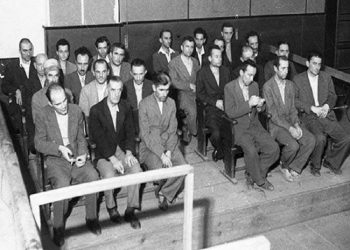
Without prolonging further, I wish to emphasize that this collection of research papers by Prof. Dr. Hasan Kaleshi, which has been offered to us these days, reflects the historical objectivity of events of great importance for the Albanian nation in general, and for its part left unjustly outside political Albania in particular. Moreover, with the release of this monumental work, I am deeply convinced that all the slanders and fabrications that have circulated against him to this day will fall away, and thus the scholarly work of Prof. Dr. Hasan Kaleshi will take its deserved place in our national historiography. For this, the most deserving are his former collaborators: Prof. Dr. Feti Mehdiu, Prof. Dr. Muhamed Mufaku, and Prof. Dr. Esad Durakoviq, who managed to collect and systematize all the works of Hasan Kaleshi published during the period 1949–1976 in scientific journals, the daily press, and periodicals in the territory of former Yugoslavia and in various countries of the world.
At the very end, I found it reasonable to refer to the great German scholar Peter Bartel, who, describing the personality of Hasan Kaleshi, states: “Kaleshi defended the … provocative thesis that the Turks saved the Albanians from Slavization. Kaleshi’s thesis was a rigorous formulation, giving rise to polemics against the inevitable thought that reigned at the Institute for Southeast Europe regarding Turkish studies. Kaleshi was a great patriot, more than others could understand.” / Memorie.al