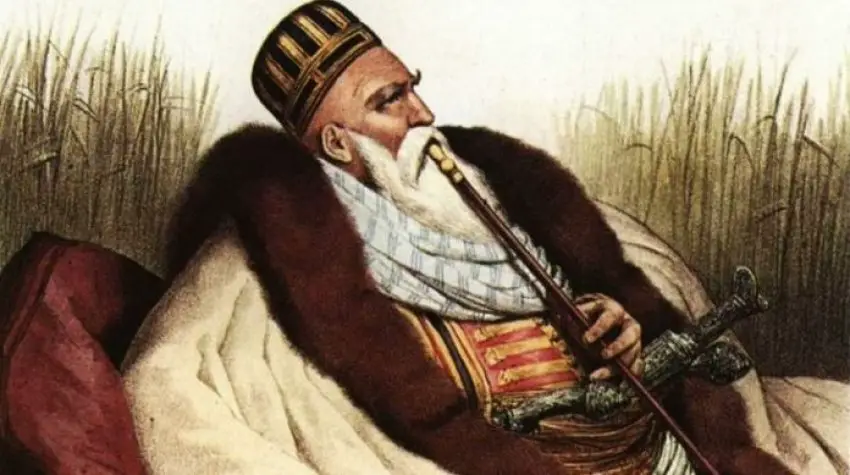
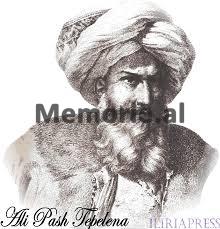
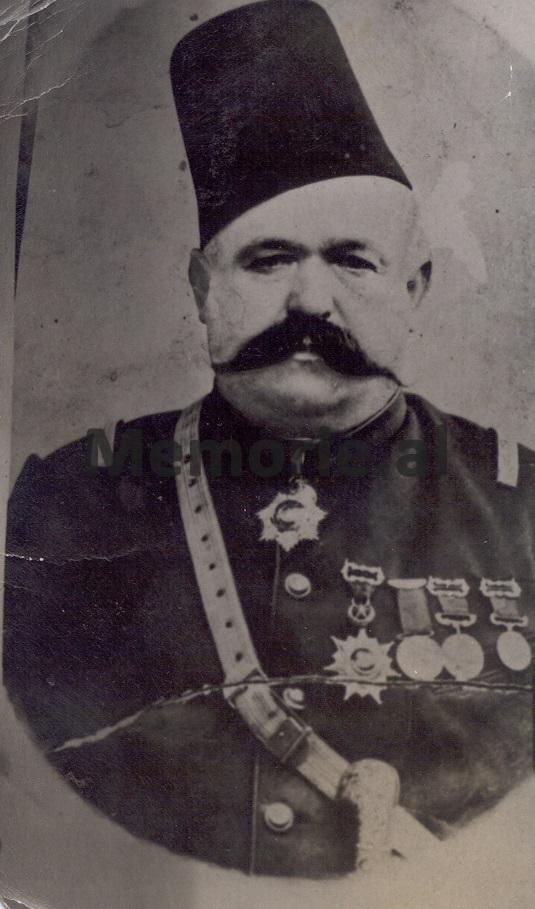
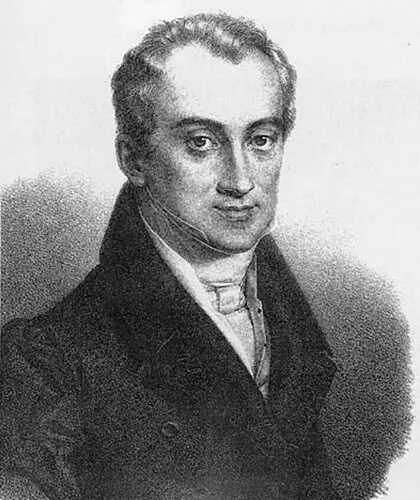
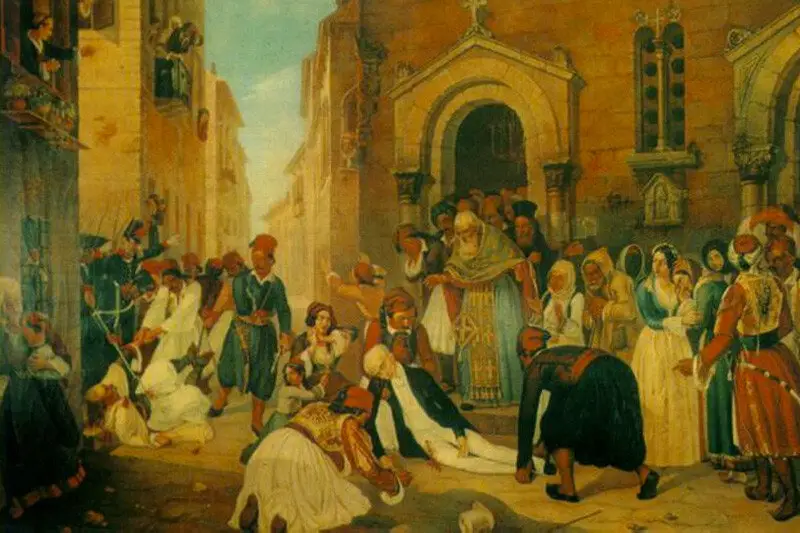
Memorie.al publishes a short history of the famous Albanians who left their marks on the history of Greece during the period of Ottoman rule – starting from Ali Pasha of Janina, who struck terror into the Sublime Porte; John Capodistrias of Corfiot origin, who was elected the first Prime Minister of Greece after the declaration of independence in 1827 and was brought by a British steamship to the island of Aegina; Haxhi Mihal Dalani, the Hero of Greece, about whom many books have been written; and finally, Banush Sevrani from Skrapar, the famous military commander who, at the head of his forces, came to the aid of the old Pasha of Janina and the Suliotes when they rebelled against the Sublime Porte.
“The Arvanites and Albanians in the liberation war of the Greek people” is one of the first books in the Albanian language that gave something to the Albanian people, the Greek people, and all other Balkan peoples and beyond. For well-known reasons, a proper study does not exist. It is not well known how the Hellenes were dispersed, where they settled, and how they were transformed – or when Greece, the Arvanites, and the Albanians were born. The Ottoman occupation and the war of the Venetians constitute the essence of the traditions in the Balkans regarding the major European interventions, especially those of the Anglo-French, the Austro-Hungarians, and Russia, which played an important role. It was the iron hand of Skanderbeg that protected European civilization. After the death of Skanderbeg, on the eve of the 16th century, even though the Turks expanded as far as Bosnia, the Albanians once again – through the uprisings they led against the Ottoman occupiers and through deadly wars – forced the Ottomans to leave many dead and much war booty on the battlefields. Regarding the heroic war fought by the Greeks, Arvanites, and Albanians against the Turks, some valuable materials have been preserved in “Historical Studies,” especially by researchers Stavri Naçi and Selami Pulaha, but even these are scattered, disconnected from one another, and often seem as though they do not complete the whole picture.
Albanians in the Museum of Janina
If you go today to the Historical Museum of Janina, you will find many documents proving that Ali Pasha is from those parts, because in Janina he had his identity in the fundamental civil status registries and had created his first administration of his own, regardless of the fact that in the end (in 1820) he turned against the Turks. One thing is true: at this time, the Albanians were bordered by Bosnia, Metohija, Epirus, and down to Preveza, yet they did not possess the [written] Albanian language. Therefore, the Romanian V. Papakostea said: “The Albanians are the only people who have no chronicle of the events of the year 1821… The grandeur of this heroic people has passed without being reflected by others and has been appropriated by others” (historiography was missing). For this reason, since before this period we did not yet possess the Albanian language, it is thanks to others like Marin Barleti or the Turkish defters (registers) – which provide enlightening data, however small, from the History of Albania – but also thanks to songs and rhapsodies, that early stories reflect or maintain the wake and flow of events. Here is one of these songs:
“The cannons fire, the sea roars,
The state is gathering soldiers,
Banush Bey, oh Banush Bey,
Forty days in battle,
Without bread and without ammunition.”
It is the time when Banush Sevrani fought in Missolonghi. This is best presented to us by one of the writers of the time, Dimitrios Photiadis; however, unfortunately, this book has not been translated into Albanian, and his killing on the small island of Dolma (Tollma), near Missolonghi, does not emerge clearly. This Albanian hero, apart from the songs and legends of those who shed blood in this war, has no other data. For these Arvanite and Albanian warriors, there is no complete data. In Dhimitër Grillo’s book, it is written that out of every 50 people beaten with sticks by the Turks, 49 were Albanian Arvanites. Recently, new books have come out. One of these is Aristidh Kola’s book, “The Arvanites and the Origin of the Greeks.” This book has left a great mark on me and has taught me many things we did not know, among others.
Capodistrias, the Albanian Prime Minister
Capodistrias, originating from Golem of Gjirokastra, the first Prime Minister, is mentioned in the book of Dr. Myslim Hotova, who dedicates this work to Haxhi Mihal Dalani. For this year, together with the Greek writer Cleopatra Prifti, the struggle of the Arvanites and the Albanians has been highlighted. She mentions this “giant tree” for the liberation war fought in Crete. In her drama, Cleopatra casts a dignified look at this Albanian hero who shines in Crete. We see below the description of Haxhiu, who was killed in 1828, and who invited John Capodistrias to the war in Crete, as, as is known, Crete fell later, in 1829. For the addition he makes to his book on Capodistrias, Dr. Hotova (from p. 205 top. 209) deserves special merit. In these pages, we find that John Capodistrias is the first Albanian Prime Minister of Greece, originally from Corfu, where his vicissitudes with the Russians until he became a minister are described, as explained in the pages of the book mentioned above. On April 2, 1827, the Greek Constituent Assembly, at the Congress of Troezen, upon the proposal of the leaders of the Hellenic uprising – Kolokotronis, Karaiskakis, and others – elected John Capodistrias (Gjika) as the Prime Minister of the first Greek state. He was brought by a British steamship and placed at the head of the newly formed independence centered on the island of Aegina. This leader, the first Prime Minister of Greece of Albanian origin, did not govern for long, because he was treacherously assassinated with a knife in the back on October 9, 1831, at the Church of Saint Spyridon. His body was buried in Corfu, at the Church of Platitera. In his honor, a monument was erected in 1887. But is he known in the international arena? Yes, he is known. There is a wealth of references; the author of the book even provides magazines and newspapers from Greece even in our days, publications from the year 2003. Let us read on pages 208-209 of the book, and it would suffice to note: “The History of Europe” by Kostë Çekrezi (1921), in the USA: “Greece was placed under the government of John Capodistrias, an Albanian long departed from Gjirokastra, for whom his museum-house is preserved.” In the book, the data on Haxhi Mihal Dalani catches our attention. The author of the book, aided by Cleopatra Prifti, writes: “The giant tree of Albania in Crete.” The activity of Dr. Myslim Hotova, eager to highlight the work of Albanians in the Greek revolution of 1821-1829, has captured and fully brought to light the heroic work of the Albanian Haxhi Mihal Dallani. Regarding this legendary figure, he informs us accurately with archival documents about his bravery, up until the giving of his life in Crete in 1828.
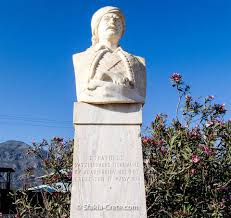
Haxhi Mihal Dalani, the Hero of Greece
For the works and the war of Haxhi Mihal, which the author has focused on Crete, the latter describes the war at the Fortress of Frangokastello and the actions of this hero on the anti-Ottoman battlefields. The author’s story is captivating when Nexhmie Zaimi, a researcher and journalist in the USA, says: When she interviewed King Hussein of Jordan [referring to the regional context], there were numerous guards on both sides of the entrance. Honoring her, he said: “Do you see these? They are all Albanians. I keep them because they are brave and men of their word (besa).” We have encountered such events everywhere. The whole world knows the Albanians for their bravery, loyalty, and generosity, but the unique aspect in this case is the struggle of the Arvanites and Albanians for the Balkans, for Greece, and for its liberation from Ottoman occupation – because if Greece were liberated, surely it would be Albania’s turn next. Let us not forget that at that time, Albania was wide and large, but un-unified. The Ottoman occupiers had expanded as far as Bosnia. The southern and eastern borders at that time were Preveza and Epirus. But let us return once more to the hero Haxhi Mihal Dalani from Delvina. It is possible that Haxhiu is actually from Konispol; some others say from Lipivan of Përmet or from Pogon. The writer Cleopatra Prifti from Crete says in her writings that he is from Delvina. She has even written a drama about him. In Crete, there is a monument. He is one of the heroes of the war for the freedom of Greece. Haxhi Mihali is one of the first klephts. When he was in Lebanon, he responded to the call of Bekim Emiri to fight against the Sultans. With 800 men, he reached Beirut. He fought bravely against the Turkish forces. This struggle was also adopted into the folklore of that country. It was passed through all the Arab countries, as far as Gibraltar, where Albanians lived, which is also confirmed in one of the museums in London. As Professor Nasho Jorgaqi also mentions, this book highlights the struggle of the Arvanites and Albanians in the victory of the Greek Revolution and for the benefit of friendship between the two peoples. But should we seek other heroes who gave their lives in the war against the Ottomans for the liberation of Greece and the entire Balkans? It is true that the Pasha of the Bushatlliu family of Shkodra had greater power than Ali Pasha Tepelena, but he held firmly to the Turks; indeed, his paid forces went to war as far as Morea without disturbing the forces of Ali Pasha. After the blows given by the Turks starting from Macedonia and the border with Bulgaria, they reached as far as Shkodra, narrowing his territory down to the city’s fortresses.
Agreements were reached to such an extent that Mustafa Pasha Bushatlliu was invited to rest in Istanbul, but this happened later. The struggle and work of the Albanian Muhammad Ali in Egypt is well known. For his victories, the Sultan’s firman (decree) to appoint him to Thessaloniki is also well known. His refusal was supported by everyone. Seventy Albanian officers protested, and the order was carried out. At this time, Ibrahim Pasha, more dangerous than his father, had won in one of the greatest battles of the time.
The Warrior Banush Sevrani
In the writings we have done about Banush Sevrani, one of the brave men of several battles, we have pointed out that his battalion (tabor) acted together with Kutahi Mehmet Reshid Pasha. In Missolonghi, it was very difficult to enter, and yet his warriors – all fellow villagers and neighbors from the villages surrounding Sevrani – fought with heroism. Even today, the song is sung:
“Oh island, beating in the water,
You were never taken by war,
Banush took you with his seal,
He made the myrtles into a bridge,
Slowly, slowly, oh island,
They call me Banush Sevrani.”
In this war, many brave men were killed. Among them, Ali Shahu was killed and Banush was wounded. Negotiations between the defenders and the Turks were in the foreground. A delegation was sent by Kutahi, which included, among others: Banush Sevrani, Veliko Jaçe, Foto Xhavella, and Haxhi Aga. The delegation, composed entirely of Albanians, was received very well by the defenders and the Suliotes. We are giving a part taken from page 248 of the book “The Second Fall of Missolonghi.” The delegation, instead of asking for their surrender, said the opposite: “May you be blessed (Hallall), may God not shame you. Your victories are ours too. As soon as they are finished with you, they will turn against us. Whoever raises a rifle against you, may God turn it back upon him?” Seeing their good conduct, they gifted them a golden dagger. Kutahi opposed this and wanted to take it from Haxhi Aga. The tension reached such a point that the Bushatlliu battalion departed. The withdrawal of Albanian forces from the ranks of the Turkish army became a “cancer,” especially during the year 1822. Out of the 40,000 warriors Kutahi had, only 7,000-8,000 remained. There are many examples of Albanian departures in favor of the Greek Revolution, but here we will write about the hero Banush Sevrani. Researcher Stavri Naçi on page 113 of Magazine No. 3, “Historical Studies, 1971,” says literally: “By order of the Sultan, he asks the Pasha for either Missolonghi or his head. Reshit Pasha had no other option but to organize a general attack in the month of September. The majority of Albanians refused to participate. Nor did the Vizier of Shkodra, who announced that due to the autumn season, he could not participate in this battle. Others refused because their salaries were not being paid. Entire units of Gegs and Tosks departed for their homelands. Even Sulejman Pasha of Vlora left with 3,000-4,000 men. Thus, about 6,000 soldiers left from Acarnania; likewise from Patras. Finally, even Banush Sevrani, who had been wounded in the battle of September 21, demanded the pay for his 1,000 soldiers because he was going to depart. The Turkish Serasker, desperate from this situation and from the stopping of supplies from Patras and Lepanto, addressed Banush Sevrani with shouts and accusations of treason. It was about the delegation in which Banush Sevrani was a member, which told the Suliotes to stand firm, because this was in the interest of Albania (read: “Historical Studies”, no. 3, 1971). This was one of the reasons that Banushi, who maintained close ties with the Suliotes, left the Turkish Pasha with all his army.
The Famous Albanians
Under these conditions, the Turkish commander-in-chief canceled the operation and awaited punishment from the Sultan. The killing of Marko Boçari and the occupation of Suli (the Republic) was a great blow to the Revolution. Besides these, the betrayal of some Greeks must also be noted. When Marko Boçari heard of this, he cried out: “Ah! Ah! Yorgo Vanaqotis, you will pay me dearly for this.” He addressed a letter to his fellow Albanian commanders, dated August 31, 1822, which says: “It is the second time I am desperate and poisoned. The first time when Reshit Pasha treacherously killed Ali Pasha, and the second time when through the betrayal of Vanai, the Ottoman army occupied Suli. The Ottoman forces will now head toward Rumeli to occupy Missolonghi. I will try to talk to Mustafa Bushatlliu to detach him from Kutahi. Brother Çelo! Meet with Asllan Kuqo, Veliko Jaçe, Tafil Buzi, and Gjolekë Kuçi and tell them that the Motherland still expects from us. I will also write to Mustafa Qafëzezi and Zylyftar Poda.” Following the call made by Ali Pasha, not only within Albania but also outside it, help arrived from many directions. Help also came from Skrapar, especially from Sevrani, with forces led by Banush Murati. Banushi connected with the experienced officer Nesti Boçari to organize the defense of Missolonghi. At this time, the song of Banushi continued to be sung, but this time for Banush Murati from the Kashisht neighborhood:
“Help, comrades, help,
Banush Murati is coming to us,
Banush, the battle-worn,
Struck upon the cheek.”
And further down, in the wake of helping Ali Pasha, the song continues:
“You, Vizier of Tepelena,
Do not let go of the fortress steps,
Bejko is coming with Myftar,
They have brought Skrapar to your aid,
Banush, mounted on his horse,
Kills and cuts down soldiers with his sword,
Oh Banush, your name has spread,
The Sultan wants your head…”
But now it was too late. Ali Pasha gave his life to betrayal. Janina, Tepelena, and all of Albania would no longer hear the voice and the rifle of Ali Pasha and Marko Boçari. But, nevertheless, the rifle and the struggle of the Arvanites and Albanians for the freedom of the Greek people would not run dry. It was said that Banush Sevrani had a close social connection with the Suliotes. He met Kolokotronis in the war. In literature, there are writings about the birth of Kolokotronis in the middle of the road, how he connected with Ali Farmaqi, how they became “blood brothers,” and who this Ali Farmaqi was. How they managed to connect with the French consul and with Napoleon. Their idea to create a Greco-Albanian state with a high council (with 12 Muslims and 12 Christians), up to the war for the liberation of Athens, where precisely in the Acropolis and the Plaka neighborhood, Arvanite blood, Albanian blood, was shed. The village of Sevran, according to documents, was a Christian village. Even its closest village, Mërtinji, was the same. Places named like Church Pass (Qafa e Kishës), Cakrri’s Church, Saint Nicholas (Shënkolli), Saint Elias (Shëndëllia), Kolleshaj (surname), indicate the properties of Banush (Pano) Sevrani. In the meeting with the Turkish bimbashi (major), we read: “The blood that is being shed and the victories near you – may they be blessed (hallall). May Allah not shame you. In the agreement, you have manifested betrayal; you have paid for it with blood. This time we have firm demands from the Vizier. Hand over your weapons, your ornaments, and withdraw in peace.” Banush Sevrani’s response was strong and sharp: “Some of our battalions have your ‘besa’ (word of honor). Besa is given for the Nation and the Motherland. We are ready for attack again because reinforcements are approaching. What you ask of us, we ask of you. Weapons and symbols are the pride of the nation’s warriors and are not surrendered.” After returning, the delegation went to Noti Boçari’s hut. There, Stefo Himarjoti, Haxhi Sarva, Jorgji Shatolla, etc., also arrived. The answer Banush Sevrani gave to the Turks was magnificent. /Memorie.al