By Ali Buzra
Part Forty-Two
LIFE UNDER PRESSURE AND SUFFERING
(Evaluations, Comments, Narratives)
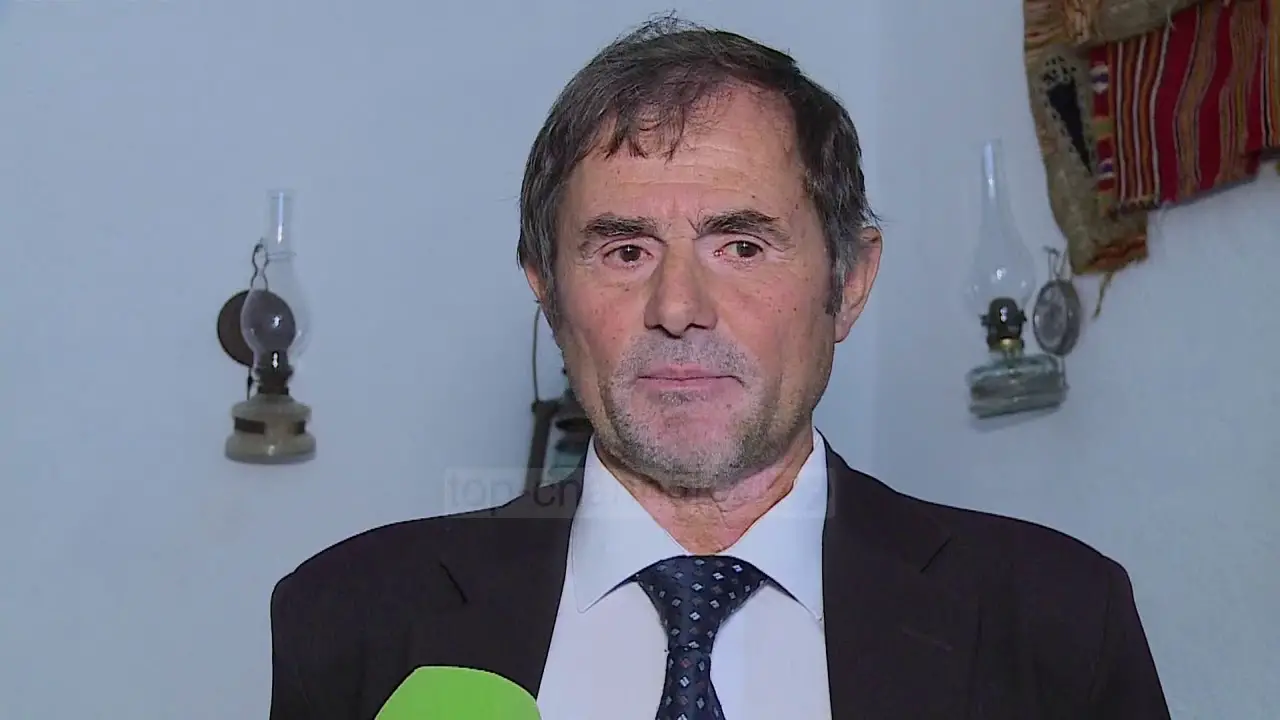
Memorie.al / At the request and wish of the author, Ali Buzra – as his editor and first reader – I will briefly share what I experienced during this encounter with this book. This is his second book (following “Gizaveshi over the years”) and naturally continues his writing style. The sincerity and openness of the narrative, the simple and unembellished language, the accuracy and precision of the episodes, and the absence of deliberate later imaginative processing have, in my opinion, served the author well. He reaches the reader in his original form, inviting us at the very least to recognize unknown human fates and pain, whether by chance or not, leaving us to reflect on a beginning of awareness toward a catharsis so necessary for the Albanian conscience.
Bedri Kaza
Continued from the previous issue
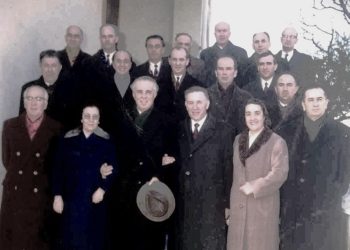
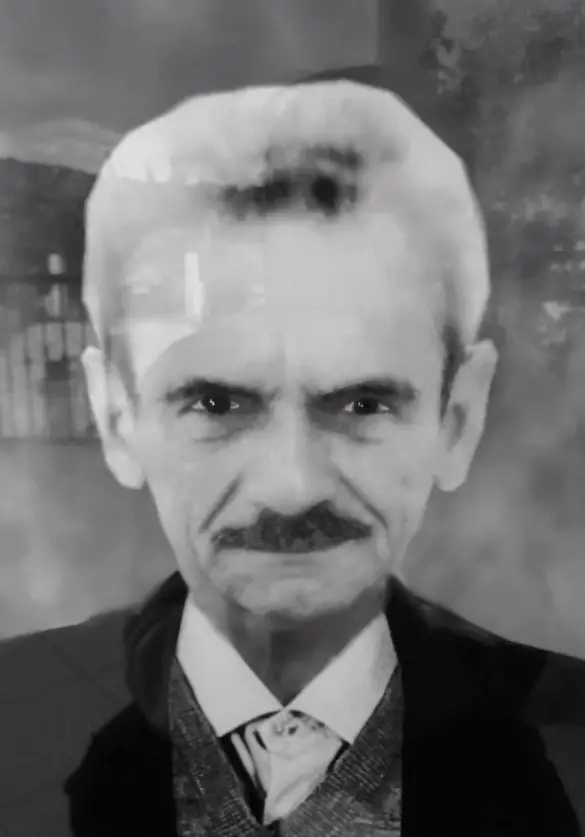
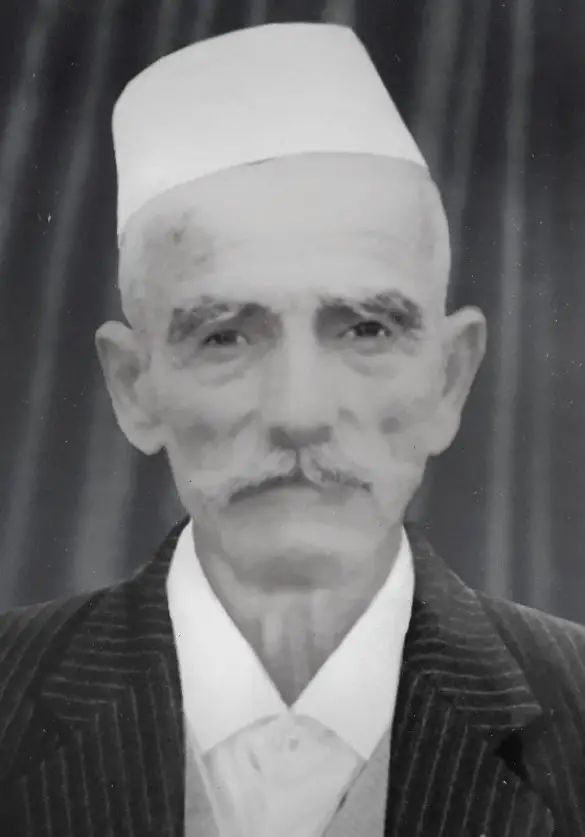
By decision of the Military Court of Tirana, operating in Elbasan, Shefqet was initially sentenced to 25 years of imprisonment. In another session, his sentence was reduced to 20 years and 10 months, along with the confiscation of his personal movable and immovable property, on the grounds of being declared guilty of the crime of treason against the fatherland. Shefqet Alla, 44 years old, a father of three with an elderly mother, served his sentence in the Elbasan Cement Factory, and in Ballsh, Spaç, and Burrel. His eldest son, Kasem, then 22 years old, bore the burden of the family. Every two months, he went to visit his father in prison, bringing him food, coffee, and tobacco. Kasem also went to the prison with his stepmother. Family members recount that his elderly mother once went to Burrel as well; longing for her son, she traveled most of the way on foot alongside Kasem.
Kasem was married to the daughter of Islam Shala from his own neighborhood. His wife, Dylberie, after her father-in-law was sentenced, was deprived of the right to freely visit her own family relatives. Out of concern not to create problems for them, she was forced to remain distant. Her brother, Hyqmet, was denied the right to pursue higher education for a time. Longing for her relatives – parents, brothers, and sisters – whom she saw every day but could not communicate with freely, this brave and determined woman proudly respected and honored her husband and his innocent family. She struggled to give birth to and raise her children, who were also not permitted to attend higher education.
Her father, Islam, decided to gift them a heifer that his wife had raised with great care. However, giving it to them was a problem. They would be accused of helping the son of an “enemy.” They couldn’t take it during the day, and nighttime movement could create even more issues. For this, they followed an illegal route. They sent the heifer to some relatives in the “Skejaj” neighborhood, leaving it there for about a month. Kasem went somewhere near “Guri i Rezit” (Rezi’s Rock) and they brought it to him there. He took the heifer and came home, passing through the “Balca” neighborhood, using the argument that he had bought it in Elbasan. These are some of the countless details of the harassment and persecution against Shefqet Alla’s family in Dorëz, which relatives recount with much pain today. Shefqet was released in 1982, now 64 years old, having served all those heavy years in the communist prisons.
He lived for another four years with his family. He passed away in 1986, unable to see the overthrow of the regime he hated so much. As happened everywhere when tragedy struck persecuted families, the State Security (Sigurimi) officers and their tools went into motion. Thus, at Shefqet’s funeral, only 5–6 men accompanied the casket, among them Selman Korra, Selman Brazhda, Shefqet Mema, Qemal Mema, and his in-law from Lushnja with his son-in-law. Two men from the neighborhood who dug the grave were pressured by a communist cadre from the cooperative, who told them they should not dig the grave of an “enemy.” Nevertheless, they did not stop their work; they completed the grave but did not return to Shefqet’s house afterward. Indeed, what must these families have felt when neighbors, relatives, and fellow villagers did not attend the funeral? This was the Stalinist-Bolshevik model installed in Albania, which, among other things, deprived one even of the rights to honor and respect the dead in their final moments toward the grave.
The elite of Albanian intellectuals suffered their sentences in the prisons of Burrel, Spaç, Qafë Bari, etc. Other prisoners who were not educated learned a great deal from them. Shefqet, Ram Kurti, Nebi Dosku, Haxhi Balliu, and others spoke of this, as their relatives recount today. Despite the harsh conditions of the prison, a sense of collectivity, mutual aid, and respect prevailed there. This spirit was maintained even after release from prison. To illustrate this, I will describe an event involving Shefqet Alla’s youngest son, Liman. In 1974, I was serving as a soldier in an artillery unit in Çorum, Kavajë. Around mid-May, a platoon of soldiers was selected – based on height and a “clean” family biography – to prepare for the military parade of November 29th, where the march would take place before the Party leadership and Enver Hoxha in Tirana.
I was also assigned to this group. We began training in the Kavajë Brigade. Later, we were sent to the Plepa unit in Durrës, where several groups trained in infantry squares in the “shoulder arms” formation. The first days in Plepa went well. Training was mostly in the morning, with only two hours in the afternoon. Around mid-June, an order was given to head toward Cape of Rodon for a wheat-harvesting “action.” They sent us in military trucks – in the back, of course – along with the logistics, and we were stationed near the village of Shetaj in Durrës. We had our full soldier’s kit: a tent sheet, two blankets, a “SKS Simonov” type rifle, a gas mask, and field eating utensils like a mess tin, canteen, spoon, etc. As soon as we arrived, we set up camp, building tents for four people each. One blanket was spread on the ground as a mattress, and we covered ourselves with the other. The kitchen was set up nearby, but there was no drinking water.
The village, where there might be wells, was far from where we were located. Nearby was a sort of pond where the water was almost stagnant. The kitchen used that water for cooking, and we drank it too. We would push aside the red frog scum and fill our canteens. The water was not only warm but also had a foul smell. A separate meal was cooked for the group of officers accompanying us; logistics soldiers brought water for them from the village. The lunch stew was inedible, as were the beans cooked for breakfast. For dinner, there was only tea and a ration of bread. All the food reeked. They supplied us with sickles, and every day we went to work on some dry hills about half an hour away from the camp. There, we harvested oats, not wheat. From the start, the daily quota was made clear: 700 square meters to be harvested and tied. The quota had to be met, or you would stay there until it was finished before returning to the tents for lunch. The soldiers paired up to work.
I was struggling. Not only was I physically weak, but I had never worked with a quota before, nor had I ever had the chance to harvest. “We will work together,” a friend told me, who came from the same unit in Kavajë. He was from Vlora, named Sabri Lame; as far as I remember, he was from the village of Sevaster. Sabri had a good, strong physique; he was a driver by profession but had worked in a cooperative. I didn’t give him an answer, neither yes nor no, because I knew that by working with me, he would have to do more than his share. We dispersed across the hills. The village brigadier measured the plots, marking the boundaries for every two people according to the quota. Sabri didn’t lose heart. No matter how hard I tried to work, he did much more than I did.
The problem was not just the drinking water we carried in our canteens, but also the food. We would wake up at 3:00 AM and set off. At 4:00 AM, we started work. We worked until 11:00 AM or even 12:00 PM, as the quota was high and the plots were full of thorns and weeds, which made the work difficult. In the afternoon, we were free. The only good thing was that the sea was close, but being exhausted and poorly fed, even that had little effect. Midway along the road we took back and forth to work, on a hillside, there was a plot planted with vegetables belonging to the military unit of the Military Agricultural Enterprise (NBU). The plot was fenced, and at its head stood a guard—a soldier from the NBU. As we passed there every day, our eyes were drawn to the tomatoes and watermelons visible from the road.
They could have been very good food for us compared to the stale stew cooked in our kitchen. One day, the soldiers had spotted a well in a ravine with cold water, which was far from the plots where we worked. I went with Sabri and filled up water there, using a piece of wire found by the well, which our comrades had apparently left. The well was not very deep. We tied the wire to our canteen straps and filled them. We drank thirstily and filled them again to take with us. For the first time in days, we were satisfied with cold water. We had finished work and were heading back to the camp. When we reached the vegetable garden, we saw that the guard was at the end of the plot, near the road. Around his neck, he had a bandage, indicating he had been treated for something.
When I approached, I noticed it was Liman Alla, the youngest son of Shefqet Alla from Dorëz. He recognized me immediately, even though we were bare-chested and blackened by the scorching sun while working on the dry hills of Shetaj. We met, and I introduced him to Sabri, telling him he was a friend of mine from Vlora. Liman told me he was a soldier in the labor unit nearby, looking a bit hesitantly at Sabri, as everyone knew that NBU soldiers were from the class with “bad biographies,” denied the right to carry weapons. “You’re lucky here, as a guard!” I said. “I’m okay,” he replied. “What’s the problem with your neck?” “It’s nothing.” I saw he wanted to say something but was cautious because of Sabri. “Speak freely, he is my friend,” I told him. Liman began to explain. In the village of Shetaj, there was a doctor who was interned (internuar).
He had been in prison for many years with Shefqet. One day, Liman developed a small pimple on his neck and went to the village clinic for treatment. When the doctor wrote his name in the register, he asked where he was from. He said from Librazhd, the village of Dorëz. After learning he was Shefqet’s son, the doctor told him he knew his father from prison. Having the authority to issue medical reports, he gave him several days of leave and told him to return. The doctor recommended that the patient should not do hard labor. Thus, Liman was stationed as a guard at the vegetable garden. The friend had done his work. “My father’s friend helped me,” Liman concluded his story with great satisfaction.
“Now, wait,” he told us. He took my military tunic (gjimnastorkë), which I kept tied around my waist, and entered the garden. He stuffed it with tomatoes and two small watermelons, looking in all directions to ensure he wasn’t seen. It felt as if he had “given us the world.” “Come again,” he said, but only after we separated from the others. Suddenly, I remembered and told him about the cold water we filled at the well in the ravine. “Don’t drink there,” he told us, “the water has worms.” We opened the canteens and poured the water into our cupped hands. What a sight. There were small white worms in the water. My God, we started to feel nauseated. We emptied the canteens. We parted with Liman, thanking him for everything. After rounding a bend, we sat down with my friend and ate the watermelons. We were truly hungry every single day. When we reached the camp, we didn’t touch the stew but ate the bread with tomatoes and salt. These were the last days of the “action” in Shetaj. We got tomatoes from Liman two or three more times. We didn’t want to burden him too much, because if he were caught, it would become a serious problem for him. Liman was brave; “just don’t tell anyone and don’t let them see you,” he would say, “and I’ll give you as much as you want.”
Thus, Liman Alla, the soldier with a “bad biography,” helped the soldiers of the military parade with “good biographies” who were struggling on the hills of Cape of Rodon harvesting oats. On the last day of the action, Sabri and I were delayed. We were in a corner far from the others, and the plot had many thorns. We were forced to stay over an hour behind our comrades. We parted with Liman at the road, which supplied us with tomatoes, and went to the camp. Exhausted and worn out, we decided to go to the sea once and then have lunch. The sweat had dried on our bodies. We ate lunch with the tomatoes and shared some with our tent-mates. In the evening, I had vomiting and stomach pains. Apparently, I caught a cold at sea. I didn’t eat dinner. During the night, I went out several times and hardly slept at all.
In the morning, we were to set off for the unit in Plepa. We were told the order was for a march, as the situation was considered “occupied territory.” I could barely stand. We didn’t know the officers; they weren’t from our unit. Sabri told the company commander to take me in the logistics truck because I was sick. In reality, there were many soldiers complaining of pain and inability to march. The commander refused, replying that there was no room in the truck. Sabri began to plead with him, saying I was very ill. I intervened, telling him, “Don’t beg him, I will walk!” The officer looked at me with anger. Breakfast was eaten there, and the lunch stew was taken in aluminum mess tins. I didn’t go to get the food, but Sabri took my mess tin and went for it. We set off around 8:00 AM. My comrades took my equipment, while I only carried my rifle, which I often used as a walking stick.
The march started in a regular single file, but along the way, the column fell apart. Soldiers complained of leg and body pain. The officers accompanying us could no longer maintain order. Around 8:00 PM, after nearly 12 hours of walking, Sabri, I, and some other friends arrived in Shijak. There was water to drink there; we had been very thirsty. In my pocket, I had 50 lek. With that, I bought seven orange sodas (arançata) for my friends and myself. They were delicious and did us good. After drinking two of them, I felt relieved. Two or three hours later, we arrived at the Plepa unit, exhausted and tired to the bone. When we woke up in the morning, some soldiers were limping, and others were completely worn out.
The next day we began training, but it wasn’t a problem as it was like a lesson with 10-minute breaks. What would torture us later was the order to work in the afternoons. During the following months, every afternoon at 4:00 PM, we went to work on the Hamallaj hills, digging military tunnels for defense. The tunnels were about 2.5 meters high and perhaps 1.5 meters wide, enough for a cart to pass with the soil we excavated. Two people worked in each tunnel. We dug, filled the cart, and took it outside, without any kind of technical safety. There was no quota, but you were forced to work from 4:00 PM until, as I recall, 7:30 PM. We entered the tunnel shirtless, because during the digging, clumps of soil would fall, and clothes would have to be washed. I worked with another friend because Sabri was hospitalized with dysentery and a cold, where he spent over two months. Apparently, he caught this during the Shetaj action but endured it for a time on his feet.
Staying in Plepa, Durrës – where there was drill training in the morning and tunnel work in the afternoon – was true torture for us. The last three weeks of November were spent at the aviation field in Laprakë, Tirana. The entire parade troop for 1974 was there. There were 34 squares of infantry soldiers who would march in step, troops from all branches – land, sea, and air artillery, tanks, etc. The military strength of the state was to be demonstrated on November 29th, on the occasion of Liberation Day. This three-week period was the best time I had during over two years of military service; the food was good and plentiful, and the sleeping conditions were also good for the time. From time to time, high military leaders came and held talks with us about the “hostile group” in the army. There, we were also told about the arrest of Defense Minister Beqir Balluku, Chief of the General Staff Petrit Dume, etc.
One day, Prime Minister Mehmet Shehu came and spoke very harshly about “internal and external enemies” working against socialist Albania. Two general rehearsals were held after midnight on the boulevard before November 29th. After the parade, we dispersed to our respective points. In November 1975, we were supposed to be discharged, but the service period was extended by another month and a half. We were to be discharged at the end of December, but it didn’t happen. An initiative was announced, supposedly coming from us, to perform a month-long “action” in agriculture. “Voluntary actions” were priority practices that accompanied Enver Hoxha’s communist system in Albania the entire time. They included workers, cooperativists, young men and women, school pupils, students, soldiers, and in special cases, even the elderly.
The communist rulers “were right,” because this was unpaid labor, while they spoke loudly about the exploitation of man in the capitalist world – where a worker, with the wage received from the capitalist, could even buy a car, while the Albanian worker could not normally provide his family with bread and food. The peasantry, which made up nearly 80% of the population, could buy one corn bread a day with their wage. Thus, we completed the action in January 1976, working the land with spades in the vineyards of the village of Dushk in Lushnja. After being discharged from mandatory military service, I immediately began work in Dranovicë, Kostenjë, where I had been appointed as a primary school teacher for four collective classes./Memorie.al