
By Prof. Dr. Ardian Ndreca
Part One
THE HISTORICAL SENTIMENT OF THE ALBANIANS
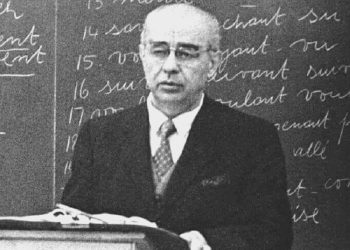
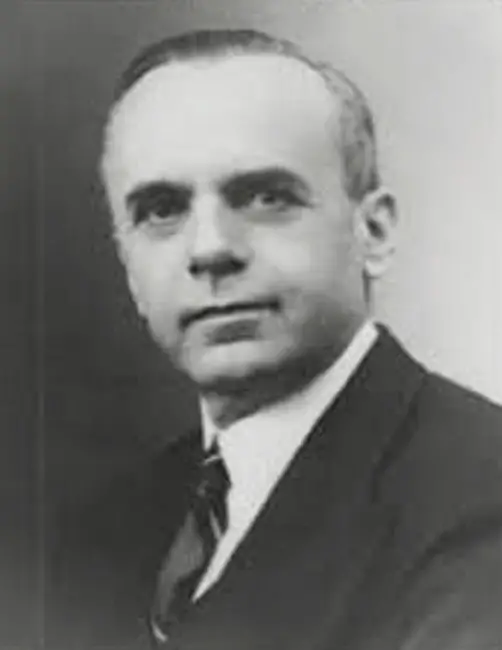
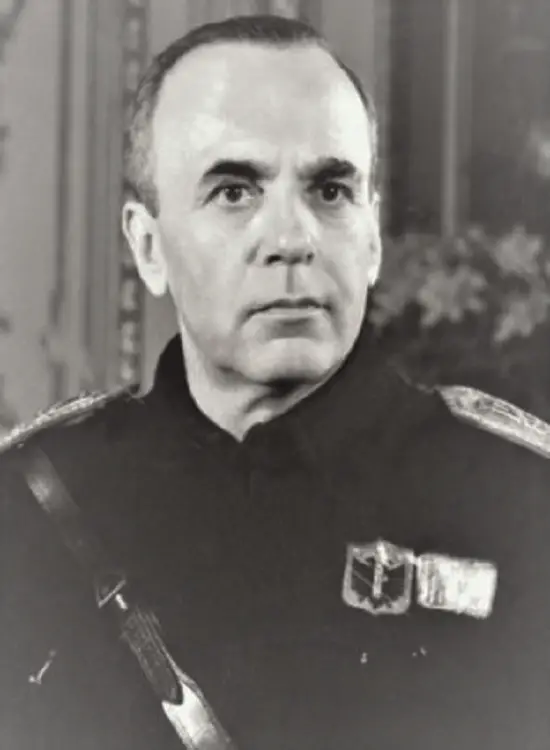
Memorie.al / It is not very easy today, while graves are being opened and memories are being buried in Albania, to present a figure as “rumored” as that of Mustafa Kruja. He belongs to that rank of men – like Lef Nosi, Dom Lazër Shantoja, Kol Tromara, and Mark Gjomarkaj – about whom almost nothing is said, even though they occupy a place of honor on the altar of our nation. Today in Albania, a trend prevails to rehabilitate those figures that the communist regime had condemned until yesterday. This is very just. However, the first ones emerging as “persecuted patriots” are precisely those who were eliminated during the internal struggle between the communist factions in power. Today’s writers strive to stir public pity by recounting the unjust fate that befell the likes of Koçi Xoxe and Mehmet Shehu, while intentionally remaining silent about the fact that thousands upon thousands of graves of worthy and innocent people were sown in every corner of the country by their very hands.
When speaking of Mustafa Kruja, it is not a matter of “rehabilitating” his figure – for he has no need for such a laborious operation – it is only a matter of making known who Mustafa was and what his life represented. Now that more than half a century has passed since the turbulent events of the Second World War (which for us ended tragically), we can view the events and the people in a more objective light, as they truly unfolded and as they truly were.
The Youth of Mustafa Kruja
Mustafa was born in the city of George Kastrioti (Kruja) on March 15, 1887, into a simple urban family that ensured he completed primary school in his hometown and later continued secondary education in Janina. The end of the first decade of the 20th century found Mustafa in Istanbul, enrolled in the superior institute Mülkiye-i-Sehahané (Faculty of Political Sciences), from which he would graduate in 1910 as a “licencié en sciences politiques et sociales.”
It was a time when the Young Turk movement had swept across Turkey under the pretext of restoring the Constitution of 1876. During this period, Mustafa began to take an interest in politics, writing various articles and participating in a revolutionary society. For this reason, he was suspended from school but was readmitted thanks to the protests of Albanian deputies in Istanbul.
The Declaration of Independence found him in Vlora, alongside Ismail Qemali and Luigj Gurakuqi, as a delegate for the people of Kruja, ready to sign the independence of the fatherland alongside the most prominent patriots of our nation. With the formation of the government, he was appointed sub-prefect of Vlora and later secretary of the Prime Minister’s Office. Karl Gurakuqi wrote of him: “He had the soul of an educator. His nature had pushed him since youth to deal with education, for Albania expected development and progress from education, especially at that time when the foundations of the new state, emerged from centuries of darkness, had to be laid. The state authorities, observing his inclination and granting his expressed desire, saw it fit to appoint him director of education in the prefecture of Elbasan.”
He held tasks of a similar nature during the brief reign of Prince Wied in 1914. This, we might say, was his longest period of stay in Albania. He wrote numerous articles in various periodicals, such as in the Albanian pages of “Corriere delle Puglie”, in Sotir Gjika’s “Kuvêndi”, in Dom Mark Vasa’s “Mbrojtja Kombëtare”, and in Shuk Gurakuqi and Dom Lazër Shantoja’s “Ora e Maleve”. In 1920, he represented Albania, alongside Monsignor Bumçi and Luigj Gurakuqi, at the Paris Peace Conference.
The First Exile
In 1924, with the short-lived victory of Noli and Gurakuqi, he was appointed Prefect of Shkodra, though he was very soon forced to leave Albania for exile in Italy. He settled in Zara (Zadar), a city known for its Arbëresh traditions, and here other intellectuals gathered around him, including Xhevat Korça, Ernest Koliqi, and Kostantin Kotte. He never ceased fighting with his powerful pen in exile newspapers such as Omer Nishani’s “Lirija Kombëtare” and Shantoja’s “Ora e Shqipnisë”. But above all, he did not stop working for a single moment on what would be the monumental work of his life: The Critical Dictionary of the Albanian Language.
The Ideals of His Life
In only two things would Mustafa remain unshakable throughout his life: he would never accept anything against the interests of the nation, and he would never violate his high moral principles? Father Zef Valentini wrote that Mustafa, although born into the Muslim faith, possessed many of the spiritual values of Catholicism. Alongside civic virtues, he cultivated a strong sense of responsibility and duty throughout his life, which perhaps hindered his relations with others but elevated his persona to the point where his life entirely coincided with the ideal he witnessed.
“In him,” wrote Tahir Kolgjini, “formulas like ‘wait and see’ or ‘slapdash work’ found no welcome. He never adopted these formulas. (…) Someone once criticized Mustafa, saying that in Albania, programs are not applicable; therefore, he should have been a political acrobat and adapted to the situation. However, Mustafa thought quite differently. He would say: ‘In this world, there is nothing easier than idare-i maslahat (managing the situation), which we now call opportunism. I know how to do it, but I won’t; because ‘Idare-i Maslahat’ allows one to accept and continue the situation as it is, even if no improvement is reached.'”
His struggle began when Albania was emerging as an independent state in 1912 and continued through the turbulent years of the First World War, culminating in 1920 with the recognition of the Albanian state by the League of Nations and the withdrawal of occupying forces. In 1924, Mustafa, alongside Luigj Gurakuqi and others, would strive with all his energy to build a modern, European Albania, to detach it once and for all from the Oriental mentality that had taken root in the Albanian soul. In this regard, he is recognized as one of the fathers of the new Albania, for he was a loyal son of the ideals of the National Renaissance (Rilindja) and an active protagonist at the threshold of two decisive eras of national life.
Without pausing to detail the causes of the June 1924 victory and the mistakes that led to defeat, it must be underlined that Mustafa was once again on the progressive and democratic side of Albanian politics. The final chapter of his active political life – the period of the fascist occupation of Albania – consists of tragic moments that deserve special depth to shed light on his figure.
Mustafa Kruja and the Fascist Era
It is very difficult to restore the Albanian mind, which has been corrupted by the clichés of historical judgment conditioned for half a century by communist pseudo-historiography – even though, as Ernest Koliqi noted as far back as 1957: “We Albanians, generally, are quite inclined toward the passion for disparagement. Not only does praise come somewhat reluctantly from our lips, but more so, we find difficulty within ourselves when reason demands that we express approval and praise for the qualities or works of another.” He continues: “This spiritual stinginess perhaps stems from the historical tribulations through which we and our ancestors passed.”
The events of April 7 (1939) found Mustafa in Geneva, where he had moved from Italy in 1936. Zog had abandoned the country, and many political emigrants were returning home. This was in itself reason enough – alongside suspicion toward the Italians – to feel a certain sympathy for the fact that the self-proclaimed “King of the Albanians” had been ousted.
The question arises: why did many Albanian patriots like Mustafa align themselves with the fascist regime? (Editorial Note by Phoenix: We believe that the inability to find an intermediate national and democratic solution between communism and fascism to save the country is the essence of Mustafa Kruja’s error and that of others. Relying on structures created by fascism to save the country from communist subversion carried the same inherent error as the total reliance on Bolshevik communism to fight fascism and liberate the country.)
Idealistic souls of that time saw a great danger across all of Europe: Bolshevik expansion. The rehearsals for a fratricidal war had been carried out “successfully” in Republican Spain, but those fleeing Soviet Republics recounted horrors, previously unknown, experienced by peoples under the yoke of Moscow. A small country like Albania, with an unsolidified state, could easily fall prey to such an experiment.
In fact, Zog had understood the bad omens as early as 1936 and had used an iron fist against “red” subversion. On the other hand, European states, since 1927, had conceded to Italy the right of influence over Albania; England and France viewed our country as almost devoid of interest. The danger always came from the neighbors, but this time it was also an ideological danger.
Another element that drew a large part of the intellectuals toward Italy was the idea of creating a “New Roman Empire,” where law, justice, the dignity of the citizen, brotherhood, and culture would direct Albania once and for all toward the West. It was a matter of either linking the fate of the country with the Western tradition or leaving it under Eastern influence.
The flawed tactic chosen was to use fascism to save the nation. Another reason that pushed Mustafa and many others to sympathize with fascism was the fact that fascist policy had guaranteed support for the restoration of Albania’s ethnic borders – thus including Kosovo and Chameria, and reviewing the northwestern border.
It must be said that Mustafa, with his sharp intuition, had been among those few Albanian personalities who understood that the best ally to overthrow Zog was Italy. In 1927, on the occasion of the signing of the Treaty of Alliance between Albania and Italy, Mustafa was the only political emigrant who telegraphed Mussolini, appreciating this agreement. Hasan Prishtina also, in an interview given to a journalist of the newspaper “Giornale d’Italia” on December 8, 1927, highly valued the Treaty – not out of Machiavellianism, but starting from the interests of the fatherland. The fact seems paradoxical, but in this way, they also exalted the policy of their own enemy, Zog.
The latter, thinking to strengthen his own power, signed an alliance that would lead to his loss of power. The fact remains that not only communist propaganda but also other political circles have tried to denigrate the figure of Mustafa Kruja, Ernest Koliqi, and many others, calling them “sold-out fascists” and, by the fratricidal versifiers of the Tirana regime, apostrophizing them as “traitors” par excellence. But today, as many things have faded, it is worth looking at what Dom Lazër Shantoja wrote in 1941, a few days after Mustafa was tasked with forming his government.
To the question: “Who is Mustafa Kruja?” Shantoja answers: “…He is neither a saint nor a miracle worker! To say only that he is a patriot is still too little. We, from those who will represent us before the nation and the world, seek something more than the ornament of a virtue, which is nothing other than the duty that should be general for all those born of an Albanian father and mother. Mustafa Kruja is something more. He is a fighter! The intellectual fighter of Albanian nationalism of the purest and most unalloyed brand. He is a sprout of that nationalist branch whose roots lie deep in the cleanest and most unspoiled layers of the race.
Mustafa Kruja – adorned with a sharp mind, a broad and healthy European culture, a steel will, a striking sense of honor and justice, a special love for the younger generations, and a Spartan rigor of domestic virtues – is the most typical political face of the new Albania, a face forged from that same dough with which the fate of Albania chose to forge the face and soul of Luigj Gurakuqi and his martyr comrades.”
Dom Lazër continues: “His life is a ‘thirty years’ war’! And during these thirty years, not a single triumph! The only one is that which flows from the voice of conscience: you have done your duty! And this duty is a sum of sufferings and sacrifices that are neither counted nor weighed.”
The reason for which Mustafa Kruja, Dom Lazër Shantoja, Lef Nosi, and Father Anton Harapi participated in the Albanian politics of the 1940–1944 periods was only the deep awareness of sacrificing themselves for the interests of the nation. These individuals (who by profession were neither criminal tinsmiths nor failed students) were, above all, affirmed as scholars in the fields of Albanian language and philology as well as the history of the fatherland; they were worthy parents and stainless spiritual leaders; they had ideals and ideal interests that in themselves were enough to fill their lives with intellectual and moral satisfaction.
However, the crossroads at which the nation stood and their foresight pushed them not to remain spectators in that tragic hour. The nation’s tomorrow would prove them more than right, since that which Western nations celebrated in 1945 as the day of freedom, for us became the fatal moment of a slavery that saw us enslaved and ruined…!/Memorie.al
*Lecturer of Contemporary Philosophy, Pontificia Universitas Urbaniana-Rome