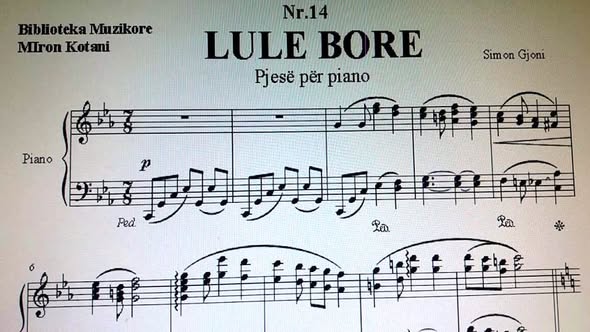
Memorie.al / Many years ago, when the talented composer and conductor Simon Gjoni conceived the sweet melody of the well‑known song “Lule bore” (Snowdrop), he would never have imagined that that melody and that sweet play of notes would make his name forgotten and become everyone’s. The composition of this song is included in the collection “Album for Piano”, which, together with the work “Album of Romances”, was promoted those days in the presence of friends, pianists and musicians, at a special ceremony at the premises of the League of Writers and Artists of Albania in Tirana. The Album for Piano, consisting of 22 works of various genres and diverse characters, sees the light of publication for the first time, with some pieces performed by pianists in various concerts.
Pieces such as “Toccata”, “Prelude”, “Conversation of the Waves”, “Humoresque”, can be combined into groups of 2‑3 or 4, forming a small suite and played consecutively. Meanwhile, the Album of Romances, considered one of the most accomplished works of composer Simon Gjoni, deals with lyrical, poetic, philosophical themes as well as themes with a strong dramatic character.
His first romance is “Vajza dhe liqeni” (The Girl and the Lake) (1946) and “Shoqe kemi hanën” (1949), which he conceived for voice, violin and piano. It includes several romances of a lyrical character such as “I fola valës” (I Spoke to the Wave), “Erdhi pranvera” (Spring Came), the duet “Bjeshkëzo” (Highlander), created in the period 1961‑1968, distinguished for their melodiousness, delicacy and varied colours.
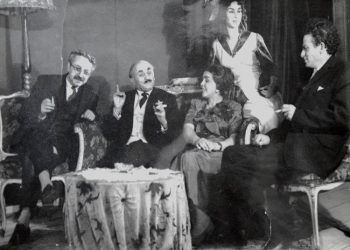
At the special ceremony where selected pieces were performed on piano, such as “Ballad” and “Prelude” in G minor, “Apollonia” by Mariola Lishi, “Conversation of the Waves” and “Scherzo” by Dorina Komani, “Source of Joy” and “Toccata” by Valbona Paço and Emiliano Kola, etc., artists and his friends such as Takuina Adami, Limos Dizdari, Avni Mula and Zhani Ciko described him as a musician who at first glance appears modest, but who created complete originality and an original and sweet melodic style.
Soprano Shqipe Zani performed his romances, considered quite technically accomplished: “Premtimi” (The Promise), “Mos mbaj mëri” (Do Not Hold a Grudge) and “Vajza dhe liqeni” (The Girl and the Lake). – Simon Gjoni and the independence of his creative style – Guitar, trombone and piano would be held early in the hands of the talented composer Simon Gjoni at the beginning of his career, while he composed over 200 original songs that quickly spread throughout Albania. “Lule‑borë” (Snowdrop), “Syt’ e tu si drita” (Your Eyes like Light), “End o vashë” (Weave, Oh Girl), were some of the most popular and entirely original motifs of composer Gjoni.
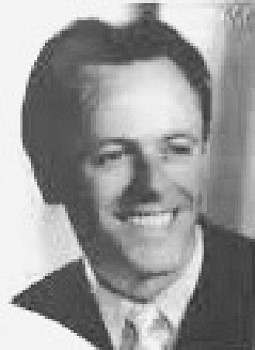
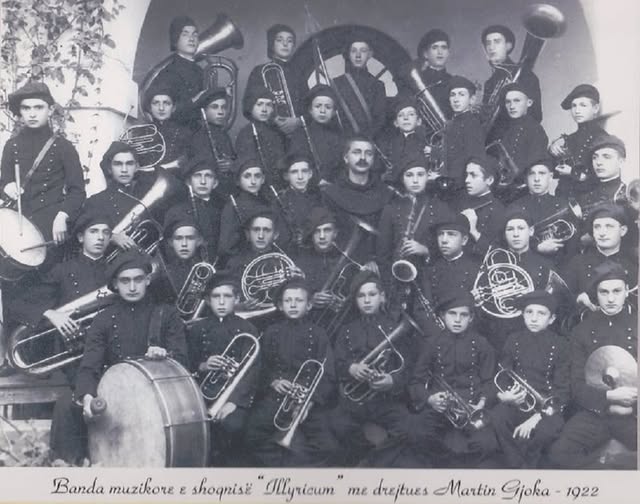
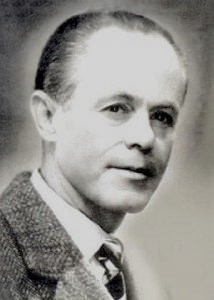
Born in the city of Shkodra, he stood out from a very young age, contributing as a leader of various orchestral and vocal ensembles in his city. In the years 1946‑1947, a series of unforgettable songs distinguished for their sensitivity, both poetic and sincere, such as “Lule bore” (Snowdrop), “Sy larushës” (Eyes of the Blue‑eyed Girl), “Sytë e tu, si drita” (Your Eyes, Like Light), “Fyelli i çobanit” (The Shepherd’s Flute), “Nëna dhe çika” (Mother and Girl), etc.
It was precisely these songs that furthered the urban tradition of Shkodran lyricism, while spreading throughout Albania. In Moscow, in 1956, the trio Avni Mula – Gjoni Athanas, Ibrahim Tukiçi, achieved extraordinary success with the song “Lule‑borë” in Vienna, while in 1961, the Youth Festival opened with the introduction of “Lule borë”. And today, it is sung together with the audience also in New York; concerts end with the anthem of Albanian song, “Lule‑borë”.
Çesk Zadeja considered it “an inimitable model in Albanian lyricism.” Simon Gjoni completed his higher studies at the Academy of Music in Prague, in the symphonic conducting class, with professors V. Smetáček, R. Brock, A. Klíma. In 1954, he participated as a composer in the International Music Festival, together with world giants such as Shaporin, Janson, Richter, Fischer, Fournet, etc.
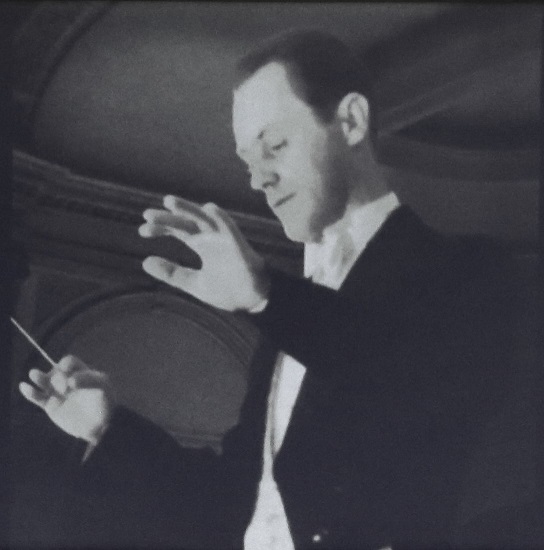
In 1956, in the Městská knihovna hall, he conducted Schubert’s “Rosamunde” and Grieg’s “Peer Gynt”. At the same time, he conducted the work “Pygmalion” by composer Jiří Benda. In 1957, in the “Dům Umělců” hall, he conducted K. Dittersdorf’s “Symphonie concertante for violin and double bass”. The success of this concert was followed by that of Franz Liszt’s symphonic poem “Les Préludes”.
In 1958, he returned to his homeland with a broad culture, talent, passion, discipline and artistic organisational strength – values that he also transmitted to the symphony orchestras where he left deep impressions and cultural and artistic horizons. Simon Gjoni is one of the first conductors of our symphony orchestras at the Theatre of Opera and Ballet and at Albanian Radio‑Television.
In 1958, he was appointed conductor at the TOB (Theatre of Opera and Ballet), while many outstanding works found their “first” interpretation with the young conductor, who interpreted them revealing their emotional charge with high sensitivity. Mentioned here are the ballet “Lola”, “Laurencia”, the operas “Don Pasquale”, “The Barber of Seville”, “Pagliacci”, “Francesca da Rimini”, “Spring”, etc.
For the first time, with his care and passion, he recorded the works of Albanian composers of that time: Çesk Zadeja, Pjetër Gaci, Thoma Nova, Abdulla Grimci; the operetta “Lejlaja” by Tish Daija; the operetta “Agimi” by Kristo Kono; the Violin Concerto No. 1 by Nikolla Zoraqi; the Rhapsody for Piano and Orchestra by Tonin Harapi; as well as the music for several Albanian films.
Among world composers, he performed for the first time in Albania: Beethoven’s “Symphony No. 8”, Mendelssohn’s “Overture”, Beethoven’s “Leonore” Overture, Weber’s “Der Freischütz” Overture, Liszt’s “Les Préludes”, Dvořák’s “Slavonic Dances”. With the new Albanian Radio‑Television orchestra, many problems arose in creating a clear profile.
For this, Simon Gjoni worked seriously, succeeding in creating the individuality of this orchestra, which at that time consisted of students from the Artistic Lyceum, students continuing at the Conservatory, and passionate orchestral players.
His creativity spans almost all genres, from song, romance, cantata, suite, poem, instrumental works, to large orchestral works, such as 11 symphonic dances – works in which one feels the atmosphere of the time, the composer’s trust in his people, whose presence is inevitable with all its manifestations in these works. In May 1960, Simon Gjoni composed the lyrical ode “Pranvera jonë” (Our Spring), with lyrics by Ismail Kadare, and a four‑movement symphonic suite.
A year later, he composed “Poema e rapsodit” (The Rhapsodist’s Poem) for bass, cello and piano. The ballad “Lufton shqipja” (The Albanian Eagle Fights) was sung immediately by bass Llukë Kaçaj. Then he composed the duet “Bjeshkëzo” (Highlander), the lyrical romances “I fola valës” (I Spoke to the Wave), “O toka nanë” (O Mother Earth), “O bjeshkë, o male kreshnike” (O Highlands, O Warrior Mountains) and a number of other songs. In 1962, he composed the first Albanian symphonic dance, which over the years was followed by 10 other symphonic dances, presenting a wonderful interweaving of cultivated music with folk music.
Each of the dances is a completely special and distinct work in its own right. The symphony addresses the serious and difficult historical situations in the struggle to gain freedom and independence for our people. His activity as a pedagogue, where he gave valuable contributions until the last moments of his life, preparing dozens of students, began in 1958 at the Artistic Lyceum.
In 1961, he was one of the first pedagogues with the establishment of the State Conservatory of Tirana (at that time the Higher Institute of Arts), together with Çesk Zadeja, Tonin Guraziu, Ymer Skënderi, etc., teaching the subjects of Intonation, Polyphony, Conducting, Chamber Music. Simon Gjoni was a rare example from which generations can learn about systematic demands, perseverance, high artistic discipline and deep conscience.
He also contributed too many other issues, such as in the field of music criticism, in the preparation of young musicians and didactic materials for these musicians. For his long artistic career, he was honoured with various awards, as well as with the high title of “Merited Artist”. Maestro Simon Gjoni passed away on 31 October 1991. His name, as the great Zadeja also described it, will remain engraved on the pentagram of Albanian music, which he served with love and respect. / Memorie.al