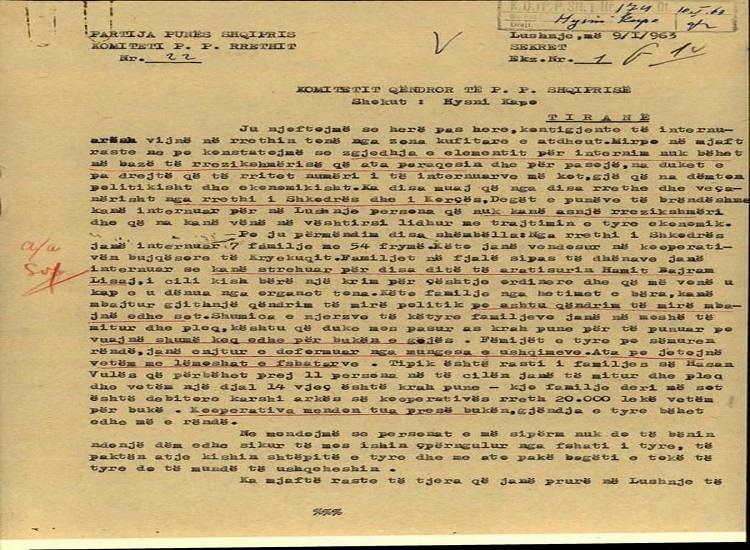
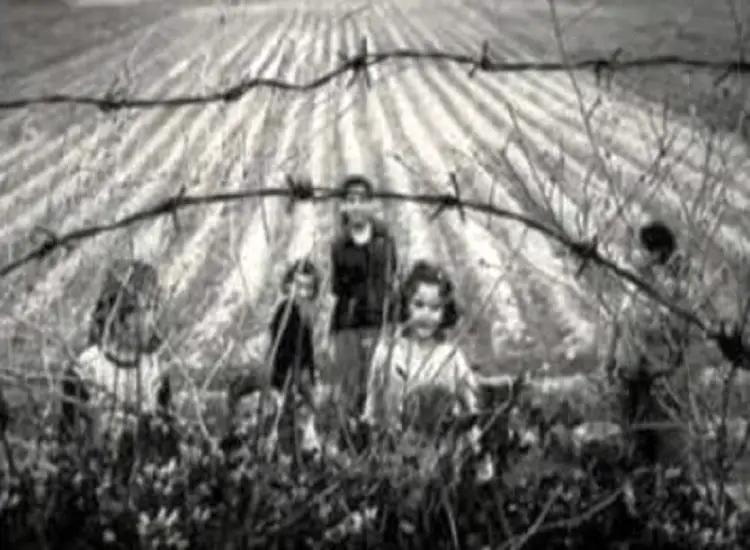
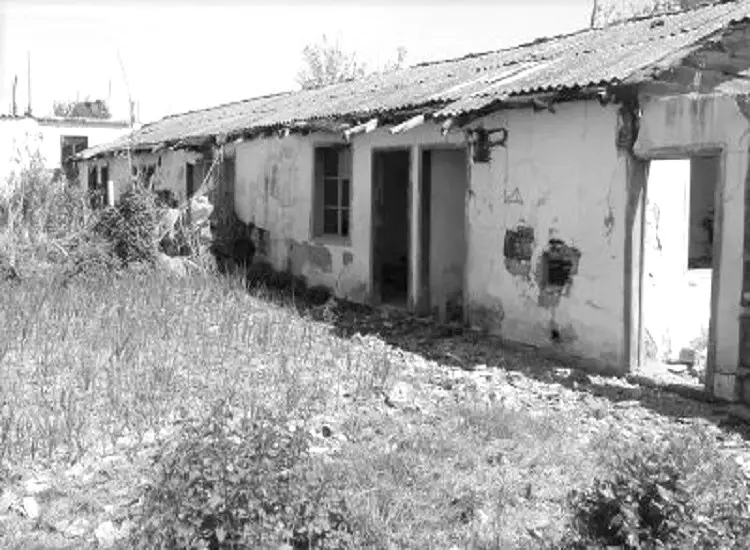
Memorie.al / VNA presents this time the secret document of 1963, in which a report from the Lushnja district is addressed to Hysni Kapo, signaling the problems caused by the mass internment of families in this area. Internment, conceived as an instrument of control and exploitation of the labor force, was filling agricultural cooperatives with people who could not work. The document treats the interned population as a labor contingent. The document questioned internment as a political measure, but highlighted the problems arising from its implementation in practice in Lushnja, mainly in agricultural cooperatives. This report constitutes historical evidence of how the communist state treated people as objects to be exploited for labor. In the report, the internees were treated as labor contingents.
Families were evaluated only according to the number of able-bodied workers and their ability to meet the quotas of the agricultural cooperatives. Meanwhile, debts for bread, malnutrition, and the inability to meet the quotas set by the cooperatives were presented simply as administrative obstacles, and not at all as human tragedies caused by the internment of entire families from the villages of Lushnja.
Even the mentally ill and disabled were included in the internment regime, although they posed no political danger. The problem for the state administration was not their internment, but the fact that they were not exploitable labor. Therefore, worthless to the system.
Consequently, the First Secretary of the Party Committee in Lushnja requests the Central Committee of the Party of Labor of Albania in Tirana to rationalize the internments, sending to Lushnja mainly families with active labor, i.e., not families with young children or family members unable to work.
This report reveals the dictatorship state that demands discipline and production that manages the population according to the function of ability to work. Internment thus appears as a technology of power, producing control and exploitation of the human being for labor.
Text of the archival document:
THE PARTY OF LABOR OF ALBANIA SECRET
THE PARTY COMMITTEE OF THE DISTRICT
Ex. No. 1
No. 22 Lushnje, January 9, 1963
TO THE CENTRAL COMMITTEE OF THE P.L.A.
Comrade: Hysni Kapo
TIRANA
We inform you that from time to time, contingents of internees come to our district from the border areas of the homeland. However, in many cases, we are noticing that the selection of the element for internment is not made based on the dangerousness they represent, and consequently, it seems unjust to us to increase the number of internees in this district, a thing which damages us politically and economically.
There are some districts, and particularly the districts of Shkodra and Korça, where the Internal Affairs Departments have interned to Lushnja persons who do not have any political dangerousness and who have put us in difficulties regarding their economic treatment.
We mention some examples from the Shkodra district: 7 families with 54 members have been interned. They have been placed in the agricultural cooperative of Kryekuqi. The families in question, according to data, have been interned because they sheltered for a few days the fugitive Hamit Bajram Lisaj, who had committed a crime over ordinary matters and who was later captured and sentenced by our organs.
These families, from investigations carried out, have maintained a good political attitude, including their attitude towards the authorities and the state. The majority of the people in these families are elderly, or children, so, having no labor force to work, they suffer very badly even for their daily bread. Their children are seriously ill, have complained and been mentioned due to lack of food. They subsist only on alms from the villagers.
Typical is the case of the family of Hasan Vula, which consists of 11 persons, including minors and elderly, and only one 14-year-old boy is a worker. This family, to date, is in debt to the cooperative’s fund for about 20,000 lek, only for bread. The cooperative is thinking of cutting off their bread supply, which makes their situation even worse.
We think that the above-mentioned persons would not cause any harm even if they had not been displaced from their village; at least there they had their homes and with that little livestock and land they could feed themselves.
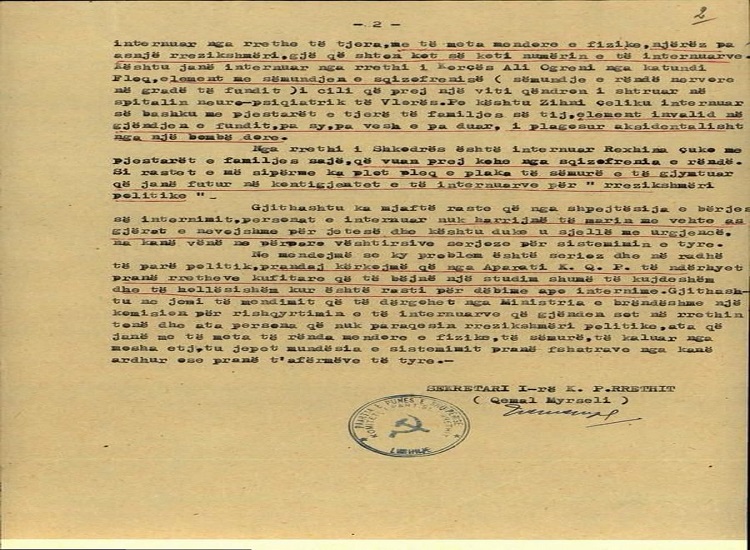
There are many other cases of internees brought to Lushnja from other districts, with mental and physical disabilities, people without any dangerousness, which increases the number of internees in this district. Thus, from the Korça district, Ali O., from the village of Floq, an element with a severe nervous disease, advanced schizophrenia, which for a year has been staying in the neuro-psychiatric hospital of Vlora, has been interned.
Likewise, Zihni Ç., interned together with other members of his family, a disabled element with a severe eye condition, without ear and without hands, accidentally wounded by a hand grenade.
From the Shkodra district, Rexhina Ç., with members of her family, who has long suffered from severe schizophrenia, has been interned. There are many similar cases of such sick individuals sent, who have been included in the contingents of internees for “political dangerousness.”
Also, there are many cases where, due to the haste with which the internment is carried out, the interned persons do not take even the necessary items for living with them, and thus, being brought urgently, have put us in serious difficulties for their settlement.
We think this problem is serious and primarily political, therefore we request that the Apparatus of the Central Committee intervene with the border districts to conduct a very careful and detailed study when there is a case for sending or interning.
Also, to be given the opportunity for a commission to be sent by the Ministry of Internal Affairs to review the internees currently in our district, and those persons who do not present political dangerousness, who have severe mental and physical disabilities, are sick, past active age, should be given the opportunity to settle near the villages they came from, or near their relatives. / Memorie.al
THE FIRST SECRETARY OF THE DISTRICT P. COMMITTEE
Qemal Myrseli