By Uvil Zajmi
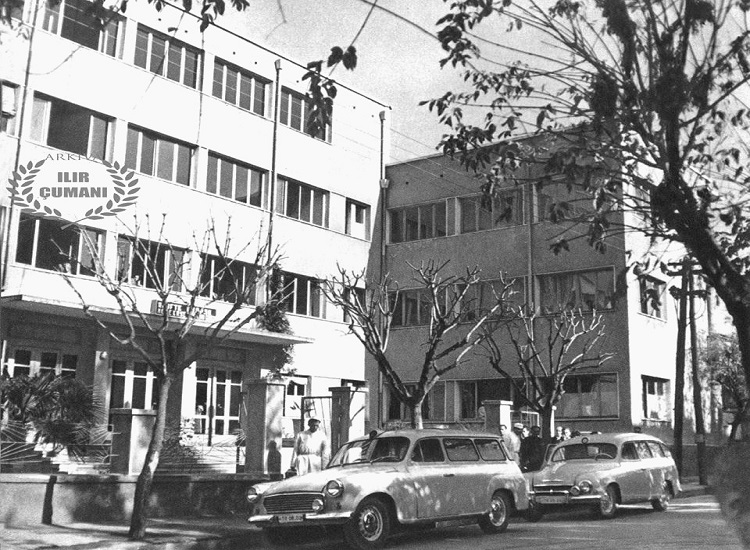
Memorie.al / The nostalgia for our Tirana cannot be understood, and is even very much linked, to a particular building, in the shape of a “U”, almost in its center. A building that I believe there is no capital resident, or from the periphery, who has not entered at least once, to receive service or medical assistance. Over the years, such was also the case for the diplomatic corps accredited in Tirana. Initially, there was a Central Ambulance, considered as such by the residents of Tirana, located in the area behind the building where “Zëri i Popullit” was printed, near the “10 Korriku” eight-year school. From the 1960s, a three-story building, with the specialties of that time: ophthalmology, gynecology, nursing, laryngology, and cardiology – this last one on the first floor. With directors and well-known doctors, starting with the first, Dr. Ymer Haveri.
Tirana, with a large ambulance
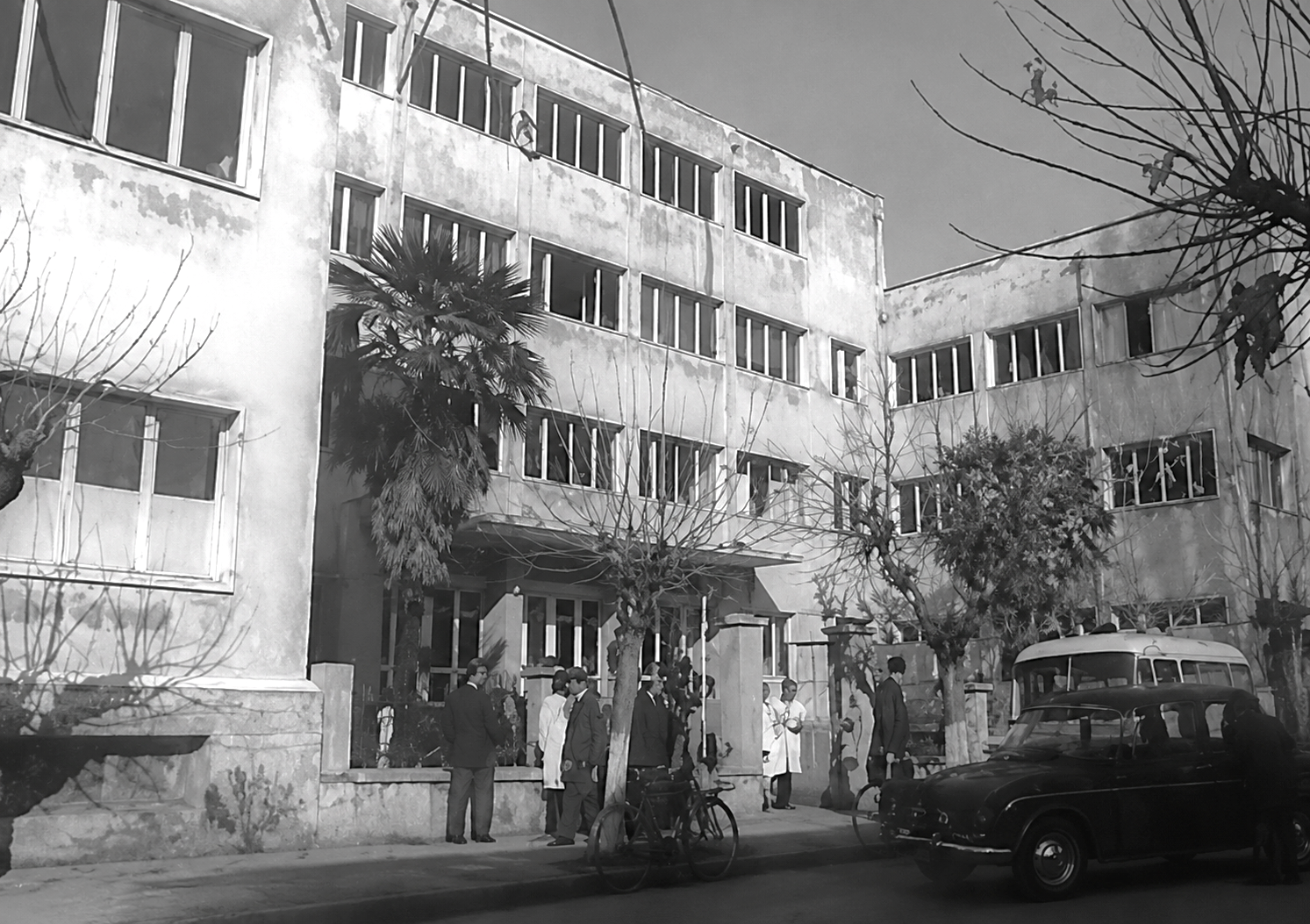
In 1966, on “Qemal Stafa” Street, next to the former War Museum on “Barrikadave” Street, a new large health polyclinic of Tirana was opened. Modern, stretching east-west, with the main entrance from the south, very communicative, with wide stairs connecting the floors, and an exit also from the north, behind it. It took the name “Central Ambulance” or “The Great Ambulance” in the capital’s vernacular, both because of its size, but also because of the multi-functional fact that it gathered all specialties, with consultations, pediatrics, children’s consulting, radiology, and analysis laboratory, mainly with primary help and services, the basic ones.
With male and female doctors, well-known names who served there, nurses, lab technicians, etc. Including medical emergencies, night watch, etc. Very quickly, it turned into a health center present in the daily life of the population, of Tirana families. Dr. Gogo Koleka remains the first director, followed by the unforgettable doctors Vasil Cingu (Cimbi), Vita Shtylla, Xhuma Doçi, Malo Minga, Llambi Konomi, etc. The heads of service of Tirana’s hospitals 1, 2, 3, 4, 5 also served there, such as doctors Besnik Petrela, Adanan Këlliçi, Lavdie Këlliçi, Liljana Luloçi, Ferid Saraçi, Spiro Qirko, Miltiadh Shundi, Zyber Muka, and many other well-known figures. With the emergency on the left, first floor, which served citizens quickly, having at its disposal and readiness ambulances, in a small parking lot, with an exit onto “Rruga e Dibrës”?
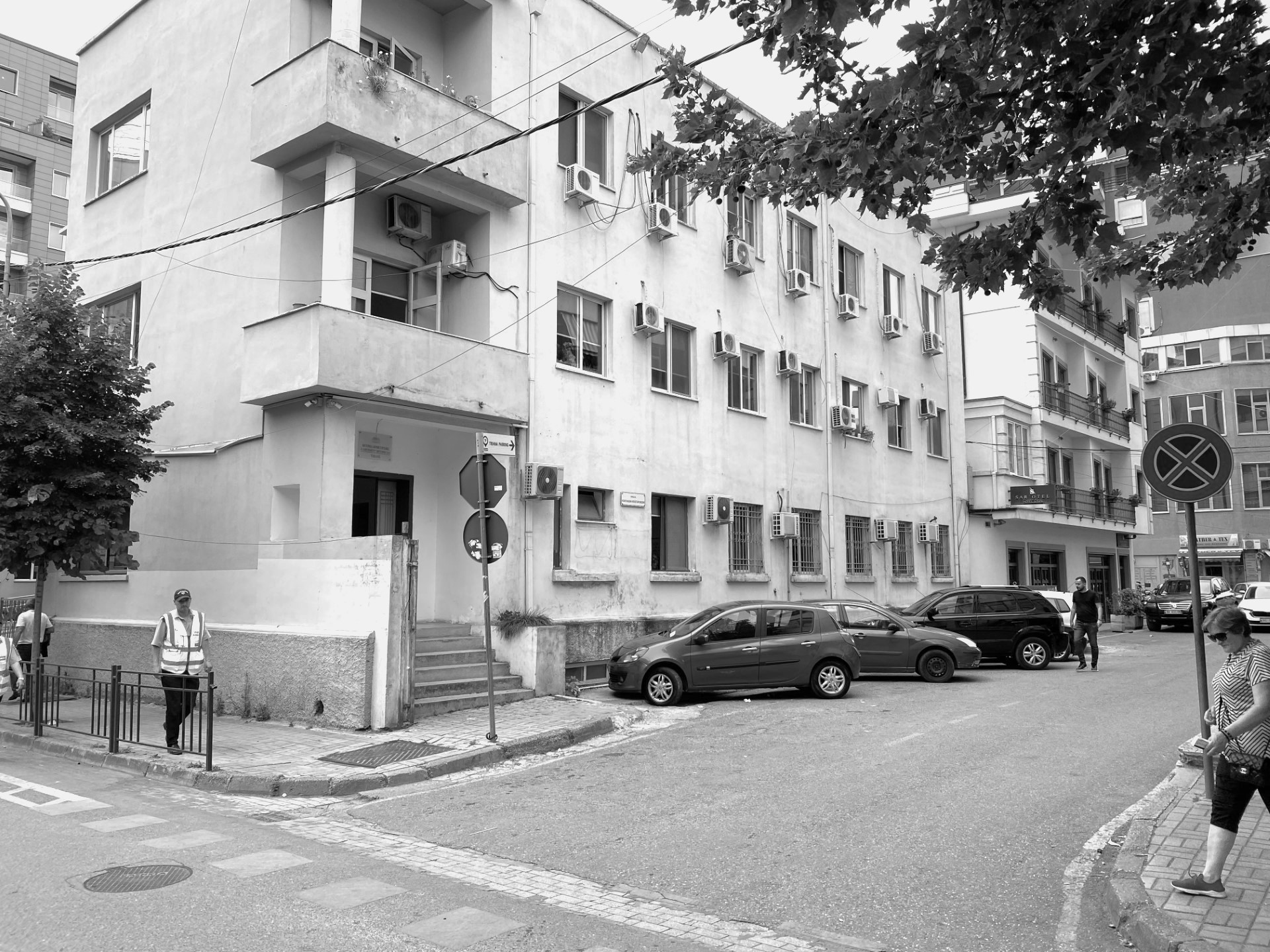
Although many years, decades, generations, and events have passed, many of them left behind and belonging to the middle of the last century, from which our writing also starts, the history of that building, which stands and resists even today, in that place, that corner, a half-intersection of the former “Barrikadave” Street with the one that leads to the “New Bazaar”. But, not like back then when opposite it was the former “Migjeni” Art School, it is no longer the War Museum, nor the advertisements, nor the Sports shop that accompanied it along with the unforgettable “Barrikadave” Street. “Qemal Stafa” Street remains, the “Fan Noli” eight-year school, and opposite it now is the Prosecutor’s Office, and on the side are the 9-story buildings. Once the “Central Ambulance”, or the “Great Ambulance”, and today still known as such, it has remained there. With the same flow of citizens entering and leaving for a consultation or after a medical check-up, where another generation of doctors serves, with modern equipment, offered by contemporary medicine and technology.
The Capital, every neighborhood with a sanitary service center
Over the years (a tradition that continues even today), the capital had several small health polyclinics, with wards, mainly the most important ones. One such for each neighborhood, with well-known, popular doctors, in the morning, at midday, with primary services, where besides check-ups, concerns, and receiving first aid, the patient could stay lying down there for a short time, under medical care. The doctors and nurses had become familiar with the residents, the families of the neighborhood, they knew the problems they presented. Everything was recorded on a card, which are still kept today, since there were no other recording means, like computers, etc. Notifications were made by telephone from the family, or from someone who had such a device, a neighbor, a relative, or when a person went to the ambulance to notify them.
Home visits were made by doctors and nurses on foot, bag in hand, knocking on the house door, since they knew well the addresses where the residents covered by the ambulance lived. Every day, the ambulance operated with a single schedule, from 7:00 to 22:00. After this hour, the medical service was transferred to the Central Emergency, hospitals, which would come with the doctor and assistant doctor. Remembered are the ambulance of Neighborhood No. 1 at “Ura e Tabakëve”, of Neighborhood No. 2, after you go up the “Brryli” bend, one of the doctors being Hilmie Mara; of Neighborhood No. 3, with Dr. Xhevdet Luloçi at “Selvia” on “Rruga e Dibrës”; that of Neighborhood No. 4 (former building of the first Central Ambulance), on “Fortuzi” Street, with director Dr. Nikolla. Some of the doctors remembered include: Asllan Merdani, Flora Rusheku, Katina Starja, Liri Berisha, etc.
With the radiology department, down to the pediatrics sector where children were examined, served, and given help. Of Neighborhood No. 5, on “Konferenca e Pezës” Street, initially a two-story building, in a dead-end street opposite the “Mihal Duri” plant, and after 1970, at the former Sh.N.U.M. (probably a school), at the entrance of the “Çamve” alley; Neighborhood No. 8 at the Italian buildings (“Tirana e Re”), with doctors Linda Kumbaro, Bukurie Çomo. Neighborhood No. 9, at “21 Dhjetori” (“Pallati i Beqarëve” – the Bachelors’ Palace). Then in Kombinat (Neighborhood No. 6), Kinostudio (Neighborhood No. 10), Laprakë, and “Student City”.
The Emergency, 24 hours non-stop
The Emergency initially served near the Central Ambulance. On the left as soon as you entered, the first floor, which served citizens quickly. Along with the staff, ambulances on standby, which were parked behind it, with an exit onto “Rruga e Dibrës”. After the 1980s, the Central Emergency was transferred to a one-story building, near the “Emin Duraku” school, which until that time had been a children’s nursery. With doctors, assistant doctors, nurses, and the vehicles that stood in its small yard. Service for all of Tirana, working in three shifts, without rest.
Dr. Malo Minga: “The Central Polyclinic, the only one in Albania”
Dr. Malo Minga, one of the most well-known doctors in Albania, an endocrinologist, with a long and experienced career in this sector, returning to the period when he served as a doctor and director there, states: “The Great Ambulance was the main institution that provided qualified medical assistance in the capital and its surrounding areas. You were obliged to go there when health problems required a more qualified specialist doctor. A parallel health network that functioned for patients who needed help, advice, medical consultations, for a short term.”
Dr. Malo, when the Central Polyclinic was opened, how do you remember it?
In 1966, it was the largest polyclinic in all of Albania, with a suitable architectural structure, a four-story building, with organized wards, and functional on every floor. Upstairs was physiotherapy, on the second floor the laboratories. Likewise, on the other floors were the specialties, mainly the basic ones.
What was the contingent of those who worked there?
There were over 100 employees, doctors, nurses, divided into 28 specialties, including the central biochemical laboratory, which was for the entire capital. Along with the administration, the emergency, the only one that served non-stop, 24 hours a day.
Were there many doctors in service at that polyclinic?
There were several who dealt with prophylaxis, treatment, home visits, planned visits, permanent check-ups from time to time, and activities, such as health education for the population, etc. Work was done throughout the week, Monday to Saturday, but not Sunday. The male and female doctors were permanent staff, but in some wards, the more specialized ones, where there was need and demand on certain days of the week, well-known doctors who came from Tirana’s hospitals also served there. When patients needed longer treatment, based on the diagnosis, we sent them to Tirana’s hospitals, with which the Central Polyclinic had direct connections.
One ambulance, many functions?
The Central Ambulance was authorized to give a medical report for the patient, for up to three days initially. But, which could be renewed for 6 or 9 days, which was the maximum, that was given only by the neighborhood ambulance, of which there were about 10 such, smaller, divided and placed according to neighborhoods. A part of the building, on the east side, the first floor, for a time was the clinic of Neighborhood No. 2, and adjacent to it was also the Diplomatic Health Service.
Doctor, since you mentioned it, how was it done with embassy personnel?
On the first floor of the Polyclinic, in an area of about 70 m², was the sector that served the diplomatic corps in Tirana. With an entrance from inside and outside, this ward had its own personnel, placed and selected by state structures, obtaining their approval. There was no person in charge there; there was an assistant doctor, Ëngjëll Sala, and two nurses, who went on visits to embassy personnel when notified by phone by them. They themselves did not come there; our doctors went to the embassies in cases where they needed the Polyclinic’s doctors.
How much health assistance did the high leadership of the PLA receive at that Polyclinic?
The Polyclinic, its personnel, had no connection with the families of the leaders, high officials, as they had their own polyclinic. The Polyclinic also had the emergency department, an organized system; I recall the head Namik Qafmolla, or Skënder Çomo, Aljosha Zakja, etc. In that sector, there were also well-known doctors, as the emergency served also as practice or confrontation with diseases, serious cases, and how they should be treated. They worked in the mornings at the hospital and in the afternoons there.
How did that system function?
With emergencies, the number of which reached 30-40 such in 24 hours, we had 6 cars initially, then 12, up to 16, with which the emergency could handle the flow, intensive with services at home, families, or brought there. Although you received the check-up, first treatment, and prescriptions for medicines from them, there were cases when the emergency doctors did not give guarantees; it depended on the situation that worsened the patient, and when specialized treatment was required, they would send them to Tirana’s hospitals.
How much did that polyclinic serve sports?
All sports teams that needed it and did not have a sports doctor would come there for check-ups, because they were more specialized there. After an injury, or when they had concerns. Differently later, when the clubs were equipped with their own doctors. At matches, national and international sports events, medical assistance was guaranteed by the Central Polyclinic, as a state nomenclature of the Tirana district. An ambulance with equipment, a doctor, an assistant doctor, would always go to the “Qemal Stafa” National Stadium, or the “Partizani” Sports Palace. Readiness in such cases was organized by us.
Present also in mass events?
For May 1st, the November festivities, New Year, everything was organized by the Health Section of Tirana, with the working group, and the Polyclinic was the base. Likewise with spartakiads or parades, we would send two or three ambulances to different points. The Central Ambulance has been and remains a very important health facility, highly professional, humane, a true modern medical laboratory in service not only for Tirana and its surrounding villages, but for all of Albania. Many patients also came from other cities, to have a check-up there, thanks to all types of specialties, specialists, and equipment that served there. / Memorie.al