
By Gjet Ndoj
Part One
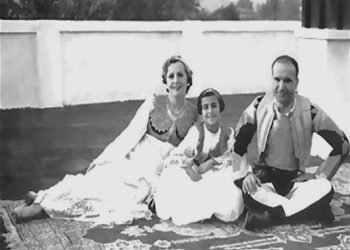
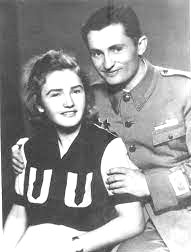
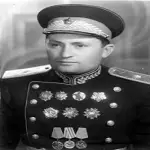
Memorie.al / Gjin Marku was born on June 2, 1918 (in documents it is recorded two years later, 1920), in the village of Baz, into a well-known family in that region. When Gjin’s father, Pjetër Marku, died, the latter’s friend, Hysen Selmani, as well as his close associate, Abaz Kupi, took 9-year-old Gjin and sent him to Tirana, to the “Orphanage.” Here Gjin received his first primary and five-year education. In the years 1932-1936, Gjin Marku finished the “Harry Fultz” Technical High School also in Tirana and later in Kavajë (only two months), in the Agriculture branch. After finishing school, he was appointed agronomist in the Korça district. In 1945, after the war, Gjini, like many other war leaders, was assigned to pursue studies in the military field in the Soviet Union. He was among the few students from Albania who attended the “Voroshilov” Academy in Moscow.
This academy was a school that produced specialists of the highest level in the military and strategic field throughout the world at that time. Gjini continued his studies at this academy for three years, and they were interrupted right in the final year, 1948-1949, due to the clashes that occurred at the First Congress of the Albanian Communist Party, in November 1948.
Engagement in the War
As soon as he was appointed in Korça, Gjin Marku came into contact with Korça intellectuals and together with them began his anti-fascist and communist activity (1936), within the framework of the Communist Group of Korça, being one of the main leaders of this group. Through Koço Tashko, the brothers Gaqo and Pilo Peristeri, etc., etc., Gjin Marku also became acquainted with Enver Hoxha, at that time a professor at the Korça Lyceum. Anti-fascist propaganda had started before Albania was invaded by Italy on April 7, 1939, as fascism had been considered a danger to humanity many years earlier (especially when Mussolini’s Party in Italy, and especially when Adolf Hitler’s National Socialist Party, came to power in Germany).
Gjin Marku was a very active participant from the beginning of the Anti-Fascist Movement, and this is seen in his participation in demonstrations and later in the formation of partisan units and bands. In 1940, the branch of the Korça Group was formed in Tirana, marking the expansion of the anti-fascist and communist activity of this group. Many people went into illegality, one of whom was Gjini.
In the contemporary documents of the Royal Police Office and the Fascist Questura, the main persons, such as: Gjin Marku, Vasil Shanto, Mihal Duri, Gaqo Nasto, Niko Llagi, Ali Reçi, Ferit Xhajko, Kajo Karafili, etc., were being pursued by the organs of the fascist power established in Albania, as of April 7, 1939.
The anti-fascist activity of Gjin Marku in 1941 and onwards was intensive and multifaceted. Besides testimonies, we learn this also from the contemporary documents we are analyzing, mainly in those documents that deal not only with his activity, but also his continuous pursuit by the carabinieri and the fascist regime. On November 8, 1941, the Albanian Communist Party was formed, where Gjin Marku, one of its main founders, was elected one of the first members of the Provisional Central Committee of the Albanian Communist Party.
The Organization of Peza
After the founding of the Albanian Communist Party, the Provisional Central Committee was elected, whose primary task was to organize the Party throughout the country, to play its role in organizing the National Liberation Anti-Fascist War. In this sense, the formation of basic organizations of the Albanian Communist Party was determined as a priority, particularly near the territorial bands that had begun to be created at this time. The premises for doing such a thing, for forming a party organization, had also been created in Peza.
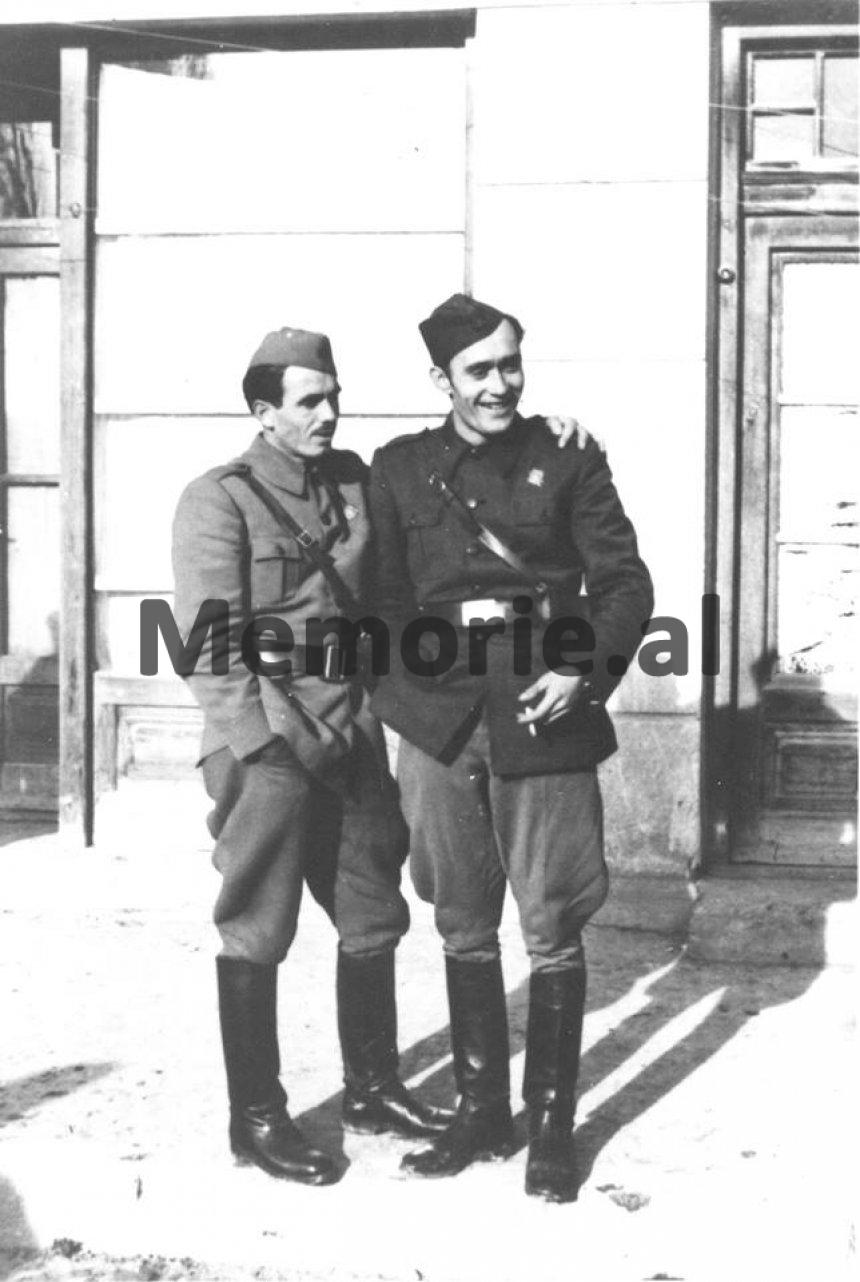
Besides this, this organization had a special importance also because Peza was a suitable area to be a very important base for the anti-fascist activity led by the ACP. This is exactly what happened. The Provisional Central Committee tasked Gjin Marku to follow and direct this founding meeting in Peza, near the band. Eight fighters of this band participated in the founding meeting: Vasil Shanto, Mihal Duri, Ferit Xhajko, Pandi Nashi, Baki Starja, Loni Grazhdani, Qazim Prishtina, and Zoi Themeli, led by the delegate of the Central Committee of the ACP, Gjin Marku.
The Testimony
Former fighter of this band, Sali Verdha, expresses that he was pleased when he saw his former schoolmate from “Harry Fultz,” Gjini, as the ACP delegate in Peza. “The meeting continued with debates and work for two days; from December 8-10, 1941. At first, Vasil Shanto was proposed as a candidate for secretary of the organization. This proposal was rejected by Gjini, clarifying that Vasili was too senior to be an organization secretary, as he was the commissar of this band.
After this intervention, Mihal Duri was proposed as secretary and was unanimously approved by the participants. Pandi Nashi was elected deputy secretary. Later this organization grew rapidly, while Commander Myslim Peza became a communist only after liberation, in 1951,” testifies Sali Verdha. Thus was formed the first organization of the Albanian Communist Party and fate, or something else, willed that Gjin Marku, the representative of the Provisional Central Committee of the ACP, be the one to do it.
Beyond Peza
Peza became a “school” and a springboard to launch elsewhere into the war. After the transformation of the Peza band into a partisan band, it turned into a very important base of the National Liberation War. Regarding this, Sali Verdha recalls: “I also became a communist after two months. All the main leaders of the ACP not only came to Peza to give orientations and make plans, but here in Peza they also came to learn military art; they especially learned to use various weapons, did various shooting exercises, etc.
Thus, Gjin Marku, before going to the Berat Region, where the Central Committee of the ACP assigned him, stayed a few days in Peza and then left for a long mission in Berat.” Verdha says that “Gjini knew all the fighters of the Peza band, Commander Myslim Peza, but his closest friend was Mihal Duri.”
Fr. Zef Pllumbi: “Gjin Marku, one of the most capable commanders-strategists”
“General Gjin Marku was a well-known man in Albania. In his early youth, he was one of the most renowned activists of the communist groups scattered throughout the country. From the very beginning of what was called the ‘National Liberation War,’ he was one of the most capable commanders-strategists…! His physical, moral, and spiritual qualities made him a charismatic leader, even though his Catholic, northern origin, like that of Zef Mala and Tuk Jakova, was disliked by the bastard of the Turkish bimbashi from Gjinokastra.
At his young age, he also had political maturity. He considered war as the last means in resolving human disputes, and there he was a fierce brave man. But before that state of war, he preferred peaceful coexistence and compromise. He was a leader with human feelings, who loved life more than death”….
How was Skrapar liberated by the band of Gjin Marku and Mestan Ujaniku?
In December 1941, Gjin Marku was assigned the duty of raising anti-fascist guerrilla units and providing clear orientation for the anti-fascist activity of the bands for the liberation of the homeland. This organizational activity of Gjin Marku’s anti-fascist insurgent war initially covered the territories of Lushnjë, Fier, Mallakastër, Berat, and up to Skrapar and beyond. When he went to Berat, Gjini first met with Kristaq Capo, Kristo Isak, Kristaq Tutulani, etc. The first bases for organizing the war were laid precisely in the city. Work started quickly, with the activation of intellectuals, the youth of Berat, as well as the formation of communist cells and guerrilla units.
At the beginning of February 1942, in the “Mangalem” neighborhood, the first party cell for the Berat region was formed. Participating in it was Gjin Marku, the delegate of the Party Central Committee, Kristaq Capo, Kristo Isak, Nuro Dobruzha, and Xhoxhi Bojaxhi. A little later, two other comrades were co-opted: Vasil Lacka and Thoma Bello. Kristo Isak was appointed to lead the cell. After Kristo’s transfer to Korça, Kristaq Capo was elected in his place. Besides this cell, other cells were formed, such as in “Murat-Çelepias,” with Secretary Iliaz Sevrani.
While the third cell was that of “Gorrica,” with Secretary Kristaq Tutulani. For the success of the anti-fascist activity in this city, but also throughout the Berat region, the designation by Gjini and his collaborators of several illegal bases where meetings, gatherings, and operational plans would be made within the framework of the Anti-Fascist War was of decisive importance. These were naturally assigned near the families of the most trusted and devoted activists. In the city of Berat, until September 1943, over 30 illegal bases were counted. Some of the first families that served as illegal bases as early as the end of December 1941 and January-February 1942 were:
– In “Kala”: the house of Kristaq Capo, Cac Dollani, Vasil Sallabanda, Koço and Dhimitër Brisku, etc.
– In “Përrua”: the house of Argjiro Leka, Jani Gjeci, Muhamet Meqemesa, etc.
– In “Mangalem”: the house of Kristaq Prifti, Kol Myzeqari, etc.
– In “Gorrica”: the house of Kristaq and Margarita Tutulani, Nikollaq Sallabanda, Pali Pacuka, etc.
– In “Murat-Çelepias” were the houses of Orhan Frashëri, Ajet Xhindoli, and Luan Qafzezi.
Meeting with Mestan Ujaniku
After this initial, but fundamental, activity that would serve for the entire duration of the success of the anti-fascist activity in the Berat region and beyond, Gjin Marku extended this activity also to the village areas throughout the region. This activity relates to the establishment of regular fighting units, such as partisan bands, battalions, groups, and up to the formation of the VIIth Assault Brigade, at the beginning of 1944. As we shall see, the epicenter of this activity, not only for the region but for all of Albania, would become Skrapar with the areas around it, such as Gramsh, Frashër and Dangëllia, Gorë-Opar, Kuçova, Dumreja, etc.
In Berat, Gjini also became acquainted with the situation and condition in Skrapar, quickly orienting himself in the organizational plan throughout the region. Through Kristo Isak and two teachers from Skrapar, Nuro Dobrusha and Tajar Grepcka, Gjin Marku became acquainted with the band of Mestan Ujaniku, a territorial grouping of outlaws, which remained as such until March 1942.
From the very first conversation where the transformation from a territorial band into an organization with an anti-fascist program was discussed, Commander Mestani looked upon Gjin Marku with great sympathy for the anti-fascist and patriotic spirit he manifested, and especially because of a very interesting way of communication that the person charged by the center had. After this moment, on March 14, 1942, the band was transformed from a territorial band into a patriotic-partisan band, whose commander would be until the end Mestan Ujaniku, while Gjin Marku was commissar.
With the new form the band took, flag in hand, they paraded through many villages of Skrapar. During these movements, Gjin Marku conveyed anti-fascist and patriotic messages, while his manner of communication attracted the attention and sympathy of that brave and generous people. Regarding this very remarkable relationship of Gjini with the people of Skrapar, Skënder Malindi says: “This, among other things, happened also for the reason that the two regions, Skrapar and Mirdita, resemble each other in many things, customs, and traditions. In a very short time, Gjini gained extraordinary popularity and in this sense, his word was law.”
This authority and the readiness of those people (of Skrapar) to respond to the calls and anti-fascist instructions of Gjin Marku, the organization of anti-fascist fighting units, etc., now constituted a concern, not only for the commands and fascist military units in Çorovodë and Berat, but a serious concern for the Italian fascist authorities up to Tirana. The organizing activity, with an anti-fascist spirit and character, of Gjin Marku, extended not only in the Berat region which included the area from Skrapar to Lushnjë-Fier-Mallakastër, but also outside it, such as: in Vlorë, Tirana, etc.
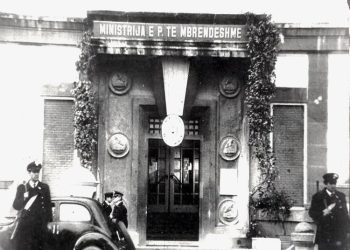
This activity is also confirmed by documents of that time. Thus, in a letter from Giuseppe Paglieri, brigadier general, senior commander, that he sends to the Ministry of the Interior, it is stated: “It is reported that it is not impossible that in the circumstances created… the villagers, incited by troublemakers, might stage a demonstration against the Albanian regime and Italy. Observation measures have been taken.”
The Liberation of Skrapar
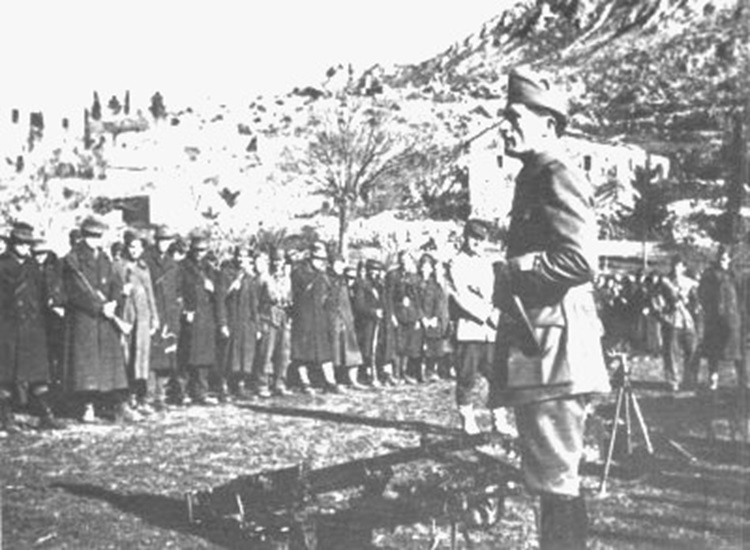
In this situation, to strike the now important bases in Skrapar, the fascist command from Tirana planned and sent units of armed militiamen organized into a company of 63 people. Reprisals began against these partisan bases; they burned many houses, among them the house of the Skrapar band commander, Mestan Ujaniku. Then the fascist militia company concentrated in the village of Mëlovë, with the aim of later surrounding and annihilating the band and its leader, Gjin Marku.
But as a counter-response, he mobilized the band and the peasants of that area, and it was he who encircled the fascist militia company. On the morning of a late August day in 1942, the fascist company, caught in the crossfire and surrounded on all sides by the unit’s forces, was forced to surrender. In these conditions, Gjini gathered the fascists in the middle of the village and took their weapons. They were not shot. He did not take their money or loot. They were given the message that; “we fight for freedom. You deceived ones must no longer serve fascism, as next time we will not forgive you.” / Memorie.al