Part Two
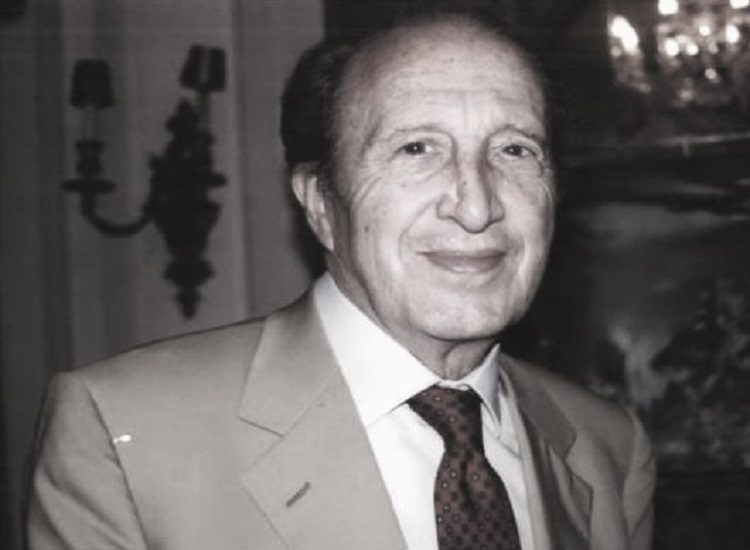
Memorie.al / Five years have passed, and my friend’s portrait remains etched in my memory – perhaps because our paths in Paris crossed so often, through mutual friends and shared work; days and years where a true friendship was forged. This friendship would always radiate kindness, respect, and gratitude, serving for me as a philosophical reference for life, the value of a human being, and what a person’s journey in this world truly represents – what power is, what modesty is, and what it means to be human.
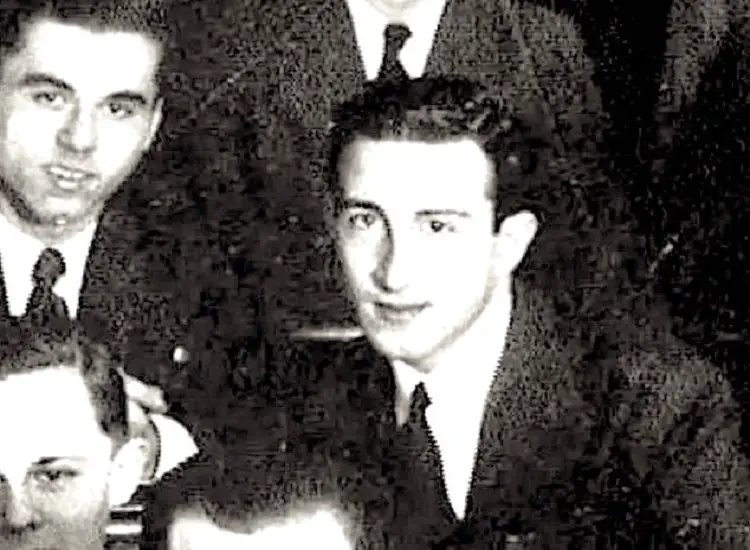
Five years have passed quickly, as if they were merely a single season. Perhaps this is because I am currently in Paris, walking along ‘Avenue Victor Hugo,’ where Jusuf lived in the 1920s and 30s, and ‘Rue de Grenelle,’ where I later lived in the same apartment for three consecutive years. Or perhaps it is the memory of gathering at the warm home of Liri Begeja and Luc Barnier, at the embassy or UNESCO, and finally at his last apartment on ‘Rue Croix-Nivert’ near Porte de Versailles, where he would spend the final days of his life.
To be continued in the next issue.
Lavdosh Sulo, a calm and generous man from Vlora, lived at that time on “Boulevard Poniatowski” on the outskirts of Paris. Together with Jusuf, we climbed the stairs to the top floor of the building and entered the small apartment of his friend, with whom he had spent several years in the forced labor camp of Shtyllas in Fier.
Their meeting was truly emotional. They began to reminisce about the years in prison, their comrades – those still alive and those who had departed this world – recounting various painful episodes. Luc was filming and I was recording, holding a small lighting lamp. After that meeting, Luc wanted to continue filming other episodes of Jusuf’s daily life, but it became impossible. Jusuf consistently refused.
I also remember the history and the adventure of his book “Mondes effacés” (Vanished Worlds), which he wrote in collaboration with his French friend Eric Faye, a novelist and literary critic. One day, Jusuf told me he regretted accepting an advance from the publishing house for the book; in fact, François Nourissier himself had been the catalyst for this.
-“Of course, at that time I needed the money, but I didn’t feel like telling stories and writing about myself. What would others say?!” Thus, he began to return the money he had previously received as an advance. But the publishing house never accepted it. French readers, and later Albanian ones, were fortunate enough to read that deeply interesting book which described the entire itinerary of his life.
“Such is the extraordinary fate of this man, the scion of a great Albanian family of the Ottoman Empire,” wrote the publisher of Editions Jean-Claude Lattès in the book’s afterword, “a man who has traversed the major upheavals of modern Europe. A passionate testimony of downfall and subsequent rise, the testimony of both an actor and a victim of the century’s cultural and political movements.”
Yes, “Mondes effacés” was an impressive book, where everything sparks curiosity and interest: his return to Tirana, the meeting with his mother and their life together at Hotel Dajti – where from the window one could see the grand boulevard named “Mussolini” – the mimosas that filled the streets in those days, then the capitulation of Italy, the entry of the Germans filling the hotel with their weapons, the duo’s escape from the hotel, and the liberation of Tirana.
Jusuf Vrioni was arrested on an autumn day in 1947, in a square in Tirana, while on his way to a date with his girlfriend. “It was September 13th…! When I was released from prison, I went to find that girl. But she wasn’t waiting for me. She was married…! At that period, the Communist Party was preparing its First Congress of 1948. Bursts of gunfire could be heard everywhere. After six months of interrogation in a cell, they fabricated a trial for espionage in service of France…! I was sentenced to 15 years in prison.”
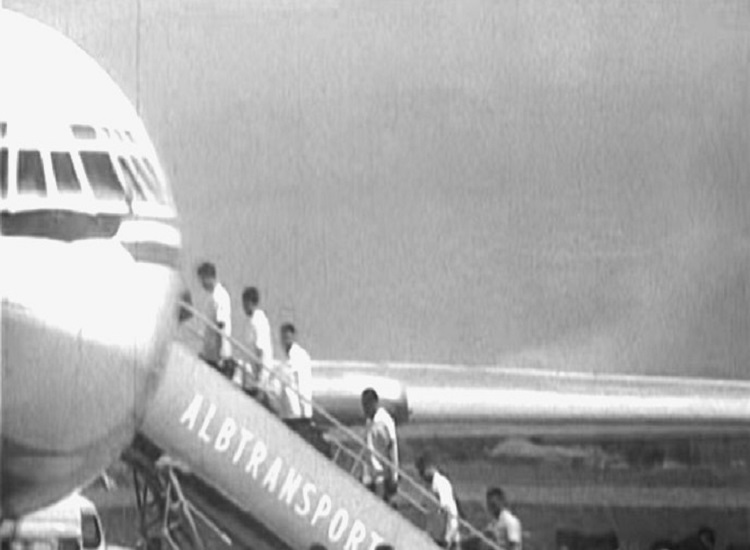
“Prisoners served the reconstruction of the country,” Jusuf sighed with a smile, likely remembering the years he spent working: digging to drain the Maliq swamp, working on irrigation canals, in mines, and constructing the runway of Rinas Airport, among others. Olivier Deprez, a film and show producer once told me a strange but true story. It was a day in 1997, when he was returning from Albania to Paris with his friend Jusuf Vrioni.
They were passing through customs at Rinas when one of the officers asked Jusuf to pay the transit tax – a ten-dollar fee required of everyone at the time. Jusuf was taken aback by this request and, after a hesitation, told the officer he would not pay.
The officer insisted, but Jusuf held his ground, until finally he said: “I have no reason to pay a tax for an airport that I built with these very arms as a political prisoner!” The officer was stunned and let him pass.
Jusuf was a man of peace and loved music dearly. But not just any music. He was very fond of jazz, which he had followed particularly in his youth. I remember several evenings when Jusuf, initially with hesitation, would get up to dance, and within minutes, he would mesmerize everyone with his elegance.
One lunch, at the home of a friend, Simon Antoine, in ‘Aulnay-sous-Bois’ near Paris, upon hearing a “blues” track, he stood up and, intoxicated by the music, began to dance. Naturally, we younger ones followed suit.
Jusuf had only one lingering sorrow: the suffering of his mother while he was in prison and she was interned, and the desecrated grave of his father, whose bones had been thrown into the river in the first year after the liberation of Albania. One day, after his release from prison, while reading an article about the novel “The General of the Dead Army,” which suggested the book deserved to be translated, he sought to read it immediately. From the very first pages, he recognized the genius of the writer he did not yet know: Ismail Kadare.
For ten consecutive years, seated before his typewriter, Jusuf Vrioni was transformed into a shadow or a ghost, translating the works of the great writer. No one knew who was translating those novels “Made in Albania,” from “The General of the Dead Army” to “The Siege” (The Drums of Rain) and so on – “Chronicle in Stone,” “The Great Winter,” “The Palace of Dreams,” etc. It was with the novels “Broken April” and “The Three-Arched Bridge” that the name of the “phantom translator” first appeared.
He was even asked to translate political publications, primarily the works of Enver Hoxha, which he certainly could not refuse; otherwise, he would have had to return to his former cells. One of Jusuf’s close friends was the French scholar and novelist Eric Faye, with whom he worked on the publication of the book “Mondes effacés.”
“Before I met Jusuf,” Faye wrote, “I had known and experienced many of the places where he had once lived: Rome, Durrës, Tirana, and his birthplace, Berat, where a guide showed us a building where his family had stayed, which had since been turned into the ‘Historical Museum of the National Liberation War.’”
In April 1990, while I was in Tirana for my conversations with Ismail Kadare, I was introduced to his translator – that “seventy-five-year-old youth.” During our meeting over coffee at Hotel Dajti, I quickly realized I was facing a man with an extraordinary history.
Over the years, a deep friendship developed between us. When he asked me to help organize his memories to put them on paper, I found myself facing the unexpected.
Could modern Europe and its history produce fates as dizzying, powerful, fractured, and rich as this man’s? A childhood like Nabokov’s – a “golden youth” with long studies that molded a soul capable of interpreting vastly different situations, of reasoning and fighting on a multitude of fronts; then the Stalinist camps of the Solzhenitsyn variety; and finally, that slow ascent back toward life in a world he did not choose, to which he had to adapt every day until his recognition through the literary universe – a recognition that came too late for him to truly savor, burdened by the pain of lost years.
Jusuf Vrioni’s mastery of translation has undoubtedly been praised by the entirety of French and Albanian literary criticism. This was noted several times at the “Assises Européennes de la traduction littéraire,” where, alongside translations of great authors like Proust, Sarraute, Duras, or Baudelaire, his translations of Kadare’s works were discussed. For these merits, he was awarded the renowned “Halpérine-Kaminsky” prize in 1995 in Arles, southern France, by the “Société des Gens de Lettres de France,” founded by Hugo, Balzac, Dumas, and George Sand.
A year later, also in Arles, Mayor Michel Vauzelle, a former Minister of Justice during the Mitterrand era, honored him with the title of “Honorary Citizen” of Arles. After being decorated with the title “Chevalier de l’Ordre des Arts et des Lettres,” he was also awarded the “Naim Frashëri Order” and the “Silver Pen” in Tirana in 1998. Five years have passed since the day Jusuf Vrioni died. Only a season.
I remember Jusuf, and I don’t know why the words of his French friend, the poet Yves Mabin, come back to me: “Jusuf the Noble, Jusuf the Albanian, Jusuf the Frenchman.” When we walked in Paris for the first time, when you were allowed to return after so many years of prohibition and absence, you told me you were my “uncle,” but that I was also your “uncle.”
In fact, you were my brother. My older brother in age, in wisdom, in painful experience, but often a younger brother when you asked for my advice and when I saw you so vibrant, like an eternal youth. We were brothers, Jusuf, and brothers know how to recognize each other in life. But they also know how to meet again in death. Goodbye for now, Jusuf!…/Memorie.al