

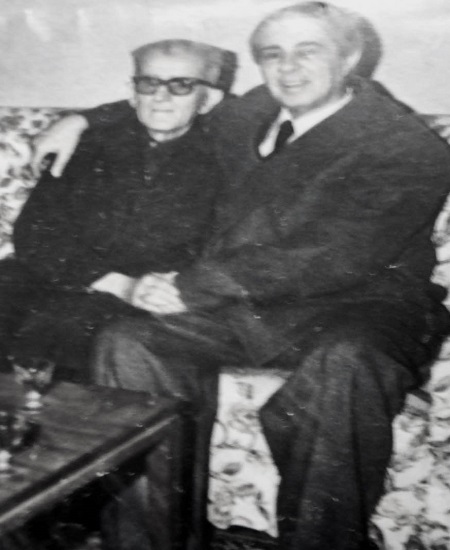
By Ahmet Xhavit Delvina
Part One
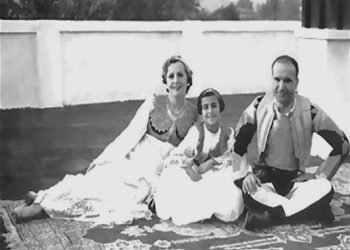
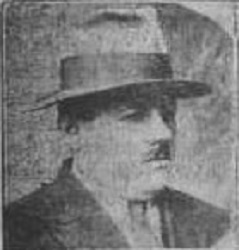
Memorie.al / I do not intend to dwell on our family biography, but I wish to describe only a few aspects of the life of my father, Neki Delvina, who was sacrificed like many of his peers for the so-called “Motherland,” which unjustly devoured him.
He was born and raised in Istanbul, in the “Galatasaray” quarter; consequently, the family held Turkish citizenship from early times. He graduated as a Doctor of Law from the Faculty of Law in Istanbul. In 1913–1914, after completing his postgraduate studies according to all Turkish government administrative rules, he was appointed as a judge in the Turkish city of Kars. However, he never began work there, as he responded to the call of his maternal uncle, Fejzi Bey Alizoti, who had raised him after his father, Sherif Bey, passed away when he was young. The call was to return to Albania because the needs for him and his profession were great; the new Albanian state had just been established, and Fejzi Bey held the post of Secretary General of State.
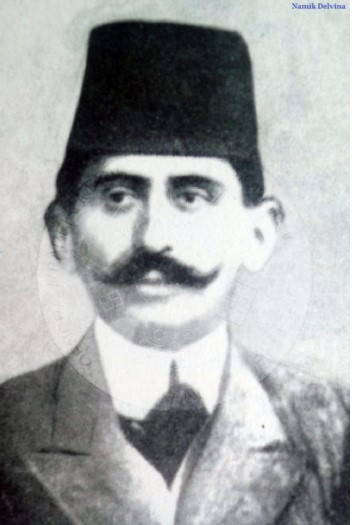
His return to Albania was also urged by his cousin Faik Konica, along with other cousins, Sulejman and Namik Delvina, motivated by the idea that in this new state, he too should contribute to laying the foundations of Albanian justice. This duty toward his true homeland was not a matter for debate, for to refuse would be to “disturb the bones of his ancestors” who had contributed to this rising nation.
He was fully convinced and immediately set off for Albania to live there forever. It was his first time in Albania, and as he told us himself, he found it difficult to adapt at first, but there was no other way; love for the motherland demanded this sacrifice and fulfilled the ancient tradition of a patriotic family like ours.
In 1914, he began his duties as a conciliatory judge in Skrapar, later serving as a prosecutor and chief judge in various districts such as Lezhë, Elbasan, Berat, Vlorë, Delvinë, and Tirana. After 12 years in these roles, he was appointed as a member of the Court of Cassation in the Criminal and Civil Branches in Tirana until 1944 – the year of the so-called “Liberation” and the final installation of communism in Albania for over half a century.
The communist government of that time reappointed the same judicial body but under a new name: the “Supreme Court.” The reorganization of the judiciary initially saw no changes in personnel because it was publicly known that these men were non-political and incorruptible; they were considered the pioneers and founders of Albanian Justice, not to mention their high professional expertise.
However, these considerations soon changed under the new “People’s Power” because their political indifference was no longer useful. With new requirements constructed through communist-colored laws, the regime demanded that all high-ranking officials without exception be, first and foremost, political people and loyal soldiers of the Party. These recommendations had to be followed blindly, as the Party now stood above the law.
For the vast majority of the Supreme Court College, these new conditions were indigestible. They could not break their character after so many years of honest and dedicated work. They could not accept these new terms or play dishonest roles that flagrantly contradicted judicial ethics or the rules of global justice!
They understood the consequences of this “stubbornness,” but they would never become the blind tools of the Party-State. The first incidents for my father began as soon as he visited his close friend in prison, Dr. Sami Visoka, along with his father and uncle. Dr. Visoka was accused of political crimes for publishing a book titled “Mother Kosovo,” which did not align with the current Albania-Yugoslavia policy.
In an era where we were a function of Yugoslav policy and had recently officially “sold” Kosovo on August 27, 1944, in Vis, Croatia, anyone preaching patriotism was considered a traitor. My father’s visit to the doctor during his detention was considered a grave political error and a defiance of communist rules.
The second “grave error” involved the appeal of a gynecologist named Dr. Çupishti, who had been severely sentenced by the Vlorë District Court for a crime he did not commit. My father overturned that decision twice. During the second retrial, Bilbil Klosi – Assistant Member of the Supreme Court and Party Secretary (also the brother-in-law of Ramiz Alia) – intervened. He suggested my father drop his insistence on the doctor’s innocence because the Vlorë Party Committee recommended that this “reactionary” remain in prison as a threat to Party interests.
“Unfortunately,” my father was not willing to fulfill the Party’s “recommendation” (or rather, its order). Despite pressure from influential figures in the ministry, the doctor was eventually released in the courtroom due to my father’s persistence. To our misfortune, shortly after his release, the doctor organized an escape to Italy by sea with his entire family.
Following this scandal, my father was summoned by the Minister of Justice, the “monster” Manol Konomi, a wicked and vile communist. Konomi told him: “This whole affair that shamed us all… resulted only from your political immaturity and lack of faith in the Party. I hope this was a lapse; otherwise, you know the consequences that await you.”
Manol pointed a finger at him in rage: “From now on, you must understand once and for all that Party suggestions stand above written laws and everything else in this world. Do you understand or not?” My father was bewildered. He knew Konomi and Klosi had studied law in France; he could not fathom how someone could study Justice in the West and then despise it so utterly.
The third and final “error” before he was cast out was his refusal to parade before the central tribunal on May 1st of that year, shouting slogans for the Party and Comrade Enver. My father said: “How can we, the Supreme Court, parade with banners and slogans before Enver Hoxha while foreign diplomats watch? We would be showing them we are totally politicized. What kind of justice would we then provide?”
Because of these three instances, Konomi and Klosi began looking at my father with irony and smirks, as if to say, “You’ll see what happens to you soon.” These actions were deemed grave political crimes. He was thrown out of his post as “unnecessary” and “incorrigible,” marking the start of his slow annihilation.
As mentioned, Enver Hoxha was well-known to our family. The link to this “trash” was my maternal uncle, Esat Dishnica, whom Enver considered a “twin” brother. Consequently, my mother, who idealized her brother Esat, naturally viewed the “monster” Enver as a second brother. My father had no choice but to respect his brother-in-law’s friend.
Our family relationship with Enver reached confidential levels; he frequently visited for lunches and dinners. Enver’s ties with Esat strengthened as he became the main manager of Esat’s business in the tobacco-cigarette industry and wholesale food trade, where profits were significant.
Coincidentally, Enver was also the brother-in-law of Bahri Omari, who was not only a great friend of my father but also a neighbor in the “four white Italian apartments” behind the “Shallvare” buildings. Enver’s sisters, Fahrije (Bahri’s wife) and Sano, spent every morning and afternoon with my mother, drinking coffee.
It seems that during these casual gatherings, my mother naively mentioned that Hiqmet Delvina – my father’s cousin and former Minister of Justice under King Zog – had left a significant amount of gold with my father for safekeeping when he fled Albania in 1939. Specifically, 20 gold napoleons.
This information reached Enver’s ears. Shortly after, he told my mother: “Listen, Cime (my mother’s nickname), tell Neki Bey to listen to us. We are well-informed that the traitor Hiqmet Bey Delvina left him gold which would serve the National Liberation Movement we are organizing. If he gives us this money, he will remain on the right side of the nation’s history.” This message continued even after they went to the mountains as partisans. My father reacted with agitation, viewing their demands for private property as true “banditry.”
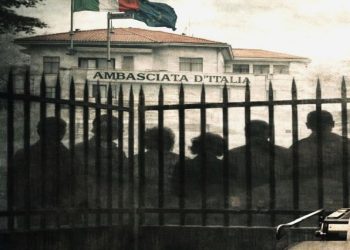
In 1945, Hiqmet Bey Delvina’s son, Dr. Dragush, and his mother, Inajet, came from Florence to retrieve the money. At that time, such travel was still possible as the regime had not yet shown its true terrorist face, and they held Italian citizenship. They came directly to our house with two letters: one authorizing them to take the money and the other being the receipt my father had given Hiqmet Bey Years prior.
The receipt was torn up in the presence of witnesses, the money was counted coin by coin, and Dr. Dragush gave my father a new receipt of delivery. The matter was closed according to all official rules. However, this marked the beginning of the tragedy for both families. The communist power refused to let the two visitors return to Italy, claiming illegally that the political situation had changed./Memorie.al