From Ali Buzra
Part Sixteen
– LIFE UNDER PRESSURE AND SUFFERING –
(ASSESSMENTS, COMMENTS, NARRATIVES)
Memorie.al / At the request and wish of the author, Ali Buzra, as his first editor and reader, I will briefly share with you what I experienced in this encounter with this book, which is his second (after the book “Gizaveshi through the years”) and which naturally continues his writing style. The sincerity and frankness of the narrative, the simple and unmodified language, the accuracy and precision of the episodes, or the absence of a refining, intentionally subsequent imagination, or its non-utilization, I think have served the author positively, who comes to the reader in his original form, inviting us to at least get to know unknown human fates and pains, whether coincidentally or not, leaving us to reflect as a starting point for awareness towards a catharsis so necessary for the conscience of Albanians.
Bedri Kaza
Continued from the previous issue
Late in the afternoon, the commander ordered the release of the tied-up men and boys. The fellow sufferer’s recount that among the people brought out that winter morning was also a woman who had just given birth to twins, who were kept in the snow, wrapped in rags, with whatever the people of the house could manage. After two days, both children passed away. The next day, the men of the neighborhood buried those two children, those two newborn angels, who couldn’t even be given names. Islam was staying in a cave, among the rocks above the village.
Ibrahim went there secretly on many occasions, and also Beqir, to bring him bread and some food. On one occasion, Abedin and Muhamet went there, bringing him flour, cottage cheese, and salt. When they returned, they told the family members that they found Lam (Islam) in the cave near a fire he had lit. It was a very cold winter night and the danger from wild animals was very great. That night, the people of the house were very worried until they returned.
Armed, Islam accompanied them to near the dwelling, embraced them, and left. One night, he comes secretly to the house. That night, Veli and Hasan also come there. Islam tells them he has decided to surrender, since they are suffering because of him. – “Because of me,” he tells them, “two infants died.” – “No,” Hasan tells him, “the children were mine, you didn’t kill them, but the state did.” This was the last night Islam stayed together with the children, brothers, and neighbors in his house. After midnight, he goes to all the children who were asleep, caresses and kisses them, never to see them again.
In the spring of 1945, when the snow in the “Shpatadoll” neighborhood had not yet melted, forces of the partisan army come to Letëm and surround the house of the Dobra brothers. With them was also a partisan girl named Mahmude. The two men of the house, Beqir and Ibrahim, had been taken a few hours earlier. That day was terrifying. In the house were the women, children, and the mother of the four boys, who was over eighty years old. After killing the family dog in the yard, the commander with some soldiers and the partisan woman enter inside and tell the old woman that they have orders to search the house.
– “Alright, my son,” the old woman tells them, “search it, but why did you kill the dog?!” – “This is an enemy house and we will set it on fire,” the partisan woman tells her. Islam’s wife, Xhemilja, intervenes, telling them that the house is not only his and that the others have no fault, to be left homeless because of her husband. After searching; they find some religious and military books, a photograph of Islam and one of King Zog. They also find a small bag of gold, which they confiscate, counting it. – “We will count these, because the state needs them.” Once again, Islam’s wife tells them to kill her, but not to burn the house. – “This is the house of three partisans with a star on their foreheads like you,” she tells them.
– “Who are they?” the commissar asks her. – “The younger brother-in-law and two nephews, what fault are they at?” she explains, still with some hope. But it wasn’t possible. They order them to go outside, not allowing them to take anything from inside. Two partisans bring corn straw and dry oak branches into the guest room. They pour a bottle of gasoline on it and set it on fire. Regarding this, Haxhi’s son, young Selim Dobra, recounts that the two-story house with 16 rooms was burned, with all the goods and four brides’ dowries inside. They also set fire to the livestock shed, while the livestock were completely confiscated. Some were slaughtered and consumed by the partisans, while the others were taken away. The family members took shelter with neighbors, but this didn’t last long.
After three days, the entire family of the Dobra brothers was expelled from the village, and escorted by police, they were sent on foot towards Librazhd. There were 16-17 people, men, women, grown children, and small infants, as well as the elderly mother. The younger brother Haxhi and Beqir’s son, Haziz, were not there. These two were performing duties in the Albanian army as officers, while their wives and children were interned. They were under constant pressure, being told to find their escaped brother, Islam.
Regarding this ominous journey, Shefqet writes in his book that when they approached the barracks of Babja, the mournful voice of the mother of the Dobra boys was heard: “Ohooo, oh God,” sighed the tearful grandmother, “who knows if I will ever see that place again? After 80 years of life, they uprooted me from my hearth, as if I was a dry twig, and I don’t know where they are taking me to burn! Everyone was moved to tears. They were tears of longing and pain, leaving without knowing where they were going.”
The children were crying and asking their mothers to rest. And what could the poor mothers do?! They would stroke their children’s heads, telling them they would arrive soon. “Why did we leave home?” 7-year-old Hatixhe would say to her mother, “come on, let’s go back home”! That night, they arrived late in Krastë of Elbasan. They were placed in some barracks where they stayed for about three months. Later they were released and returned home.
They stayed in the neighbors’ houses for some time. The women started working in agriculture, while the men engaged in building the house. There were five married couples. They built a large one-story dwelling with the stones from the walls of the burned house. But this didn’t last long. They were not left in peace with their troubles again. Around the autumn of 1945, they were interned again. This time they were sent to Berat. Islam’s family stayed in Berat for over three years, while the others were released sooner.
After staying a few months at home in Letëm, the police officers appeared again. They uprooted them for the third time and sent them with those few belongings loaded up, heading towards the city of Librazhd, without being told where to. Only Azis’s wife with her little son, Çaush, was left in the village. She was also sent to the neighbors, while the house was sealed at the door lock. Haxhi, sometime earlier, had taken his wife and little daughter to Vlora where he was serving in the military.
A calvary of sufferings for the Dobra family. This inhuman treatment of these families was no different from the Serbian violence in Kosovo. In Zgosht, on the motor road, they were waiting for the families of Isak Alla and Azis Biçaku. They did the same with the Allaj family; sometimes they interned them, sometimes they returned them to the village, apparently with the aim of luring the escapees to catch them. At midday, all three families were sent on foot to Elbasan. They arrived there late at night and were put into a large room in the Egyptian quarter, where they were held for about two weeks.
In the evening, they were taken out of the room, and with belongings in their arms, they were taken to the “Bezistan” square by the plane tree of the same name. People passing by looked with surprise at these “muhaxhirs” (displaced people/exiles) waiting, while their children fell asleep on the belongings placed on the sidewalk. Around midnight, an old “Zis” type truck arrived and they were loaded onto it. The children woke up from the shouting of the policemen. The truck, as the survivors remember, was an old rattletrap that broke down several times on the road, while the men of the families were forced to get out and push it.
The next evening, they arrived in Turan of Tepelena. There was a military barracks there, but it was full of people who had arrived from other districts before them. So, these people were forced to build a shack with oak branches. When Haxhi heard about the internment, he took leave and took his wife to the village. He opened the house; meanwhile he also took Azis’s wife and placed both of them there with the children.
Immediately, as soon as it was known, the council people came to demand an account for opening the house, but it passed. The families of Dobra, Alla, and Biçaku spent that winter in the oak shack, where whatever fell outside came inside. “In the spring,” writes Shefqet about this, “a little son of Ibrahim, Refat, from his mother’s lap, would just watch us, wherever we moved, turning his head which hung loosely. He was sick, they sent him to the hospital in Gjirokastër for a few days, but he had weakened a lot.”
3.3 Xhemile Dobra with her children languishes in internment camps
One day, all the internees were gathered, and many of them were released. The families of Beqir and Ibrahim were released, and they also released Muhamet, Islam’s son, apparently the latter, to use him to catch his father. Islam’s wife remained there with her daughter and little son, Shefqet. After a few days, they received a letter from Ibrahim’s family, telling them that as soon as they entered the house, they put Refat in the cradle to sleep, but he looked all around, as if searching for something with his eyes, perhaps looking for you, they wrote in the letter, and after a moan, he closed his eyes forever.
After two months, they moved them from Turan and sent them to the prison camp of Tepelena, planned for “internal enemies” and their families. There they were placed in barracks, assigning a position for each family, calculating 50 cm per person. In each barracks, a person in charge was appointed from among the prisoners. There were only 16 toilets for all those people. They had to wait in line to perform hygienic needs.
The camp was surrounded with barbed wire and guarded by police; anyone crossing it was punished. On the second day, they were taken outside the enclosure where they would collect the remaining shells from the war. They collected and stacked them. Shefqet Dobra and Ilir Biçaku from Letëm and Faik Alla from Zgosht were the same age, 6-7 years old. In his book, Shefqet writes, remembering the stacks of long shells that were placed on the banks of the Bënça River.
Although people were very careful during work, there were many cases where they exploded, and many people lost their lives. For this, a report was kept signed by the family members stating that the person lost their life due to negligence, and at the same time it was certified that they had not attempted to escape. Until the collection of shells was finished, they went there every day from morning to evening.
At dusk, the bell rang to enter the barracks. They went to the kitchen only once a day, where they received 400 grams of bread per person on a list, initially only dry bread. In the morning, mothers would wake the children early, so that when the roll call was made, everyone would be lined up in front of the bed. Nursing infants, the mothers would uncover them so the policeman could see them. Regarding this, Shefqet Dobra writes: “Captain Selfo couldn’t write or read, but he remembered very well the surname of each family and how many people each had. When it was his turn to count us, as soon as he set foot on the doorstep, he would let out a chilling cry: ‘Everyone in front of the bed!’ And immediately he would call out the surname of each family. We had to pass before him one after another.
If it happened that any family member was missing, even a child wrapped in swaddling clothes, he wouldn’t interrupt the counting, because he would get confused, but after finishing the count, he remembered who was missing from this or that family. At the end, the persons who had been missing, if they weren’t there to apologize, would be punished with the dungeon or with having their bread ration cut.”
After finishing collecting the shells, the adults were taken to make wood in the forest. The women carried them on their backs. At the Bënça Bridge, the policeman stood, watching the loads. If it seemed to him that they had loaded little, he would send them back to the forest. From Tepelena, Islam Dobra’s family was released once. After several days of travel, they arrived home in Letëm. They thought they were saved. Muhamet worked, while Shefqet went to primary school in the village. Haxhi and Emin also came home.
The latter was Beqir’s son, who after finishing military service, became an officer in the army with the rank of captain. They had come on leave, and they had their weapons with them. One day, Ibrahim, Haxhi, and Emin were not seen at home all day. They came home late at night. The children recall that night that when they entered, the men would stop their conversation. After a few days, Haxhi and Emin had left, while Ibrahim didn’t come home for three or four days.
Ibrahim’s absence wasn’t very noticeable, as the latter would sometimes leave for weeks, working as a master craftsman in the areas of Dibra, to secure livelihood opportunities for the large family. During those days, Ibrahim had escorted Islam across the border. This event was not mentioned during the entire communist period. Only after the fall of the system was it learned that they were helped by their cousin, Muharrem Hasa from Qarrishta.
The pressure and threats for the surrender of Islam were continuous. Haxhi was sent several times by the command of the unit where he served, to Letëm, to find and surrender his brother, Islam. The same was done with Azis and Emin. They might have kept them deliberately in the army to force them to catch the escapees. But the men, the officers of the Dobra family, did not fall into the trap of the Sigurimi (State Security). In 1947, Azis was killed in an area of Dibra, while being part of the Pursuit Forces.
The person thought to be directly in contact with the escaped brother was Ibrahim. He endured torture, threats on his life, and everything else, but they couldn’t defeat him. Ibrahim Dobra will remain a legend for his bravery, courage, and loyalty to his escaped brother, standing like a lion before the brutality of the communist state. This time, Islam’s family stayed at home for 5-6 months. They would be interned again.
The mother, with her three children; Muhamet, now 16-17 years old, Hatixhe 11 years old, and Shefqet 7 years old, are taken by the police, escorting them again to the prison camp of Tepelena. They were familiar with the life of terror there. The return was death for them. Mother Xhemilja and Muhamet were forced to work. The work of transporting wood continued. The camp people’s labor provided firewood for the military units.
In the forest, there were wild pears. The women would collect them and give them to the children at night when they came, to quell their hunger a little. Late one afternoon, when they returned from work, they were stopped in front of the camp gate, just as they were, loaded with wood on their backs. The lieutenant orders them to unload the wood and line up. He begins to check their bags, telling them; – “And these, what do you have these for?”
– “Wild pears,” one of them answers. “We collected them for the children.” The lieutenant ordered one of the men; they emptied the bags, putting them in a sack, to take them to the pigs. The women, almost every day, took herbs and nettles from the forest, which they boiled with water, since there was no question of fat, to use in the absence of food. These also often ended up with the pigs when the lieutenant was there. Survivors recount that when Captain Isen Lena from Mati, or Captain Syrja happened to be there, they weren’t checked.
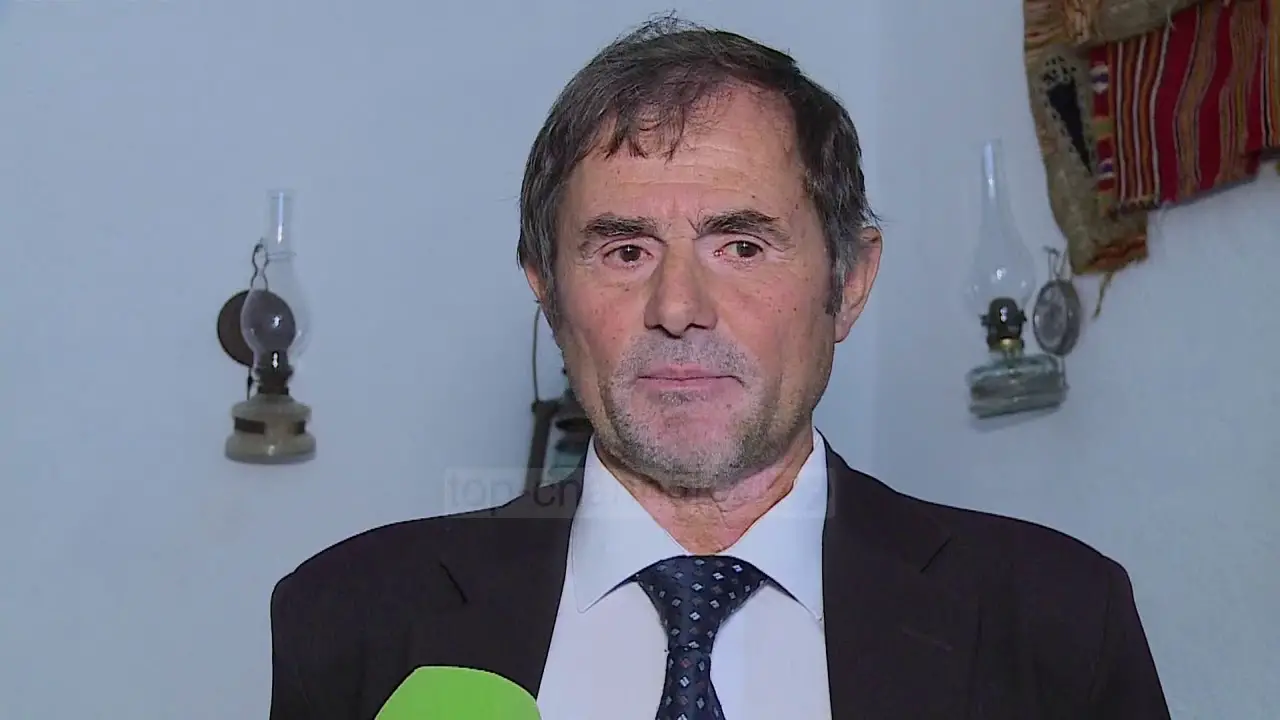
“From not eating, in extremely harsh conditions, and from stress,” recalls Shefqet, “people died every day. Most were children and the elderly, but also young men and women.” All survivors have testified about the cemetery problem. I have also learned this orally from survivors, Ilir Biçaku from Letëm, Sheme Muzhaqi from Vilani, Faik Alla from Zgosht, Shefqet Dobra from Letëm, Faik Kasa from Gurshpata, and Xhevdet Shuaipi from Erseka, with whom I have been in contact.
“Initially, they made the cemetery inside the enclosure,” recounts Shefqet, “but the number of dead increased more and more every day. One day a tractor comes and plows them over, leaving no trace of graves, with the aim of putting others in. After the place fills up again, they plow it again and plant the land with barley. People saw how the plow would bring out the bones of their deceased relatives. Later they started burying them outside the enclosure.” These testimonies speak of an unprecedented and never-before-heard genocide.
In a conversation I heard on TV Klan with the surviving general Rrahman Parllaku, the latter among other things states: – “The German would kill you, but leave you there. Relatives would take the corpse and bury it, while under Enver Hoxha’s regime; they would make the corpses of the dead disappear.” The case of Tepelena is chilling and seems unbelievable, but unfortunately it is a lived reality, testified to by hundreds of survivors from that cruel camp of Albanian communism.
In the camp, for the prisoners, the newspaper was read in the evening in an organized manner. Reading the press, at that time, was almost mandatory and done everywhere; in cooperative brigades, in state enterprises, in youth volunteer actions, in the army, and everywhere. This was part of the propaganda for the communist education of people. Meanwhile, schools were established in every village, massifying education nationwide. This massification of education was accompanied by its extreme politicization.
Everything in educational institutions had to be linked with the policy of the party-state. Even from the Tepelena camp, the children were sent to school. Initially, a space was improvised in the camp, while later with the increase in the number of prisoners; children went to the town of Tepelena to continue school. They remember that they went to school in an organized manner, and later, not escorted by police, as they were children, where would they go! There were so many that they went both in the morning and afternoon shifts, in two shifts. They returned in rows of two and were counted by the duty officer. / Memorie.al