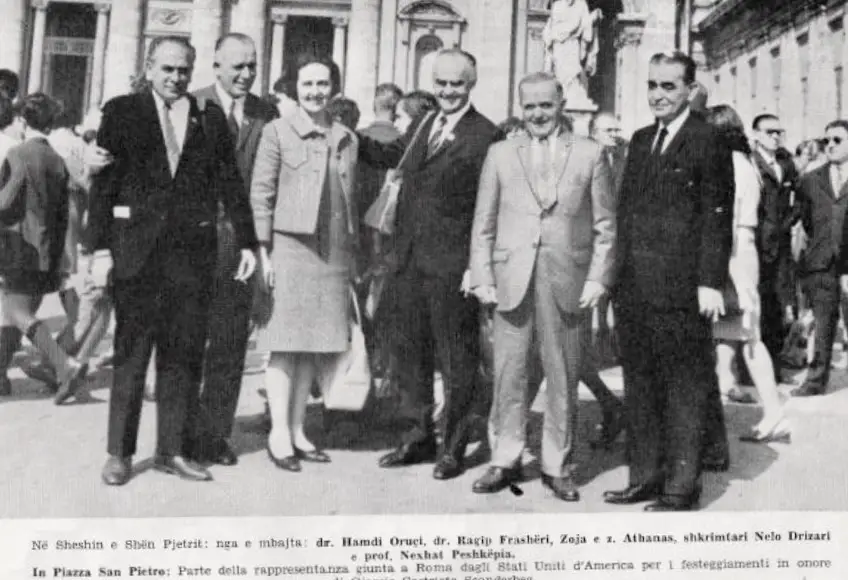
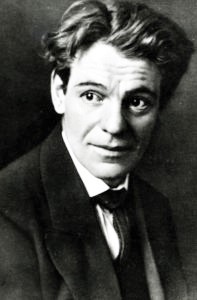
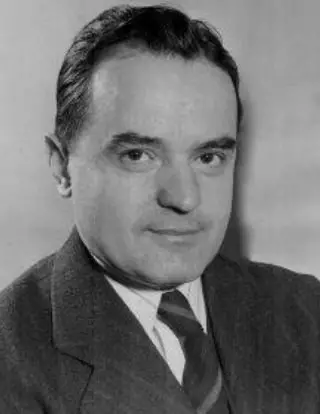
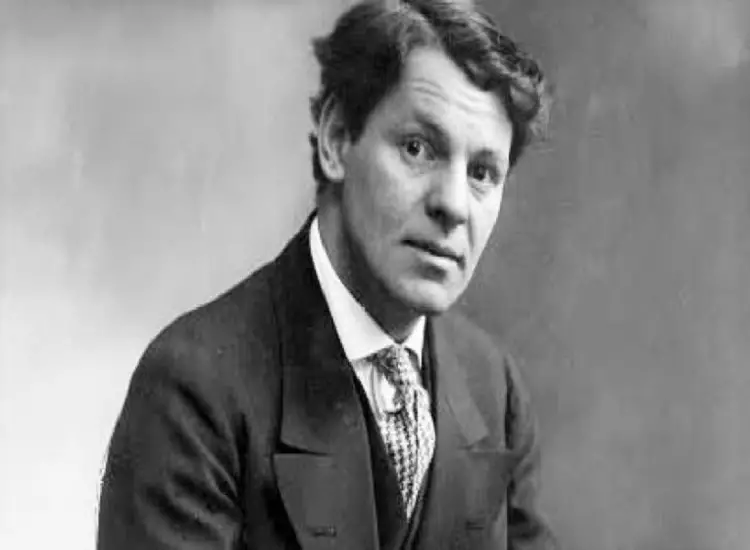
Memorie.al / Nelo Drizari, the Editor of the newspaper “Dielli” (The Sun), had the fortune to meet and interview the great actor of Albanian origin, Aleksandër Moisiu, during his theater troupe’s tour in the USA. We focus extensively on Drizari’s descriptions because his writing reveals the deep adoration he held for the great actor. Drizari describes with emotion the warm reception the Americans gave to the actor of Albanian descent. Journalist Nelo Drizari conveys this with a sense of exhilaration:
“When Aleksandër Moisiu first came to America in November 1927, the world thought he would stay for only four weeks. But his acting performances caused a massive stir. The public demanded more time and opportunities to see this famous actor. Reinhardt’s program was to play one drama per week to leave space for others, but the public’s demand forced the troupe leaders to extend the time and keep the protagonist until the 8th of this month (February 8, 1928).”
Conveying the atmosphere surrounding the famous actor during his shows, Nelo Drizari writes for the readers of ‘Dielli’:
“Moisiu is truly a beloved person. Three times I have joined him backstage after his performances, and I have been amazed by the behavior of his admirers. Many people, the majority of whom were women, rushed like mad crowds just to shake Moisiu’s hand. Others played the role of souvenir hunters. The latter sought his signature on programs, photos, or books related to Moisiu. The great actor received them with a smile and distinguished chivalry, fulfilling their wishes whenever he was not in a rush to go somewhere. This pleasant behavior, this outstanding gallantry, combined with his talent, has won him close friends and numerous admirers.”
“…Despite what some say – that Moisiu is stern – his nature seemed gentle to me. Moisiu looks as if he belongs to the Nordic race: the Anglo-Saxon or Teutonic race. Those who do not know that Albania is full of people of this type cannot believe that his father was Albanian and his mother Italian.”
“This is true. Moisiu was born in Trieste in 1890. His father was Kostandin Moisiu from Durrës, who had businesses in Vienna and later in Fiume, Hungary. Aleksandër Moisiu spent his infancy in Albania. In Durrës, he went to school and, before leaving for Vienna, he knew Albanian well. Since his father sent him to school in Vienna, he had no chance to use his mother tongue, the Albanian language. Thus, today, he remembers only a few rare words.”
The author of the article, Drizari, defends the actor. He protects him from those Albanians who gossiped that Moisiu had lost his Albanian identity and felt nothing for his race. Nelo argued:
“But we cannot say that Moisiu has lost his feelings or compassion for Albania. No. While he was in Vienna, he associated with Albanians. Furthermore, Moisiu went to Albania for several months after the Balkan War. There is no doubt that Moisiu feels warm joy when he meets an Albanian. Likewise, he holds himself majestically when remembering that his father was Albanian.”
“On the other hand, there are other things to consider. Moisiu is an artist trained in the cultural centers of Europe. He faced great expenses and hardship (zor) while absorbing education in foreign languages. Moisiu has dedicated himself to the art of drama with all his flesh and soul. In other words, he made sacrifices; he crossed the river. Like a scientist, or a musician, or an inventor who puts everything else aside to realize an ideal, so too did Moisiu set out to reach the peak of his chosen field; that is, to become an outstanding actor.”
According to Drizari’s argument, the artist of Albanian origin had no time to deal with trivial matters. The young journalist, Nelo Drizari, is enthusiastic about Moisiu’s fame:
“As a distinguished actor and a complete artist, he is received with cheers in foreign circles. Naturally, the Germans claim him as their own. But the world of drama is interested in Moisiu’s interpretation, talent, and personality, not so much in his nationality. Wherever he goes, he triumphs. Everywhere he makes a brilliant impression. Because he has the ability and his talent is not limited only to being a tragedian; Moisiu is also a consummate comedian. For these reasons, Moisiu cannot simply go out and shout: ‘I am Albanian!’ But when the occasion has arisen, he has stated without hesitation the nature of his lineage.”
Drizari recounts how he met the great actor:
“I wanted to follow him, I wanted to talk with him, and once more before he departed for Europe on the steamer ‘New York,’ I went to meet him. Fortunately, Mr. Paul Linke, a young German writer and close friend of Moisiu, came with me. When we went backstage, a line of people was waiting. As soon as Moisiu saw us, he invited us into his Chamber (Oda) – the small room every theater has for the lead actor – and received us with brilliant warmth.”
“Even though he was tired, he was immensely happy to learn that Albanians wish him great progress and are interested in his triumph. At that moment, his face lit up when he heard again that Albanians honor him, not only as an artist but also recognize him as an Albanian through his father. His face glowed!”
To make it as believable as possible for his readers, Nelo Drizari writes:
“Have you seen the face of a youth who is praised by his parents for something good he has done? Have you noticed how beautifully the words sound: ‘Bravo…! Well done…! You have honored us!’ So it was with Moisiu. Particularly, Moisiu was glad to see that the newspaper ‘Dielli’ has written about him so many times.”
“In the final greeting, Moisiu assured me that he wishes to thank the Albanians for the interest and love them show; he holds his head high when remembering that his father was Albanian and that he spent his childhood years in Albania. When he opened the door and stepped out, the German public greeted him with ‘Hoch Moissi…! Hoch Moissi!’ (Long live Moisiu!)”
Within his being, Nelo Drizari feels a sting in his heart that other nations and states were enjoying the Albanian Moisiu. He writes, not without pain:
“When Moisiu went through the crowd to the automobile, I remembered some Albanians of history: the fruits of their labor have been enjoyed by the World – that world that raised and honored them. When will the time come for Albania to keep its sons for itself?”
By an irony of fate, Nelo himself would remain far from his country and would pass away in America. (Part of the study on the editors of Dielli over the years). / Memorie.al