

By Prenjo Imeraj
Part One
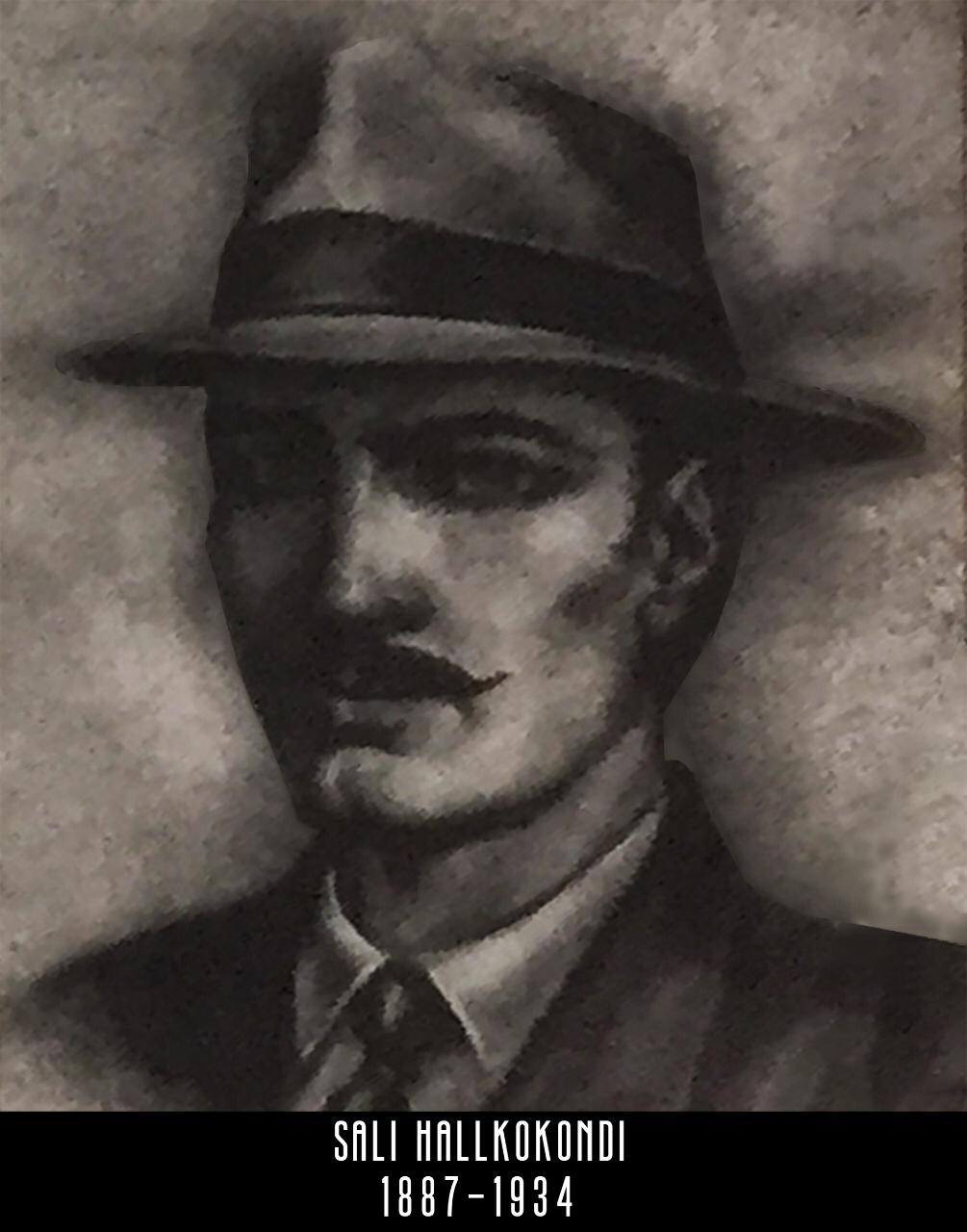
Memorie.al/Two major things immediately stand out when reading Bardhosh Gaçe’s interesting monograph dedicated to this figure of historical proportions: 1. How is it possible that for so long, such a grand encyclopedic figure as Sali Hallkokondi has been left in oblivion!? 2. His premature death, through a macabre murder at the peak of his life, due to his intellectual and patriotic activities (he lived only 49 years)!… The well-known journalist and publicist Bardhosh Gaçe has proven very courageous and quite persistent in researching the life and activity of Sali Hallkokondi, when regarding this prominent intellectual and ardent patriot for the national cause, nothing had been written – not only from the time of King Zog, who is suspected of having “buried” Sali Hallkokondi himself, but not even during the communist regime or even in the early days of democracy in Albania.
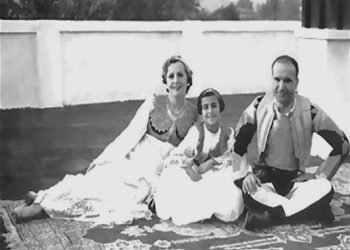
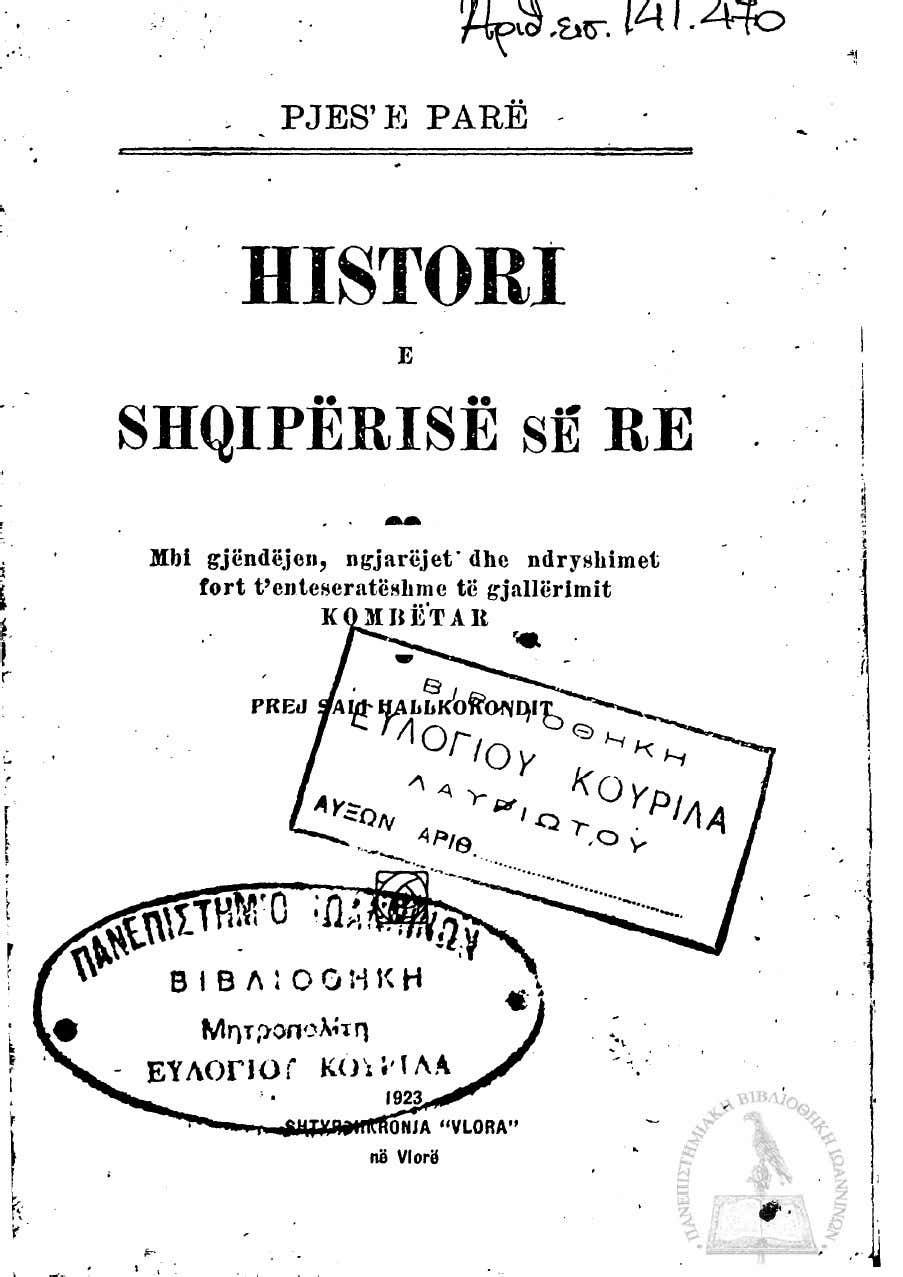
It was a stroke of great fortune that the former head of the Academy of Sciences, Aleks Buda, took an interest in Vlora in 1983 regarding the book: “The History of Albania” by Sali Hallkokondi, as well as the “Dictionary of Labëria,” and some other manuscripts left by that well-known jurist and publicist…! We call it luck because in those years, Sali Hallkokondi’s wife, Lutfia, and his son, Eteri, were still living in Tirana, upon whose door the author of this monograph knocked in 1985, after finding them with great difficulty…!
Everyone who knew Sali Hallkokondi, in school or at work, in efforts or struggle during the major events for the fates of the Albanian Nation, in life and society, in his family and wide clan, has spoken and written with special admiration…! In Sali Hallkokondi, one was drawn to his appearance resembling the legendary kreshniks inherited from his father, Beqir Hallkokondi; his sharp and vigilant eye, which characterizes not only his clan but all the people of Vranisht, distinguished for bravery, loyalty, and nobility. The very name Vranisht, borne by his birthplace in the Labëria region of the Vlora district, carries within itself ancient historical events for the masters of those lands, as old as the earth itself…
Born on April 14, 1887, into a family well-known not only in the village and Labëria, Sali Hallkokondi, while being rocked in the traditional Albanian cradle, would be nurtured along with his mother’s breast milk by lullabies of the kreshniks and heroes of those parts: Captain Zenel Gjoleka, Cane Miftari, Lulo Abaz Mehmeti, Selim Hasani, Dervish Aliu, Lilo Qendro, Mete Çobo, the Leskodukaj of Bolena, and others, “who emerged from epic songs, flashing with the thunder of lightning for the wars against the Ottoman hordes in defense of Albanian lands.”
Beqir Hallkokondi (Sali’s father) died unexpectedly in the autumn of 1894. Undoubtedly, his premature death was influenced by the wound he received in the war of Lëkurës against the Ottoman hordes and the sufferings in the prison of Berat. Sali Hallkokondi was orphaned at the age of 7, together with his two brothers: Novruz, 9, and Bajram, 4. All three children were taken into the care of their uncles: Hakan and Elmaz Hallko, skilled and renowned livestock farmers in the entire Vlora River region.
The two younger brothers, Sali and Bajram, after attending their first years of the village mejtep (school) under the care of family friends: Isa Isarai, Beqir Sulo, and Haxhi Muameti, were taken to Vlora for care due to the famine that struck the Sanjak of Berat. Their remaining school years were spent in “Muradie,” where they were also educated with the spirit of labor, as they did not spend their school holidays in vain but worked in the olive groves of the Agas.
With the intervention of Haxhi Muameti, in the autumn of 1899, Sali Hallkokondi went to Janina to attend the traditional secondary school of that city. There, he became acquainted and struck up a friendship with Ali Asllani and many compatriots from various parts of Albania. In his third year of school, through the patriots Kadri Gjata and Isuf Bushi, he began to get involved in the national movement of the time. Albanian books arriving from Bucharest and Cairo began to be distributed by them in Progonat, Kuç, Mesaplik, and Vranisht.
In the years 1904-1905, he enrolled in higher education in Istanbul to pursue studies in Political-Legal-Administrative Sciences. It was a great fortune that when he settled in Istanbul, he became roommates with Ali Asllani and Gani Tafili on Galata Street. Through Mulla Xhafer Drashovica, who lived near them, they met Tahir Bey Vlora, the son of Ismail Qemali, and Telha Bey Vlora, who were continuing their medical studies and, a little later, also Sali Nivica, who for a time served at “Robert College” in Istanbul as a teacher.
In the years 1907-1908, Sali Hallkokondi began collaborating with Albanian newspapers published in Cairo, Boston, and Bucharest. Closely following new international events and, especially, the situation in the Balkans and the fate of his beloved country, Albania…! Thus, he began to understand even better the despotic regime of Istanbul.
In April 1908, because of a letter he had sent to Ali Asllani – who at that time worked in the administration of Janina – he was summoned by the Galata gendarmerie, where his attention was drawn to his participation in the coup d’état and collaboration with the patriotic club “Bashkimi” (Union) of Janina. This matter was quickly silenced, as with the victory of the Young Turks in July 1908, he initially became their supporter, hoping for the new reforms that would be taken for liberty, equality, and fraternity for all peoples of the empire…!
From the amnesty of the Sublime Porte on August 5, 1908, the former political prisoner Ismail Qemali also benefited, who shortly thereafter was elected deputy in the new Turkish parliament for the Sanjak of Berat. From that time on, he never parted from the path of the “Old Man of Vlora” for the national cause. In January 1909, Sali Hallkokondi left Istanbul and was appointed an intern at the court of Crete, Berat, and Vlora. At the same time, through Ibrahim Abdullau, he connected with the “Labëria” club, of which he was the chairman, together with his friends, Memo Mete and Pasho Ramadani. This club had declared Ismail Qemali honorary president.
The Young Turk stance of the “Union and Progress” (Bashkim e Përparim) club in Vlora and the isolation of Ismail Qemali by the Young Turks, as a prisoner in his own home, caused Sali Hallkokondi to immediately distance himself from the Young Turks. Within the framework of the patriotic activity of the “Labëria” club, Sali proved very active, establishing relations and coordination of actions with other patriotic clubs in Delvina, Gjirokastra, Korça, Janina, Filiates, Monastir, Bucharest, Cairo, Sofia, and elsewhere. When the Young Turks in Vlora increased reprisals against him, Sali Hallkokondi left Vlora and settled in his birthplace, where he remained until November of that year (1909).
With the arrival of Ismail Qemali’s son, Qazim Bey, in Vlora, Sali Hallkokondi was very active in defending the figure of the “Old Man of Vlora” against the intrigues and slanders of Ferid Pasha Vlora, who incited his kin against Ismail Bey. That same year, a committee was created in Vlora to help the Albanian insurgents in Kosovo and the northern parts of the country, of which Sali Hallkokondi was also an active member. The chairman of that committee, which was in fact the Committee for the “Freedom of Albania,” was Ismail Qemali’s son, Qazim Bey. In 1911, the secret committee “For the Freedom of Albania” established links with Ismail Qemali and the insurgents in Kosovo.
In July 1911, Sali Hallkokondi was an active participant in the Assembly of Drashovica, in support of the Greçë Memorandum, for the outbreak of the Vlora-Mallakastra uprising, through which several demands for national interests were presented to the Sublime Porte. During that war, Sali Hallkokondi, together with Captain Sali Murati, joined the çeta (band) commanded by the distinguished fighter Zançe Xhelo, along with 29 other men from Vranisht.
In the summer of 1912, we see Sali Hallkokondi involved in the next uprising. The cause of that uprising was also the elections for deputies to the Turkish parliament, and it encompassed all Albanian lands. After this uprising, the Young Turk government was forced to resign on July 17, 1912. In the month of August, Ismail Qemali entered Albania and organized a meeting in Fier with the leadership of Vlora, Fier, Berat, Skrapar, Lushnja, Mallakastra, and Tepelena, where the jurist Sali Hallkokondi was also present. In this assembly, Hasan Prishtina was proposed as their delegate in the Albanian-Ottoman negotiations in Pristina for the resolution of the demands of the Albanian insurgents.
The autumn of 1912 brought the Balkan War, which at its center aimed for the national unification of the Balkan peoples, but unfortunately, this war developed under predatory aims and greeds against Albania and Macedonia; especially the predatory plans of Serbia, Greece, and Montenegro became most prominent. In a meeting held at that time among the patriots of Vlora, Et’hem Bey, another son of Ismail Qemali, also arrived. It was declared there: “to take up arms and defend our motherland,” demanding the autonomy of Albania.
At the beginning of November, the “Vlora Commission” created the administrative center in the village of Shkoza, becoming a strong support with armaments, ammunition, and food for the war front in Janina and other districts of Vlora. This center, of whose leading staff Sali Hallkokondi was also a member, functioned until the spring of 1913.
With the raising of the National Flag in Vlora on November 28, 1912, Sali Hallkokondi was near Ismail Qemali in support of the newly created Government of Vlora. He had great respect and love for Ismail Qemali, whom he had known during difficult days. This is how Sali Hallkokondi would express himself regarding this great event: “The National Congress carried through the hands of the Great Old Man the magnificent national flag, which had been humbled by captivity, that proud-headed eagle, which the enemies had not allowed to fly freely in the cleared air of the Fatherland…”!
As a jurist, Sali Hallkokondi gave a precious contribution to the administrative problems of the Vlora government, especially in building the local administration: prefectures, sub-prefectures, municipalities (kryekatundari), etc., relying on the examples of Austria, Italy, and Romania. For this purpose, he worked for a relatively long time in the administration of the municipalities.
When Essad Pasha Toptani and his followers began to put spokes in the wheels of Ismail Qemali’s Government, Sali Hallkokondi, through the newspaper “Përlindja e Shqypnies” (The Rebirth of Albania), published many articles against the divisive anti-national activity of Essad Pasha Toptani and the preparation of his military forces against the Government of Vlora.
The resignation of Ismail Qemali from the post of Prime Minister of the Vlora Government – after experiencing the grave situation of Vlora during the days of the “Plot of Beqir Grebene,” orchestrated by the European Powers for the political elimination of Ismail Qemali – saddened Sali Hallkokondi, who would later write: “The Chairman of the Provisional Government Mr. Ismail Qemali, seeing the changes, divisions, and disturbances that occurred both before and recently, and judging that Albania finds itself surrounded amidst many dangers, after thinking long and wide over the responsibility that the conclusions of these terrifying matters might bring, decided to put an end to the work in an agreeable manner…”!
Despite the great difficulties of Ismail Qemali and the Provisional Government of Vlora, Sali Hallkokondi remained faithful throughout his life to the great national ideals of the wise and noble old man who desired to build a European and modern Albania. With Ismail Qemali’s departure from the country, he never interrupted his correspondence by letters with him, especially in the difficult situations created during the governance of Prince Wied and thereafter.
When in the years 1914-’15, the great drama of the Albanian refugees (muhaxhirë) occurred around Vlora, due to the reprisals of the Greek armies in their villages in Southern Albania and the peasant uprising in Central Albania against Prince Wied, Ismail Qemali briefly broke away from France where he had settled and came to Vlora. He was received and surrounded with warmth by his compatriots and early collaborators, among who was Sali Hallkokondi. Together with them, on June 30, 1914, he went to a meeting with Prince Wied in Durrës.
At the “assembly” of Vlora held on July 15, 1914, where Ismail Qemali delivered a long speech regarding the grave situation created, Sali Hallkokondi was one of the organizers and most active members of that assembly. Immediately after that assembly, in the first days of August 1914, the prominent English Albanologist, Edith Durham, also visited Vlora, to whom a golden pen was gifted and she was declared an “Honorary Citizen of Vlora” for her precious work for the benefit of the Albanian national cause…
The outbreak of the First World War dealt a heavy blow to the independent Albanian state. The Balkan warring powers, exploiting internal quarrels, began the dismemberment of its lands. The rebel insurgents also directed themselves toward Vlora. The situation became even more critical. The patriots of Vlora, with Sali Hallkokondi among them, after consulting from afar with Ismail Qemali, agreed to sign an agreement with the rebels, because armed resistance against them would cause a great international echo, something that would endanger our national existence./Memorie.al