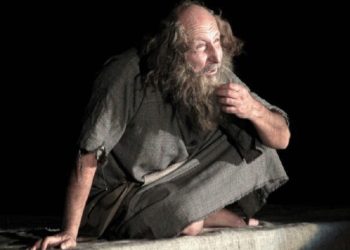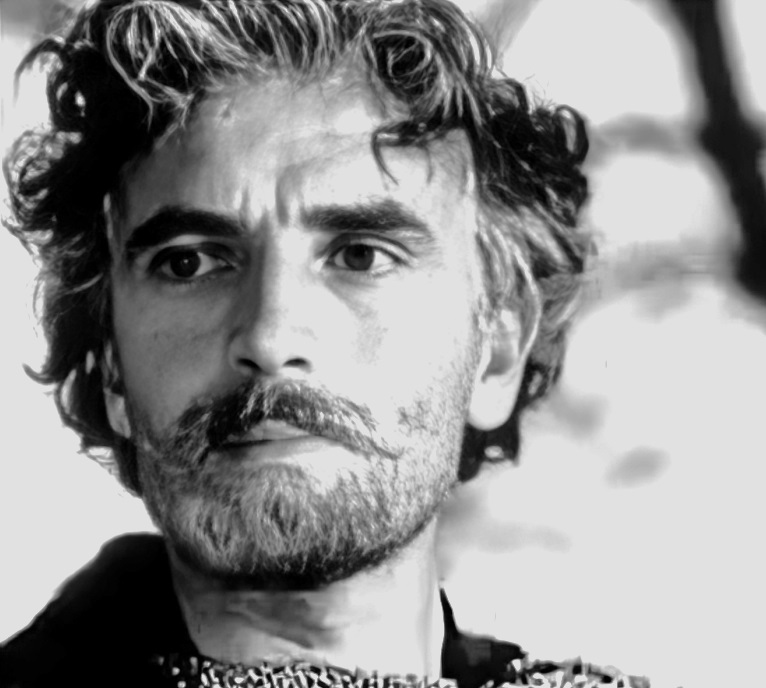
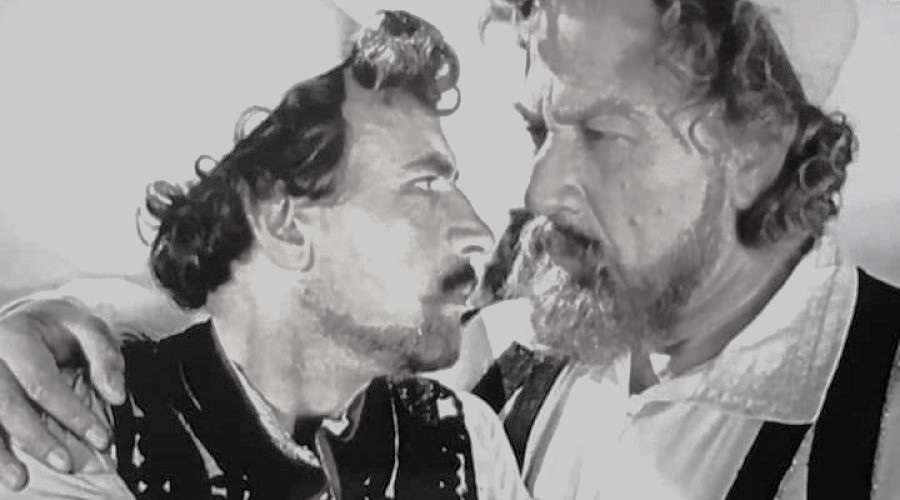
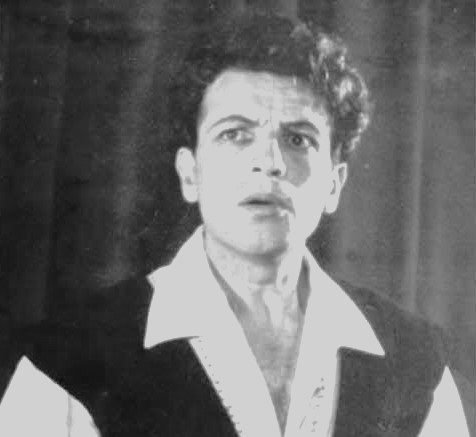
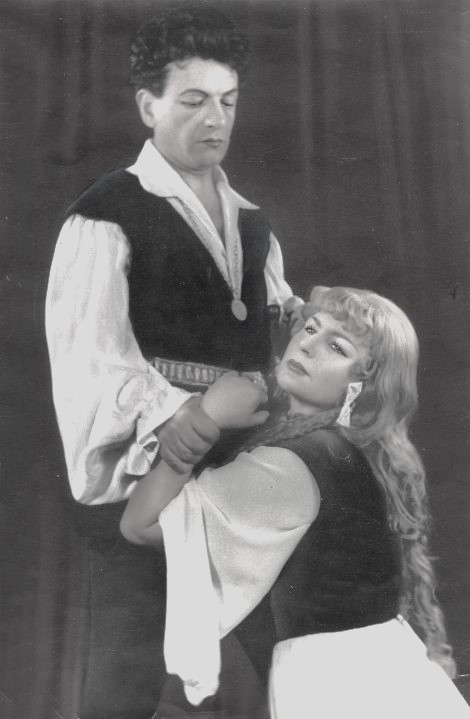
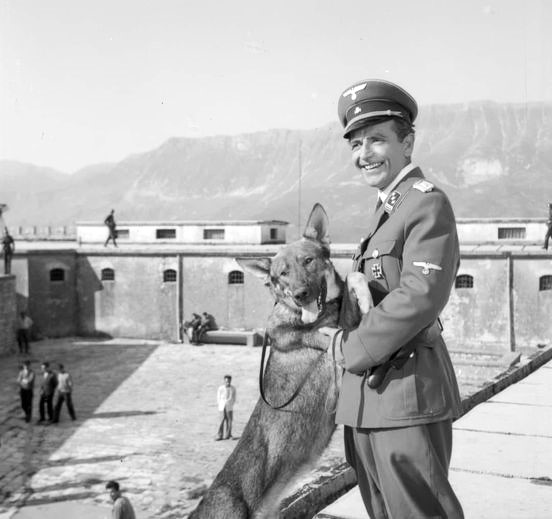
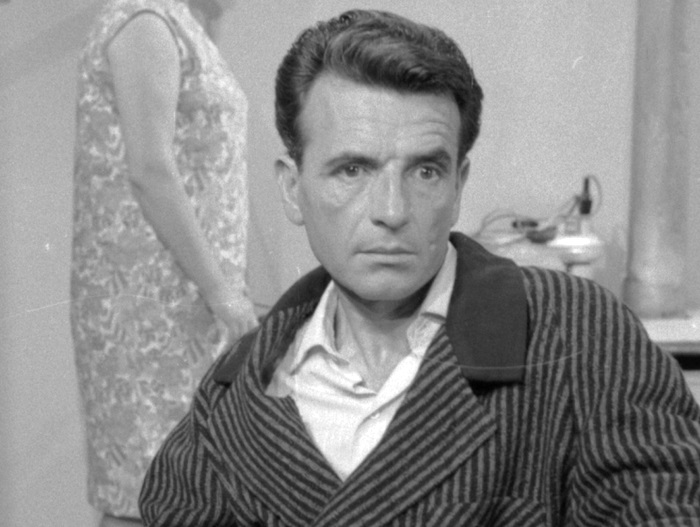
Memorie.al / In the sad farewells and the great losses of the performing arts, the premature death of the distinguished artist Naim Frashëri is undoubtedly among the most painful. He passed away on February 18, 1975. It was a severe blow to the performing arts – above all, to a potent artist who had dominated the stage with leading roles from both world and national dramaturgy for 20 consecutive years, most notably with Shakespeare’s Hamlet. Today, we pay homage to this great name of the Albanian theater on the anniversary of his passing.
“During the night, in the early hours of February 18, Naim – troubled and in a deteriorating state of health that he did not openly show – slept alone. He woke up several times because he had discomfort and pain,” his sister recalled. In the morning, he did not get up to go to work at the Institute. Violeta, his wife, called out to him: ‘Get up Naim, it’s late!’ When she approached him, she saw with horror how he had curled up, his hands clenched from an extraordinary strain. He showed no signs of life. He died from a massive seizure, without disturbing anyone.”
It was February 18, 1975. Outside it was cold, and a slight, chilling wind blew. On February 19, the newspaper “Zëri i Popullit” (The People’s Voice) published the obituary. (A short time later, a long article was also published, which included this sentence: “Quiet, you lilliputians, before the brightest voice and figure of Art, Naim Frashëri!”).
A state commission was established to organize the funeral ceremonies. Homages took place in the hall of the Executive Committee from 9:30 to 10:00 AM. The procession to the cemetery began at 10:00 AM. Naim Frashëri’s funeral was a public manifestation; people flooded the doors of the Executive Committee to pay their respects and mournfully follow his departure…!
Along the route where the funeral passed, followed by thousands upon thousands of citizens, workers from various enterprises could be seen along the boulevard, having left their work to see off the artist. The farewell speech was delivered by Minister Thoma Deljana. The burial was accompanied by funeral marches and three volleys of gunfire from a squad of riflemen…! A great pain and loss for art! Yet, in a way, the “People’s Artist” was “killed”; he was brought to an early grave. And here is why.
The beginning of the 1970s was a terrible time for those who experienced the National Theater. A stifling climate was created – a toxic spirit among actors that affected not only the level of art but also the further progress of the institution. Naim Frashëri was one of the victims, one of the “silent heroes” of this war.
By 1970, he had achieved everything: high titles, “People’s Artist,” “Hero of Socialist Labor,” deputy, and Party Secretary of the National Theater. Yet, he was not a favorite of the regime. He was an artist of great dignity and unparalleled courage. He did not compromise. Mediocre people wanted to “bring him down” because they could not endure his brilliance. For this, they slandered him, backed by support from “above.”
Under that regime, one could get into trouble for two things: agitation and propaganda, or moral issues. They could not catch Naim on the first, so they exploited his stage charisma, his many performances and partners on stage, and the malice fed by immoral people. They slandered him until they killed him spiritually. He requested his resignation from the theater troupe to go to the Higher Institute of Arts as a lecturer. His life was tied to the stage of the National Theater, but the scoundrels forced him out.
Naim Frashëri had openly criticized the poor quality of the plays being staged, the dilettante commitment of some actors, and political misuse. “I believe,” Naim wrote, “that the Central Theater should not turn into a laboratory for weak works. That work should be done outside the theater.” In the 1960s, after the removal of the foreign repertoire, a series of schematic works were staged at the National Theater, suffocating it. To be highlighted were the works of Fadil Paçrami, which came one after another every season. Mediocrities!
The clash with Paçrami was intense, but Naim was brave and bold. When Paçrami told Naim: “It would be better for you to retire,” Naim replied: “You should better retire yourself, for you have reached the age – you’ve even become a grandfather!” He was courageous. At the National Theater, when the class struggle inspired by the dictator Enver Hoxha intensified, Naim stood up for Ilia Shyti when they wanted to expel him because his brother had escaped the country!
Naim also preserved the reputations of talented actors Sandër Prosi and Prokop Mima when people began to gossip about their “unclear past.” He became a shield for the young actor Bujar Lako when they wanted to remove him “for biographical reasons.” He associated with young actors Bexhet Nelku, Robert Ndrenika, and Timo Flloko when the “shadows” of biographical analysis fell upon them. Naim was and remained a great man, regardless of his party affiliation.
From his protection of the “declassed,” those who had “stains on their biography,” and from his manhood in meetings – where he would even talk back to important Party delegates – we are convinced he was an honest man, the embodiment of the best social virtues. His personality was not defined by political beliefs.
Drita Pelinku, the distinguished actress and his partner in several roles, wrote of him: “He left the Theater before the play ‘The Fisherman’s Family’. This departure broke Naim’s wings. The departure killed him. When he finally came to play ‘The Fisherman’s Family’ for a television recording, he was a silent man carrying a drama. He could not live without the stage…”!
Meanwhile, Ilia Shyti said: “The incompetent found the opportunity to engage in gossip, but there was also the envy of the talented, professional ambitions that manifested in the theater in one form or another.” Agim Zajmi concludes: “After numerous party meetings, where he was attacked by ‘devout communists’ and where his entire creativity was questioned, Naim became deeply troubled. It was a great sorrow.”
“The theater in those times became very difficult,” recalls Pirro Mani. “Naim left, and I left a year after him. Over the theater loomed the Executive Committee, the Ministry of Education and Culture, the Ministry of Internal Affairs…! It was a stifling atmosphere…! In this heavy ideological and spiritual state, amid a great wave of gossip, Naim saw it as necessary to leave. It was a psychic shock. He left at the peak of his artistic maturity; the theater needed artists like him.”
Naim performed his work as a lecturer with great passion, sacrificing everything from his experience as an actor. Naim smoked a lot, often cheap cigarettes…! His fingers were yellowed from nicotine. His lungs were in pieces and his cough troubled him constantly.
“In his final years, Naim felt constant pain,” recalls his sister Sofo. “From time to time, he suffered from pancreatic crises. First, our mother died, whom he loved very much. ‘I think I have a pancreatic issue too,’ he would say. And indeed, he died from this disease, acute pancreatitis, four months later. He died at home; they didn’t even realize it.”
“Naim died poor,” said director Esat Oktrova, “both as a man and as an actor; he was like a silent volcano.” The artist, who dedicated his life to the theater, embodying over 100 roles on stage and screen for 35 years, finally experienced his own personal drama with a tragic end.
Naim Frashëri remains one of our most prominent stage actors, honored – besides the titles “People’s Artist” and “Hero of Socialist Labor” – with the First Class Republic Prize, the high title “Honor of the Nation,” and recently, the title “Honorary Citizen” of Përmet./Memorie.al