• Rreth Nesh
  • Kontakt
  • Albanian
  • English
Monday, August 3, 2026
Memorie.al
No Result
View All Result
  • Home
  • Dossier
  • Interview
  • Personage
  • Documentary
  • Photo Gallery
  • Art & Culture
  • Sport
  • Historical calendar
  • Others
  • Home
  • Dossier
  • Interview
  • Personage
  • Documentary
  • Photo Gallery
  • Art & Culture
  • Sport
  • Historical calendar
  • Others
No Result
View All Result
Memorie.al
No Result
View All Result
Home Interview

“Before parting from life, Martini burned all the correspondence he had with the college and with Father Zef Valentini, since…” / The testimony of the author of the documentary “Martin Camaj, the Irreplaceable”!

“Kur Martin Camaj u nda nga jeta në mars të 1992 në Mynih, në vendlindjen e tij, në Temal, sipas riteve parake, nisi ‘gjama e burrave’, për birin që…”/ Refleksione të shkrimtarit të njohur
Studimi i panjohur i Prof. Martin Camaj: “Asht për t’u habitë se si Noli e Konica, pa qenë gjuhtarë…”/ Kumtesa e mbajtur në 60 vjetorin e gazetës “Dielli”
“Kur Martin Camaj u nda nga jeta në mars të 1992 në Mynih, në vendlindjen e tij, në Temal, sipas riteve parake, nisi ‘gjama e burrave’, për birin që…”/ Refleksione të shkrimtarit të njohur
“Kur lexoja ‘Gjenerali i ushtrisë së vdekur’, ndjeja praninë Hemingway-t, ashtu sikurse vite më vonë, praninë e Ungaretti-t, në poezinë e Martin Camajt…”/ Refleksionet e shkrimtarit dhe gazetarit të njohur
“Për atë që bëri për Kosovën, si ministër i Arsimit në qeverinë Vërlaci, ku dërgoi 200 arsimtarë, ai meriton monument në Prizren apo Prishtinë…”/ Refleksione mbi kontributin dhe veprën e Ernest Koliqit
“Poeti Kombëtar, At Gjergj Fishta, botoi nji ode shqip të At Valentinit, për nderim t’Shtjefën Gjeçovit, martirit t’ides kombëtare…”/ Refleksionet e studiuesit të famshëm, për korifenjtë e letrave shqipe

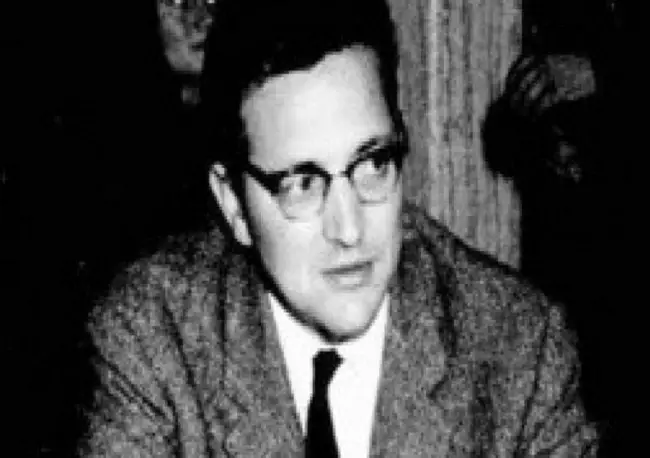
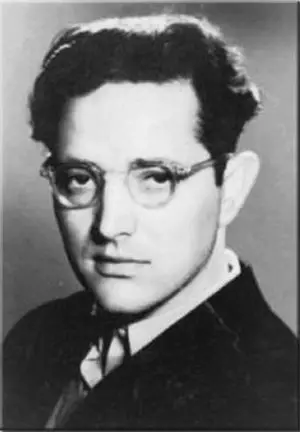
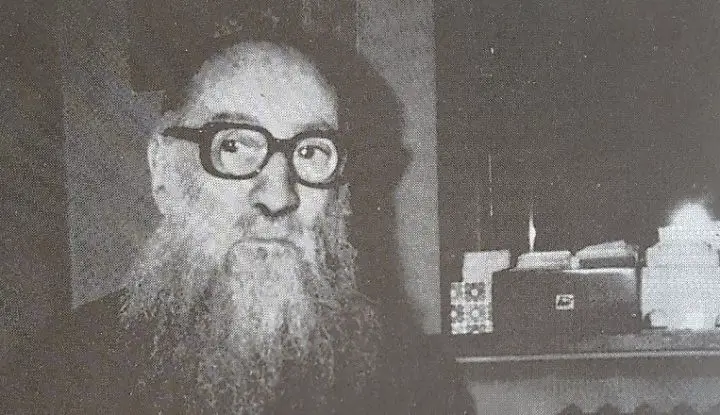
Memorie.al / “My dear Albanian friends and brothers, intellectuals, artists, and all the Albanian people, my greetings are directed to all of you. I am immeasurably happy that you have decided to evaluate my work: this evaluation brings us closer. May you have the courage to place me in your ranks? Although separated for half a century, I am yours and you are mine. Martin Camaj!” These were the last words Martin Camaj said during a phone call from Munich to Albania, before passing away.

Martin Camaj was the one who organized the Albanology department as an interdisciplinary field in Munich, and moreover, he ensured its continuity. His academic and professional career in Munich can be summarized in three phases: scholarship recipient, private lecturer with teaching authorization in Albanology, and university professor in Albanology (1971-1990).

The documentary “Martin Camaj, the Irreplaceable,” with screenplay and direction by journalist Tefta Radi, speaks about this, and about Camaj as a person. In an interview, Ms. Tefta Radi discusses the work she did to produce this documentary, from her visit to the house where Camaj grew up in Temal, to interviews with Albanologists and his former students.

Radi calls for attention to be paid to such figures, so that their contribution is recognized by all Albanians. The documentary was assisted by Agim Kuri as cameraman, editing by Gjergji Pano, musical composition by Kozeta Rafti, and mixing by Ermal Bardhi, together with Klodi Kadillari, who is also the youngest actors, having staged the scene of Martin Camaj’s meeting with Erika Camaj.

Gjithashtu mund të lexoni

“When my mother went with my brother to send food to my father in prison, a man from Elbasan told him; uncle, take that bride, don’t leave her hanging around here, because Dauti has been gone for ten days…”/ The sad story of the lawyer from Peqin

“I was marking Messi and speaking Italian to him, I asked him to exchange shirts at the end of the match, but he told me…”/ The rare testimony of the former red and black defender, who played against the Argentine legend

Ms. Radi, what prompted the making of this documentary?

The reason for making this documentary was the presentation of the documentary I had made about Migjeni in Munich, “Migjeni, and This Hurricane.” The documentary was presented with the participation of a large audience, among who were representatives of Munich’s Albanology department. The interest of Professor Bardhyl Demiraj and the translator Hans-Joachim Lanksch, who entrusted me with the responsibility to produce a documentary about Martin Camaj, was key.

What sources did you work with?

I utilized all possible sources: the State Archive in Munich, the Faculty of Albanology, and the Camaj family archives. Here I would highlight the extensive correspondence Camaj had with personalities of the Albanian diaspora, from Ernest Koliqi to Father Zef Valentini, who was once the rector of the “Liceu i Kolegjit Saverian” (Saverian College Lyceum), where Camaj studied for 11 years. He is the key witness confirming Camaj’s studies at this lyceum.

A lyceum where Luigj Gurakuqi, Faik Konica, and many other national personalities had studied, a lyceum where the Albanian language was introduced for the first time, and why it was the end of the 18th century, since as the well-known researcher Vili Kamsi says: “In Albania, the entire world’s languages were studied, but not the Albanian language itself.” This lyceum, as much religious as it was humanistic, influenced his formation.

What period of Camaj’s creative work did you cover?

Camaj has an interesting history. He studied at the Saverian College Lyceum until 1946, then it was closed by the communist dictatorship and he worked as a teacher for two years in Prekal, even though he was from Temal, a deep region of Dukagjin. Later, he fled the country and began his studies in Munich. I worked with his diplomas; I interviewed former students and colleagues, distinguished Albanologists, such as Herman Ölberg, 91 years old.

What new facts do you bring?

The facts about the status of a political asylum seeker, a status which Martin Camaj endured, are very interesting. He suffered greatly because his work was not published and never recognized in Albania, but was only published after the years of democracy. It was a wound that he did not get to reap the fruits of his labor, being the author of many, many works of different genres and styles.

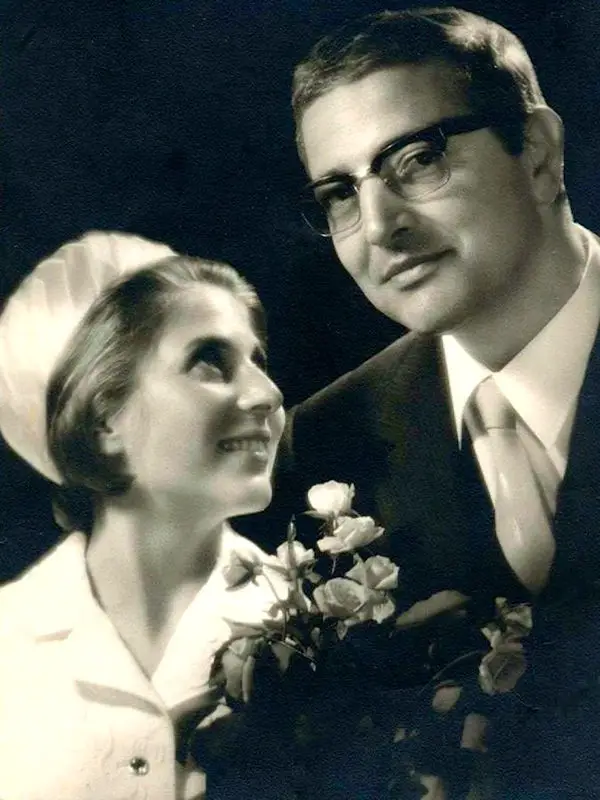
Erika Camaj states that: “I saw Martin cry, I saw many tears in his eyes. I saw a man who was never discouraged, even though his paths were blocked, but who worked and wrote hard even under the status of an asylum seeker. Although it was positive that Martin created freely, had he been in Albania, his mouth would have been shut, like many other writers.”

How do his colleagues or former students remember him?

Ölberg recounts in his interview the accidents that happened to Camaj due to his political status, at various conferences outside Albania. According to him, incidents were numerous; for example, in Arbëresh (Italo-Albanian) communities, it was a condition that either the Albanian side or Camaj had to be present.

Meanwhile, his student, Kristina Körner, a director at the United Nations Departments, expresses that: “Martin preferred to give way to his colleagues, because he respected people, Albanian scientists, intellectuals; he had nothing against people, because he understood that the injustice was done by the system.”

Peter Bartl, another distinguished Albanologist, says: “Martin Camaj made that small Albania become so big in my eyes.” Bartl highly values Albania; surprisingly, in his house, I found many symbols of our nation: the flag, books in Albanian, and many stories that connect him to Albania. Erika Camaj confirmed to me that; “Two years before he died, Martin Camaj burned all the correspondence he had with the college and with Father Zef Valentini.”

According to her, everything remains an enigma. She says; “Had I been with him, nothing would have ended up dissolved in fire, because those were very valuable documents. Camaj was outside clichés, he was himself, he was the man who tried not to do what others had done, but to always search.”

Did you film in his birthplace, in Temal?

My persistence to film at Martin Camaj’s house in Temal, to travel 13 hours and cross four or five mountains, was great. I managed to do it, I can even say I surpassed the men; this shows that we women are strong (laughs). The Camaj family house, although declared a cultural monument, has not been maintained; it is crumbling day by day.

I was extraordinarily impressed by the children of that area; I was impressed by Olivia, two years old in Temal, to call her a doll, no, no, and a fairy is not enough for me. Together with Moris, I brought Olivia to stage Martin’s early childhood. I cast Moris in the role of Martin when he was herding livestock, a child so beautiful, with blue eyes and so intelligent that I never had to repeat a scene twice, that’s how intelligent that child was. / Memorie.al
ShareTweetPinSendShareSend
Previous Post

“The virtuoso musicians, the Starova brothers, products of the most famous Italian school, were highly sought after in the luxurious venues of Tirana, where the fanatic communists entertained themselves...”/ The testimony of the former Spaç prison inmate

Next Post

“In the Espionage Office in Ioannina, where Dhimo Duka, originally from Senica of Delvina, was working, when the major asked me why there were no more escapes from Albania, I...”/ The depositions of Braho Beqo Emini, “Gjoksi”

Artikuj të ngjashëm

“When Haxhi Gora communicated to us; ‘The Presidency of the Assembly did not spare your lives, today at midnight, the rifle platoon will execute the decision for your four comrades’, we…”/ Testimony of the former prisoner of Spaç
Interview

“When my mother went with my brother to send food to my father in prison, a man from Elbasan told him; uncle, take that bride, don’t leave her hanging around here, because Dauti has been gone for ten days…”/ The sad story of the lawyer from Peqin

July 31, 2026
“I was marking Messi and speaking Italian to him, I asked him to exchange shirts at the end of the match, but he told me…”/ The rare testimony of the former red and black defender, who played against the Argentine legend
Interview

“I was marking Messi and speaking Italian to him, I asked him to exchange shirts at the end of the match, but he told me…”/ The rare testimony of the former red and black defender, who played against the Argentine legend

July 26, 2026
“The young boy, a brigade member in Lukovë, with a communist card in his pocket, went to the internment camp in Savër of Lushnja to look for the girl he recognized from the operation…” / The shocking story and the meeting after 25 years.
Interview

“Qirjako Mihali, as director of the Treasury, refused to allocate a few gold grams for a tooth of Vaçe Zela, Mehmeti and Manushi supported him, but I stood up…”/ The rare testimony of the former member of the Politburo

July 16, 2026
“At 12 o’clock at night, together with a cashier and the chief of police of Laç, we opened the safe and filled 11 bags with lek…”/ The rare testimony of the former director of the Kurbin Bank branch
Interview

“At 12 o’clock at night, together with a cashier and the chief of police of Laç, we opened the safe and filled 11 bags with lek…”/ The rare testimony of the former director of the Kurbin Bank branch

July 13, 2026
“The young boy, a brigade member in Lukovë, with a communist card in his pocket, went to the internment camp in Savër of Lushnja to look for the girl he recognized from the operation…” / The shocking story and the meeting after 25 years.
Interview

“They mostly used men to spy and when they arrested them, they would certainly take the women, torture them, but also to…”/ The shocking testimony of D.B., a former political victim

July 10, 2026
“Albania was the only country in Europe where there were more Jews at the end of the war than there were at the beginning, and this happened because Albanians, both in Kosovo and…”/ Testimony of Prof. Moshe Landsman
Interview

“Albania was the only country in Europe where there were more Jews at the end of the war than there were at the beginning, and this happened because Albanians, both in Kosovo and…”/ Testimony of Prof. Moshe Landsman

July 2, 2026
Next Post
“In the Espionage Office in Ioannina, where Dhimo Duka, originally from Senica of Delvina, was working, when the major asked me why there were no more escapes from Albania, I…”/ The depositions of Braho Beqo Emini, “Gjoksi”

“In the Espionage Office in Ioannina, where Dhimo Duka, originally from Senica of Delvina, was working, when the major asked me why there were no more escapes from Albania, I...”/ The depositions of Braho Beqo Emini, “Gjoksi”

“Historia është versioni i ngjarjeve të kaluara për të cilat njerëzit kanë vendosur të bien dakord”
Napoleon Bonaparti

Publikimi ose shpërndarja e përmbajtjes së artikujve nga burime të tjera është e ndaluar reptësisht pa pëlqimin paraprak me shkrim nga Portali MEMORIE. Për të marrë dhe publikuar materialet e Portalit MEMORIE, dërgoni kërkesën tuaj tek [email protected]
NIPT: L92013011M

Na ndiqni

  • Rreth Nesh
  • Privacy

© Memorie.al 2024 • Ndalohet riprodhimi i paautorizuar i përmbajtjes së kësaj faqeje.

No Result
View All Result
  • Albanian
  • English
  • Home
  • Dossier
  • Interview
  • Personage
  • Documentary
  • Photo Gallery
  • Art & Culture
  • Sport
  • Historical calendar
  • Others