

By Erald Kapri
Part One
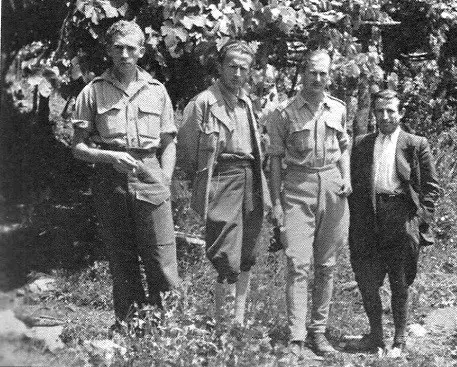
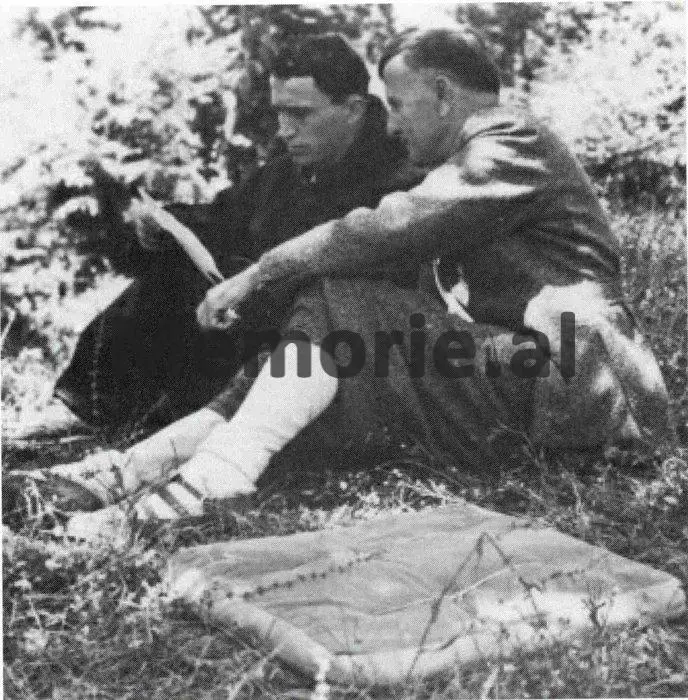
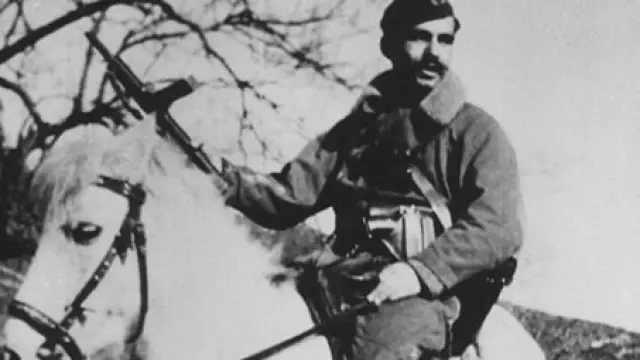
Memorie.al / The liberation movement of Gani Kryeziu and his brothers in the Second World War in Albania was among the most powerful in the North of the country, so much so that the British expressed a rare admiration and supported it. At its head were the brothers Gani, Hasan and Said Kryeziu. After the Italian occupation, they organized the anti-fascist resistance and then the armed war against the German occupiers. Gani Kryeziu, the head of the movement, with the help of the British Julian Amery and the coordinator, Oakley Hill, began the war against the Italian occupier as early as April 1941, in cooperation with Abaz Kupi, Mustafa Gjinishi, Muharrem Bajraktari, Mehmet Ali Bajraktari and others, but later was forced to withdraw because Germany began the occupation of Yugoslavia. The brothers Gani, Hasan and Said Kryeziu were arrested by the Germans and imprisoned in the concentration camp in Zemun.
Later, they were handed over to the Italian authorities, who interned them in Ventotene of Italy for about two years. In December 1943, they would escape and return to Gjakova. There they began the organization for the uprising against the German occupiers, came into contact with the British Peter Kemp, then also with Hibbert, for a major military action in Kosovo and in Northern Albania.
Gani’s battles, with about 1500-2000 fighters against the Germans, impressed the British. They then assigned a British mission to him, headed by Major Simcox, who documented very important battles against the Germans in the Highlands of Gjakova and Tropoja, such as those for the capture of the chrome mines, so important for the Germans, the fighting in the region of Bytyç, etc. But the greatest battle of the Kryeziu movement was that for the liberation of Gjakova, which took place from September 10 to 16, 1944.
In this war, 170 fighters from Gani Kryeziu’s detachments fell, who even today are unappreciated. But the Kryeziu Movement clashed with Yugoslav chauvinist interests, but also with the power interests of Enver Hoxha, therefore both sides, in agreement, militarily attacked Gani Kryeziu’s forces, precisely when they were fighting against the Germans: on one side the 7th Assault Brigade of the National Liberation Army of Albania headed by Manush Myftiu and Shefqet Peçi, and on the other side, the national liberation forces of Yugoslavia, headed by Pavle Jovanović and Fadil Hoxha.
Gani Kryeziu did not want to wage a civil war among Albanians and dispersed his forces. Gani Kryeziu, the British Major Simcox, the political adviser of the Kryeziu family, Llazar Fundo, Said Kryeziu and other leaders of the Movement were arrested. Later, the OZNA forces massacred in Hereç 26 fellow fighters of the Kryeziu Movement, among them Hasan Kryeziu. The British Major Simcox worked for several months in the Kryeziu headquarters and in December 1944 drafted a complete report on their movement.
He reported to the British Ministry of War that Gani Kryeziu was sabotaged by the previous British mission of officer Hands, by not giving him aid and by supplying only the communist movement of Kosmet. But Gani Kryeziu showed great values, turning into the strongest movement in the North of Albania. It is worth noting a detail, that Said Kryeziu had lived in France as an opponent of Zog and there had also supported Enver Hoxha with money. The dictator Hoxha had no mercy for the Kryeziu brothers, considering them political opponents and enemies.
Even before the war ended, Enver Hoxha gave the order for the liquidation of this patriotic movement. He killed their friend and collaborator, Llazar Fundo. Gani Kryeziu would be imprisoned until 1952, in the infamous prison of Sremska Mitrovica, where he would lose his life in a suspicious manner. The communists would also kill four other nephews. The only one who survived was Said Kryeziu, who thanks to the insistence of the British, was extradited to Italy and then went to the USA, as representative of Kosovo in the “Free Albania” Committee founded by Mid’hat Frashëri in 1949.
THE COMPLETE DOCUMENT OF THE BRITISH MILITARY
The independent movement in the North of Albania, as part of the war of Gani Kryeziu and his nationalists, it is difficult to give a name to the followers of Gani Kryeziu. What happened to him is very important. He is a very educated man and is a true patriot in the North of Albania and who has fought the Germans, with the aim of liberating his country and at the same time, he has many credits to invite his voice to be heard at the Peace Conference. To discuss honestly about his movement, the activity and work of the leader himself, Gani Kryeziu, has been documented.
Before the Italian occupation of Albania, Gani Kryeziu had contacts with the Serbs and it is believed that he was part of a conspiracy to overthrow King Zog, but also, to take control of Kosovo that was held by the Serbs. Regarding this issue, the topic was discussed by the inhabitants, but they were never fully aware of Kryeziu’s ambitions.
I do not know anything concrete from this episode of his life, but knowing Gani Kryeziu, as I know him now, I can say with conviction that he always had at heart the interests of the Albanians of Kosovo, of which he was one of them who had suffered under the Serbian regime. It is difficult to unravel everything of this gentleman, although I was near him as a military liaison officer.
But, I make it clear, for what I report above, it is a deduction obtained from the small pieces of information I have collected. The details of Gani’s fighting, I believe are now known and even confirmed by Colonel Oakley-Hill, but I must emphasize that Gani with his brother, with a force of 4 thousand men, resisted the Italians at the time when the British were preparing for a German attack on the British Isles.
This fermented the conviction in Gani, who even though he saw entire nations that surrendered, Britain would triumph in the war, even though alone. He too, had faith that the British government would intervene to help Albania as it has done with other small nations, after the fighting ended. He knew very little about British foreign policy, which would be sacrificed for the sake of killing a few more Germans.
At this stage, this idea would not even occur to him, that Great Britain would support the communists. I can only pray and imagine the great disappointment he felt when he learned that Great Britain, not only did not ignore the fanatical policy of some organizations, but gave them continuous aid by strengthening these organizations, which were called fighting, but in fact helped them to achieve their objective, and furthermore, that they could force him to join the pro-German elements.
After resisting the Italians and Germans, for some time, Gani Kryeziu’s forces were disbanded and he with his family was forced to leave Yugoslavia after the capitulation, and later would be captured and forced to go to a concentration camp in Italy. It is very interesting when one notes that none of the “heroes” of the National Liberation Front was in that prison.
In fact, the only known person who undertook actions early, who fought with Gani and was a pro-nationalist element within the National Liberation War, was Mustafa Gjinishi, whose death, in a mysterious manner, in a recent action, has caused much shock within the other “right-wing” elements in the NLW. During his stay in prison in Italy, Gani always hoped to escape from there. With that idea, he planned the raising of a movement against the Germans.
His hopes began to have basis when his brother, Hasan Kryeziu, returned to Albania and began the movement. Using every possible means, Gani Kryeziu, his brother, Saidi, and Llazar Fundo, who was their friend, although he had been a communist, but whom openly supported Kryeziu’s ideas, escaped from Italy and arrived in Albania at the end of 1943. At that time, Major Kemp had set up a mission for intelligence purposes in Kosovo.
In his report, you find details from his discoveries, but it must be emphasized that with his immediate return to Albania, Gani immediately contacted the mission and began the resistance with the hope that there would be British aid. It is unfortunate what happened with Kemp’s activity in Kosovo, where interests and suspicions about Tito were accused (since at this time he was hated by KOSMET) since starting from these conditions, Kemp left in order not to compromise relations with Tito.
The success of Gani’s movement would have to be supported with immediate help with weapons and clothing. Kemp’s withdrawal, as well as the existence there of the British officer very pro-partisan, Hands, made it impossible for Gani to receive the proper attention and in particular material for fighting. Gani’s relations with KOSMET were very good, although his political ideas did not allow him to join the forces of the National Liberation Front or with KOSMET.
Nevertheless, he was quite prepared to fight the Germans in cooperation with KOSMET. This did not suit our staff there, headed by Hands, who sought to be the main controlling force of the north. Therefore, they refused to supply Gani Kryeziu with weapons, who insisted several times to discuss the matter with the British officer Hands, but he completely ignored the two letters written by Gani.
In the reply to the third letter, he told Gani that he would participate in a conference and that in no case could he discuss the issue of military aid, since he had received orders from Cairo “to support the partisans.” The German attack of March 1944, against the British mission and the partisans, gave Gani Kryeziu the opportunity to have British support.
The British officer, who was left in the mud by KOSMET, was informed that Gani Kryeziu would secure his life and a safe place. But he ignored this message and his mission went to the south of the country, to escape this situation.
Reports from some of our liaison officers, that the people in the north were “reactionaries” and that they would never fight the Germans, signed the death of Gani Kryeziu’s ideas for a great uprising against the Germans in the spring of 1944. Gani played a great role in presenting the real situation and received moral and material support from Great Britain, and his movement would be stronger than the NLF, but not as long as officer Hands was in the north.
The aid that Gani received was small and always late in time. During this time, I have been working in the area of Dibra and I was never convinced with the idea that there is no hope for inciting fighting in the north. This was based on the conversations I had with many officers, who had spent quite a lot of time in that region and I immediately expressed the desire to set off to the north, in order to clarify the situation.
It was emphasized that I would not be spared in this aspect considering that I had no doubts about the reports of other officers who had been in the north. But, for three months, from March to May 1944, there was no British military mission in the north, beyond the river Drin, therefore it was not understood what was happening there. Gani Kryeziu continued to work to create his pro-British movement and had begun activities by gathering a large number of supporters. / Memorie.al
Continues in the next issue