
Part One
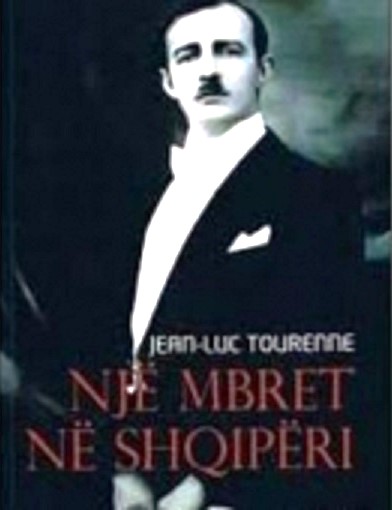
Memorie.al / “A King in Albania” is the title of the novel published by Jean-Luc Tourenne, brought into Albanian by the “Uegen” publishing house with the translation of Dashnor Kokonozi. The author is a Parisian psychoanalyst. His nature as an unusual traveller drove him to visit Albania in 1985 as well. There, he learned about our history, and then carried out an extensive research work on our country. “This is a novel. Some names have been changed, others not. The historical facts and most of the events actually happened; some are the fruit of the imagination. And such a thing, I believe, is the privilege of historical novels,” he writes in the introduction to the book. The excerpt we publish below is taken from it…
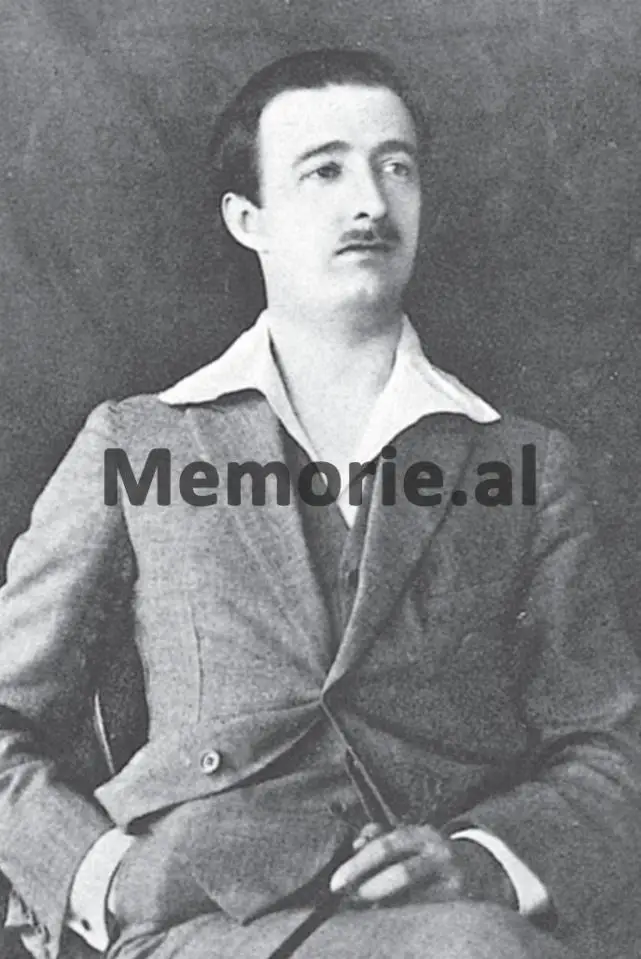
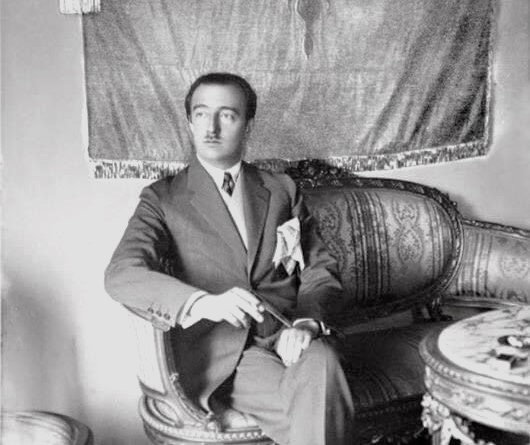
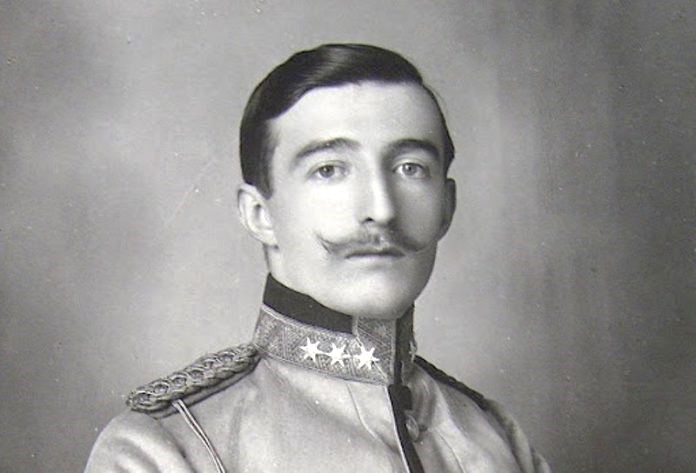
Don’t call me Mister Colonel. We’re not at the front. I am Albanian. My name is Ahmet Bey Zogu.
– You don’t foresee a military career?
– I don’t foresee anything beyond the next twenty-four hours.
– What about you?
– Me? I will be King.
I burst out laughing.
– Excellent idea! – I told him.
A faint smile formed on his face. He filled two glasses and raised his. We clinked glasses to his kingdom. On November 11, 1916, an Albanian delegation, which included the young colonel, was present in Vienna, like many others, to attend the funeral of Emperor Franz Joseph. Exhausted by the unending war, the emperor had decided to die right in the middle of it. Had he lived, there would never have been any delegations.
I would have ended that December night in some cabaret, accompanied by two artillerymen; I would have lost myself in the arms of some blonde and died on the field of honour six months later. As soon as the ceremony was over, Ahmet Bey Zogu was ready to return to his homeland, a narrow strip of land on the western coast of the Balkans, about which I knew nothing.
But leaving Vienna proved difficult. It all started with futile justifications. The war had disrupted transport routes, the railways were unsafe, and the Balkans was on fire. Then, in some high offices, they began to speak to him of obscure diplomatic reasons. Finally, they let him understand that his leaving Vienna was out of the question. If he was causing this much bother to the Austrian Empire, he must have been much more than a mere colonel.
Ahmet Bey Zogu was born in Burgajet, among the mountains of Mat, in Northern Albania. He was the heir to an old tribe of warlike chieftains, whose names I still mix up to this day. Zogu the Great, Zogu the Small, Xhelal Pasha Zogu, all powerful men of a highland feudalism that had continued since the fifteenth century.
In that modern Middle Ages that ruled in his homeland, Ahmet Zogu grew up and became a tribal leader when his father died. He had been only thirteen years old. – I haven’t had many opportunities to show what I’m capable of, – he confessed to me.
Ahmet completed his studies at the French Lycée of Galata Serai, and then attended officer courses in Manastir. Perhaps not long enough to justify Austrian support, but enough to lead men in war, something he would later not lack the chance to do.
– That doesn’t bring us much closer to Vienna, – I said impatiently.
He filled my glass again.
– You keep interrupting me…!
– I tend to jump ahead, forgive me.
– A habit of the cavalry! That’s the advantage infantry has over cavalry. It prepares, waits, then strikes at the right moment.
I didn’t want to get into a discussion of strategic matters, but it had been three years that the infantry had no longer been waiting for anything, perhaps not even for a change of position, there where it sat, in Galicia, in the mud of the trenches. To strike at the right moment, first it would have needed to have its fate in its own hands, to defy the cold, the rain, the lice, and keep its head safe from the deadly game of shells.
I blamed his newly acquired rank for his lack of understanding of this war they called modern. Perhaps he had been fed on images from the pages of history, where one still died amidst glory, dressed in white and covered in gold. Time would pass before I understood that he reasoned like a highlander, and that a man who lay in ambush on the bare rocks of Mat was worth ten others on horseback.
Ahmet continued his story. Rebellious, independent, he had long been used to hearing that he was cut out to climb very high. As a child, he had walked the family estates alongside his father. He was greeted and cheered. In the years when he was away from his homeland, these cheers did not fade from his memory. Vaguely, he remembered a distant childhood event that spoke of his ties to his land. One day, as they were passing through a village, a crowd of highlanders rushed upon them.
Ahmet saw his father pull out his pistol, ready to protect him. The child thought that death lay before them. He remembered the livid faces, women raising their hands to the sky. And as the horse reared up, the crowd began to shout. Xhelal Pasha Zogu put his pistol back in his belt and brought the child close to the villagers. They took him and lifted him high, carrying him on their shoulders. It was the first time the heir of the tribal chieftain had met his people.
– Perhaps, – he resumed, – it was precisely that day that I understood what those people meant to me.
His expression struck me as amusing, but after all, it befitted a King…!
– It is a debt, a debt you incur from birth, and no servitude can wash it away.
– He knows nothing else, – added Ahmet, – beyond paperwork, he knows nothing.
Ahmet, then, continued his dry account. Besides the Ottoman language and customs, during his stay in Constantinople he had also acquired other values. There he had received his first lessons in politics and diplomacy, and above all, he had learned strategy – something completely different from the instinctive warfare his people in Albania had waged for many generations. Being close to the Young Turks movement, he had felt the tremor that threatened to topple the empire.
He let nothing escape him, he took advantage of everything he saw, everything he read, and he sought to learn from everyone, turning his stay there into a tool for understanding the world.
But Zogu’s people were poor. When his money began to run out, the Albanian guards of the Sultan’s palace began to deduct something from their wages to allow Ahmet to continue his studies. He would never forget this for the rest of his life.
Without the help of those anonymous people, those emigrants he had once despised because they had chosen to serve the Turks, his ambitions would have been ended by lack of money.
While he continued his schooling, the Ottoman Empire disintegrated little by little. The Albanian front opened in 1909, before the Young Turks’ reforms could reach the country. A year earlier, Bosnia-Herzegovina had risen against the empire and won its independence. An expedition was sent against Albania, pushing the highland tribes toward Montenegro, their centuries-old enemy. Fifty thousand Ottoman soldiers trampled the country and established order in the Turkish way… In Constantinople, they thought the danger had passed.
But in 1911, when they had been weakened by wars on many fronts and while Italy was nibbling away at their territories in Libya, Albania again began to slip from their control. Less than two years before the start of the First World War, the Balkan countries set aside their ancient quarrels and united against the Ottomans.
The region went up in flames. Caught between two fires – the war against the Turks and the predatory ambitions of its neighbours – Albania felt more threatened than ever. Ahmet was no more than seventeen years old, but he sensed that his hour had come. There are certain crucial moments in everyone’s life, moments that must not be allowed to slip away even when you find yourself in the most wretched state, – he told me, staring at his empty glass.
Then he added: – It’s just that most people don’t know how to see them. Otherwise, they prefer to let them pass. Ahmet had returned to his homeland. There, war was wreaking havoc – a war that was said to be waged to win back independence lost in the tides of centuries. The leader of the Albanians in exile, Ismail Qemal Bey, had called for taking up arms against the Turks, but also against the Balkan countries that had again decided to divide the land among them.
At the head of his men, Ahmet Bey Zogu clashed with the Serbian and Montenegrin troops, better armed and trained than the highlanders of Mat. But what ultimately made the difference was the determination of the Albanians. Those men, raised in the spirit of chieftains, known as nationalists and unsubdued predators, fought blindly for honour, for their given word.
– They don’t know fear, – Ahmet specified with not a hint of pride. – It is not part of their culture. I remained hesitant for a few moments, unable to understand whether the colonel was embellishing the events he recounted or whether this unknown people truly was the Sparta of the Balkans. Today, drawing on my Albanian experience, I believe I have understood that it is not so much culture as the lack of it that makes them not know fear.
… – Until that moment, I was merely the son of my father. Ismail Qemali and other men respected our tribe, because we were the first to rise against the Turks. We were a symbol, but outside the history of my family, I was not known as someone. At least, not before I had known the fire of weapons. So, then, at the age when the sons of Viennese families learn to waltz, Ahmet Bey Zogu entered the pages of History for the first time. I learned no more about his role in the events that followed Independence, nor about the fate of that country in the Balkan turmoil.
… We returned to the year 1916. At the beginning of the year, the Austrian army had entered Albania to restore order after fresh disturbances. Trampled by the Serbs, controlled by the French, placed under the yoke of Esad Pasha, this small country struggled to recover after the successive regimes that had ruled it following the declaration of Independence.
Vienna cast enticing glances at Ahmet Zogu, whose future seemed promising.
It was a matter of respecting the country’s neutrality, restoring sovereignty, appointing an independent government. The young nineteen-year-old leader grasped the empire’s outstretched hand with hesitation and fears that the country might be swallowed up again and turned into a front line for the Austrian army. He hastened to arrive ahead of the allies at the liberation of Kruja, and then created a National Assembly, where for the first time he called upon Albanians to follow him.
The Austrians had not been mistaken; they declared a state of siege in Elbasan, where the assembly was to convene. Rather than subdue Zogu by force, Vienna remained true to its diplomatic tradition and decided to summon him to Vienna and shower him with honours. After Constantinople, it was Vienna’s turn to try to win over the stubborn highlander and channel his nationalist energy into the gears of the imperial machine.
– Uniforms please women, – he specified with a touch of humour, casting a fleeting glance at the waitress who was sweeping between the tables. Memorie.al