

Memorie.al / While the Holocaust continues to occupy the minds and imaginations of writers and film directors throughout the civilized world, the Gulag – many times more terrible than the former – has remained in the shadows and almost entirely untold. Should this silence be broken? Has the time ripened for a broad discussion and exposure of what happened, and why must this be done? Voices are rightfully raised accusing the West of cultivating a memorial culture only for the Holocaust, while closing its eyes to what happened in the Gulag, the communist hell. I believe the reason for this asymmetry lies in historical reality.
The survivors of the communist genocide have not yet created a collective memory in the West. They have not yet shed enough light on their painful but heroic history. When justice is not served, it is memory that must play that role.
Tirana, 1975. At the entrance of the “Petro Nini Luarasi” high school, two “grey-suits” (a term used ironically for State Security officers before the 90s) flanked him. Their bloodless faces told him they had something to clear up with him in the principal’s office. Waiting in the office were the Party Secretary, Vasilika, and two of his “friends” – the informants. They informed him of his expulsion from school for “agitation and propaganda against the people’s power.”
– “Silence is suicide,” Klement Islami had said. “One day we will feel guilty if today we close our eyes before evil… whoever dislikes the anti-human must fight it!”
Immediately after the expulsion was communicated, the two investigators grabbed him firmly by the arms and dragged him outside.
– “I looked at the second-floor window and measured the distance that separated me from it. I wanted to throw myself headfirst and end my life before falling into their hands, but the hyenas sensed it and gripped my arms with force,” Klement told me years later. – “It’s still early; you’re going through our planer first,” they told him as they dragged him away.
In the courtyard, a “GAZ-69” awaited. That same day, his mother, father, sisters, and grandmother were forcibly interned in one of the death camps in the south of the country, in Çermë, Lushnje. Within the iron doors of the Special Investigation Unit in Tirana, communist terrorists exerted the most macabre tortures upon his young body.
They burned his flesh with cigarettes. They applied electric shocks to his ears and genitals. For days on end, they tightened his hands behind his back with irons to the maximum and left him handcuffed until he lost consciousness.
They demanded he cooperate with them. Klement never accepted. He was forged from the spirit and blood of an anti-communist family. His father, one of the few intellectuals who had completed higher studies in Physical Education in Italy, was a sworn anti-communist, while his uncle had died in prison as an opponent of the communist regime. In the neighboring cell, at the same time, they also tortured Viktor Martini, another political prisoner.
In prison, they kept him isolated for an entire month inside a concrete cell, windowless and in total darkness. Even when they moved him to a communal cell, they brought in a “Red” officer who screamed: – “Don’t give bread to the enemy of the Party! Let him rot! He doesn’t deserve its care! Long live the Party!” That communist officer, loyal to the party, was there because he had stolen from the military unit where he served.
In June 1984, I met Klement near the Kristoforidhi bust in Elbasan. The suffering in the internment camp in Çermë had stolen his youth. His blonde, curly hair had grown long and was scorched by the sun in the fields. He asked about my family and repeated his advice:
– “Don’t trust anyone easily, so you don’t suffer like I did. The psychological torture used by these ‘anti-humans’ aims to make you lose trust in those closest to you. To condemn you, they use a friend, a comrade, family, a girlfriend – the dearest people whom you naturally trust and love.”
It was lunchtime. I invited him to eat. On the way, the director of the Elbasan Psychiatric Hospital passed us by. In this hospital, Klement had been tortured for a time in a special ward where political dissidents were kept isolated. Klement began to tremble entirely from revolt. We sat at one of the tables at the back of the establishment.
– “Muçi,” he told me, “I am convinced that one day we will see these anti-humans held accountable before justice. He is one of them; he allowed them to give me an abscess in my leg.” The psychiatric hospital was well known by the city’s residents for its secret mission. Hundreds were the political prisoners who were forcibly brought there and never left.
“Abscess” was what political prisoners called the torture caused by injecting pine resin into various parts of the body, usually the legs. It created a massive infection, and often the prisoner ended up with a leg amputation.
Behind the hospital was the colony. There, dissidents, mentally and physically degraded by medications forcibly administered by doctors and nurses chosen by the State Security, were kept surrounded by barbed wire.
After calming down somewhat, Klement began to analyze the days in captivity, the “occupation of the human by the anti-human,” as he called the communist occupation. He spoke of the horrors in internment, the hard manual labor, the difficult life full of suffering, and the endless searches and interrogations.
– “Nazism,” he said, “created internment camps to exterminate races undesirable to it. Communism has turned extermination camps into the backbone of the country’s industrialization – the foundation of a slave labor system that digs canals, drains swamps, and builds factories.”
Then he described the long political conversations, head-to-head with his sisters, Isabela and Zamira. As he spoke, he motioned with his hand for me to look across the street where some of his relatives lived.
– “Even they, like the anti-humans, have disowned our entire family.”
We remained silent for a while. Klement broke the silence.
– “Let’s go! I must meet her; there’s no telling when we might see each other again.” We went near Building No. 41. His female friend lived there. We waited, sitting on the sidewalk. After a while, she arrived and, in my presence, begged him not to meet her anymore. They had threatened to fire her from her job because of her connection to him.
Klement did not speak, but pain appeared in his eyes. It was approaching six o’clock; he had to catch the train to Lushnje.
– “Let’s go,” he said. We walked in silence toward the station. It was the last time we saw each other.
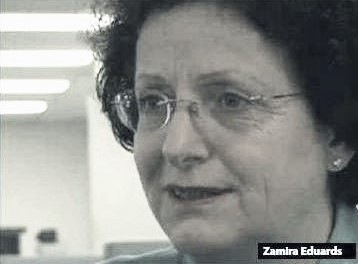
Washington, 1994. In one of the halls of the US Congress, I met Zamira, Klement’s younger sister, who, now in the free world, worked alongside Isabela for “Voice of America.” After we greeted each other and Elez Biberaj, who was with her, stepped away, the conversation turned to Klement. Zamira recounted their final moments with him:
– “We waited for it to get dark, and then we entered the water. Klement asked us to go ahead while he followed behind us. We swam all night, encouraging each other. Just a bit more! Be strong! Look, freedom is right there. From time to time, the searchlight of the border guards would fall upon us.
By dawn, we felt exhausted. I began to fall asleep. Isabela resisted more. An Italian tourist yacht spotted her. Together with Isabela, they came and found me. We looked for Klement…”
Tears would not let her continue. With her head slumped down, she sat on the marble floor, while I, deeply touched in my heart, remembered his words: “Muçi, I am convinced that one day we will see the anti-humans come before justice…!”
On that summer morning of 1984, after parting with tears of pain from his beloved parents, Klement, along with his sisters, Isabela and Zamira, set off for Saranda. Using his regular leave as a pretext to spend vacations in the coastal city, they settled in the city’s hotel.
The following evening, equipped with inner tubes and hidden behind a rock, Klement and his sisters entered the sea and began to swim toward freedom, toward the West.
After many hours of exhausting swimming, just when they thought they had reached freedom, Klement noticed that the border patrol had begun to patrol the side where they were located. Without alerting his sisters, he urged them to swim faster ahead, while he stayed behind. To save his sisters, he changed direction; he began to swim toward the south.
As he moved away from his beloved sisters, the motorboat of the “Red” criminals drew ever closer to Klement. In vain, he dived several times to hide. The criminals had approached so closely that they had discovered him. They called for him to surrender. They struck him with the bow of the motorboat. Klement did not give in. Submerged deep in the sea, he swam toward freedom.
They sought him in the depths of the abysses. They tied him with a rope and dragged him like hyenas through the waters of the communist prison. Tied like that, they paraded him around the bay of Saranda to terrorize the people. But the brave man, even when slain, radiated freedom, love, and heroism./Memorie.al