• Rreth Nesh
  • Kontakt
  • Albanian
  • English
Friday, February 13, 2026
Memorie.al
No Result
View All Result
  • Home
  • Dossier
  • Interview
  • Personage
  • Documentary
  • Photo Gallery
  • Art & Culture
  • Sport
  • Historical calendar
  • Others
  • Home
  • Dossier
  • Interview
  • Personage
  • Documentary
  • Photo Gallery
  • Art & Culture
  • Sport
  • Historical calendar
  • Others
No Result
View All Result
Memorie.al
No Result
View All Result
Home Personage

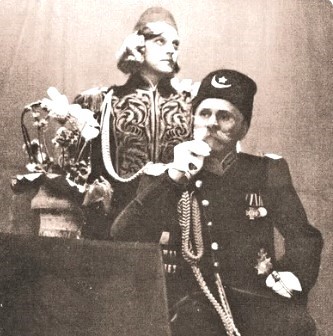
“Wearing a uniform rented in Vienna, on February 15, 1913, he arrived at the port of Durrës and later traveled to Kavaja, where he established a harem of girls…”! / The story of Otto Witte, who “reigned” for 5 days in Albania.

“Me një uniformë të marrë me qera në Vjenë, më 15 shkurt 1913, ai mbërriti në portin e Durrësit e, më pas në Kavajë, ku ngriti haremin me vajza…”! / Historia e Otto Witte që “mbretëroi” 5 ditë në Shqipëri

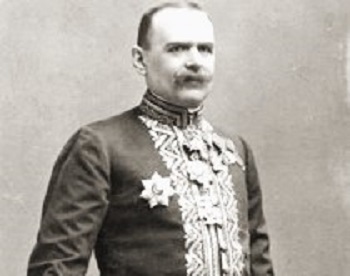
Memorie.al / If you visit the Hamburg cemetery, Ohlsdorfer Friedhof, today, you will come across the grave of Otto Witte (16.10.1871 – 13.08.1958). On his headstone, the inscription clearly reads: “Ehemaliger König von Albanien” (Former King of Albania). However, in the registry of notable people, his profession is listed as “Exhibitor” – a man who performed shows with his mobile home at Germany’s annual fairs. What is the connection between this noble title and such a peculiar profession?

“Yes, it is true: I was King of Albania for five days; a real King, with a throne, servants, and an army, as befits a King,” Witte begins in his 1939 autobiography, 5 Days King of Albania. He notes that Albania is not some remote Pacific island or a Central American republic, but a “normal country in Southeast Europe” with a population of one million.

A Tale of Two Germans

It seems Prince Wilhelm zu Wied was not the only German to lead the Albanians (Wied reigned for six months in 1914). Another German claims to have ascended the throne before him. While contemporary historical evidence in Albania is scarce – perhaps due to the phonetic similarity between the names Witte and Wied – this story is cited in dozens of European articles as one of the greatest adventures of the 20th century.

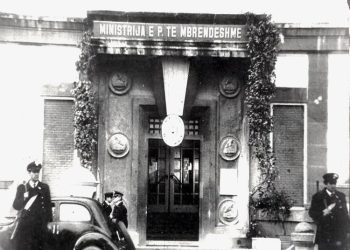
In early 1913, Albania’s fate was being discussed in the chancelleries of London, Vienna, and Paris. The Conference of Ambassadors had declared Albania an autonomous principality under a foreign prince. While the Vlora government sent appeal after appeal for a head of state, Esad Pasha was maneuvering for power in Central Albania. Amidst this chaos, one name was frequently mentioned: Turkish Prince Halim Eddine, the Sultan’s nephew. This political vacuum provided the perfect stage for Otto Witte.

Gjithashtu mund të lexoni

“The National Poet, Father Gjergj Fishta, published an Albanian ode by Father Valentini, in honor of Shtjefën Gjeçov, the martyr of the national idea…” / The famous scholar’s reflections on the giants of Albanian letters.

“When the Italian doctors insisted that his eye surgery could not be performed without anesthesia, he told them…”! / The untold story of the Old Man of Butka, who “brought to their knees” even French generals and diplomats.

Who was Otto Witte?

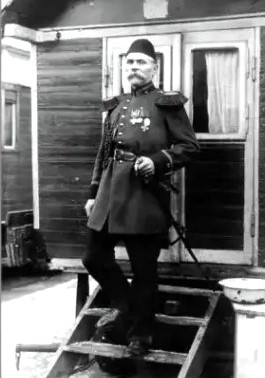
Born in 1871 in Berlin, Witte began earning money as an artist and magician at age eight. He spent much of his life as a wanderer across Europe, America, Africa, and Asia Minor, changing professions from construction worker to animal catcher and waiter. Though he had little formal schooling, he had a natural gift for languages and spoke Turkish fluently. In 1912, he joined the Turkish army, eventually rising to the rank of Major.

The Five-Day Reign

According to Witte, while in Constantinople in 1913, he met an old friend, Ismail Arsim, who worked for Turkish intelligence. Learning that Albania was waiting for Prince Halim Eddine, Witte conceived a daring plan: he would impersonate the Prince.

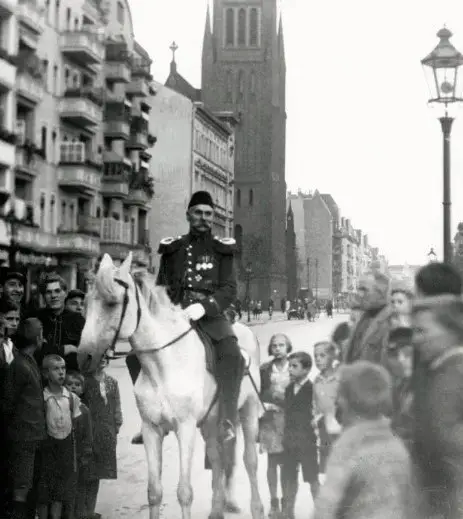
He sent two successive telegrams announcing the “Prince’s” arrival. On February 15, 1913, wearing a uniform rented in Vienna, Witte arrived at the Port of Durrës, accompanied by his friend acting as an adjutant. Due to his resemblance to the real prince and the pre-arranged telegrams, he was crowned. As a “King,” he hosted receptions, organized military parades, and was even offered a harem by his loyal subjects.

The news spread worldwide via international correspondents, eventually reaching the Sultan in Istanbul. The Sultan was baffled, knowing his nephew was actually on vacation in Vienna. When the real Prince Halim Eddine sent word from Vienna expressing his astonishment at the news from Albania, the fake monarch knew his time was up. Witte fled just in time to escape an arrest warrant from Esad Pasha, reportedly aided by the girls of the harem, and escaped by boat to Bari, Italy.

The Post-Royal Period

This story became the central theme of Witte’s later life and his fairground shows. In 1939, he published his memoirs, written by his daughter, “Princess” Elfriede Witte. He even managed to have “Former King of Albania” legally added to his identity card.

The legal battle over this addition was specific: he couldn’t use “Ex-King” (which implies a legitimate former monarch), but “Ehemaliger König” was allowed because he had technically functioned as a king under the name Halim Eddine. Witte took his “royalty” seriously; in 1957, he reportedly felt insulted when Prince Rainier III of Monaco failed to invite him to his wedding to Grace Kelly.

Whether this story is a masterpiece of historical deception or merely a wild fantasy remains a mystery that Witte took to his grave. Today, only three things remain as “proof” of his adventure: his autobiography, his identity card, and his tombstone. Interestingly, his birth date – October 16 – is the same as that of Enver Hoxha, a coincidence that only adds to the legendary nature of his story. Memorie.al
ShareTweetPinSendShareSend
Previous Post

"Whoever, for the purpose of profit in public places, employs 'çëngina' (dancing girls) or other women to attract people and places them at the disposal of clients shall be punished..." / How was prostitution penalized during the Zogist Monarchy?

Next Post

"Our torpedo boat opened fire on the Italian vessel 'Zeus – 2', which arrived on a reconnaissance mission, equipped with a motorboat, machine guns, and radar equipment..." / Secret documents uncovered regarding the incident off the coast of Sazan, April 1970.

Artikuj të ngjashëm

“The National Poet, Father Gjergj Fishta, published an Albanian ode by Father Valentini, in honor of Shtjefën Gjeçov, the martyr of the national idea…” / The famous scholar’s reflections on the giants of Albanian letters.
Personage

“The National Poet, Father Gjergj Fishta, published an Albanian ode by Father Valentini, in honor of Shtjefën Gjeçov, the martyr of the national idea…” / The famous scholar’s reflections on the giants of Albanian letters.

February 11, 2026
“In his book ‘Six Months of History of Albania’, the French Colonel Dekon accepted Sali Butka’s proposals for the proclamation of the Albanian Self-Government of Korça and…”/ Reflections of the renowned researcher and historian
Personage

“When the Italian doctors insisted that his eye surgery could not be performed without anesthesia, he told them…”! / The untold story of the Old Man of Butka, who “brought to their knees” even French generals and diplomats.

February 11, 2026
“Ali Xhunga, the chief investigator at the Church Prison in Shkodër, when he found out that no one came to my meeting and we had no food, he told me…”/ The sad testimony of the friar Celebrity
Personage

“Father Zef Pllumi, the last among the true fathers of the Catholic Church, steadfast in his convictions – which he never betrayed nor denied, and for which he suffered the consequences… ” / Reflections on the famous friar

February 11, 2026
“The Romanian scholar T. Capidan believed that the crime might have been committed through an agreement between the Phanar and the Yildiz, as the murder of Naum Veqilharxhi occurred in…” / The unknown side of the famous patriot’s death.
Personage

“The Romanian scholar T. Capidan believed that the crime might have been committed through an agreement between the Phanar and the Yildiz, as the murder of Naum Veqilharxhi occurred in…” / The unknown side of the famous patriot’s death.

February 10, 2026
“In his book ‘Six Months of History of Albania’, the French Colonel Dekon accepted Sali Butka’s proposals for the proclamation of the Albanian Self-Government of Korça and…”/ Reflections of the renowned researcher and historian
Personage

“Safet Butka, while serving as the Inspector of Education in Tirana between 1935 and 1937, provided the capital’s schools with photographs of National Awakening patriots, such as Koto Hoxhi and…” / The unknown history of the “pioneer” of education.

February 9, 2026
“Ervis Gega and her family entered the German embassy in July 1990 by bribing the policemen and…” / The article from the well-known German magazine “Der Spiegel” about the director of the Bonn Classical Philharmonic.
Personage

“Ervis Gega and her family entered the German embassy in July 1990 by bribing the policemen and…” / The article from the well-known German magazine “Der Spiegel” about the director of the Bonn Classical Philharmonic.

February 7, 2026
Next Post
“According to Enver’s order, when we launched a four-torpedo boat into Lake Pogradec, all the vacationers, in Ohrid and Struga, up to Tito’s villa ‘Biljana’, were terrified, because…”! / Confession of the former Deputy Minister of Defense

"Our torpedo boat opened fire on the Italian vessel 'Zeus – 2', which arrived on a reconnaissance mission, equipped with a motorboat, machine guns, and radar equipment..." / Secret documents uncovered regarding the incident off the coast of Sazan, April 1970.

“Historia është versioni i ngjarjeve të kaluara për të cilat njerëzit kanë vendosur të bien dakord”
Napoleon Bonaparti

Publikimi ose shpërndarja e përmbajtjes së artikujve nga burime të tjera është e ndaluar reptësisht pa pëlqimin paraprak me shkrim nga Portali MEMORIE. Për të marrë dhe publikuar materialet e Portalit MEMORIE, dërgoni kërkesën tuaj tek [email protected]
NIPT: L92013011M

Na ndiqni

  • Rreth Nesh
  • Privacy

© Memorie.al 2024 • Ndalohet riprodhimi i paautorizuar i përmbajtjes së kësaj faqeje.

No Result
View All Result
  • Albanian
  • English
  • Home
  • Dossier
  • Interview
  • Personage
  • Documentary
  • Photo Gallery
  • Art & Culture
  • Sport
  • Historical calendar
  • Others