
From Bashkim Trenova
Part Thirteen
NAZIBOLSHEVISM – LITERATURE AND THE ARTS
PREFACE
Memorie.al / Historians, political philosophers, intellectuals from various schools or different positions have dedicated thousands and thousands of pages, entire volumes, studies and articles to the comparison between Nazism and Communism. Generally, in their publications and studies, they focus on the police control of society by these dictatorships, on the role of the dictatorial state hierarchy and the head of state as suppressors of free thought, on the omnipresence of official propaganda in society, on the mass massacres and the network of concentration camps, on the activity of the secret police, the NKVD in the USSR (later the KGB) and the Gestapo in the Third Reich. In his book “Le Passé d’une illusion” (The Past of an Illusion), François Furet notes that Nazism and Communism share the same opposition to liberal democracy and to what they call “capitalist bourgeoisie.” Both ideologies claim to be socialist and use the image of socialism. Communist countries called themselves “socialist.” “Nazism” is a shortening of National Socialism.
Continued from the previous issue
Chapter II – MUSIC
Arseny Avramov is known mainly for his ‘Symphony of Sirens’ (Симфония гудков), dedicated to sirens, and composed on the occasion of the fifth anniversary of the October Revolution. The symphony was performed on a gigantic scale, in an open-air setting at the port of Baku on November 7, 1922. For its performance, factory sirens, ships from the entire fleet present in the Caspian Sea, two artillery batteries, seven infantry regiments, bells, towers, trucks, hydroplanes, twenty-five steam locomotives, whistles, an orchestra, and massive choirs were employed. Avramov thus paved the way for the use of military-industrial sounds in musical works. The ‘Symphony of Sirens’, according to the Bolsheviks, is a spectacle of the masses, created by the masses, realized by the masses, and which educates the masses, the people, through its revolutionary content.
The composer himself describes the scene and justifies his work with these words: “Music has the power to organize society… Only in the context of the October Revolution could the ‘Symphony of Sirens’ be produced. The capitalist system, for its part, provokes anarchic reactions. Its fear of seeing workers marching in step, in the same direction, prevents music from developing freely…! Then the Bolshevik Revolution broke out. Precisely this happened on an unforgettable evening in Petrograd: sirens, whistles and alarms took over the square, mingling with the gunfire of the soldiers who responded. […] In this majestic chaos, the victorious anthem of the International resounded. What a great revolution! The sirens and cannons of all Russia have once again joined in a single voice.”
In this spirit, another Russian composer, Alexander Mosolov, became famous for his composition ‘The Factory. The Music of Machines’ (Завод. Музыка машин), a work where he uses the rhythm and noises of machinery to show a factory in action, to touch the masses, to unite them, to strengthen among them, in accordance with communist ideology, the sense of belonging to the same community. This piece was also performed in Baku in 1922, using sirens of all kinds (locomotives, ships, plants, factories, trucks, and hydroplanes) and two infantry batteries of the infantry regiment. The work, of course, given the colossal material and human resources it engaged, could only be performed, as it was, in an open-air setting.
Despite everything, in the conditions of an unenclosed space serving as a stage, in front of a crowd of several tens of thousands, the spectacle faced difficulties in being heard by the spectators. This “little” detail did not bother its organizers, whose goal was to create enthusiasm in the crowd, to indoctrinate it, not to educate it through music. From the Russian musical life of the 1920s, we can also note the creation of Shostakovich’s Symphony No. 2 in October 1927.
This symphony, dedicated to the October Revolution, follows the tradition of Soviet music of those years, especially what could be called “industrial music”, whose task was to inspire the proletariat, to idealize the revolution – a dream that recedes the closer you approach it. The choral part of the work is preceded by factory sirens. At the end, the choir performs a text that hymns Lenin and the Revolution. The text first describes the sufferings of the people, who before the revolution sought bread and work, then concludes with a salute “to October and Lenin.”
This work by Shostakovich is part of the political propaganda organized in 1927 on the occasion of the 10th anniversary of the October Revolution. Its creation (on November 5) was accompanied by a political demonstration in which several communist leaders took part, such as Kalinin, Kuibyshev, Lunacharsky and Chicherin. Critics welcomed this performance, presenting Shostakovich as a “child of the Revolution.” Lunacharsky described the celebrations of the 1920s as great parades. According to him: “If organized masses march to music, sing with one voice, perform numerous gymnastic or dance figures, that is, organize a parade, the others, the unorganized masses, will regroup where the festival takes place and join the organized masses.”
The musical works of this period in Russia reflect the aim to create a collective art, which is no longer an individual creation, but an “expression of everyone.” According to its framework, the division spectator/actor no longer exists. The actor is no longer a professional. Soldiers, workers and peasants are the ones who are the actors of history, but also of the stage. The spectator belongs to the crowd and the actor is merely an element of it. Spectators often mingle with the actors and theatre merges with reality. The actor is the individualized symbol of the collective hero. The present, the past and the future merge into the revolutionary project that unites historical memory, dream and reality.
In conclusion, it can be said that especially in the first part of the 1920s, musical creativity in the land of the Soviets was marked by extraordinary poverty. No symphony or opera that left a trace can be observed. The same can be said for oratorios, cantatas or concert music. After the October Revolution, these genres were seen in Russia as ideologically suspect. If in the 1920s in Russia one notices the presence of a myriad of “ultra-proletarian” musical groups and societies, the 1930s are characterized by the rush to establish new methods of control over all musical activity. In 1932, the Party’s Central Committee dissolved all proletarian organizations in the artistic sectors.
On this occasion, it was decided that control over art in general, and thus over music as well, would be exercised through various “Unions”. For music, this would be done by the Union of Composers, sister to the Union of Writers, charged with controlling literature. On April 23, 1932, the Bolsheviks declared and made mandatory the doctrine called “Socialist Realism”; an ideological terror. Formally, according to this doctrine, literature and the arts in general had to create for the people; in fact, they had to sing endless praises to the regime, linking “national form” with “revolutionary content”.
The Christian formula: “In the name of the Father, the Son and the Holy Spirit”, would be replaced, according to this doctrine, by the formula: “In the name of the Homeland, the People, Communism and the Revolution.” In its service, the Union of Composers would control and evaluate new compositions, approve or condemn them. Any music judged as “formalist”, “modernist”, “hermetic” or even as composed to please a Western elite, would be unacceptable, thrown away, cursed as the creativity of the enemy or in the service of the enemy, as counter-revolutionary, as anti-Soviet.
This oppressive and suffocating climate, extended to all vital spheres of the country, caused, about 100 years ago, over 1 million Russians to immigrate to various Western countries. Most of them never returned to their homeland. In this wave of emigration, Russia also lost a number of brilliant musicians, talents who left indelible marks on the history of art in the countries where they settled. Those who remained in the country either retreated into their own silence, or adapted to the regime’s demands, or succumbed to persecution, isolation, or ended up in prisons and gulags.
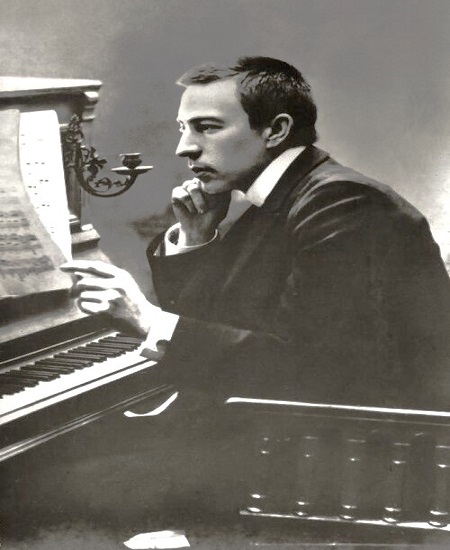
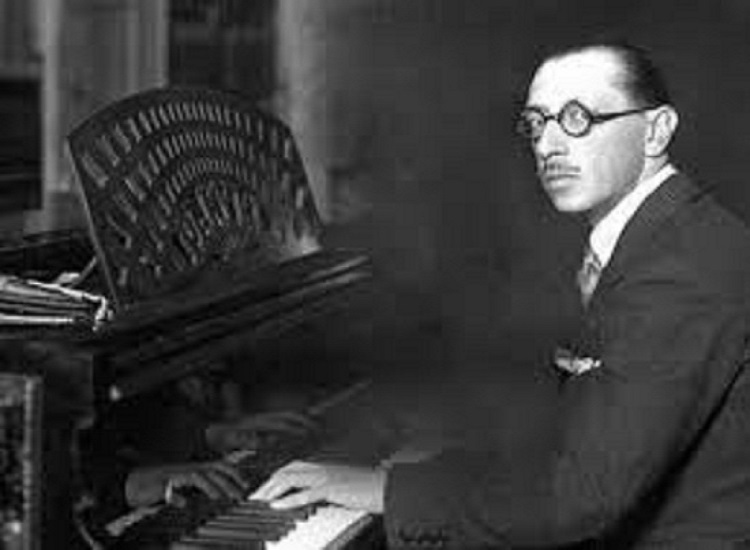
Immediately after the October Revolution, on December 22, 1917, Sergei Rachmaninoff was forced to leave his homeland, settling first in Sweden and then in New York with his family. He was followed by Sergei Prokofiev, who after a tour of the USA in August 1918, settled in the cultural capital of the time, Paris. During the same year, Nikolai Oboukhov also left Russia to settle in Paris. Igor Stravinsky, a world-renowned composer, who had settled in Switzerland during World War I, also immigrated to France in 1920. At the beginning of 1921, Alexander Tcherepnin also left Russia to settle in France.
The bass-baritone Chaliapin abandoned Russia during the same year, settling in Paris. The following year, it was Arthur Lourié who, taking advantage of an official tour in Berlin, requested political asylum. In 1924, he too settled in Paris. Later, in 1941, Lourié immigrated to the USA. The departure of Russian composers continued in subsequent years. In 1928, for example, it was Alexander Glazunov who also settled in Paris. Mstislav Rostropovich, cellist and orchestra conductor, also first immigrated to France and then, in 1974, to the USA. As a consequence, his Soviet citizenship was revoked “for acts that have continuously harmed the prestige of the Soviet Union.”
The fate of those Russian composers and artists in general who did not have the opportunity to emigrate and who, in one way or another, voluntarily or involuntarily, showed any sign of disobedience to the doctrine of Socialist Realism, is now well known. Nikolai Andreyevich Roslavets, for example, was condemned as a micro-bourgeois artist, as an enemy of the people, and was interned in Tashkent, Uzbekistan, at the end of the 1920s. This measure was a consequence of his opposition to “proletarian musicians.” He was accused of being counter-revolutionary and a Trotskyist. Another composer, Alexander Vasilyevich Mosolov, was condemned in 1929 as an “enemy of the people.”
In 1932, he wrote a personal letter to Stalin where, among other things, he emphasizes: “…During the last three years I have published nothing; since 1928, little by little, my pieces are no longer played, and in 1930 and 1931, none of my compositions have been played, neither mass songs nor large symphonic and stage works…! I am not at all anti-Soviet, I would like to contribute to our life, I would like to work and compose, but… my name, after being cited many times – and in a not at all benevolent way – in the journal ‘Proletarian Musicians’, has become a symbol of the class enemy, anti-Soviet…! I have endured these persecutions since 1926. Now I cannot endure any longer.”
Mosolov begs Stalin to intervene with RAPM (Russian Association of Proletarian Musicians), or with the RAPM-ists, so that they no longer trample on his rights as a composer, that he not be persecuted, that he be given the right to work in the USSR or, otherwise, that he be allowed to emigrate abroad. In 1937, Mosolov was arrested. In 1943, at the age of 19, the musician Mikhail Nosyrev was also arrested, together with his mother and stepfather. Nosyrev was initially sentenced to death. He was then “shown mercy” and sentenced to 10 years in the Gulag. Nosyrev spent 10 years in the Vorkuta camp, 2,500 kilometers northeast of Moscow. He was then interned in Syktyvkar, west of the Urals, over 1,000 kilometers northeast of Moscow.
During these years, a growing discriminatory and oppressive activity by the Bolsheviks in power in Russia is also observed against Russian composers of Jewish origin. It is known that the situation of Jews in Russia and later in the Soviet Union has always been difficult. We may recall that in 1928, Stalin artificially created the Jewish region of Birobidzhan in Siberia. After about two decades, in 1949, as a result of an anti-Semitic repressive campaign, the schools, theatres, newspapers, all Jewish cultural centers of the region were closed and 90 percent of the artists were sent to the Gulag. Jewish culture, except to some extent in the 1920s, never enjoyed official local support.
If one flips through the ‘History of the Music of the Peoples of the USSR’ (История музыки народов СССР) in five volumes, one will notice that it provides data on extremely small ethnic minorities, while Jews, numbering nearly 3 million, are ignored. After the 1930s, their music completely disappeared from works published in the Soviet Union. In this anti-Semitic atmosphere, the position of Russian composers of Jewish origin was also extremely difficult. Mikhail Gnesin is one of them. He was threatened by both the German Nazis and the Russian Bolsheviks. Gnesin was denigrated by the Russian Union of Proletarian Musicians (Российский союз пролетарских музыкантов) and accused of “reactionary formalism” and “bourgeois nationalism.” He was officially denounced again in 1953 and forced to leave his post and retire.
In 1948 and 1949, one of the greatest composers of the “Jewish school” of Soviet music, composer Alexander Veprik, and ethnomusicologist Moshe Beregovski, known as the leading ethnomusicologist of Judaism in Eastern Europe, were arrested and ended up in Soviet Gulags, accused of “anti-Soviet Jewish bourgeois nationalism.” Veprik became famous for his music in the USA and Europe. In the Gulag, he formed an amateur orchestra with other prisoners. Beregovski made about 2,000 field recordings of Jewish folk music, especially klezmer music, on 700 phonograph cylinders.
Other musicians would end up in the terrible gulags of the Bolsheviks. This would also be the fate of Vsevolod Zaderatsky. Condemned to remain silent, never to perform, never to publish, forbidden to reside in large Russian cities, without the right to vote. Imprisoned for the first time in 1926, he was thrown into the Gulag in 1937, under the pretext that he had played works by “fascist musicians” (Wagner and Strauss). His only “crime” was simply being, before the Revolution, a piano professor for the son of the last Russian Tsar, Nicholas II. In the Kolyma camp, Vsevolod Zaderatsky would compose 24 preludes and fugues for piano. For the first time, these compositions would be played at the Moscow Conservatory only after 75 years.
Edi Rosner, of Polish Jewish origin, was also sent to the Gulag in 1947. He was arrested accused of attempting to cross the border illegally. Before being sent to the Gulag, before being sentenced to 10 years of forced labour in the Soviet labour camps, he was tortured in the Lubyanka by agents of the Russian secret service. Rosner was first sent to Khabarovsk, in the Soviet Far East, where other musicians had been thrown before him. With them, he formed a jazz orchestra. Rosner was soon transferred to the Kolyma Gulag in Magadan, further north and more brutal than Khabarovsk. He and his orchestra played during this time in various camps of the region, to entertain their executioners!
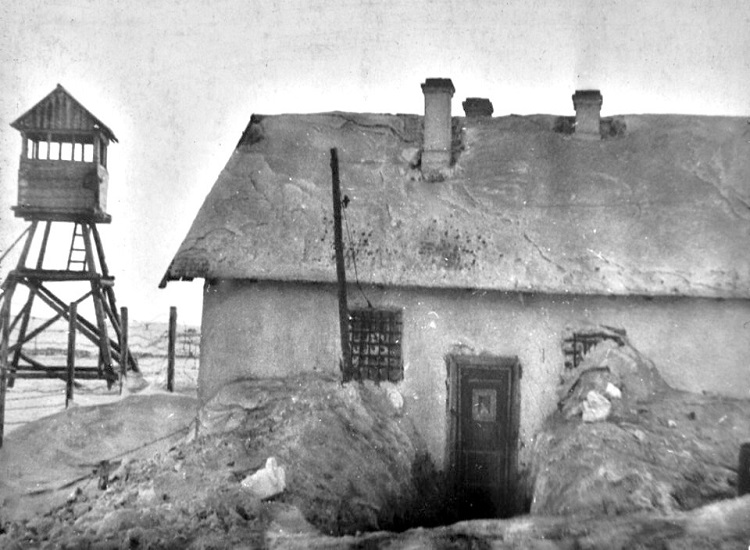
‘Vanino Port’ (Ванинский порт) is a folk song from 1947, known as the anthem of the Kolyma Gulag, or as the anthem of the Kolyma prisoners. Vanino Port is located on the Russian Pacific. It is known as a transit port for prisoners, who were transported to the port of Magadan. Then the prisoners traveled on the “Road of Bones”, so called because of their high mortality during its crossing and because of the bones of the dead prisoners scattered along its entire length. Their journey continued towards the Kolyma region, much further north, in the middle of the taiga, where the cold in winter reaches minus 60 to 70 degrees Celsius. Here was located the Gulag where Rosner was sent. Gold mines were found near it.
Besides ‘Vanino Port’, quite a few songs carrying and conveying hatred, pain, irony, sadness has reached our days from the Soviet Gulags. One of the most expressive songs about the Soviet camps is the song ‘Comrade Stalin’ (Товарищ Сталин) by Yuz Aleshkovsky. In the verses of this song, among other things, it is said: “Comrade Stalin, you are a great scholar / A connoisseur of linguistics / But I am simply a Soviet exile / And my friend is the grey wolf / Why am I here? I really don’t know / But the prosecutors surely have their reasons / And here I am in Tarukhan / Where, under the Tsar, you yourself were exiled.”
In 1953, the composer of Jewish origin Mieczysław Weinberg was also arrested. Along with Prokofiev and Shostakovich, he is known as one of the most talented Soviet composers of the last century. He was accused of conspiring to create a Jewish republic in Crimea, a false accusation, on the basis of which the accused deserved not internment, not prison, not the Gulag, but the death penalty. In 1953, Dictator Stalin died and Weinberg and other convicts were released.
In the Stalinist camps, musicians were, in fact, treated like all other prisoners, according to a system of “reformation” and “re-education through labour.” In the Bolshevik Gulags, in accordance with this system, so-called cultural and educational offices (KVO) had also been established, controlled by the KVT-ch (Cultural and Educational Section, part of the secret police charged with “cultural work” in the Soviet camps or gulags.) Under their supervision and dictate, music was treated in the Gulags of Soviet Russia or the USSR as forced labour, like all others.
As early as 1918, Lenin created the system of concentration camps, or, as it is known, the Gulag. Stalin further developed, “perfected” this monstrous machine of mass annihilation. The 15th Congress of the Communist Party of the Soviet Union drew up a long list of enemies of all colours. Viewed as suspicious, as an obstacle to revolutionary activity, as undisciplined towards the norm, various authors would become part of the long cortege of show trials, imprisonments, internments and executions. Twenty-five million people were condemned through show trials, or even without any trial, and were exiled to the Bolshevik Gulags during the years 1918-1956.
Stalin’s totalitarian regime and his ambition for absolute power spared no one. Many of them could not withstand this tragic fate, the sufferings and tortures. Most were shot, died of hunger, tetanus or contagious diseases. Their lives were broken, their families destroyed. Composer N. Zhilyaev, friend of Soviet Marshal Tukhachevsky, was shot in 1938. To justify and perpetuate their rule, totalitarian regimes have also used, according to their interpretation, the notions of “good” and “evil” as weapons. In the doctrine of Socialist Realism, “good” necessarily destroys “evil.”
The Bolsheviks explain to the masses where “evil” lies, who represents it, how it acts, and how, subsequently, these masses must fight it. In music, “evil” is what the communists label as “formalism” or a “formalist tendency in music.” Behind such formulas hides, in truth, their concern that art might escape the control of the authorities and set an example of a kind of dissidence. The Kremlin regime understood very well that art is a very powerful language for Bolshevik propaganda, but also extremely dangerous if not kept under strict control.
The Bolsheviks had absolute control over all artistic and cultural life in post-World War II Russia. After literature, theatre, painting, cinema and philosophy, they would also bring music under the complete control of their Party. To further strengthen this control, a major conference led by Andrei Zhdanov was convened in January 1948. / Memorie.al