




By Elsa Demo
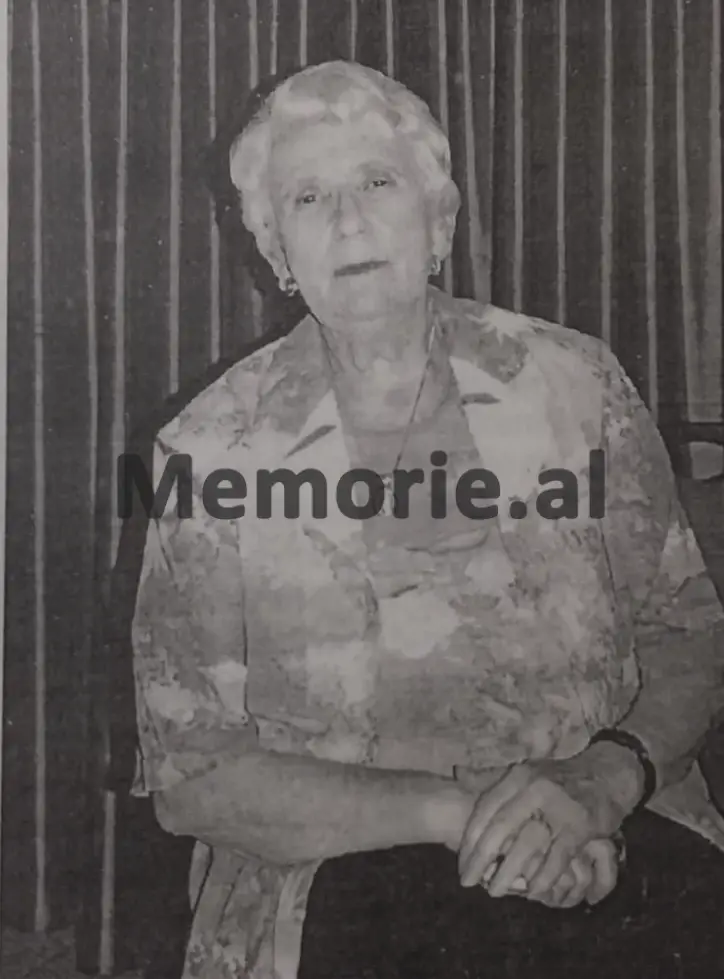
Memorie.al / In 1985, Ismail Kadare wrote “The Death of the Russian Woman,” a story about the fate of women from the former Communist Bloc who married Albanian men and were subsequently betrayed by the Albanian state. Twenty years later, the writer publicly declared: “An apology must be sought for the imprisoned foreign women.” In January 2008, the chairman of the National Center of Cinematography (QKK), Xhevdet Ferri, confirmed the submission of a development project: a screenplay written by Ismail Kadare. For this script, with the approval of Minister Bujar Nishani, the archives of the Ministry of Interior were utilized, and the production team studied over 3,000 pages of investigative files of Russian and foreign women married in Albania – victims of Albanian totalitarianism.
It is upon this material that the writer based his screenplay for the feature film titled “The Frightened Gazelles” (Sorkadhet e trembura), which is likely to be helped by a foreign director. At least, this is claimed by sources within the Film Project Approval Council at the QKK, who have received the project. It is intended to be realized as a Russian-French-Albanian co-production between the film houses “Albimage” (Albania), “Ton” (Russia), and “8-et plus” (France).
When two states clash, the fates of many people caught in between are overturned. But when the clash occurs between two communist states, everything is doubly dramatic. This is the story of foreign women from the Socialist Camp who married Albanian men and, like frightened gazelles, suddenly found themselves in the midst of a struggle between two states of the Communist Bloc. This is the essence of this “requiem film” for these women. The Albanian screenplay is nearly 150 pages long and has already been translated into French by Artan Katro and into Russian by Vasili Tyhin.
The events begin in the Soviet Union in the late 1950s – specifically in Moscow, the heart of the Eastern Communist Bloc. It was there that the youth of these countries gathered to train, educate themselves, and fall in love. The Albanian student, sent to Soviet universities to eventually return to a homeland lacking professionals, was not excluded from this collective fate.
One of the two main plotlines is built on the fate of a couple: a Russian girl and an Albanian boy. What follows is something our readers can imagine – having heard or read about the crimes of communism, and having seen it partially treated in Kujtim Çashku’s film “Colonel Bunker” (1996).
In Piro Milkani’s “The Sorrow of Mrs. Schneider” (2007), we see only one side: the love stories of Albanian boys with foreign girls in Bloc countries, treated with a certain lyricism and romanticism, while the drama of what is to come is more declaimed than cinematically lived. Also in 2007, Bulgarian director Adela Peeva completed her documentary on mixed marriages during the Cold War, where Albanian material constitutes the main part of the film.
From what we gathered from board members regarding the project “The Frightened Gazelles,” the drama will be depicted from its inception to its climax. The goal is to “narrate the crime,” to show the sacrifice of Russian women who, along with their love for Albanian men, brought charm, culture, and professionalism – and ultimately, models of suffering, as Pëllumb Kulla once wrote regarding one of them, Maria Rafaeli.
They were prevented from obtaining documents to return to their countries; they were blocked from sending or receiving letters from their families (the letters that were never sent or received, now located in the archives of the Ministry of Interior, were specifically used for this project); and attempts were made to recruit them as secret agents or to have them spied upon by Albanian “friends” and informants.
Thus, the Russian women felt betrayed by both countries: the homeland they left and the one they found, at the moment when the “friendship between peoples” proved to be a system “created by dictatorships.”
Kadare’s story is a dramatic tale of the life of an intellectual couple monitored by the Sigurimi (State Security). In this mix, the Russian women are hostages of love on one hand, and hostages of the Socialist Camp’s ideals on the other.
The Declaration
“There are crimes for which the regime is responsible, and there are crimes for which the state must answer. I believe the Albanian state should apologize to those states from which the foreign women who were sentenced in Albania originated. Certainly, this is a minor crime compared to the crimes of communism in Albania, but it is among the most hideous; it is pure vendetta against those women whom they labeled as spies,” the renowned writer Kadare stated.
“It was one of the greatest shames of the Albanian state – I am not saying just the regime, but the Albanian state – that poor foreign women, remaining in Albania after the break from the socialist camp, were put in prison one after another; it was a cowardly revenge. The Albanian state could not catch the KGB spies, it could not catch the spies of East Germany or Hungary and in a cowardly manner, and it caught their wives, imprisoned them, and left their children in the streets. These were crimes of the regime, but there are certain crimes for which the state bears responsibility in historical continuity.”
List of Imprisoned Russian Women in Albania
The first three women arrested:
- Nadezhda Sidorova (husband’s surname Kabashi). Sentenced to 20 years as a political prisoner. Currently resides in Saint Petersburg.
- Anufrieva Smirnova (husband’s surname Gulina). Sentenced to 15 years. Resides in Mykolaiv, Ukraine.
- Nina Pumo. Sentenced to 15 years. Resides in Moscow.
The second group arrested:
- Natalya (Natasha) Pengili. Sentenced to 18 years. Resides in Moscow.
- Taisiya Pisha. Sentenced to 16 years. Resides in Israel.
- Volya Vasilyevna Sharonova (husband’s surname Hoxha). Sentenced to 15 years. Resides in Moscow.
- Vilgelmina Veshi. Sentenced to 15 years. Resides in Durrës. Her husband, Miço Veshi, was a political prisoner sentenced to 20 years.
- Inna Shahe. Sentenced to 8 years. Resides in Moscow.
- Elena Çami. Sentenced to 8 years. Her husband, Minella Çami, was sentenced to 20 years. Resides in Korçë.
- Inga Vitalyevna Tarasova (Dyrzi). Sentenced to 8 years. (Her son, Valer Dyrzi, was sentenced to 13 years). Resides in Moscow.
- Lyudmila Denisova. Sentenced to 8 years. From Saint Petersburg. (Deceased).
- Galina Dani. Sentenced to 5 years.
- Valentina Keli. Sentenced to 10 years. Resides in Canada, in a nursing home.
These are some of the Russian women who served prison sentences in Albania. In fact, the list is much longer, including those who were interned together with their families./Memorie.al
![“When the party secretary told me: ‘Why are you going to the city? Your comrades are harvesting wheat in the [voluntary] action, where the Party and Comrade Enver call them, while you wander about; they are fighting in Vietnam,’ I…”/ Reflections of the writer from Vlora.](https://memorie.al/wp-content/uploads/2025/06/admin-ajax-4-75x75.jpg)
