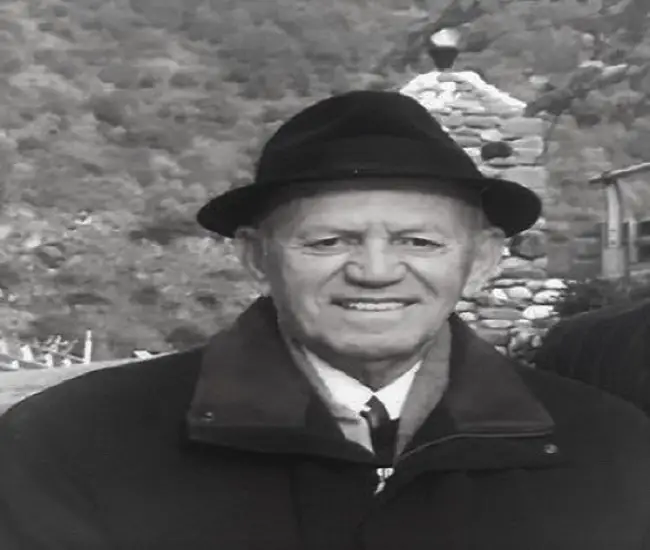

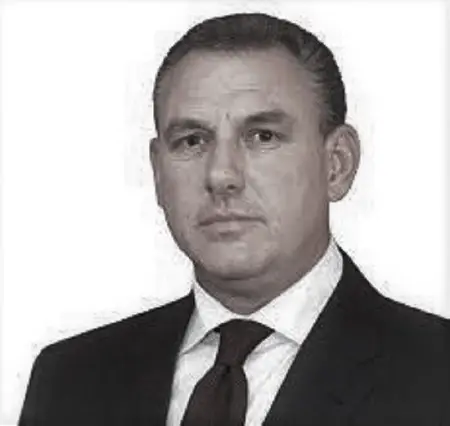
Memorie.al / Makensen Bungo was my uncle, and he passed away in New York on September 15, 2018. I would have wanted to be there, at his funeral, but it was impossible. Not simply as his nephew, but to be near him on his final day – near the man who deeply influenced my formation. Since I was a child, I have seen Elbasan through the eyes of my mother, Ferije, and my uncle, Makensen.
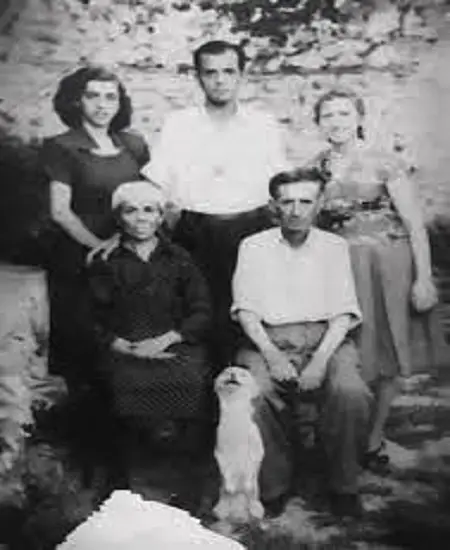
He often spoke to me about his father, Ali Bungo, a career officer; about his mother, Ruzhdije Hastopalli, who was sick with diabetes her entire life and was forced to raise two young daughters alone – my mother and my aunt – after her son was thrown into prison and her husband was sent to work at the Beden canal in Kavajë. That was where all the wealthy and the aristocracy of Elbasan were sent after Enver Hoxha’s communists came to power at the end of ’44.
He often told me family stories; he spoke of Gani Bej Bungo, his uncle, a participant in the Congress of Monastir, and of his maternal uncle, Ahmet Hastopalli, a deputy and prefect of Elbasan for many years. He told me about his grandfather, Hysen Hastopalli, the Mayor of Elbasan nearly a hundred years ago.
I know the Great Families of Elbasan through him – the relations with Verlaci, Aqif Pasha, Zogu… he had a special admiration for his professor at the ‘Normalja’ school, Sule Harri! He was very close to Tomorr Sinani; Ruzhdija and Hajrija (Tomorr’s mother) were first cousins, but he did not hold any special regard for him. He valued him as an anti-fascist, but not as a communist.
I believe that books and writing were the greatest loves of his life! Like all Elbasan natives of his age, he played poker and backgammon very well. When I asked him about prison, he would say: “I felt more pity for the family library, which they burned the day I was arrested!” Nevertheless, he rebuilt his library; whenever I borrowed a novel to read, he would make a note of it, and it absolutely had to be returned.
Of those who tortured him in prison, he remembered two men well: one with the last name Tepelena and an Elbasan native with the last name Biçoku.
When the democratic processes began, I had the fortune of spending a lot of time with him, as we were heavily involved in property matters. On one occasion, the two of us were walking along the Lana River in Tirana. An elderly man with glasses approached us; he was well-preserved and dressed with great taste in a suit and tie. When he reached us, he turned to my uncle, extended his hand, and said: “How are you, Makensen?”
It was clear they were acquaintances. My uncle did not extend his hand; he didn’t speak a word, but I saw that he became extraordinarily upset. Seeing him like that, I suggested we go into the nearest café – the Lana area was full of them back then. After drinking a coffee and calming down somewhat, him told me:
“That is one of the men who beat me before they arrested me!” Of course, he told me the name as well. They had been classmates at the ‘Normalja’. It was then that I learned my uncle had been beaten nearly to death in the courtyard of ‘Normalja’ because, during a lesson, he had spoken about Kosovo – and that was a time of good relations with Josip Broz Tito. The arrest and prison followed.
Many years later, the “Elbasani” Association organized a dinner at Hotel “Tirana” for those from Elbasan living in Tirana. I was invited as a Member of Parliament. After I gave the keynote speech, one of the participants approached me, took a chair, and sat next to me. In fact, I recognized him immediately.
After we shared a toast, he asked me: “Which of the Bylykbashi family from the Fortress (Kala) are you?” Not wanting to ruin my own mood, I told him: “I am not a Bylykbashi from Elbasan; my mother is from Elbasan!”
He began to speak to me about Elbasan – its traditions, culture, tolerance… and being curious, he asked again: “What family is your mother from?”
I waited for the Zena brothers to finish their song, leaned into his ear, and said in a loud voice: “I am the nephew of Makensen Bungo!”
He trembled all over! His face fell, his eyes behind his glasses took on a different shape; he stood up without saying another word and left the dinner. I followed him with my eyes until he closed the door. Neritan Ceka, who was sitting next to me, asked: “What happened to him…?” “Old age…” I replied!
His name was Agim Popa, from the Fortress!
It is bad enough they never once asked for forgiveness for what they did, but there I was, listening to him – some time ago, one night on television – telling stories of when he had been in Moscow accompanying Enver and Mehmet…!
In truth, I was upset, but I felt more for my mother! It wasn’t her fault! Her only brother had died! And so far away! There was nothing left for me to do but to say: Farewell, my uncle, Makensen! May the soil of America be light upon you!/Memorie.al