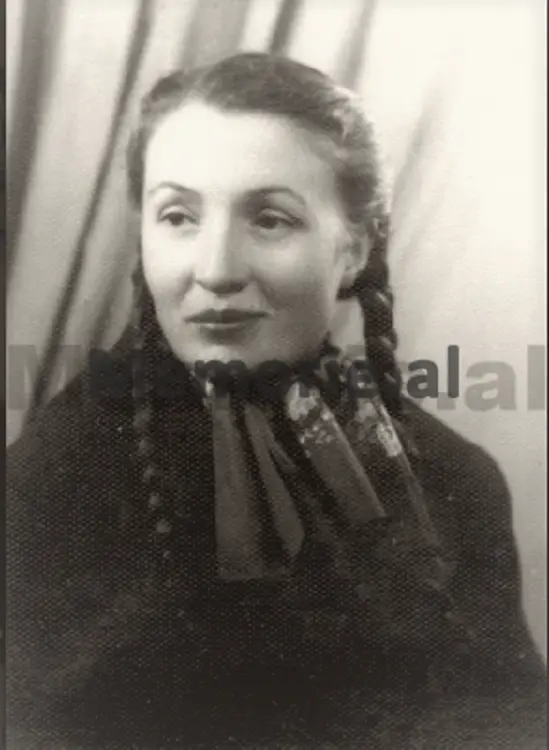
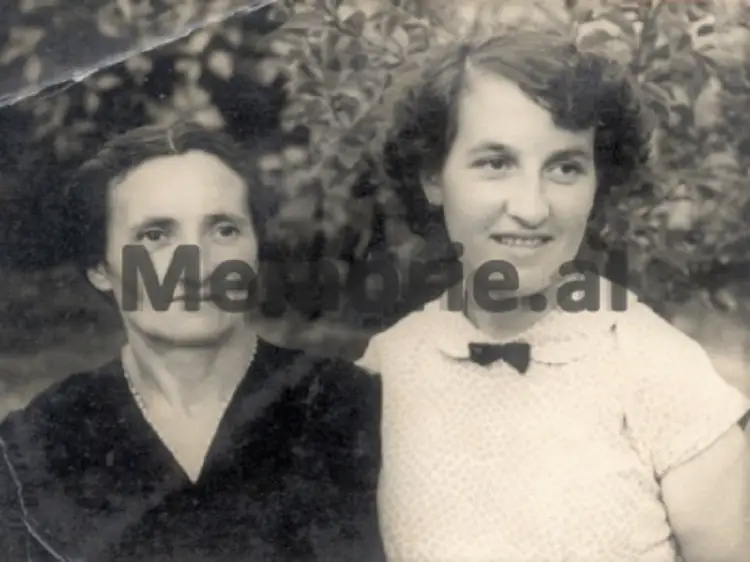
Memorie.al / After suffering more than 27 years in the prisons of Enver Hoxha’s communist regime and his successor Ramiz Alia, Pjetër Arbnori was released from the “communist hell” in August 1989 and returned to his family in the city of Shkodra. At the end of 1990, he joined the Democratic Party, being one of the main leaders of the Shkodra branch, and as a result, in the first parliamentary elections of March 31, 1991, he was elected deputy in the Albanian Parliament, representing his constituents in an area of the city of Shkodra. Likewise, he was re-elected deputy one year later, in the elections of March 22, 1992, even being elected Speaker of the Albanian Parliament, a duty he performed with great dedication until the end of that legislature in 1996. From that period onward, alongside exercising his mandate as a deputy, Pjetër Arbnori also engaged in publishing his books, such as translations, novels, etc., but the largest part consisted of memoirs from his prison period. A special place in those memoirs is occupied by his letters from prison, such as this letter we are publishing in this article, sent to his niece in 1986.
Pjetër Arbnori’s letter from prison, sent to his niece in Shkodra in 1986
Dear Niece,
Today marks 25 years since I was separated from the family. You had not been born then, nor was your mother engaged or married, while now you have grown up and are attending secondary school. It is exam time and you must be buried in your studies. I cannot help you, but I will tell you something that will increase your will to learn.
When they put me in prison, the first thing I had in abundance was what I had always lacked: time. I had turned 26 without ever having had my fill of sleep, without ever enjoying anything, because it was always as if I heard someone saying to me: “You are late! You have no time! The exam, the meeting, the work awaits you!” I had achieved everything in life through struggle.
Now, apart from the great anguish, I had no other worries. Neither bread to earn, nor family problems to solve. I would see dawn and dusk thousands, if not tens of thousands of days, with the patience of a water droplet that pierces stone. I had to find a way to spend all these hundreds of thousands of hours usefully, so as not to let them crush me with their weight. Excessive daydreaming makes you melancholy. But even those who try to pass prison by sleeping do nothing but change their biological clock, sleeping during the day and suffering at night. But the night brings bad, exhausting thoughts, and generally, those who disrupt their sleep tend to be the first to go mad.
Other chores, especially washing and sewing, do not take up the whole day, no matter how much you fuss. Only one path remains: study. Unfortunately, I had no books, and from home they were not allowed here. Besides, in prison, literary books wear out quickly, and there is no library that can satisfy a prisoner. After I had devoured the unread newspapers from the last two years, when I had been cut off from life, I brought my eyes around to see if I could find something else to study. The prisoners I shared a room with could not help me.
I had a waiter, a peasant, a bricklayer, an officer, a brigadier, a shepherd, an accountant, and an ambassador, all with an “ex-” before each. Only the officer gave me the 4 volumes of the novel “War and Peace” by Leo Tolstoy, a wonderful book that I had read in Russian, the only language I knew when I was free. From the very first pages, I came across conversations in French exchanged by countesses and princesses, as was the custom of the Russian aristocracy in the 19th century.
I stopped reading and thought: What if I learn some French words! A foreign language is the most useful thing, and it makes the time pass without you noticing. But with what to study when I had no method, no grammar, no dictionary? The shepherd only knew Vlach, the peasant and the accountant knew some mangled Greek. I had frozen with “War and Peace” in my hand. I took a notebook and began copying line by line the dialogues printed in French together with the Albanian translation given. I ended up with, if I’m not mistaken, about 16 good pages, including those of Julie’s letters, Napoleon’s, or the Tsar’s.
When I had read it a few years earlier in the original, I had been annoyed by all those French expressions, also given in Russian, in small print. “What need was there for this formality?” – I had complained to myself against Tolstoy. Now I was looking at it with different eyes. I reproached Tolstoy for not having included a few more pages in French. Because this was my only wealth of French. I set aside three notebooks for phonetics, grammar, and vocabulary.
How would I learn without anyone’s help? True, I had completed higher education without anyone’s help, without hearing a single lecture, but then I had the books. Here it was different. In conversation, the ambassador had told me that he had studied French methods, but when I broached the topic from a distance, asking for some help, he turned a deaf ear. I knew that French is not read as it is written, and this was a big problem for me.
When I was 11 years old, in 1946, French was included in our school curriculum. Our teacher was Hydajet Cenka. Both I and Margarita liked it. All day long we chirped our first words in French. We had done 7 or 8 lessons, but after a few weeks they removed it. It was a time when foreign language programmes changed every few months, until finally Russian was established. I remembered little from that time. Something else came to my mind quite suddenly. I had in my memory hundreds of geographical names or names of French writers. I remembered how they were written, but also how they were pronounced.
So I began and noted them down as they came to mind: Bordeaux = Bordo, Voltaire = Volter, etc. The laborious phonetic analyses began, along with the first question marks. Thus, by studying for many days and nights hundreds of proper names, I deduced hundreds of “rules” of French phonetics, exhaustively. When I filled the notebook with all those laws, I began to compare them. Of course, French had to be much simpler than what I was coming up with, and that was what I was trying to achieve. And I would get angry with myself for the three or four tables I was missing; I had to struggle day and night to codify them myself, and despite all the effort and sweat shed, I was conscious of the gaps created.
Every three or four entries, a threatening big question mark in red would rise up. And when I managed to eliminate one, two more would appear. When I thought I had finished with phonetics, I breathed a sigh of relief. I then grabbed the notebook with the French texts and during the exercise hour in the yard, I began to read aloud based on the rules I had derived. I was glad that no one who knew French could hear me, because surely they would look at me with surprise, trying to figure out which “African language” I was practicing. The ex-ambassador had told me initially that he had studied French and Russian. But he told me he knew very little, and even that little he had forgotten. As for French, he said he remembered it better. Since I had started learning, the ambassador would look at me somewhat curiously, even twisting his lips in a pained smile.
To tell you the truth, at first I had thought of asking him about some ambiguities, thinking that he would know French better than Russian. But I was tormented by a pronounced pride, which both gives you wings and hinders you in learning foreign languages. Pride increases your will to learn, but the fear of being wrong makes you blush before you err and does not let you express yourself freely. I memorised those 16 pages of French and Albanian text, then I began to analyze the translation. In truth, the translation was very good, but it did not satisfy me, because like a beginner I wanted it word for word.
New difficulties arose with the vocabulary, and the red-pencil question marks multiplied. The vocabulary reached several hundred words, but almost half had dubious, even contradictory meanings, and some others had only half-meanings. I turned insistently to grammar, thinking that it was to blame. When I thought I had “watered down” those faults, I turned my heart to “stone” and begged the ambassador to listen to me once. He listened to me with surprise and asked me if I had ever studied before. When I told him the way I had learned, he twisted his lips and listened to me reluctantly.
As I read, it seems I made a terrible mistake (only one?!), and he laughed with an evil voice that pierced my heart. As I translated, he looked at me with squinting eyes. I asked him about some simple grammatical issues, but his explanations tied my head in knots. With numerals, I again made an unforgivable mistake. Starting from analogy, I said two words that did not exist at all. This made the ambassador burst out laughing. At that time, I did not know that French had remnants of the vigesimal counting system (a twenty-based system, like old Albanian: dyzet, trezet, etc.). From that day on, I never asked him anything again. Around that time, I received two bulletins on social and natural sciences, to which I was subscribed.
My joy was boundless when I saw that after each article there was a summary at the end. Now my material was greatly increased. If I were outside, I would hardly have read, for example, about the yellow-clawed shrike, a migratory bird that feeds on insects, but need drives you even to the enemy’s door. The bad thing was that the summaries did not always match the text of the article. So I was forced to make a “guess translation”. The vocabulary grew thicker, but I was not satisfied with the meanings I had derived and tried to squeeze fat from a flea.
I remember an article about the Illyrian helmet. Oh, how much sweat I shed over it! And other archaeology articles that came right under my nose! Especially two words there, which I could not translate at all, gave me a hard time. But despite the shortcomings, I was now more confident in myself. The material had now increased considerably, and I had “solved” many problems that the rest of the world already knew. However, I was inside, and the “world” was outside. Still, fate would not always be against me.
One day, the guard responsible for prisoners, who helped open doors and look after the storage room, were burning rags and paper in a stove. In the middle of the flames, my eye immediately caught some pages in French. I burned my hands putting it out, under the threatening shouts of the guard, who complained that I had let his fire go out of sync. I held his hand to keep him from throwing more papers into the fire from a pile nearby. He was not very fond of reading. I explained to him that while I was suffering for a single page in French, he was offering them to the flames without a shred of mercy. I noticed with excitement that they were issues of the magazine “Temps Nouveaux” and I pulled them toward me.
But the guard, who had once been a merchant, held my hand. “It’s forbidden,” he said. “Without permission, I cannot.” I learned that they belonged to an educated prisoner who had been moved and who stayed in another room, separated from me. I begged him every day to get permission as soon as possible, because I needed them. The more impatience I showed, the more the tradesman delayed the matter. When I said that I would ask for permission myself, he replied not to spoil the work he had put in line.
Now the guard would ask me for anything without shame, especially dried carob pods, which he liked very much. In truth, the prison “cat” also ate a lot of carobs, because before the discovery of the magazines, two or three times I had happened to find the bag I kept on the floor almost empty, and the guard would advise me to keep them safe, because the cat was a big glutton. The bad thing was that she, apparently, distributed the carobs to other cats as well, since the count showed that the weight of what was eaten was greater than her own belly.
One day, after he had promised me heaven knows how many times that he would give me the first magazine, the guard said to his assistant: “I made a spinach dish to leave my nails in it. Now I don’t know what to do for eggs! There’s a guy, but I don’t feel like taking from him.” “I have some,” I intervened, and I gave him four eggs. Large, fresh eggs that my dear mother brought me every month. I knew that one day before setting out for the visit; she would go around to all the neighborhood friends to exchange for fresh eggs, just laid from the hen.
The magazine I got had 48 dense pages of articles, travel impressions, chronicles, etc. When I was “free” (in the sense of having time), I had read that magazine in Russian, and thanks to memory, I recalled many things. I walked and deciphered the French phrases with that lame vocabulary I had devised myself! Every word for me was a mathematical problem with many unknowns, which cost me great effort to solve, but also gave me special satisfaction when I got it right.
The notebooks kept filling up, and French now seemed to me like a wild beast I had teamed with patience and willpower, without any other tool, unless I count the 30-40 eggs and some piece of prosciutto I had spent to “tame” the guard – the keeper of the treasure – who barely managed to harden his heart and gave me 3 magazines over several months.
Time passed, and the ambassador was allowed two French methods and two Russian ones. He had seen me many days and nights breaking my head over French rebuses, and the mocking smile had gradually frozen on his lips. But I never opened my mouth to ask him for help in my first steps, nor did I feel very proud when I thought I had achieved something. Because languages are not a luxury, but servants of man. My heart heard me thinking of looking at those methods to check my knowledge and erase the ambassador’s mocking smile, but I never reached out my hand for them, no matter how much he left them in a visible place.
He prepared notebooks, sharpened his pencils carefully at the barber’s, wrote beautiful blocks in red and blue, set a detailed work schedule – all sure signs that he would do nothing. Around that time, I also received permission from the prison command to buy the English and German methods, and I felt extremely happy. While I started studying at five in the morning and parted from my books only when the break came, he could not easily find a comfortable position; from sitting he would lean on a pillow, then without realizing it, stretching little by little onto the mattress, he would start to idle, and within ten minutes he would fire up the “engines” and snore between his fallen book and drooping pencil.
This scene repeated every day, until he abandoned the French method, calling it a half-dead language, and grabbed the Russian method, which supposedly was the language of the future. In my third month, I was finishing the second English method, while he was not wetting his whistle even with the “language of the future” and left it at lesson fifteen, until the heat passed. I was convinced that many hot and cold seasons would pass for him until the end of this prison, and he would hardly learn anything.
While I was attacking German in the heat of the moment, my eyes often went to the beautifully written blocks of the ambassador, which had remained untouched. I would hear him giving opinions and conclusions. “A language, if you don’t speak it, is not a language! But for a prison language, I learn four in a year! There are those who say they know it, but when they meet a foreigner, they go ‘mek-mek’!”
An event separated us from the ambassador. Our room was dissolved; he went to the camp, while I was transferred to the cell of the owner of the magazines. We knew each other by hearsay. He received me well. Ashamed, I told him that I had learned foreign languages, but as well as one can learn in prison. I thanked him for the magazines and told him I had kept them safe so as not to ruin his collection. “What collection,” he said, “a magazine, once read, is gone. Time overcomes the events they describe. I don’t understand why you didn’t take them all. If I had left them in a pile in the storage room!” I told him the story of the eggs. “Ah, the swindler,” he said, “He’s done many such tricks to me too!” He spoke so many kind words about studying, simply and without arrogance, that my courage grew; I took out my curious notebooks and showed him my French journey. “Without methods or dictionary, well done!” he was amazed. I took heart. “Could you listen to me a little? Just don’t be frightened by my pronunciation. I have never heard anyone speak French.”
I began to read and waited for his laughter to burst out. Because this man had seen more of the world than the ambassador and had been something more than him; he had the right to laugh. I had decided to become more patient; I wanted to trample my pride underfoot. Otherwise, how would I learn? But the reading continued, and he smiled benevolently. “Oh, how good! Oh, how good!” he spoke sincerely and then continued speaking to me in French.
From the emotion, I did not understand a single word. I flushed, but he understood immediately and said: “Don’t be afraid! I also had it difficult at first. I also got my schooling on the sly.” He made only one remark: “The ending ‘ent’ of the third person plural of verbs in the imperfect is not pronounced at all.” But he told me even this in such a humane way that I felt ashamed of that nasal ‘a’ that I had been braying like a donkey to sound supposedly French. He corrected a few other small mistakes. In that dark prison cell, I read about 6,000 pages of magazines and rarely needed to ask…
I wrote you this story to show that good conditions are not everything for learning. The main thing remains pride, positive ambition. Often, for a person with pride, the lack of conditions does not hinder him, but pushes him to try to forge an iron will to learn. Now I can say with certainty that French was taught to me by the “laughter” of that ambassador, even though he himself remained at lesson fifteen. / Memorie.al
I embrace you,
Your uncle who loves you dearly,
PJETRI
May 27, 1986