By Sheradin Berisha
Part Two
Memorie.al / The city of Prizren lies in the southern part of the Dukagjin Plain (Rafshi i Dukagjinit) (and in southwestern Kosovo). The territorial entity of the Municipality covers an area of 640 km² and represents 5.94% of Kosovo’s territory, divided into 76 settlements. According to local censuses, in 2002 the Municipality of Prizren had 220,776 inhabitants, of whom approximately 110,000 reside in Prizren itself. During the period between January 1998 and June 12, 1999, 325 civilian residents were killed in the territory of this municipality (257 males and 68 females), 125 residents are missing (121 males and 4 females), while 143 martyrs fell on the altar of freedom. The most horrific massacres were committed in Krusha e Vogël (113), Landovica (23), Lugishta e Hasit (34), Korisha (77), and the Tusus neighborhood of Prizren (27)….!
Continued from the previous issue
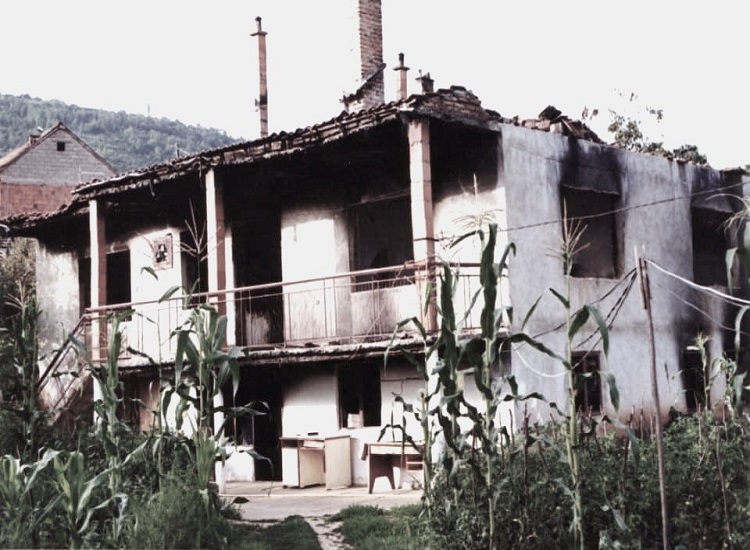
Where “Ramiz Sadiku” Street ends stands the house of the Abdylmexhiti family, whose six male family members were killed and barbarously massacred by Serbian criminal forces on May 26, 1999. Witness Jehona (Sami) Abdylmexhiti-Thaçi (born on December 4, 1980) describes that terrifying day as follows:
“May 26, 1999, was a Wednesday. I was in my house in Prizren, ‘Rugova’ Street No. 6, and ‘Tusus’ Neighborhood, together with my family, uncles, and several cousins – 15 people in total. Early in the morning around 8:30 AM, Serbian police and military forces began burning houses in this neighborhood. Around 11:00 AM, the flames approached our house. We were panicked and did not know where to go or what to do. At one point, our six men headed toward the main road (formerly ‘Dedinja’ Street). However, they were stopped by the Serbian police and army and forced back into the house.
They lined them up against the wall of our house, searched them, and demanded money. They took my father, Sami, inside the house, and in the presence of my mother, Fejzie, demanded money from him. On this occasion, they threatened my mother: ‘If you don’t give us money, we will kill your husband.’ Out of fear, my mother gave them 2,000 DEM. They struck my uncle Rafet with an automatic rifle butt and demanded money from him as well. I know he also gave them Serbian dinars, but the police officers and soldiers threw those away and took the Deutschmarks.
This entire severe and hair-raising situation was witnessed by four of my uncle’s children, three women, my grandfather Vait, and my grandmother Zymyle. All the while, they kept asking us: ‘Where is the KLA? Where is your America? We will kill you all,’ along with other provocations. After taking the money from my mother, they brought my father outside and lined him up against the wall alongside my uncle Rafet, my two brothers (Shefik and Behar), my cousin (Hyrmet), and my maternal cousin (Mirsad); from Mirsad’s house, which is adjacent to ours, they brought my aunt’s husband (Hesat) and my aunt’s son (Bejan), whom they also lined up against the wall – eight people in total.
Meanwhile, they searched the inside of the house but found no weapons. Then they told us women and children to step outside. We headed toward the main road. After 3–4 minutes, we heard bursts of automatic gunfire. We didn’t dare turn back. There were many forces on the street. In the afternoon, grandmother Zymyle (my father’s mother) entered the house while it was burning and saw bloodstains and documents and other personal belongings scattered on the ground, but she did not encounter any bodies. Hope kept us going that perhaps they were alive. Two days later, Bejan’s father (Xhevat) went to the police station to ask for his son, but they told him: ‘Go ask God for him… run fast or we will kill you too.’
On Friday, May 28, 1999, Xhevat Xhimshiti went to the morgue and identified Bejan and Hesat, while on that same day, my mother Fejzie and my aunt Servete identified my father Sami, my uncle Rafet, my brothers Shefik and Behar, my cousin Hyrmet, and my maternal cousin Mirsad at the hospital morgue. On that very day, they were buried in the Prizren cemetery,” concludes the testimony of Jehona (Sami) Abdylmexhiti-Thaçi.
A researcher from Human Rights Watch interviewed two witnesses who had collected the bodies of the victims from the Prizren hospital morgue in the days that followed. Witness M. B. (65 years old) stated that “he and a few friends had taken about two dozen bodies from the morgue that Friday, including a thirty-four-year-old woman who was completely burned; she used to live on the same street as him.”
He recalls when “the morgue doctor” told them that they had to decide: either takes them and bury them, or else they would dump them all into a mass grave. “I transported some of the bodies using a cart.” Another 65-year-old witness, F.D., told the Human Rights Watch researcher that he went to the morgue for several consecutive days, retrieving two or three bodies each time. He also attended the funeral of some of the deceased on a Sunday at the cemetery near the local mosque.
Residents of the neighborhood who survived this horrific massacre recall that Serbian forces left Tusus in the afternoon hours (of May 26), before nightfall. As the Serbian troops were leaving, a truck arrived in Tusus to collect the bodies of the executed men, transporting them to the morgue at the Prizren hospital. Witnesses told the Human Rights Watch researcher that the group on the truck consisted of an Albanian driver, four Serbian civilian employees, and four Roma who were brought in as laborers to load the bodies. “The truck was full to the brim with corpses,” one witness said.
“It was open at the back, so they were easily visible. The Roma went from house to house searching for bodies. They grabbed them and threw them into the truck as if they were sacks!” Another witness declared that she had seen a large number of corpses wrapped in white sheets in the back of the truck, while one of the civilian employees held a video camera, filming the deceased.
WHO WAS EXECUTING ON MAY 26, 1999, IN THE “TUSUS” NEIGHBORHOOD OF PRIZREN?
From the testimonies collected in this neighborhood, it is learned that on May 26, 25 unarmed Albanian civilians were atrociously executed inside houses and on the streets of “Tusus”:
- Rafet Abdylmexhiti (1947)
- Sami Abdylmexhiti (1951)
- Shefik Abdylmexhiti (1978)
- Behar Abdylmexhiti (1982)
- Mirsat Osmani (1975)
- Hyrmet Sylejmani (1964)
- Hesat Xhemshiti (1937)
- Bejan Xhemshiti (1975)
- Bislim Qengaj (1921)
- Selvinaze Qengaj (1923)
- Salih Elshani (1936)
- Ymer Thaqi (1945)
- Avdi Berisha (1921)
- Refki Berisha (1961)
- Hajrim Arifi (1977)
- Sani Bajrami (1968)
- Neki Gashi (1935)
- Selim Berisha (1932)
- Feim Berisha (1927)
- Xhemajli Poniku (1933)
- Halil Poniku (1937)
- Fazile Maqkaj (1968)
- Rexhep Maqkaj (1923)
- Nijazi Muja (1959)
- Fadil Ramadani
HOW ENES AND FATMIR MUHARREMI WERE EXECUTED IN THE “BILBIDERE” NEIGHBORHOOD OF PRIZREN
In another neighborhood of Prizren, “Bilbidere,” ten days before the Tusus massacre took place – specifically on May 16, 1999 – Serbian paramilitary forces killed Enes and Fatmir Muharremi inside their home. Human Rights Watch interviewed family members regarding the execution of Enes and Fatmir. Witnesses stated that around late April, almost all residents of the neighborhood fled to Albania, while their family and six other families remained behind.
Three weeks passed without any incidents until one Sunday, May 16, when a group of Serbian police officers arrived and began searching the house for weapons. Not long after the police left, a large group of paramilitaries arrived. E. Muharremi, a 26-year-old woman, recounted to Human Rights Watch what transpired: Arkan’s men, nearly one hundred strong, arrived around 9:00 AM. She remembers well that “on their heads they wore sky-blue bandanas and wore special vests left unbuttoned; thus, you could see their chests. Around their necks they wore necklaces with crosses and other emblems. Most of them had shaved heads; some had beards. Among them was a bearded Russian who didn’t speak a single word of Serbian…! Their faces and the area under their eyes were painted with face paint. They wore green camouflage uniforms like the army, while a small group wore dark blue ones…! They didn’t come to our house right away, but were spread out all over the neighborhood. We were terrified to the core.”
Muharremi recalls that the paramilitaries took her two brothers-in-law, Elez and Enes Muharremi, as well as Enes’s son, Fatmir Muharremi. Not long after they had been taken, the family members who remained in the house heard bursts of automatic gunfire. A. Muharremi, the mother of the two brothers, continued explaining: “I heard the gunshots. ‘I’m afraid they killed them,’ I told my other son… it was entire bursts of fire from an automatic rifle.” After the paramilitaries left the neighborhood, family members found the bodies of the two men in the bathroom of a nearby house.
Enes’s surviving brother told Human Rights Watch: “I heard the screams of the women who had found the bodies, so I ran toward them. A neighbor told me: ‘Don’t go inside, you won’t be able to bear that sight,’ so I didn’t enter. I set off for the police station to report it, but on the way I encountered three of them. They came with me to the house where the bodies were located, and we entered the bathroom together. There we saw the corpses collapsed on the floor. Blood was everywhere you looked. Enes had been shot twice, in the chest and arm; Fatmir had been shot in the chest and leg. The police did not take the bodies to the morgue.”
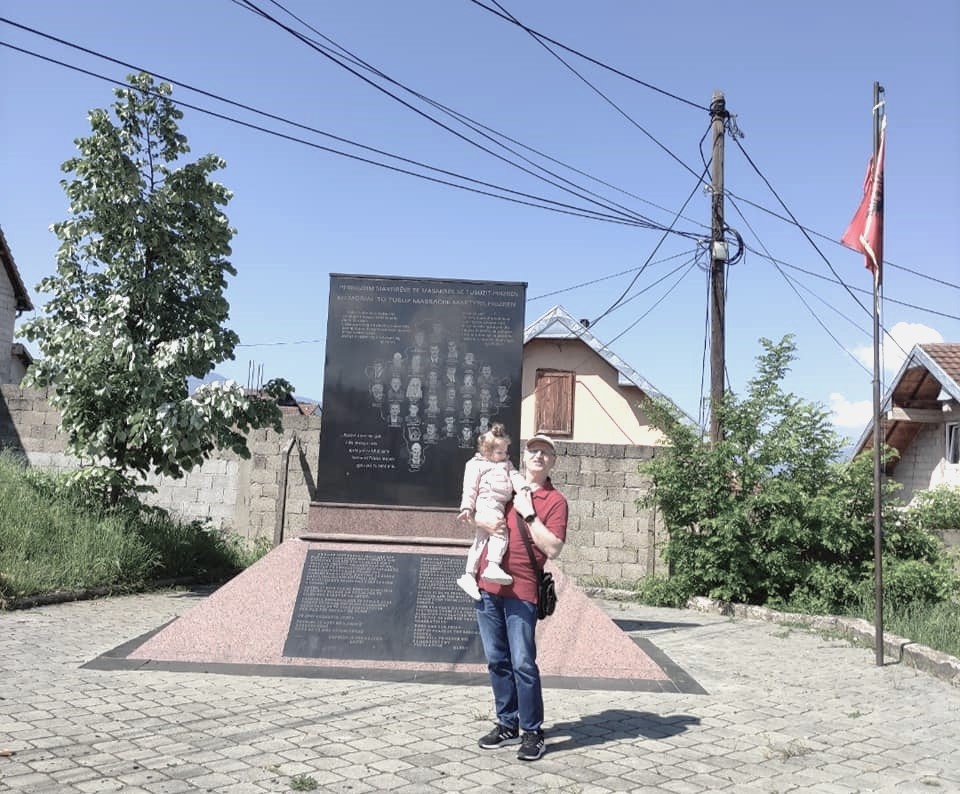
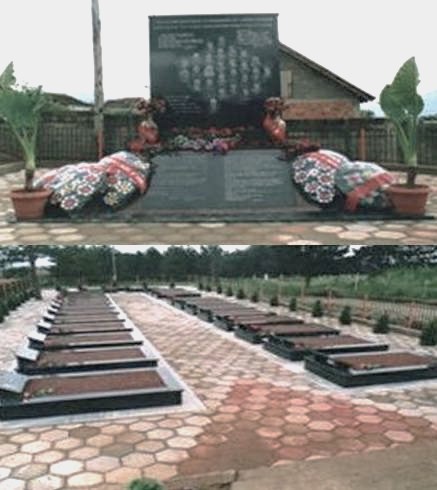
After the war, Enes and Fatmir, together with the 25 martyrs of “Tusus,” rest in peace in the joint cemetery at the end of the “Neighborhood of the Brave” (formerly “Tusus”). “Our bequest: ‘Work, love, and help one another, cherish this freedom brought to you by our blood and that of thousands of others, if you do not want history to repeat itself…! …Kosovo, washed in blood over centuries and ages, our blood is freely given to you; farewell historic Prizren, may our blood become light for you…'” – so reads the inscription on the memorial erected in the “Tusus” neighborhood (now “Lagjja e Trimave”) in Prizren, where the names of 27 Albanians brutally killed and massacred on May 16 and 26, 1999, by Serbian criminal forces are engraved.
WHY IS NO ONE PROSECUTING THE CRIMINALS?!
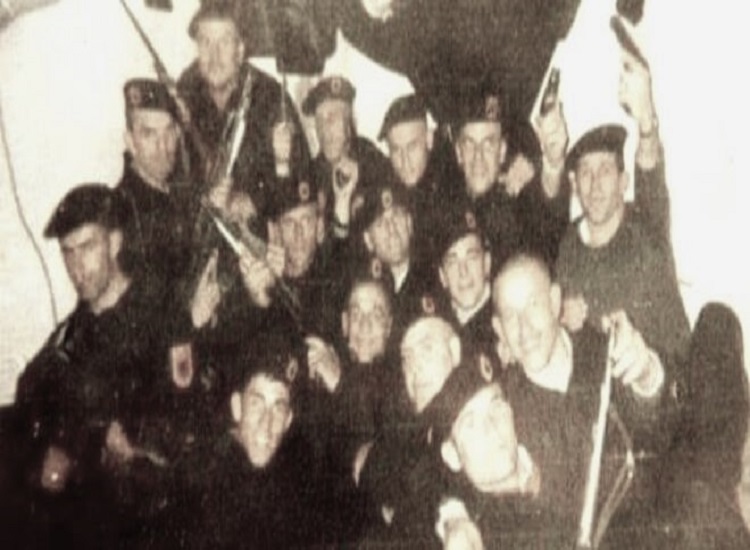
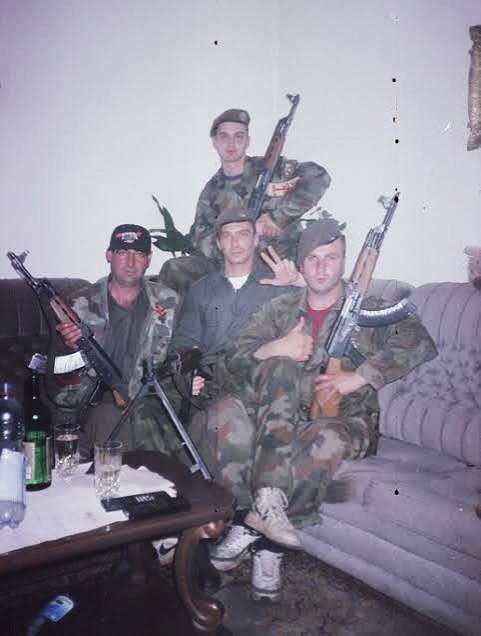
After the war ended and the displaced population returned to Kosovo, military documents and even photographs were found (many photographs of Serbian criminals were also found in the “Tusus” neighborhood of Prizren and its surroundings). In these photos, Serbian military and paramilitaries are clearly seen in action, smiling mysteriously with weapons in hand in front of houses engulfed in flames, or seen looting the property of Albanians.
Even though the names of the criminals who committed thousands of massacres were identified by survivors of the crimes, to this day no security officials in Kosovo – neither the EULEX police or prosecution, nor the Kosovo police or local prosecutor’s office, nor other international or local institutions (the Government, Presidency, Parliament, or Civil Society) – have shown the slightest interest in pursuing and arresting these criminals.
Meanwhile, EULEX pursues and arrests freedom fighters who, with weapons in hand, defended the population from extermination! Considering all these facts and thousands of others like them, the entire political and institutional leadership of Kosovo is naturally held responsible for failing to file a criminal lawsuit against the state of Serbia for the genocide and ethnocide committed in Kosovo. On May 26, 1999, after looting them, Serbian criminal units burned and reduced 245 houses in the “Tusus” Neighborhood to ashes! (See some photos taken by activist Bajrame Tafallari) / Memorie.al