By Sheradin Berisha
Part One
Memorie.al / The city of Prizren is located in the southern part of the Dukagjin Plain (in southwestern Kosovo). The territorial entity of the Municipality covers an area of 640 km² and accounts for 5.94% of Kosovo’s territory, divided into 76 settlements. According to local census records, the Municipality of Prizren in 2002 had 220,776 inhabitants, approximately 110,000 of whom lived in the city of Prizren. During the period between January 1998 and June 12, 1999, within the territory of this municipality, 325 civilian residents were killed (257 males and 68 females), 125 residents went missing (121 males and 4 females), while 143 martyrs fell on the altar of freedom. The most horrific massacres were committed in Krushë e Vogël (113), Landovicë (23), Lugishtë e Hasit (34), Korishë (77), and in the Tusus neighborhood of Prizren (27)…!
In the report of the Regional Center of the CDHRF (Council for the Defence of Human Rights and Freedoms) in Prizren, dated February 23, 2009, titled “Consequences of the War in the Municipality of Prizren”, it is highlighted that in July 1999, three mass graves were found in the villages of Has: in Gorozhup and Planejë, two mass graves containing 12 bodies each were uncovered, while in the village of Mazrek, another grave containing 10 bodies was found. All those killed were from the village of Lubizhdë (Lugishtë) of Has in Prizren, who had been executed between April 12 and April 26, 1999.
In June 2006, a mass grave containing 20 victims was discovered between the villages of Lubizhdë and Korishë. The deceased were from Krusha e Vogël, executed on March 26, 1999. According to records from the Municipal Council of Prizren and other associations, 3,459 Albanian homes, 15 school facilities, 2 local administrative offices, 1 cultural center, 4 school libraries, 8 health facilities, 18 religious sites, and approximately 2,000 commercial premises were destroyed in the Municipality of Prizren (Serbian Crimes in Kosovo 1998–1999, Book 2 – Pristina 2010, p. 174).
With the onset of the NATO bombing campaign, the OSCE reported that the Serbian army and police cordoned off several areas of the city and demolished the historical site of the “League of Prizren,” a vital historical monument for Albanians…!
During the war in Kosovo (1998–1999), Serbia deployed the Third Army of the Yugoslav Armed Forces, paramilitary units operating under the military umbrella, and an extensive superstructure of police forces against the Albanian people and the KLA (Kosovo Liberation Army), culminating in March 1999 with the extermination operation codenamed Operation “Horseshoe” (Plani “Patkoi”).
These forces comprised a combination of special police structures under the Ministry of Internal Affairs of Serbia, special military units of the Serbian Army, numerous paramilitary units, as well as a spectrum of other volunteer forces coming from post-Soviet countries such as Russia, Belarus, Ukraine, and also Romania, among others.
In an October 2001 report, the human rights research organization Human Rights Watch wrote: “The Yugoslav Army held overall command during the NATO bombing period. By law, it had subordinate authority over the police and paramilitary forces, although senior officials in the Serbian Ministry of Internal Affairs exercised significant influence during the campaign. The Army controlled main roads and borders, thereby coordinating and facilitating ‘ethnic cleansing’ (in Kosovo).
The police and paramilitary forces were more directly involved in the expulsion of civilians and the destruction of villages, supported by army artillery. During these operations, men were separated from women and children to be interrogated regarding the Kosovo Liberation Army and were executed on the spot,” highlighted Human Rights Watch in its report.
In an investigation conducted by Human Rights Watch following the war in Kosovo, it determined that: “During the war, the ‘Third Army’ of the Yugoslav Army, responsible for Kosovo, maintained a barracks in Prizren, and a number of witnesses claimed the army had been extremely active in this municipality, coordinating actions with the police.
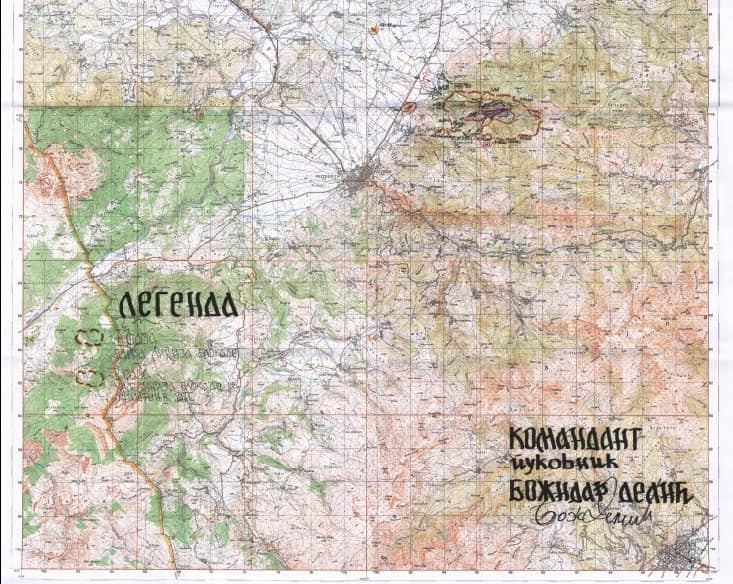
Headquartered in Prizren was the 549th Motorized Brigade, commanded by Colonel Božidar Delić. Prizren was also one of seven regional bases of the Serbian police in Kosovo, known as the Secretariat of Internal Affairs (SUP – Sekretariat Unutrašnjih Poslova). The Prizren SUP covered the municipalities of Prizren, Rahovec, Suhareka, and Gora.
The Commander of the Prizren SUP throughout 1998 was Colonel Gradimir Zekavica, while Lieutenant Colonel Milan Đuričić served as head of the police section within the Prizren SUP department. In January 1999, a new head of the SUP was appointed, Colonel Miloš Vojnović, who simultaneously served as deputy chief of the police department within the Ministry of Internal Affairs of Serbia.
On June 7, 1999 (just two days before the signing of the Military-Technical Agreement in Kumanovo between NATO and Serbia), Serbian master-criminal Slobodan Milošević expressed gratitude and support to 911 members of the MUP (Ministry of Internal Affairs) and the Yugoslav Army for, as he stated, ‘suppressing terrorism in Kosovo and defending the country against aggression’!
On this occasion, he awarded the ‘Order of the People’s Hero’ to Colonel Božidar Delić – Commander of the 549th Motorized Brigade based in Prizren – as well as Serbian MUP officers in Prizren: Colonel Gradimir R. Zekavica and Lieutenant Colonel Milan S. Đuričić, who participated in the planning and organization of barbaric massacres in the villages of the Municipality of Prizren.
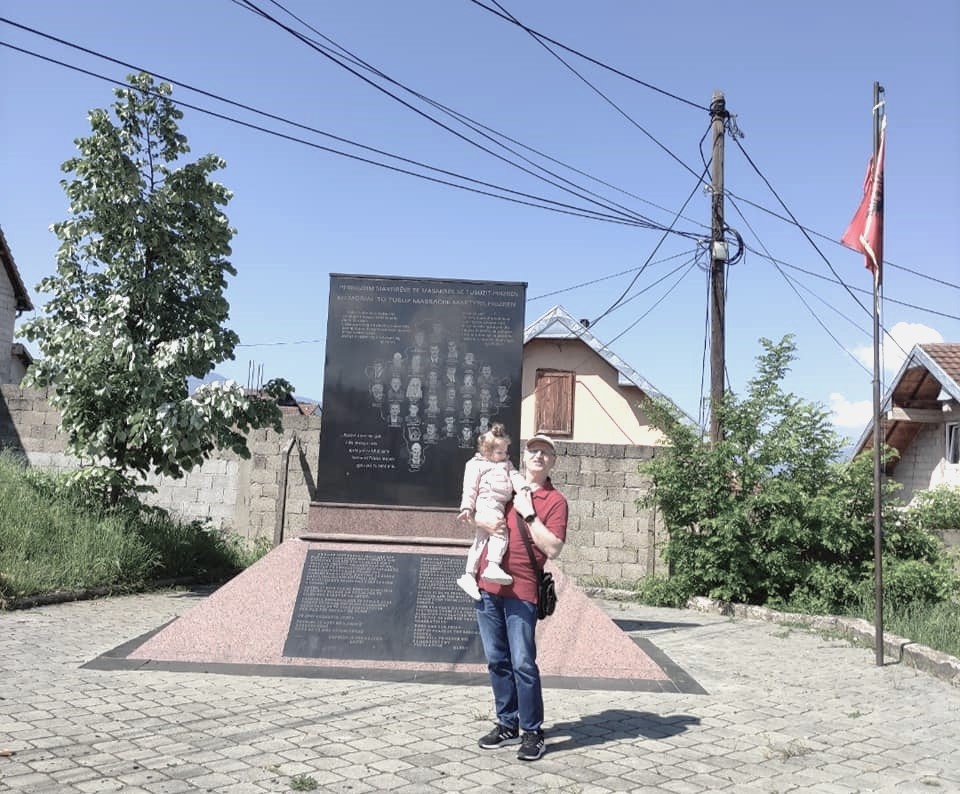
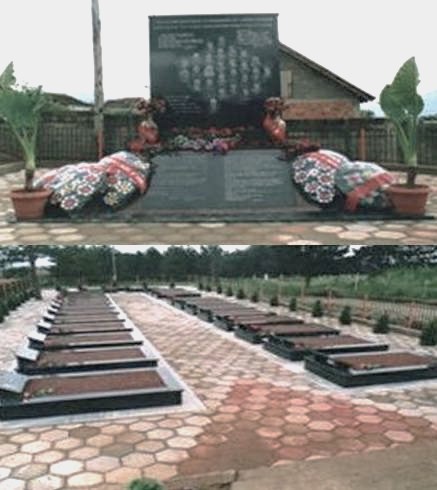
HOW THE MASSACRE IN THE “TUSUS” NEIGHBORHOOD OF PRIZREN OCCURRED ON MAY 26, 1999
The “Trimave” neighborhood (formerly “Tusus”) lies in the southern part of Prizren at the foot of the Cvilen Mountains. During the war, this neighborhood served as the primary base for the Kosovo Liberation Army and played an important role in mobilizing KLA ranks for the Vërrin zone; as such, it was kept under constant surveillance by Serbian occupying forces.
Between March and May 1999, at a time when Serbian military and paramilitary forces were forcibly expelling the Albanian population to Albania, “Tusus” had transformed into a formidable stronghold for the KLA. Consequently, the majority of its residents did not abandon their homes, and for a time, dozens of families from Vërrin, Opoja, and villages across Theranda and Anadrin also found shelter there.
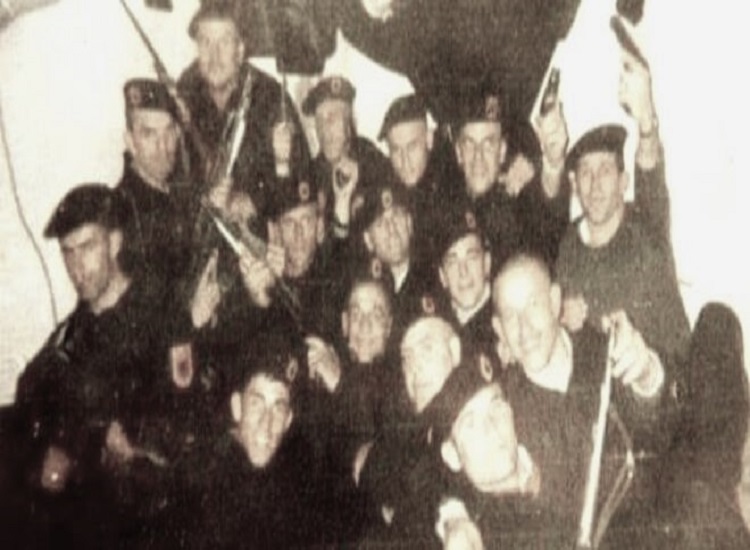
Serbian criminal forces made several attempts during this period to position themselves in Tusus, but continually met armed resistance from two KLA units of the 125th Brigade, led by commanders Samidin Xhezairi (“Hoxha”) and Zafir Berisha.
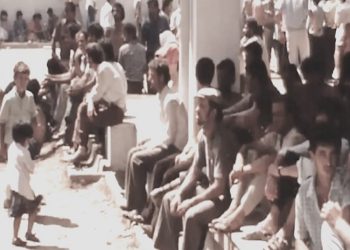
To “challenge” this unyielding resistance of the KLA, the Serbian military command in Prizren mobilized large military and police forces on April 24, 1999, and surrounded the “Tusus” neighborhood. During this operation, 50 men were arrested and taken to the “Sezair Surroi” Sports Center, which, following the onset of NATO bombings (March 24, 1999), had been converted into a “large concentration camp” for hundreds of captured Albanians from various parts of Kosovo being deported to Albania.
Numerous witnesses report that during April and May 1999, Serbian military and paramilitary forces forced hundreds of captured Albanian prisoners to dig trenches in several settlements along the border to protect themselves from NATO alliance air strikes. Human Rights Watch interviewed two men who were taken from their homes on April 24 to serve in labor brigades.
Initially, they were assembled at the Prizren sports center near the army barracks, where they were given old army uniforms to wear. Subsequently, they were sent to the municipality of Dragash, south of Prizren, where they dug trenches for an entire month. Other residents of Prizren who fled the city in mid-April stated they left precisely to escape such forced roundups…!
Throughout May 1999, KLA units defending the Albanian population engaged Serbian occupying forces on several occasions in the “Tusus” neighborhood and other areas along the Cvilen and Vërrin mountains. The climax of all KLA combat operations in this Prizren neighborhood occurred on May 26, 1999, when KLA units killed two Serbian special police unit officers during an action. In the report of the CDHRF Regional Center in Prizren, dated February 23, 2009, titled “Consequences of the War in the Municipality of Prizren”, it states:
“On May 26, 1999, at 07:30, KLA units launched a surprise attack on the Serbian police in the ‘Tusus’ Neighborhood, precisely during a shift change, after observing the movements of Serbian forces in the area for some time.
Two police officers were killed in the ambush. The killing took place on ‘Ramiz Sadiku’ Street (now ‘Xhevat Berisha’ Street) in this neighborhood. The slain officers carried bags containing goods looted from abandoned homes of Albanian citizens.”
In the first half of June 1999, Human Rights Watch interviewed three refugees in Albania who were eyewitnesses to the events in “Tusus” on May 26, 1999. Meanwhile, a Human Rights Watch researcher visited the “Tusus” neighborhood of Prizren on June 14, immediately following NATO’s entry into Kosovo.
On that occasion, the researcher photographed the destruction wrought by Serbian forces and interviewed fourteen residents of “Tusus.” The violence in “Tusus” erupted following the killing of at least two Serbian police officers on “Ramiz Sadiku” Street, the main boulevard running through the heart of the area.
A number of witnesses told Human Rights Watch they had heard about the killings, while another witness, L.V., stated he had seen the bodies on the morning of May 26: “One (of the policemen) was lying on his back,” L.V. explained. “The other had fallen face down, his back riddled with bullet holes; his back was smeared with blood.” The Ministry of Internal Affairs of Serbia published the names and photographs of the two policemen killed in “Tusus” on May 26: Milosav Rajković (born in 1975) and Zlatomir Stanković (born in 1957).
Large numbers of Serbian military, paramilitary, and police forces, unable to destroy the KLA units’ bases, launched a comprehensive retaliatory offensive against the innocent civilian population during the early morning hours of May 26, 1999. “At 09:30, the offensive by Serbian forces began,” writes the CDHRF Regional Center in Prizren.
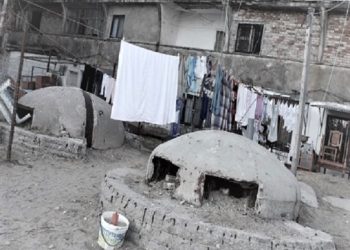
Serbian criminal units brutally entered home after home, looting, burning, and reducing 245 houses in the neighborhood to ashes during this violent operation. In this situation, Serbian criminal units separated the men from the women and children and mercilessly executed 25 men of various ages. This operation of genocidal proportions continued into the late afternoon hours.
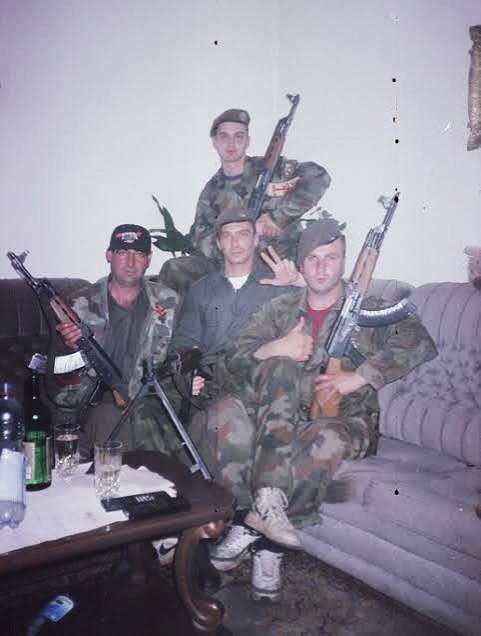
Many witnesses who survived the massacre state that special police forces were involved in this bloody operation, coordinated with mixed Serbian military and paramilitary formations wearing camouflage uniforms (green), some wearing face masks while others wore bandanas tied around their heads.
An 11-year-old boy told a Human Rights Watch researcher that they carried “large knives” and “smoked cigars.” Another witness described the presence of “Greeks and Russians who did not speak a single word of Serbian.”
Witness F.K., 33, a resident of “Tusus,” told the Human Rights Watch researcher that he and 16 members of his family – on the morning of May 26 – “had taken shelter in the house cellar and heard heavy gunfire.” “The gunfire,” he said, “was continuous, extremely close, perhaps about fifty meters from my house.
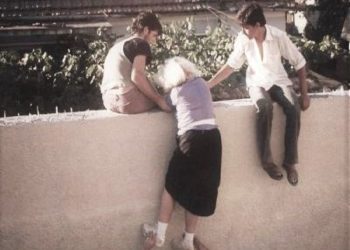
After half an hour of continuous shooting, they began burning and demolishing houses in our neighborhood. They destroyed everything.” He stated that the fires burned until early evening, when he and his family escaped by climbing over the backyard wall and walking among charred beams to reach the road leading out of the neighborhood.
Members of other families described how Serbian forces entered their homes, sometimes to kill, sometimes to conduct searches. Witness L.V. (a 16-year-old boy) told the Human Rights Watch researcher: “More than fifteen Serbs came into the house. They asked us: Is the KLA here? They searched the entire house and stayed inside for about five minutes. They were special police units with red Serbian flag badges on their sleeves. They pulled me out of the house and told me: We are going to kill you. Take a last look at your family because we are going to kill you.”
When L.V. was brought outside, a man who according to him was the Serbian commander ordered the others to release him. L.V.’s mother was also abused; she stated that at that moment she thought security forces were going to take her away, but only the screams of her mother-in-law saved her. Their house was visited more than once by groups of Serbian security forces, as it was situated directly in the middle of “Ramiz Sadiku” Street./ Memorie.al
Continued in the next issue