

– The Chronicle of the “Bad Year 1913” –
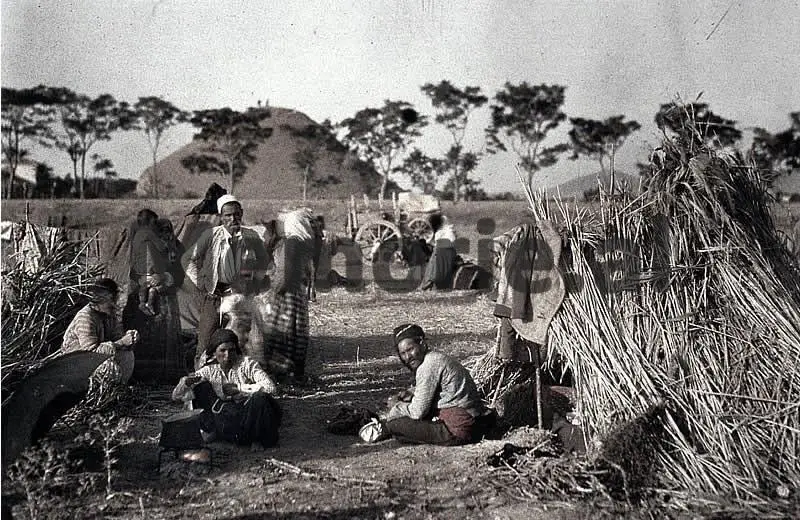
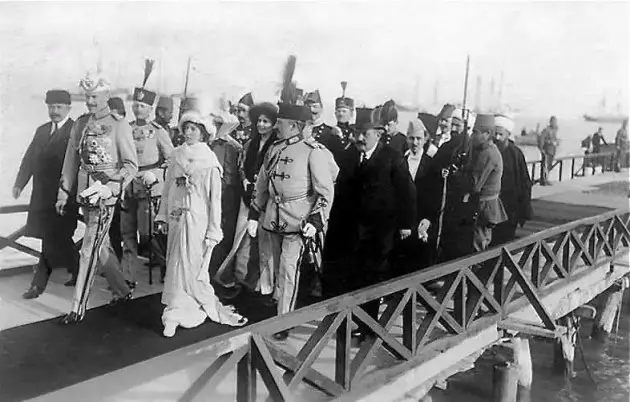
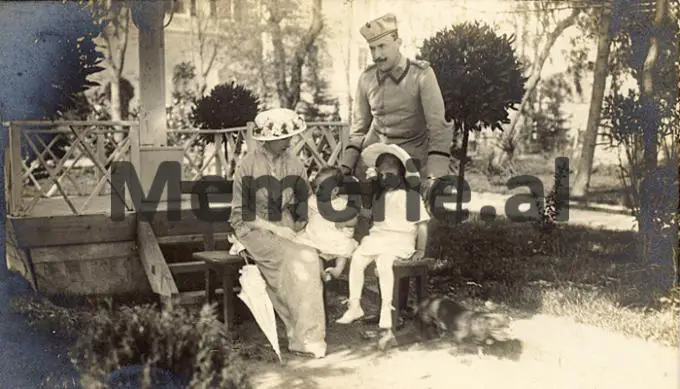
Memorie.al / The chronicle of the “bad year,” as our great, world-renowned writer Ismail Kadare called the year 1913, returns for the Albanian public with a historical exhibition: with facts, documents, and unknown photographs from that dark reality of Albania on the eve of the Great War. They come not only in black and white photos but, for the first time, in color photos of Shkodra, Vlora, and especially Durrës during the time of Prince Wied, just as the Dutch soldiers of the Peace Mission in Albania at that time took these cities with them. The Dutch historian, who prepared the exhibition, Harrie Teunissen, shows how he built the chronicle of the bad year through the memories, documents, photographs, postcards, and souvenirs that the military members of the Dutch peace mission in Albania had taken from this country where everything went wrong.
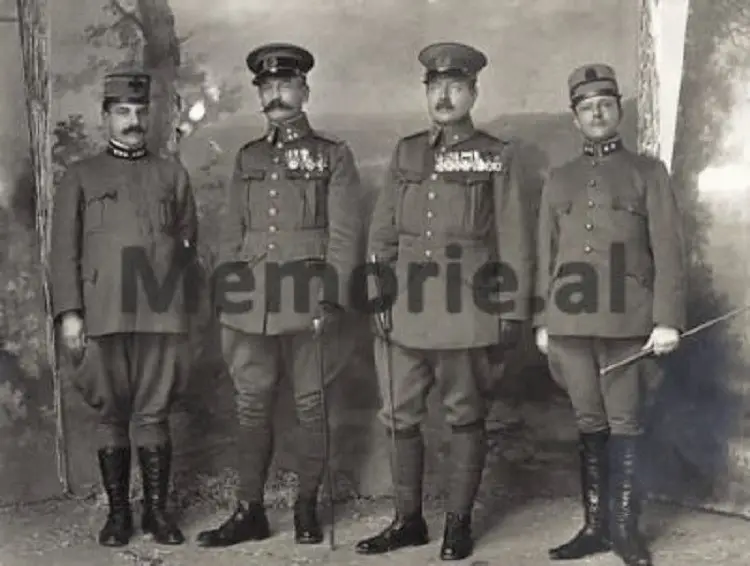
But the protagonist of the exhibition, which opened some years ago at the National Historical Museum, is the Dutch colonel Thomson, who was killed during his mission in Albania under somewhat mysterious circumstances, which are further obscured by the historical myth that envelops the hero. Having arrived in Durrës in November 1913, along with 12 other Dutch missionaries, to establish the Albanian police force that would bring peace to Albania, Colonel Thomson was killed during a battle in Durrës on June 15, 1914, when the city was engulfed by the rebellion of rebels and Esadists and when calls of “Dum Baba” demanded the return of the Sultan’s rule.
Dutch newspapers of the time, also presented at the exhibition, wrote about the murder of Colonel Thomson in Albania that: “Thomson was hit from the front, on the front line,” while eyewitnesses stated that he was behind the front line and with his back to the trenches. In Durrës, an Italian sniper was speculated, while according to a popular Italian publication, he was killed on horseback by an Albanian bullet. This is how the tableau of the death of the colonel who led the Dutch peace army in Albania is presented.
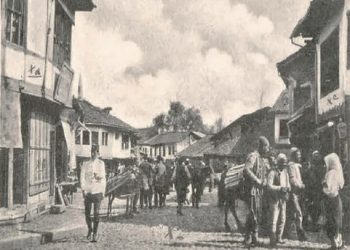
In addition to the many facts, documents, and photographs from the Dutch colonel’s days in Albania, in the exhibition “Colonel Thomson and Albania, a peace mission in the Balkans, 1913-1914,” the Dutch historian Teunissen has built a broader panorama that, through photographs, maps, and postcards from Albania preserved by the military, brings the climate of that barbaric time. Unknown photographs of mass graves show how komitadjis had killed forty men of a Muslim village of Kodra, in the Vjosa valley opposite Tepelenë, inside a church (shooting them from the roof and windows). The postcards from Shkodra, Durrës, and Vlora are savagely beautiful, but no less backward, uncultured, completely lost…!
The Dutch historian who built the exhibition says that a part of the photographs “are the first color photos of Albania.” The exhibition with the same materials was opened a year earlier in The Hague and in several cities in the Netherlands and comes to Albania from the cooperation of the Dutch Embassy in Tirana and the publishing house “Skanderbeg Books,” which has published a book with the memories of a 25-year-old military member of the Dutch mission in Albania, Jan Fabius.
The confession of the Dutch historian: “How I discovered the first color photos of Albania?”
He found them in the personal collections of the Dutch military members who returned after their mission in Albania, in the archives of the Dutch Military Institute and in the “Albert Kahn” museum, where the collection of photos from the Balkan region is a treasure. Harrie Teunissen says that the great industrialist had equipped dozens of hundreds of people with advanced photographic equipment for the time to build an encyclopedia of the Balkans through photos taken from the field. Teunissen says that the Dutch military members were also equipped with photographic cameras and took many photos from Albania, including the first color photos.
Reports of the members of the Peace Mission for the Dutch colonel who was killed in 1914 during the peaceful mission in Albania
Colonel Thomson, a Dutch hero of Albania
Linked to the founding of the Albanian state, sent to establish peace in the troubled Albania of 1913, and then a victim of intrigues and killed by religious fanatics in 1914, Colonel Thomson is considered the true hero of the peace mission in the Balkans. However, this mission failed to fulfill its duties due to the great turmoil in the region and is considered a failed mission. The Dutch ambassador in Tirana called the hero of this mission a symbol of Albanian-Dutch relations. Commemorated with a monument in The Hague, where there is also a square named “Thomson Square,” the Dutch colonel is an “Honorary Citizen” of Durrës, where his statue is not missing, and for some time now the Academy of Officers in Albania has also been named “Thomson Academy.”
According to the documents presented at the exhibition “Colonel Thomson and Albania, a peace mission in the Balkans, 1913-1914,” Thomson and General De Veer were assigned to investigate how the gendarmerie could be established in Albania, although they only managed to bring Durrës under their control with their police. They cooperated with Albanians to strengthen the gendarmerie. Colonel Thomson was killed on June 15, 1914, during the Battle of Durrës. The documents show that the rebellion of the rebels and religious fanatics spread widely in 1914, while Colonel Thomson had been appointed “army leader.” Thomson declared a state of war and turned Durrës into a fortress.
Gendarmes and adventurers, locals and foreigners, were trained in his army. His captain, Fabius, formed an artillery unit with volunteers. The highlanders paid volunteers from the northern tribes, and their number reached 1000 men, but they were not commanded by Dutch officers, but by the head of their clan. At the moment Thomson called the clan leaders to order their men into the trenches; he was hit in the chest, even though the attack was happening behind his back. As the documents and memories of the military members of the mission presented at the exhibition show, the defenders were able to repel the rebels, but the rebellion continued.
Among the many articles dedicated to Thomson’s death, the exhibition presents some that show drawings of the Dutch colonel at the moment of his murder. The colonel had a temporary grave in Durrës, while the coffin was later transported to the Netherlands, where a funeral was held with all military honors. At this time, Prince Wied continued to stay in Albania, but the south of Albania had completely lost control, as had the north where Serbian troops were operating. The majority of the “Dutch Mission in Albania” had returned to the Netherlands, while the last two captured majors were released in September. The First World War had begun with all its horror.
Plans for the Albanian Gendarmerie
Fragment from the memories of the Dutch captain Fabius –
“…Ismail Qemali resigned. The Control Commission took over all the administration of the country, so Colonel De Veer and Major Thomson entered the official Albanian service as generals and a colonel. A very big job awaited them. There was nothing, and anarchy reigned everywhere; in the midst of all this, the officers had to give the Control Commission advice and practical actions. They had to make plans for the gendarmerie, start creating the first departments in Vlora and arrange everything for our arrival (the members of the peace mission)…! The installation of telephones, the paving of roads, the supply of machine guns were done very quickly…! Officers of the former Albanian troops were recruited for the gendarmerie. Several hundred men were gathered very quickly…”.
The mission goes towards failure…!
“Several days after the events, we received newspapers from Europe and noticed that the death of Colonel Thomson had made a great impression in Europe and in our homeland. It did not happen often that an emperor of Austria would send a telegram of condolence to the Dutch state for the death of a Dutch chief officer…! With his death, the plans were destroyed, and the idea of attacking the insurgents from three sides at the same time had turned into smoke from the sudden attack of the 15th…! We could not find out who was shooting and from which house. When I walked the streets at night, I always had my revolver in my hand and made sure never to wear white, but a long, dark overcoat, to be as inconspicuous as possible. Although I quickly got used to this and nothing happened to me, it was a pleasant thing to walk in the middle of the night through those silent, lonely, dark streets and alleys, risking that at any moment you could be the victim of a gunshot…”!
Fragment from the memoirs “Six Months in Albania” by Jan Fabius, one of the most courageous Dutch officers of the Peace Mission. The captain can be considered one of the pioneers of Albanian artillery, and he has left authentic memories of his short stay in Albania, at the age of 25! / Memorie.al